





Antique Feline Artwork
Antique feline artwork brings together paintings, prints and drawings of cats and kittens that collectors prize for their charm and observation.
Antique Feline Artwork
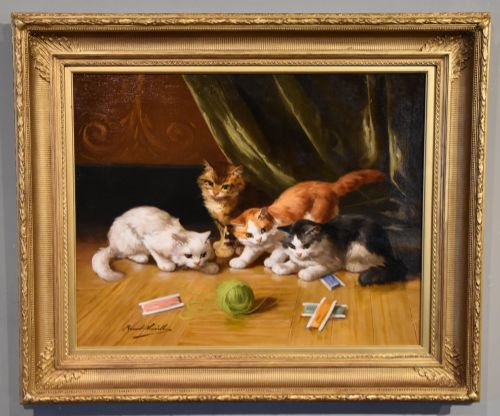
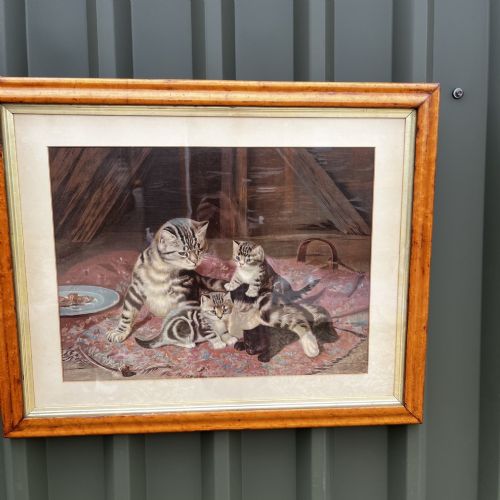
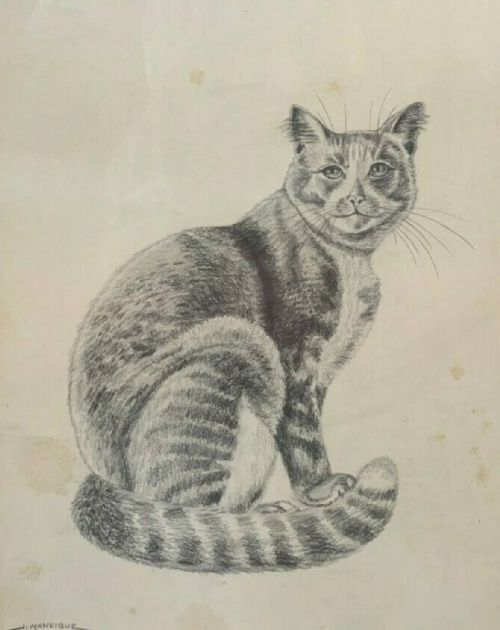
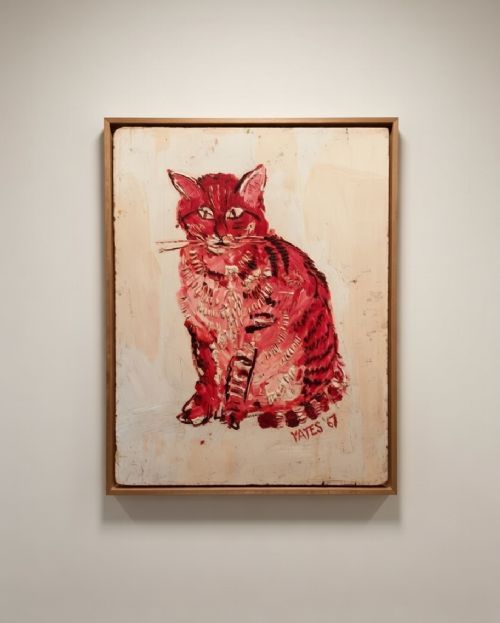
Antique feline artwork spans oil paintings, watercolours, pastels, pencil drawings and chromolithographs depicting domestic cats, kittens and wild leopards. These pieces range from Victorian genre scenes and traditional realism to Edwardian illustration and mid-century modern works. Buyers searching for antique feline artwork will frequently encounter depictions of playful kittens, mother cats with litters, and solitary felines.
The objects appear in various formats, including framed prints, oil paintings on canvas and panel, and detailed drawings on paper. Pieces originate across the nineteenth and twentieth centuries, capturing evolving artistic approaches to animal subjects. Domestic cats dominate the selections, alongside occasional studies of leopards rendered by specialist animaliers.
Materials and techniques
Artists working on these pieces utilised oil paint on canvas, board and panel, alongside ink, pencil and pastel on paper. Chromolithographs and prints reproduced popular compositions for a wider audience, employing layered inks to capture texture and tone. Frames frequently incorporate wood and gilt wood with gold leaf finishes, matching the period of the artwork.
Makers applied fine brushwork to delineate fur and posture, whether capturing the soft rendering of Persian kittens or the powerful musculature of a prowling leopard. Drawings rely on precise pencil or pastel marks to suggest movement and expression, whilst oil paintings build depth through successive colour glazes.
The listings show works from the nineteenth century, nineteen-hundred, nineteen-ten, nineteen-thirty, and nineteen-fifty.
Markers of distinction
Quality in these works rests upon the precision of anatomical observation and the handling of texture in the subject's fur. Superior pieces demonstrate an artist's ability to render light and individual expression rather than relying on generic formulas. The fidelity of print reproduction and the preservation of the original paper or canvas condition also influence the standing of an individual piece.
Framing plays a role, with period gilt wood surrounds enhancing the visual weight of oil paintings and prints. Works bearing attribution to known animal painters command greater attention through their established mastery of the genre.
Alfred Arthur Brunel de Neuville·Horatio Henry Couldrey·Louis Wain·Agnes Augusta Talboys·Herbert Dicksee·Bessie Bamber·Cuthbert Edmund Swan
The Antique Feline Artwork Glossary
- Chromolithograph
- A multicoloured print produced through a planographic lithographic process. This technique allowed nineteenth-century publishers to replicate oil paintings and watercolours with high colour fidelity.
- Genre
- A category of art depicting scenes from everyday life. In this context, it often describes domestic cats and kittens engaged in human-like or playful domestic activities.
- Animalier
- An artist or sculptor who specialises in the realistic depiction of animals. Painters in this tradition focused on the anatomical accuracy and behaviour of wildlife and pets.
- Panel
- A rigid support base for paintings, commonly made of wood. Artists utilised panels before canvas became the dominant medium.
Antique Feline Artwork: Frequently Asked Questions
How do I date an oil painting of kittens?
Dating relies upon examining the canvas support, stretcher frames, and the style of the gilt wood frame. Stylistic markers within nineteenth-century animalier art also provide clear indicators of period origin.
Signatures, artist attribution, and remnants of old gallery labels on the reverse offer further chronological evidence.
What is the difference between an oil painting and a chromolithograph?
An oil painting is a unique handmade work created with pigment suspended in drying oil on canvas, board or panel. A chromolithograph is a mechanical print created using multiple lithographic stones for each colour.
Under magnification, prints reveal tiny dot patterns or flat ink layers, whilst oil paintings display visible brushwork and paint texture.
How should I care for antique paper drawings?
Paper drawings and prints require protection from direct sunlight to prevent fading of inks and discoloration of the paper support. Framing with acid-free mounts ensures the preservation of pastels, ink, and pencil works.
Maintaining stable room humidity prevents the paper from warping or developing foxing spots over time.
Why are cat prints by Louis Wain popular?
Louis Wain gained recognition for his distinctive anthropomorphic depictions of cats and kittens in Edwardian illustration and print form. His work evolved from realistic animal studies to stylised, decorative compositions.
Collectors value these prints for their distinct character and the artist's unique perspective on feline subjects.