





French Genre Oil Painting
These french genre oil painting works capture intimate everyday moments and historic scenes, offering a tangible window into past lives that collectors prize for their narrative depth.
Understanding French genre oil painting
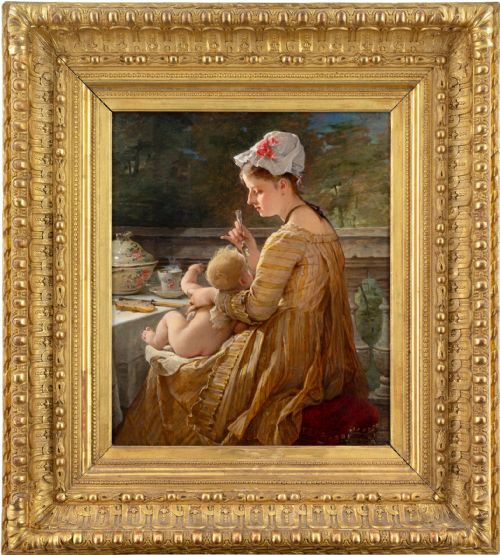
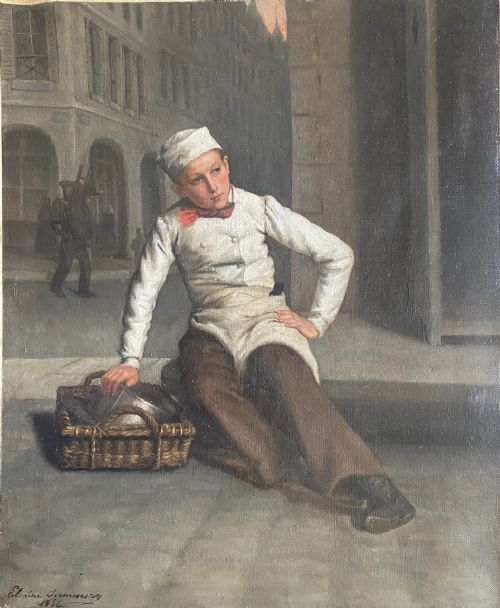
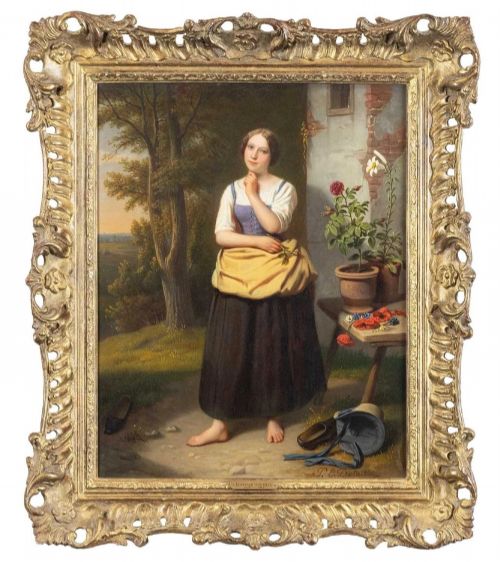
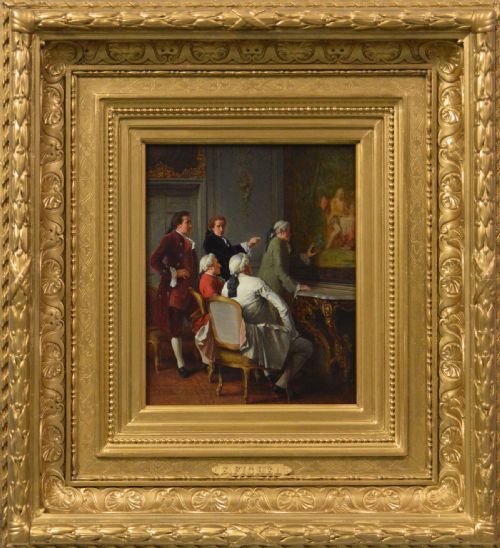
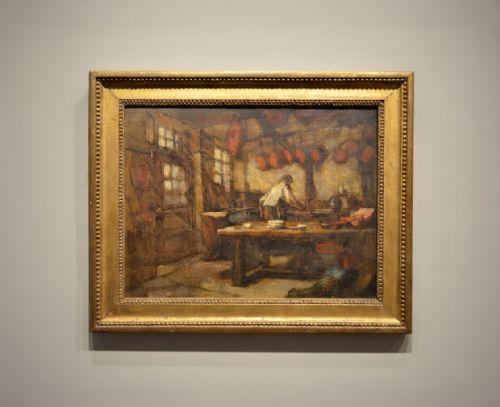
A french genre oil painting depicts scenes of everyday life, intimate domestic interiors, and historical vignettes rather than grand mythologies or distant landscapes. These works often centre on figures engaged in leisure, games, or social gatherings within ornate settings.
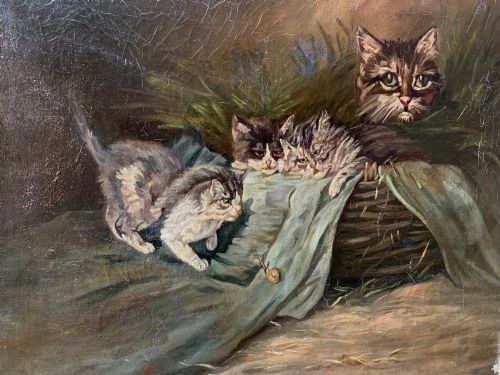
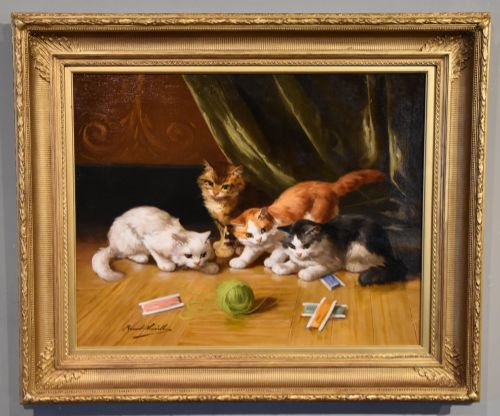
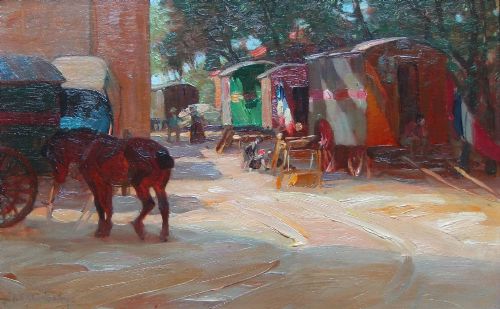
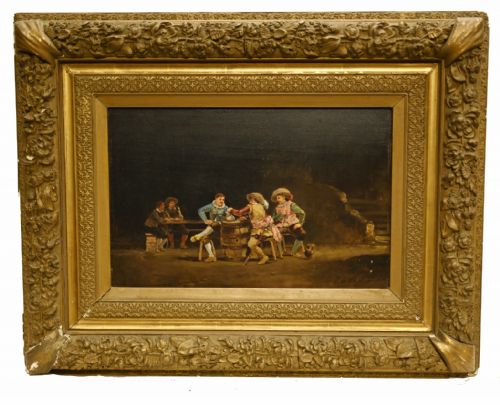
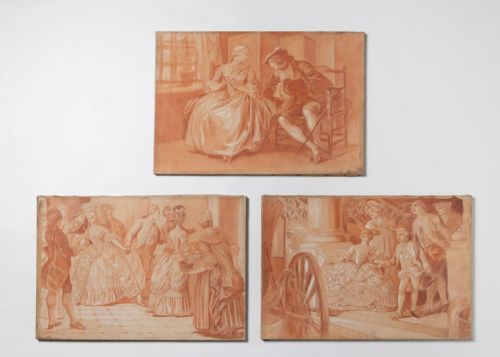
The pieces on this page draw from the nineteenth century up to nineteen fifty, encompassing movements such as nineteenth century french realism, academic styles, and rococo revivalism. Common subjects range from playful kittens and figures with horses to courtiers playing chess in Versailles.
Buyers frequently encounter works executed on canvas or panel, frequently housed in giltwood or gilt wood frames that complement the ornate painted interiors. These objects provide a direct connection to academic traditions and narrative art of bygone eras.
Materials and construction
Artists apply oil paint directly onto prepared canvas or wooden panels, building up layers of pigment to achieve rich textures and nuanced lighting effects. This combination of oil on canvas or panel allows for subtle blending and deep luminosity in interior scenes.
Many of these artworks are housed in frames constructed from wood and embellished with gold leaf or giltwood, framing the painted narrative with metallic lustre. The physical materials reflect traditional studio practices of the nineteenth and twentieth centuries.
Retail Price Guide 2026
Typical UK retail prices for french genre oil painting, calculated from the Sellingantiques database of over a million retail prices indexed since 2003. This retail price guide relies exclusively on Sellingantiques data; no external sources or auction records are used, so the figures do not describe the wider market.
Listings include works from the nineteenth century up to nineteen fifty, spanning academic realism, rococo revival, and french school traditions.
Assessing quality and execution
The sophistication of brushwork and the precision in rendering human expressions and fabric textures separate standard decorative canvases from masterly academic compositions. Finer pieces demonstrate a superior command of light, shadow, and atmospheric depth within interior settings.
The integration of the artwork with its original giltwood or gold leaf frame influences the overall integrity of the piece. Superior examples maintain a harmonious relationship between the painted surface and its housing.
Alfred Arthur Brunel de Neuville·Benjamin Eugene Fichel·Léon Joseph Voirin·Marcel Brunery·Pauline Delacroix Garnier·Michel Katzaroff
The French Genre Oil Painting Glossary
- Genre painting
- A branch of fine art depicting scenes from everyday life, ordinary people, and domestic interiors rather than historic or mythological subjects. These works rely on narrative storytelling and character interaction.
- Oil on panel
- A technique where artists paint directly onto a prepared wooden support rather than stretched canvas. This method provides a rigid surface that allows for fine, detailed brushwork.
- Giltwood
- Wood that has been treated with a thin layer of gold leaf or gilt powder for decorative effect. It frequently frames nineteenth century academic canvases.
- Rococo Revival
- A nineteenth century artistic movement that revives the ornate, curving ornamentation and lighthearted themes of the eighteenth century French Rococo period. It appears frequently in courtly interior scenes.
Frequently Asked Questions
What is a French genre oil painting?
It is an artwork depicting everyday human subjects, domestic scenes, or historical vignettes created using oil pigments.
These pieces often focus on narrative moments, such as card games or afternoon tea in ornate interiors.
How do I date these paintings?
Dating relies on stylistic clues, artist signatures, framing materials, and recorded exhibition histories from the nineteenth and twentieth centuries.
Academic realism and rococo revival styles offer strong chronological markers for when the work was produced.
What subjects are most common?
Common subjects include courtiers in historic settings, domestic interiors, animals, and social gatherings like tea parties.
Figures engaged in leisure activities or games frequently appear across these compositions.
How should I display these in a home?
These paintings suit traditional or eclectic interiors where their narrative depth and ornate frames can be appreciated up close.
Placing them away from direct sunlight protects the oil pigments and the surrounding giltwood frames.