




Gold Frame Cat Portrait
A gold frame cat portrait brings together fine oil painting and feline charm in a polished period setting.
Gold Frame Cat Portrait
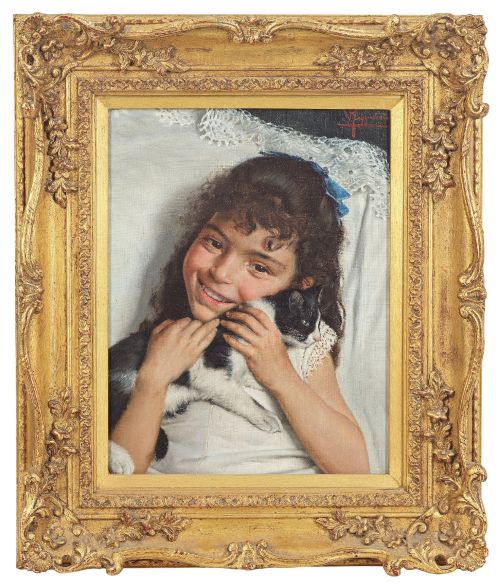
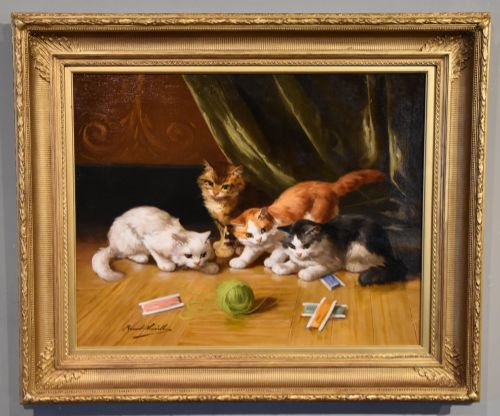
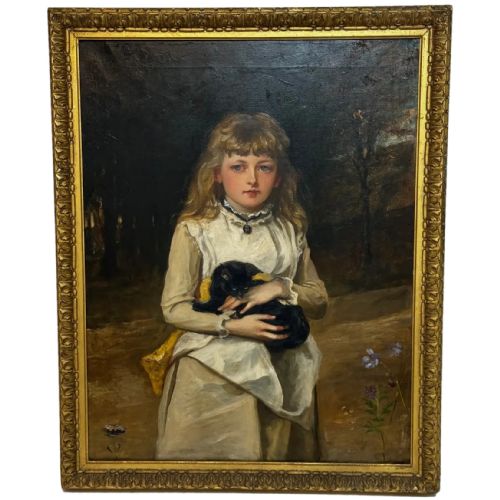
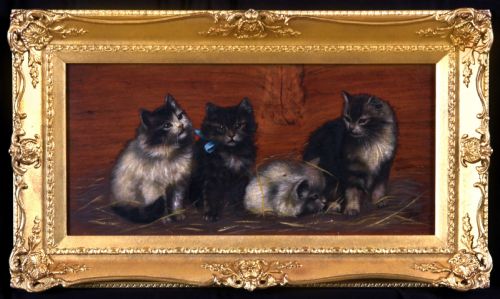
A gold frame cat portrait focuses on feline subjects captured in traditional realism and Victorian genre painting styles. These works range from individual studies of pets to playful groups of kittens rendered with meticulous detail.
The pieces on this page span the nineteenth century through the mid-twentieth century, including Victorian and provincial works. Buyers will encounter both intimate panel paintings and larger canvases framed in ornate gilt wood.
Subjects often feature domestic cats and kittens depicted alone, with children, or engaged in playful scenes. The accompanying framing typically employs gesso and giltwood to complement the rich tones of the oil paint.
Materials and construction
Artists painted primarily with oil paint on canvas or wood panel supports, building up layers to render the texture of fur and light. Some works also utilise oil pastels on appropriate surfaces to achieve softer visual effects.
The frames are constructed from wood, finished with layers of gesso, and gilded to create a bright metallic border. This combination of oil medium and gilt framing reflects the standard picture-making practices of the nineteenth and early twentieth centuries.
Listings span the nineteenth and twentieth centuries, incorporating Victorian provincial works as well as mid-century panels.
Evaluating quality and execution
Quality rests upon the artist's ability to render the anatomy, expression, and texture of the cat's coat with convincing realism. Finer works display careful brushwork in the fur and lifelike poses that elevate the subject above simple illustration.
The construction and original gilding of the frame also contribute significantly to the overall integrity of the piece. Hand-carved gesso detailing and well-preserved gilt wood provide a harmonious match to the canvas within.
Vittorio Reggianini·Alfred Arthur Brunel de Neuville·Charles Burton Barber·Agnes Augusta Talboys·Henry Weigall·Horatio Henry Couldery·Francisco Jose Domingo y Marques·Bessie Bamber
The Gold Frame Cat Portrait Glossary
- Giltwood
- Wood that has been coated with gold leaf or a gold-coloured finish. This material forms the primary structure of many traditional picture frames.
- Gesso
- A plaster-like mixture applied to wood frames to create a smooth surface for gilding and ornamentation. It allows for crisp decorative moulding.
- Oil on panel
- A painting executed on a flat wooden board rather than stretched fabric. This support provides a rigid surface often seen in smaller nineteenth-century works.
- Victorian genre
- A style of painting depicting scenes from everyday life, frequently featuring domestic animals and children. It prioritises narrative charm and sentimental appeal.
- Traditional realism
- An artistic approach aiming to represent subjects accurately and truthfully without stylistic distortion. It is the dominant mode in these animal portraits.
Gold Frame Cat Portrait: Frequently Asked Questions
How do I date a cat painting?
Dating relies upon examining the canvas style, the framing technique, and any signatures or inscriptions recorded on the reverse. Victorian works often show specific stretcher construction methods typical of the nineteenth century.
Changes in artistic conventions from the mid-nineteenth century to the mid-twentieth century also help narrow the period of execution.
Are these works original oil paintings?
The selection consists primarily of original hand-painted works in oil on canvas or wood panel. Each piece represents a unique artistic creation rather than a modern reproduction.
Signatures and attribution notes help connect individual paintings to known artists of the period.
How should I hang a gilt framed painting?
Hang the artwork away from direct sunlight and excessive moisture to protect both the oil paint and the gilded wood frame. Secure wall fixings rated for the combined weight of the canvas and heavy gesso frame are essential.
Positioning the piece at eye level in a principal room allows the detail of the feline subject to be appreciated properly.
What distinguishes provincial art from studio work?
Provincial paintings often display a charming local character and simpler techniques compared to academy-trained urban works. They reflect regional tastes and domestic patronage outside major artistic centres.
Such pieces offer a direct window into nineteenth-century domestic life and popular animal portraiture.