




Vintage Cat Wall Art
These vintage cat wall art pieces capture feline character across centuries of illustration, painting and printmaking.
Vintage Cat Wall Art
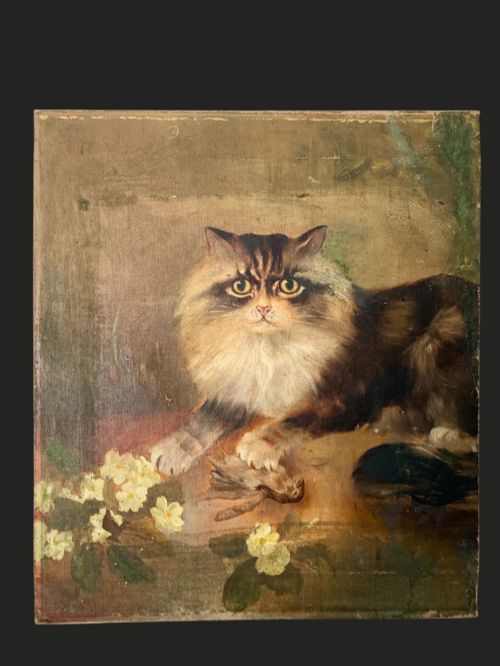
Vintage cat wall art spans centuries of creative output, bringing together domestic pets and wild felines through diverse media. Buyers searching for vintage cat wall art encounter everything from naive nineteenth-century oils to mid-century drawings and early twentieth-century prints.
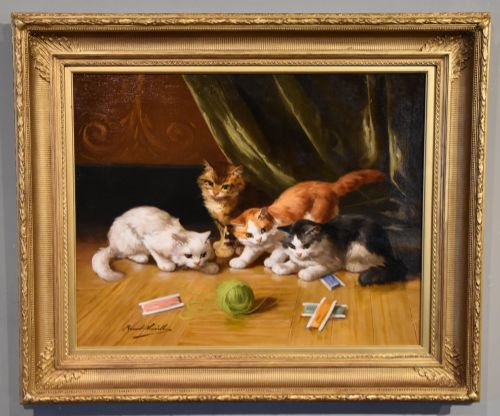
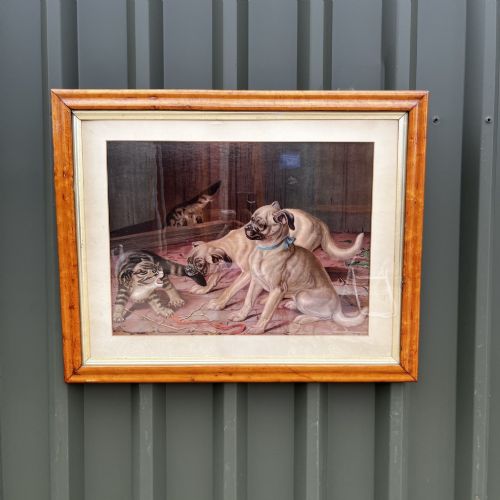
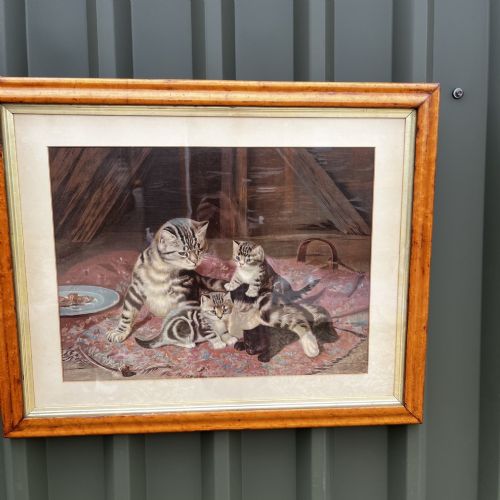
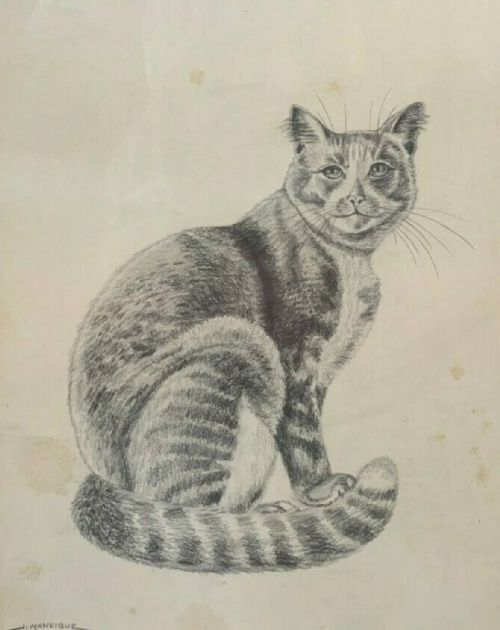
The selection on this page relies heavily on nineteenth-century works, Victorian pieces, and Edwardian illustrations. Framed prints, oil paintings, and pastel drawings form the primary objects available to collectors.
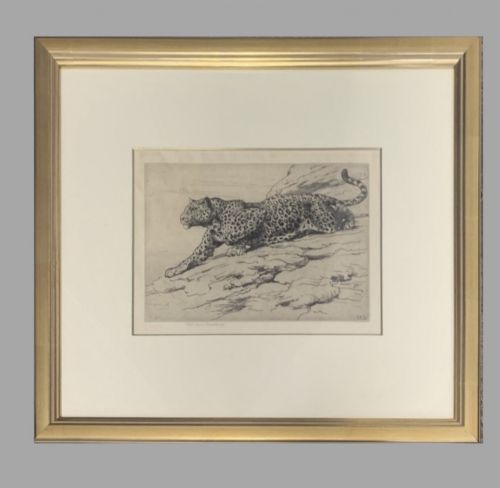
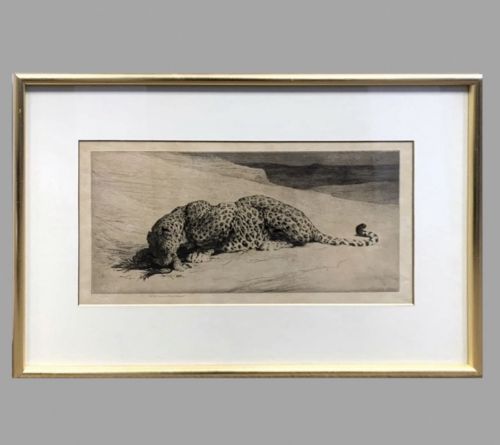
Subjects range from playful kittens and domestic groups to larger felines like leopards and lions. Works originate from various periods including the Edwardian era, the nineteen-thirties, and nineteen-fifties.
Materials and Techniques
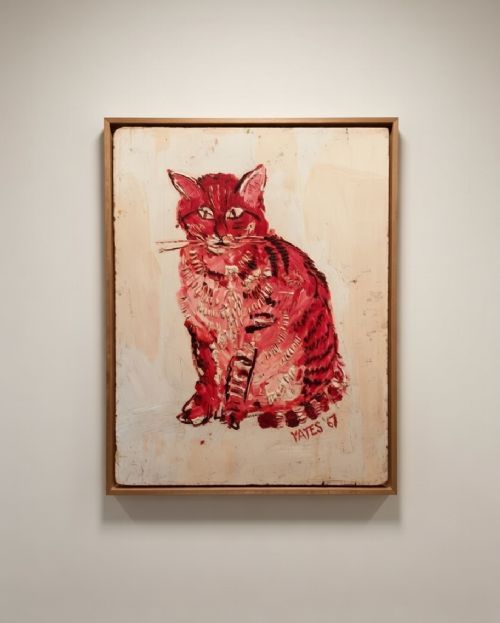
Artists utilised oil paint, pastel, and pencil on supports such as paper, canvas, board, and panel. Chromolithography enabled the reproduction of detailed multi-coloured animal scenes during the nineteenth century.
Framing often involves wood, gilt wood, and gold leaf finishes that complement the era of each piece. Etchings and engravings on paper required precise plate printing techniques managed by notable artists and printmakers.
Glass paintings present unique reverse-applied imagery, whilst oil paintings layer pigment to build texture in the depiction of fur and whiskers.
Listings feature works from the nineteenth century, nineteen-hundred, nineteen-tens, twenties, thirties, fifties, and sixties.
Distinctions in Quality
Quality rests upon the artist's ability to render feline anatomy and expression convincingly. Hand-signed etchings and limited edition proofs carry greater distinction than standard commercial prints.
The handling of medium dictates visual impact, from the delicate strokes of pastel drawings to the rich impasto of oil paintings on panel. Preservation of the original paper, canvas, or board preserves the integrity of the artwork.
Herbert Dicksee·Alfred Arthur Brunel de Neuville·Horatio Henry Couldrey·Louis Wain·Takabatake Kasho·J Manrique·Fred Yates·Agnes Augusta Tallboys·Francisco Jose Domingo y Marques·Albert Terry·Geza Vastagh·Bessie Bamber
The Vintage Cat Wall Art Glossary
- Chromolithography
- A planographic colour printing process used to produce multi-coloured pictorial works. It created vibrant reproductions of popular animal paintings during the nineteenth century.
- Etching
- A printmaking technique where lines are bitten into a metal plate with acid before being inked and pressed onto paper. Herbert Dicksee utilised this method for detailed feline studies.
- Naive School
- An art movement characterised by a childlike simplicity in perspective and proportion. Nineteenth-century naive school works depict cats with distinct charm and directness.
- Oil Pastel
- A painting and drawing medium formed from pigment mixed with a binder of oil and wax. Artists applied oil pastels directly to paper to achieve textured and immediate feline portraits.
- Glass Painting
- An artistic method where pigment is applied directly to the reverse side of a glass sheet. Japanese antique examples use this technique to create glossy, luminous imagery.
Vintage Cat Wall Art: Frequently Asked Questions
How do I date a cat painting?
Dating relies upon the framing materials, the type of paper or canvas, and the artistic style characteristic of specific decades. Victorian and Edwardian pieces often carry distinct aesthetic markers tied to their period.
Signatures, stamps, and biographical details of the artist also help narrow the creation date. Examining the backing and mounting techniques provides further clues regarding age.
What is a signed art proof?
A signed art proof is an impression pulled from a printing plate and personally approved by the artist. These carry signatures and limited edition markings that distinguish them from later or mass-produced copies.
Printmakers like Herbert Dicksee produced signed proofs of their etching work on paper. Collectors prize these items for their direct connection to the creator.
Are Louis Wain prints valuable?
Louis Wain prints capture the distinctive anthropomorphic cat illustrations created around nineteen-hundred and later decades. Their worth is influenced by condition, the specific printing method, and whether they are framed appropriately.
Pairs or re-framed editions from the early twentieth century appear frequently in collections. Demand remains steady among enthusiasts of feline illustration.
How should I display antique drawings?
Antique drawings on paper or pastel require protection from direct sunlight to prevent fading. Framing with acid-free mounts ensures the paper does not degrade over time.
Keeping them in rooms with stable humidity levels protects the medium from moisture damage. Glass fronts shield delicate pastel and pencil marks from accidental contact.