




19th Century Cat Portrait
A 19th century cat portrait captures feline character in oil on canvas, offering both domestic charm and fine Victorian observation for your walls.
19th Century Cat Portrait
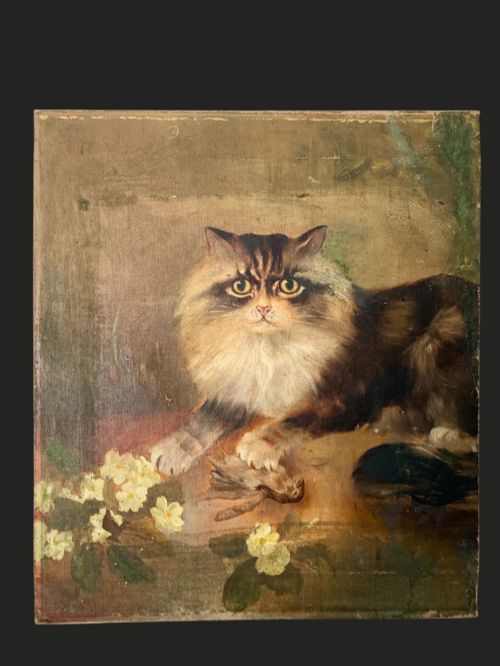
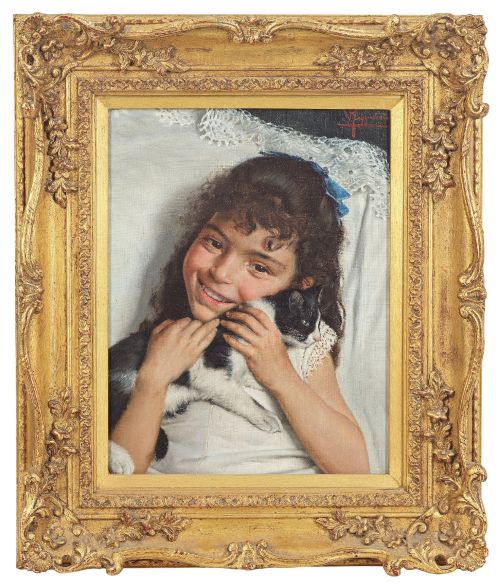
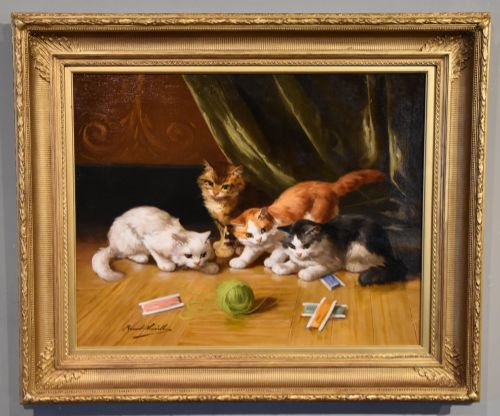
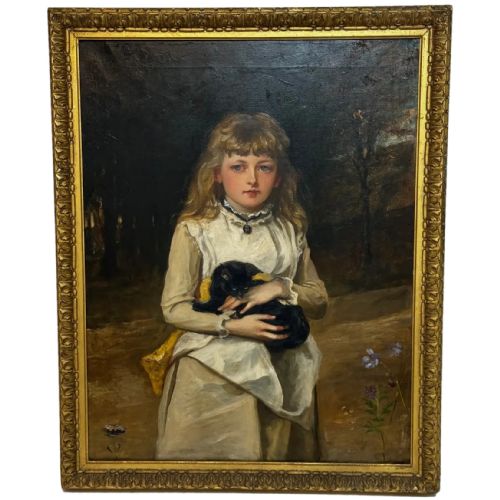
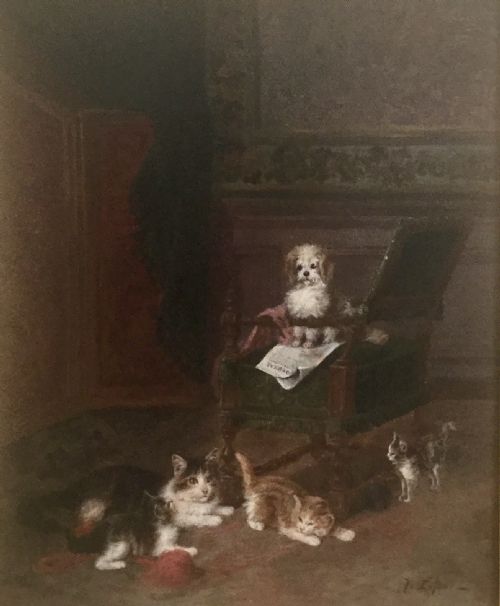
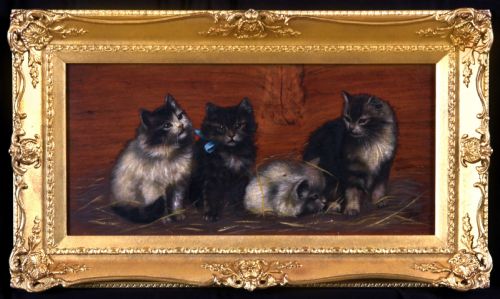
When you search for a 19th century cat portrait, you encounter oil paintings on canvas or board that capture individual felines with remarkable personality. These works range from naive school studies to detailed realism and Victorian animalier scenes.
The pieces on this page span the 19th century and early 20th century, frequently depicting playful kittens or singular prized cats. You will find both intimate character studies and broader genre scenes involving children and animals.
What varies in quality
Quality in these portraits rests upon the anatomical precision and expressive capability of the brushwork. Master painters render feline posture and light in fur with convincing depth, whereas naive works rely on charming simplicity.
The distinction also lies in the handling of the surrounding composition and canvas preservation. Superior examples show confident handling of both the subject and the interior or landscape setting.
Listings feature oil paint on canvas and board, paired with gesso and gilt wood frames across Victorian and 19th century periods.
Vittorio Reggianini·Alfred Arthur Brunel de Neuville·Charles Burton Barber·Agnes Augusta Talboys·Henry Weigall·Horatio Henry Couldery·Francisco Jose Domingo y Marques·Geza Vastagh·Jules Le Roy·Bessie Bamber·Thomas Sidney Cooper·John Leech
The 19th Century Cat Portrait Glossary
- Naive School
- A style of painting characterised by a childlike simplicity in perspective and proportion. It often appears in provincial nineteenth-century animal portraits.
- Animalier
- A nineteenth-century artistic genre focused on the realistic depiction of animals. It highlights the distinct physical characteristics and behaviours of various species.
- Oil on Canvas
- A traditional painting medium where pigments suspended in oil are applied to stretched fabric. This combination allows for rich colour blending and subtle tonal gradations.
- Gesso
- A plaster-like mixture applied to wooden frames as a smooth base for gilding. It forms the moulded ornamentation seen on period picture frames.
- Genre Painting
- A style depicting scenes from everyday life involving ordinary people and domestic animals. These works often tell a narrative story within an interior setting.
19th Century Cat Portrait: Frequently Asked Questions
How do I identify a naive school cat portrait?
Naive school paintings often display flat perspectives and simplified anatomical proportions while maintaining a direct, engaging charm.
Unlike formal academic works, they prioritise character over strict realism, resulting in delightfully unpretentious representations of pets.
What is the difference between an animalier painting and a standard portrait?
Animalier works specifically focus on the natural behaviour and physical form of animals as primary subjects.
Standard portraits in this category, by contrast, frequently integrate the cat into a domestic interior alongside human figures or personal possessions.
Are these paintings usually signed by the artist?
Many nineteenth-century works feature artist signatures, monograms, or attribution notes on the front or verso of the canvas.
Unsigned pieces also appear frequently, particularly within the naive and provincial traditions where makers remained anonymous.
How should I display a giltwood framed oil painting?
Keep the artwork away from direct sunlight and dramatic fluctuations in temperature or humidity to protect both the oil paint and the gesso frame.
Ensure the hanging wall is structurally sound to support the weight of the traditional wooden and plaster framing.