


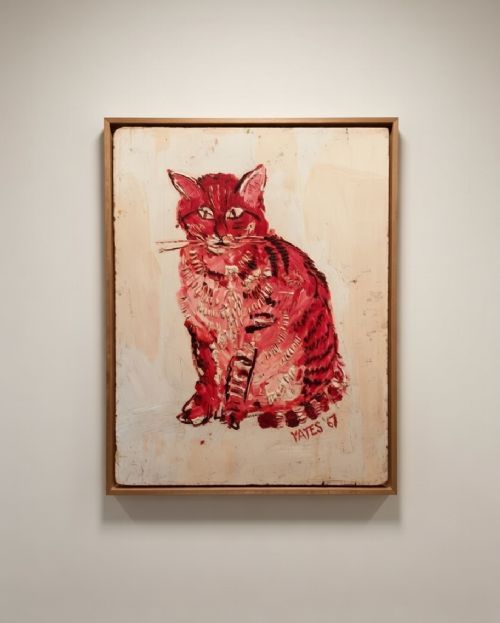

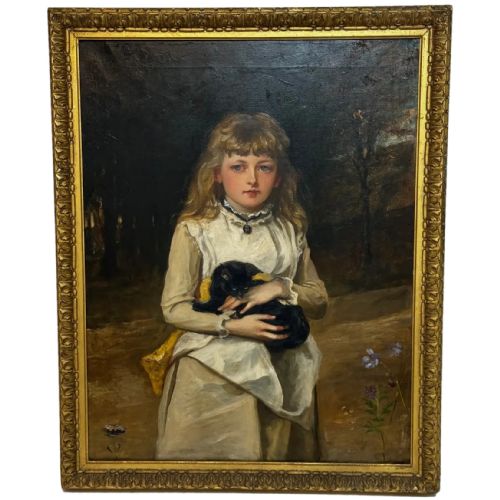
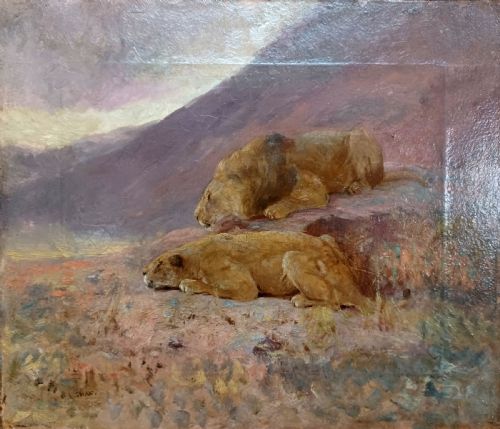


Antique Cat Oil Painting
An antique cat oil painting captures feline character through nineteenth-century brushwork, offering charm and domestic history to collectors.
Antique Cat Oil Painting
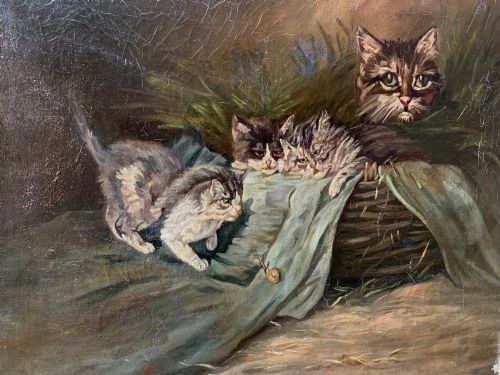
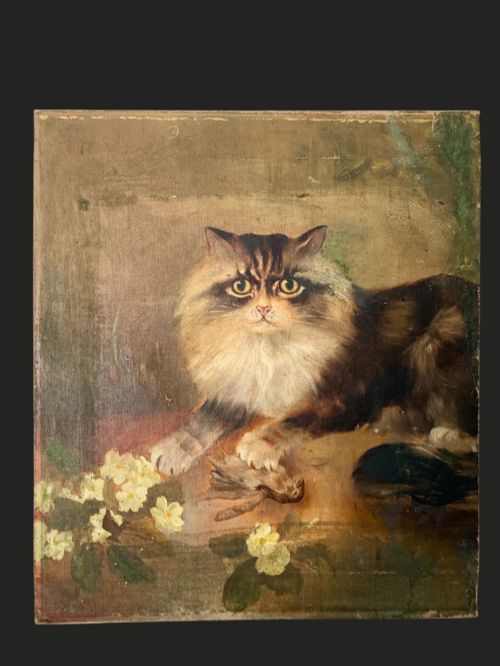
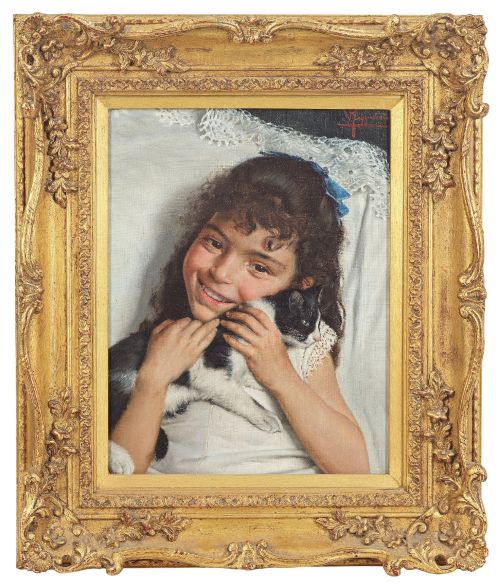
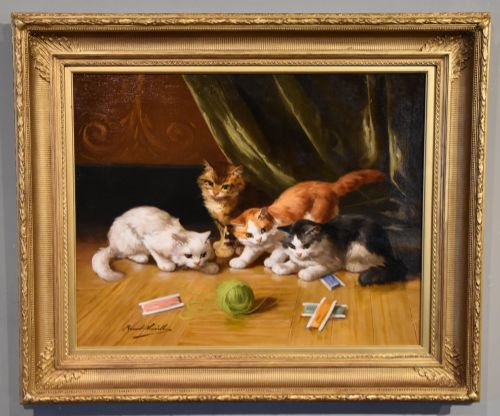
When searching for an antique cat oil painting, buyers encounter works ranging from naïve school studies to detailed Victorian animalier canvases. The subjects span solitary portraits, playful kittens, and elaborate domestic scenes featuring felines.
Nineteenth-century examples dominate the selections, alongside pieces stretching into the early twentieth century. Domestic interiors and playful groupings form the most common subjects on this page.
The works capture both pedigree pets and provincial mousers through the specific lens of historical schools. Artists employed oils to render soft fur textures and alert postures against darkened backgrounds or detailed interiors.
Materials and technique
Artists applied oil paint to woven canvas, wooden panels, board, or tin supports to achieve varying textures for feline coats. Grounds were often prepared with gesso before layering pigments to build depth in shadows and light.
Frames frequently utilise gilt wood or carved gesso ornamentation to complement the traditional oil medium. Brushwork shifts from tight realist precision in formal portraits to looser, expressive marks in provincial and naive studies.
Antique Cat Oil Painting Retail Price Guide 2026
Typical asking prices for cat oil painting among the pieces listed under this phrase on Sellingantiques today, from the lower quarter to the upper quarter. They describe what is for sale here now, not the wider market.
Several canvases record mischievous felines disrupting tea parties and stalking fish.
Assessing quality
Quality rests upon the artist's ability to render anatomical accuracy, texture, and expression within the feline subject. Superior examples capture light across whiskers and fur with precise brushwork rather than flat fills.
The composition and condition of the underlying support dictate overall merit. Original frames matching the period also elevate the standing of a canvas.
Vittorio Reggianini·Alfred Arthur Brunel de Neuville·Charles Burton Barber·Agnes Augusta Talboys·Henry Weigall·Cuthbert Edmund Swan·Horatio Henry Couldery·Francisco Jose Domingo y Marques·Geza Vastagh·Jules Le Roy·Bessie Bamber
The Antique Cat Oil Painting Glossary
- Animalier
- Art focusing on the realistic portrayal of animals. This French term gained prominence during the nineteenth century.
- Canvas
- Woven fabric stretched across a wooden frame to serve as a painting surface. Linen and cotton were standard supports for oils.
- Gesso
- A plaster-like mixture applied to panels or frames as a base for gilding or paint. It provides a smooth foundation for decorative elements.
- Naive school
- Art created by painters without formal academic training, often characterised by flat perspectives and direct charm. These works rely on honest observation rather than strict proportion.
Antique Cat Oil Painting: Frequently Asked Questions
How do I date a cat oil painting?
Dating relies on stretcher construction, canvas type, and the clothing styles of any human figures present in the composition. Framing methods and artist signatures also provide reliable chronological markers.
Nineteenth-century works often feature distinct framing styles and canvas stamps from period suppliers. Comparing brush techniques against known regional schools narrows down the decade of creation.
Are these paintings on canvas or panel?
Both mediums appear frequently across historical feline art. Canvases on wooden stretchers allow for larger compositions, while panels offer rigid stability for smaller studies.
Artists selected their supports based on scale and portability. Panels were favoured for intimate provincial works, whereas larger domestic scenes typically utilised woven canvas.
What is Victorian animalier art?
Animalier art is a genre dedicated to the realistic depiction of animals, which reached peak popularity during the Victorian era. Painters focused heavily on anatomical precision and animal psychology.
These works often anthropomorphise pets, placing kittens in domestic settings engaged in human-like activities such as tea parties. The style reflects nineteenth-century fascination with pet ownership and sentimentality.
How should I care for an old oil painting?
Keep paintings away from direct sunlight, high humidity, and rapid temperature fluctuations to protect the canvas and paint layers. Gentle dusting with a soft, dry brush maintains the surface.
Avoid using water or chemical cleaners on aged oil paint or giltwood frames. Professional conservators should handle any deep cleaning or canvas stabilisation.