




Antique Kitten Artwork
Antique kitten artwork brings domestic charm into a room through oil paintings, panels, and prints spanning the nineteenth century to the mid-twentieth century.
Antique Kitten Artwork
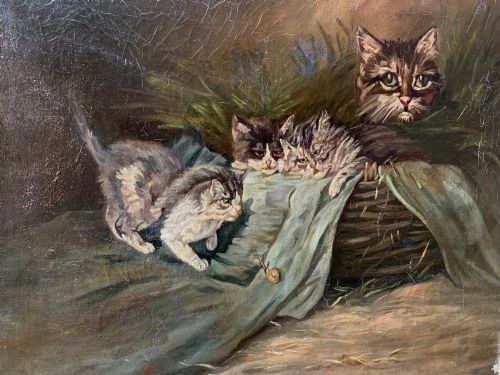
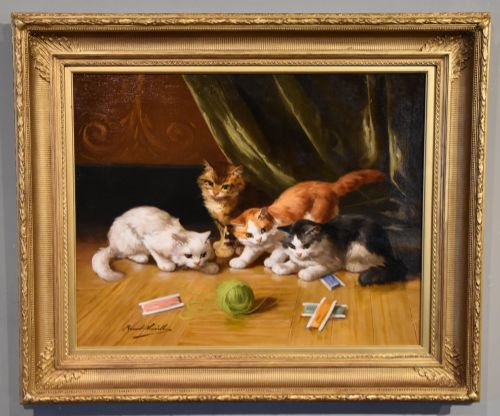
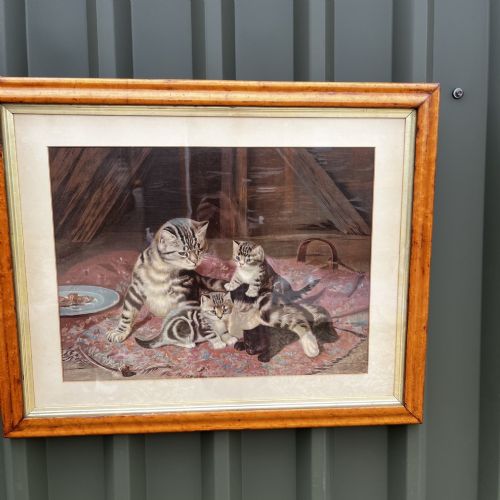
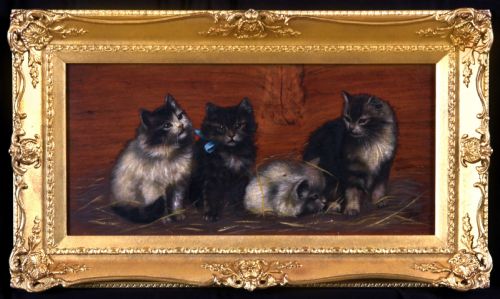
Antique kitten artwork encompasses oil paintings, oil on board, oil on panel, pastels, and chromolithographs depicting domestic cats and kittens. These pieces frequently capture playful scenes, feeding moments, and formal group portraits.
The selections on this page predominantly date from the nineteenth century, including Victorian works and pieces attributed to the nineteenth century French school, alongside later examples from nineteen hundred, nineteen ten, and nineteen fifty.
Buyers encounter framed artworks in traditional realism styles and Victorian genre compositions. Formats range from intimate studies of Persian kittens to larger narrative scenes involving mother cats and their litters.
Materials and methods
Artists utilise oil paint on canvas, board, and wood panel, building up rich textures to render soft fur and lively expressions. Many of these works employ traditional painting techniques associated with nineteenth century academic practice.
Framing materials commonly feature gilt wood, gesso, and gold leaf, often protected behind glass where paper prints or pastels are concerned. Chromolithography provides a detailed multi-coloured print method seen in domestic depictions from the period.
Assessing quality and execution
Quality rests in the handling of brushwork and the anatomical accuracy of the animals, distinguishing academic skill from standard decorative output. Master artists capture light and texture in the fur with considerable subtlety.
The integrity of the original framing, such as gilded gesso mouldings, contributes to the overall preservation and presentation of the piece.
Mark William Langlois·Alfred Arthur Brunel de Neuville·Horatio Henry Couldrey·Agnes Augusta Talboys·Henry Weigall·Bessie Bamber
The Antique Kitten Artwork Glossary
- Chromolithography
- A colour lithographic printing process used to produce multi-layered pictorial prints. This technique allows for faithful reproductions of detailed animal paintings.
- Oil on Panel
- A painting executed on a flat wooden support rather than stretched canvas. This rigid base was favoured for smaller, detailed cabinet paintings.
- Victorian Genre
- A style of painting focusing on scenes of everyday domestic life during the reign of Queen Victoria. These works frequently feature household pets in narrative settings.
- Gilt Wood
- Timber decorated with a thin layer of gold leaf or metallic powder. It forms the decorative surface of traditional picture frames.
Antique Kitten Artwork: Frequently Asked Questions
How do I date antique kitten artwork?
Dating relies on stylistic markers, framing materials, and support mediums such as wooden panels or early canvas. Nineteenth-century pieces often display traditional realism or Victorian genre characteristics.
Secondary clues include artist signatures, biographical records, and labels affixed to the reverse of the frame or stretcher.
What is the difference between oil on canvas and oil on panel?
Canvas provides a woven textile support that requires stretching over a wooden frame, typical of larger nineteenth-century compositions. Panels offer a rigid wooden surface often used for smaller, intimate animal studies.
Both mediums utilise oil paint, but panel paintings frequently exhibit a smoother ground and tighter brushwork control.
Where should I hang framed pastel drawings?
Pastels consist of dry pigment powder and lack the protective varnish of oil paintings. They require placement away from direct sunlight to prevent fading.
Glazing with glass is essential to protect the delicate chalk surface from moisture and physical disturbance in domestic spaces.
What characterises Victorian genre animal painting?
Victorian genre painting depicts animals participating in human-like activities or domestic interactions, such as tea parties or feeding times. These compositions emphasise narrative charm and sentimental appeal.
Artists working in this mode combined strict academic draughtsmanship with accessible, popular subject matter.