
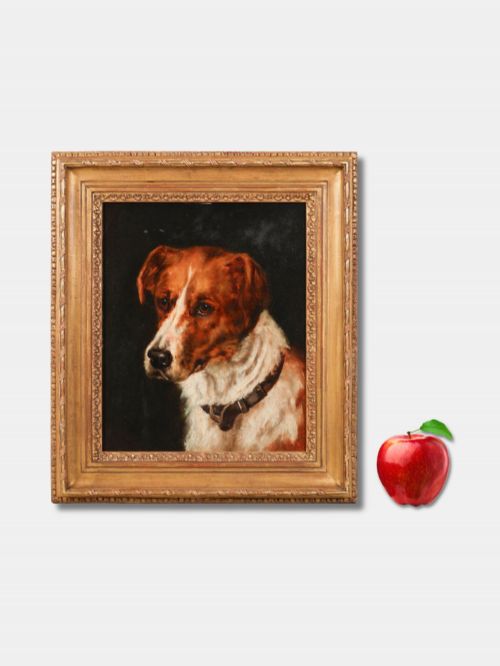


19th Century Pet Portrait
A 19th century pet portrait captures beloved animals in oil, canvas, and needlework, offering a charming glimpse into historical domestic life.
19th Century Pet Portrait
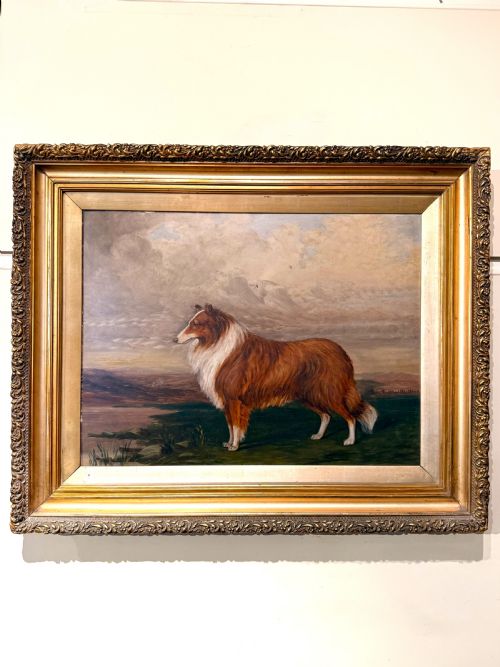
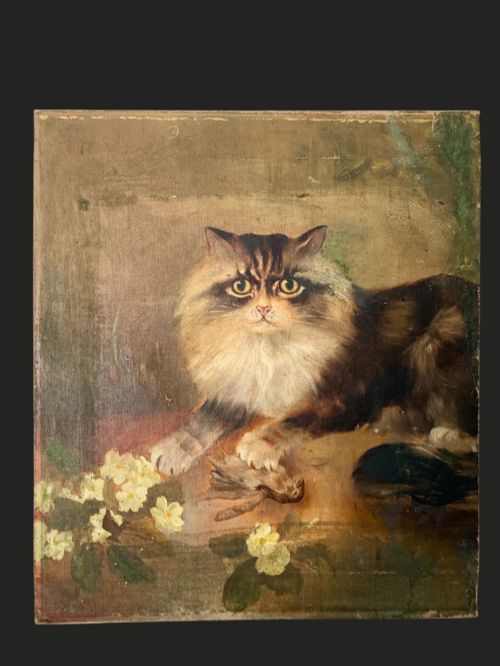
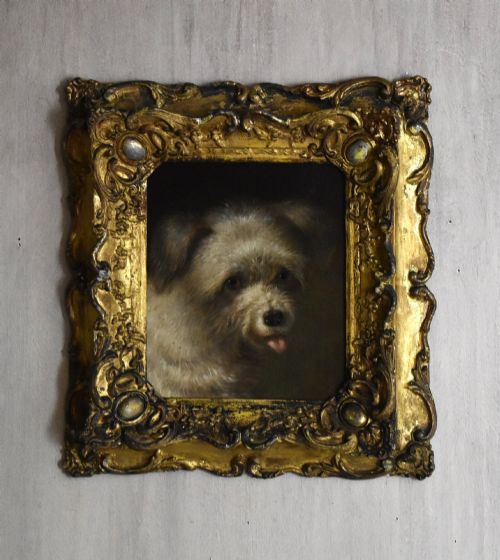
When a buyer searches for a 19th century pet portrait, they encounter depictions of dogs, cats, rabbits, and other household animals created during the Victorian and Regency eras. These works range from naive school paintings to fine art canvases, showing cherished animals either alone or in interiors.
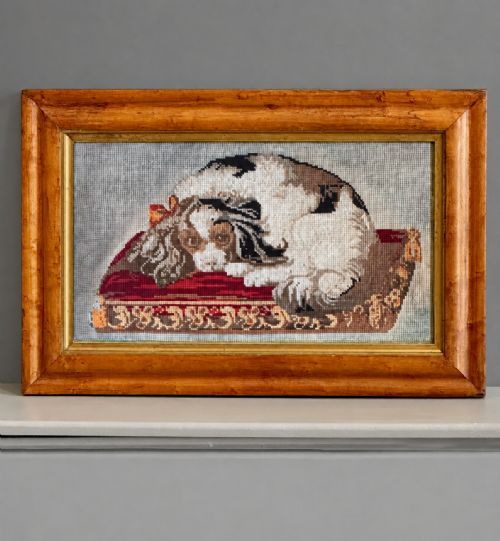
The most common examples on this page are oil paintings on canvas or board, depicting individual dogs such as spaniels, terriers, and greyhounds. Buyers also find framed needlework like Berlin work, alongside occasional watercolour paintings of pugs.
These portraits reflect the period's deep affection for domestic animals, recording prized racing champions alongside household pets. Artists from the 19th century captured these subjects with varying degrees of academic realism and charming folk simplicity.
How they were made
Painters applied oil paint onto stretched canvas, prepared wooden boards, or paper surfaces, often finishing the work with protective varnish. Frames frequently incorporated carved wood, gesso, and gold leaf, whilst textile pieces utilised wool needlework mounted in burr maple frames.
Makers built up compositions using layered oil colours to render the texture of animal fur and the light within domestic interiors. Guilders and framers encased these artworks in period timber mouldings designed to complement the domestic setting.
19th Century Pet Portrait Retail Price Guide 2026
Typical asking prices for 19th century pet portrait among the pieces listed under this phrase on Sellingantiques today, from the lower quarter to the upper quarter. They describe what is for sale here now, not the wider market.
Lord Methuen's favourite dogs immortalised in paint ensure that demanding Victorian pets live on forever.
What varies in quality
The distinction between top tier works and simpler pieces rests upon the artist's anatomical precision and ability to render the character of the animal. Finer examples display accomplished brushwork in the depiction of fur, expression, and interior lighting, whereas naive pieces rely on charming simplification.
Framing also influences the character of a piece, with original burr maple or gilt gesso frames adding historical integrity. The depth of provenance, connecting a painted dog to a named artist or historical owner, elevates the significance of the portrait.
Martin Theodore Ward·William Barraud·Agnes Augusta Talboys·John Henry Dell·Valentine Thomas Garland·Francisco Jose Domingo y Marques·Samuel John Carter·Jules Le Roy
The 19th Century Pet Portrait Glossary
- Berlin work
- A type of coloured wool needlework charted on squared paper, popular during the Victorian period for creating detailed animal pictures. This technique allowed makers to produce intricate depictions of spaniels and other pets.
- Oil on board
- A painting execution where oil pigments are applied to a rigid wooden or composition panel rather than stretched canvas. This medium appears frequently in smaller nineteenth century animal studies.
- Naive school
- An aesthetic characterised by a childlike perspective and flat perspective, lacking formal academic training. These works possess a direct and honest charm.
- Gesso
- A plaster mixture applied to wood frames as a base for moulding and gilding. Artisans shaped this material into decorative relief patterns before applying gold leaf.
- Regency
- The period in British history preceding the Victorian era, spanning the early nineteenth century. Works from this time display distinct classical influences.
19th Century Pet Portrait: Frequently Asked Questions
What animals appear in these portraits?
Paintings show various domestic creatures, with dogs forming the largest group. Spaniels, terriers, greyhounds, and pugs are common subjects.
Kittens and rabbits also appear in domestic interior settings, painted by artists recording cherished household animals.
Are these works painted on canvas?
Many examples utilise oil paint on canvas stretched over wooden frames. Other pieces are executed on wooden or prepared boards.
Some domestic animal depictions take the form of watercolours on paper or wool needlework textiles.
How do I date a pet portrait?
Dates rely on artist biographical records, costume details in the background, or inscriptions on the reverse of the canvas or board. Frame styles and painting techniques also help indicate whether a piece belongs to the Regency or Victorian era.
Needlework pieces often display stylistic markers specific to mid nineteenth century domestic craft.
Where should I hang a pet portrait?
These works suit traditional living rooms, studies, or hallways where their domestic subject matter complements period interiors. Placing them away from direct sunlight protects the oil pigments and paper works.
Matching the timber tone of the original frame to existing furniture helps integrate the piece into a room.