


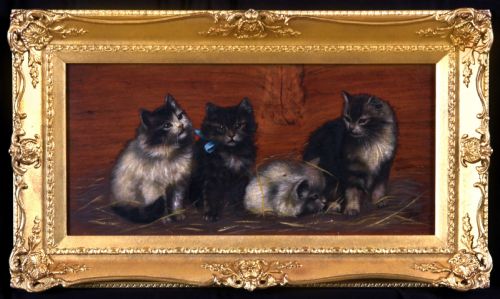

Oil Painting of Kittens
An oil painting of kittens captures domestic play across canvas and panel, offering the enduring charm of nineteenth-century animal art for your home.
Oil Painting of Kittens
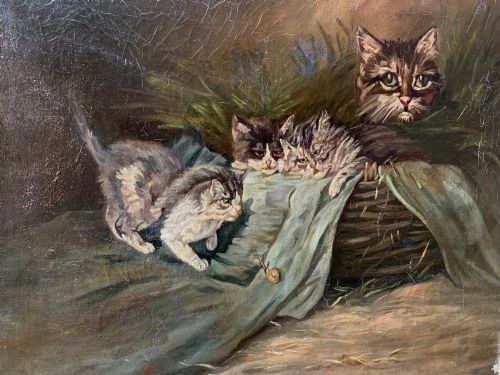
An oil painting of kittens draws the eye through playful domestic scenes rendered in traditional realist and genre styles. Buyers seeking an oil painting of kittens commonly encounter nineteenth-century works alongside pieces from the Victorian era and early twentieth-century painters.
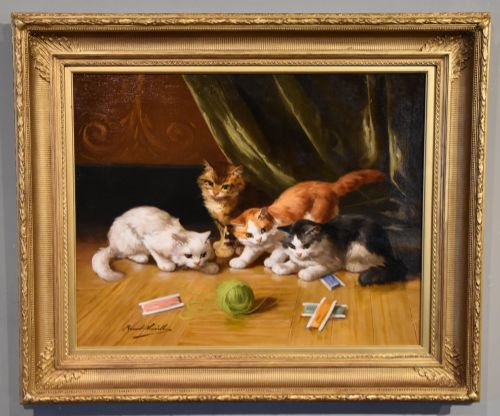
The subjects range from solitary pets to lively groups at play, tea parties, or feeding scenes executed on canvas, board, and panel. These works capture the intimate texture of fur and the energetic posture of young cats through accomplished brushwork.
Originating largely from British and French studios, these paintings span periods from the Regency era through to mid-century examples. The selection balances narrative charm with accomplished academic training in animal portraiture.
Materials and technique
Artists painted these subjects using oil paint applied to prepared canvas, wood panel, or board substrates. The medium allowed for subtle blending to render soft fur textures and warm lighting.
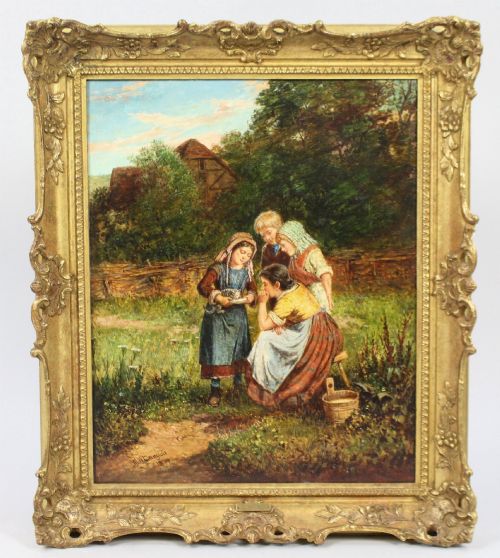
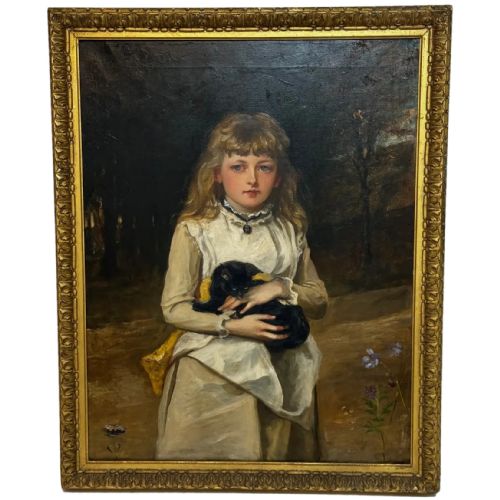
Period frames constructed from gilt wood and gesso often house these works, employing moulded ornament to complement the interior subject matter. The combination of oil pigments and gilded surrounds defines the physical presence of these pieces.
Recorded periods span from the Regency era through Victorian times to the mid-twentieth century.
Judging quality in animal art
Quality rests upon the artist's ability to render anatomical accuracy and lively expression without descending into sentimentality. Masterful brushwork distinguishes works by named nineteenth-century specialists from anonymous studio output.
The preservation of the paint surface and the integrity of the original gilt wood or gesso frame contribute significantly to the standing of a piece. Finer examples display confident draughtsmanship in the depiction of movement and light.
Mark William Langlois·Alfred Arthur Brunel de Neuville·Agnes Augusta Talboys·Henry Weigall·Francisco Jose Domingo y Marques·Bessie Bamber
The Oil Painting of Kittens Glossary
- Genre
- Genre painting depicts scenes from everyday life, often featuring domestic animals or human figures in narrative settings. These works focus on relatable, charming moments rather than grand historical events.
- Panel
- Panel refers to a flat piece of wood used as a rigid support for oil painting instead of stretched canvas. Artists favoured panels for smaller works requiring a stable, smooth surface.
- Gesso
- Gesso is a traditional primer mix of binder and chalk applied to wood or canvas to prepare it for painting. It also forms the carved relief details on gilded picture frames.
- Realism
- Realism is an artistic movement focused on depicting subjects truthfully and without theatrical idealisation. In animal painting, this approach prioritises natural anatomy and behaviour over decoration.
Oil Painting of Kittens: Frequently Asked Questions
How do I date an oil painting of kittens?
Dating relies upon stylistic markers, costume hints in surrounding details, and the construction of the canvas or panel. Examining the stretcher frames and backing materials also provides clues to the era of creation.
Signatures and biographical dates of known animal painters further help narrow down the decade of production. Archival records and framing methods complete the chronological picture.
Where should I hang a kitten oil painting?
These works suit intimate spaces such as studies, sitting rooms, or hallways where their domestic subject matter can be appreciated up close. Position them away from direct sunlight and strong heat sources to protect the oil pigments and canvas.
Pairing the piece with traditional interior decor allows the gilt wood frame to catch natural room light. Lower eye-level placement works well for smaller panel formats.
What is Victorian genre painting?
Victorian genre painting tells a visual story about daily life, often incorporating children, pets, and domestic interiors. Artists used these relatable scenarios to evoke specific emotions or gentle amusement in the viewer.
In kitten paintings, this style transforms simple animal antics into charming narratives of play and nurture. The approach reflects nineteenth-century values surrounding home and hearth.
How do I care for antique oil paintings?
Maintain a stable room temperature and moderate humidity to prevent the canvas from slackening or the wood panel from warping. Dust the surface gently with a soft, dry brush and avoid chemical cleaning agents.
Professional conservators should handle any structural repairs or surface cleaning to preserve the original paint layers. Keeping the painting out of direct ultraviolet light prevents fading.