




Victorian Genre Animal Painting
These Victorian genre animal painting works capture domestic and farmyard scenes with charm, offering collectors delightful windows into nineteenth-century domesticity and rural life.
Victorian Genre Animal Painting
A Victorian genre animal painting depicts domestic pets, farmyard livestock and working animals alongside human figures in narrative or cottage settings. These works merge portraiture of animals with everyday genre scenes, capturing moments such as kittens at play, feeding time in the farmyard, or ponies and foals in rustic enclosures.
The pieces on this page span the nineteenth century, including works from British and French schools. You will encounter oils on canvas and watercolours on paper, often set within gilt wood and gesso frames decorated with gold leaf.
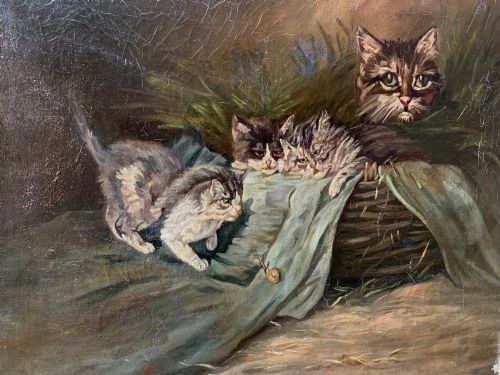
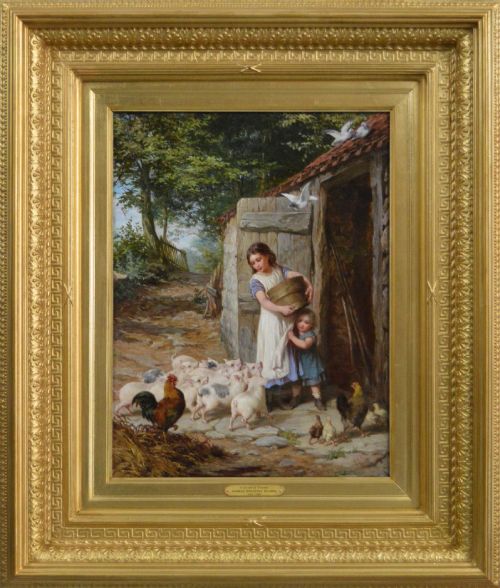
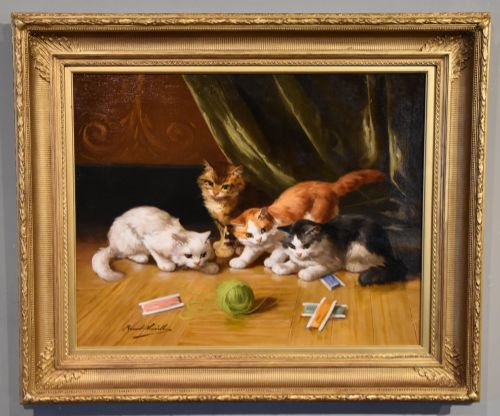
Subjects range from playful Persian kittens and mischievous cats with snails to bustling farmyards filled with horses, pigs, goats, poultry and cattle. Human figures frequently share the composition with the animals, creating affectionate narratives of cottage life.
Materials and methods
Artists painted these works primarily using oil on canvas or watercolour on paper, applying pigments to capture the soft textures of fur, feathers and rustic interiors. Canvas supports were stretched over wooden frames, whilst watercolours were worked on paper.
One persistent nineteenth-century artistic obsession captured here is the tea party attended exclusively by six Persian kittens.
Assessing quality and execution
Quality in these works rests upon the artist's ability to render animal anatomy and expression with convincing detail, particularly in complex multi-animal compositions. Weaker examples can feel stiff in arrangement, whereas superior paintings display dynamic interaction between the animals and their human handlers.
The handling of light and narrative atmosphere also distinguishes the range, with accomplished painters using subtle tonal shifts within cottage interiors and farmyards. Frame preservation and the integrity of the original canvas or paper further influence the standing of an individual piece.
George Augustus Holmes·Alfred Arthur Brunel de Neuville·Helena Maguire·Agnes Augusta Tallboys·John Frederick Herring Jnr·Jules Le Roy·Charles Hunt Jnr
The Victorian Genre Animal Painting Glossary
- Genre painting
- Artwork depicting scenes from everyday life, typically involving ordinary people engaged in common activities. In this context, animals frequently share the focus with human subjects.
- Gesso
- A plaster-like mixture applied to wooden frames as a base for gilding. It allowed craftsmen to mould intricate decorative details before applying gold leaf.
- Gold Leaf
- Extremely thin sheets of beaten gold used to gild picture frames. It provides a bright, reflective border that complements nineteenth-century oil paintings and watercolours.
- Oil on Canvas
- A traditional painting medium utilising pigments suspended in drying oils applied to stretched fabric. It allows for rich colour blending and textured brushwork.
- Watercolour
- A painting method where water-soluble pigments are applied to paper. This medium produces translucent washes and delicate details, frequently seen in nineteenth-century animal studies.
Victorian Genre Animal Painting: Frequently Asked Questions
What defines a Victorian genre animal painting?
These artworks depict domestic pets and farmyard animals within everyday narratives, often interacting with human figures in cottage or rural settings.
They combine naturalistic animal observation with storytelling elements popular during the nineteenth century.
How should I care for these watercolours and oils?
Keep works on paper away from direct sunlight to prevent watercolour pigments from fading over time. Maintain stable indoor humidity levels to protect both canvas supports and the gesso on antique frames.
Dust gilt frames gently with a soft, dry brush without using liquid cleaners.
Are these paintings supplied with original frames?
Many nineteenth-century works retain their period frames made of wood and gesso, often finished with gold leaf. These frames form an integral part of the piece's historical presentation.
Check individual descriptions to confirm whether a frame is period-original.
What subjects are most common in these works?
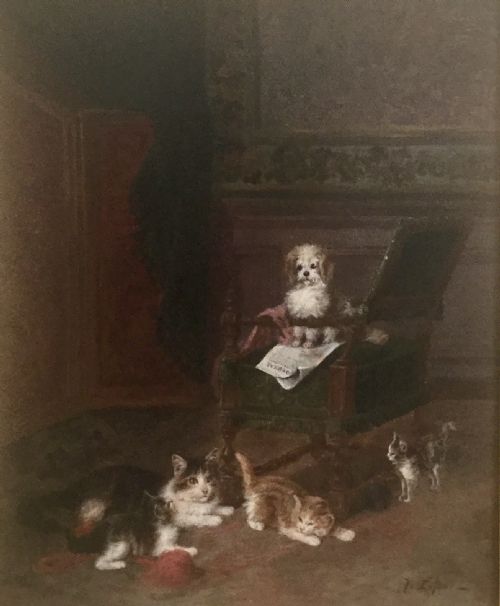
Kittens at play, farmyards filled with livestock, and domestic interiors featuring ponies or dogs appear frequently. Artists often placed animals in affectionate or humorous situations.
Scenes range from solitary animal studies to complex group compositions involving several species.