




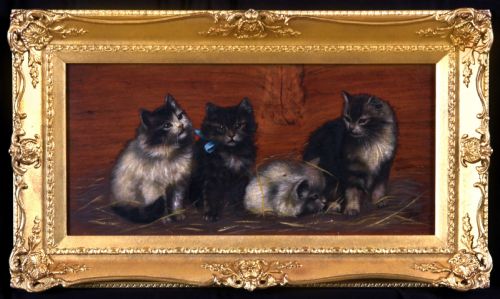

Gold Frame Cat Artwork
Gold frame cat artwork brings together oil paintings, etchings, and prints spanning the Victorian era through the mid-century.
Gold Frame Cat Artwork
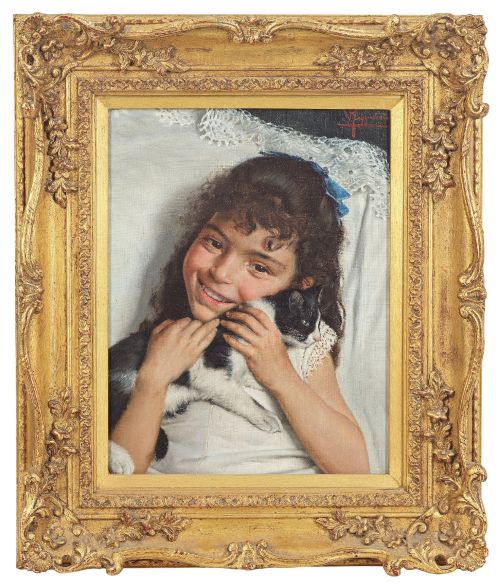
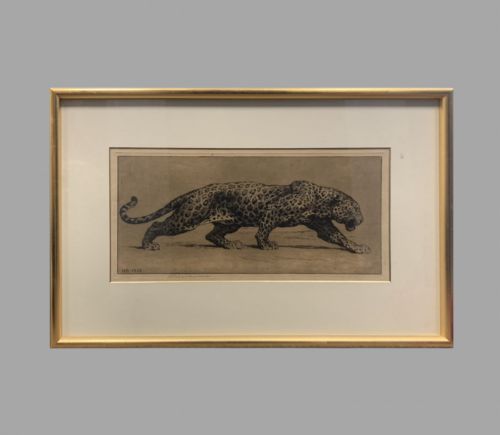
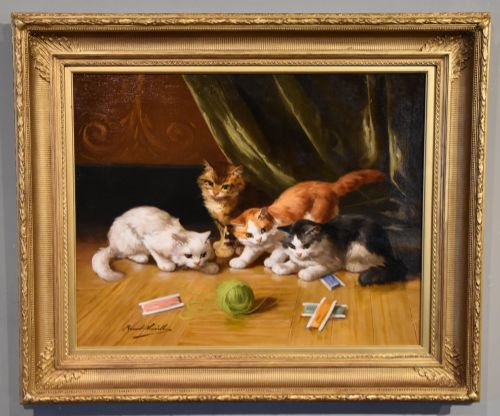
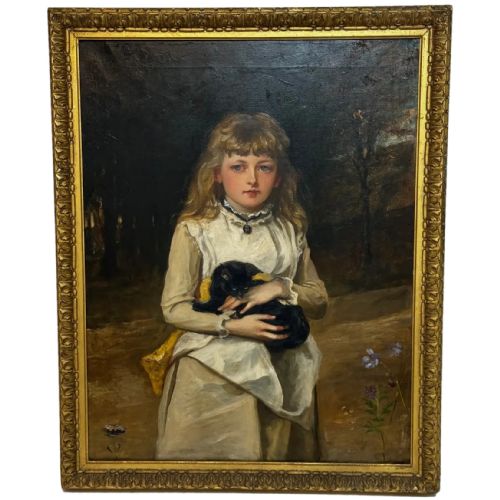
When you search for gold frame cat artwork, you encounter oil paintings, oil pastels, etchings, and framed prints depicting domestic felines and kittens, often created by named Victorian and early twentieth-century artists. These pieces span the nineteenth century, the Victorian period, and decades into the twentieth century including 1920, 1930, and 1950. The subjects range from individual portraits of stylish cats to playful groups of kittens and genre scenes featuring children with their pets.
The framing itself forms an integral part of the piece, utilising gilt wood, gesso, and giltwood surrounds that complement the traditional realism and Victorian animalier styles of the artwork within. You will find works originating from provincial English schools and continental European makers, rendered in media such as oil on canvas, oil on panel, and paper under glass.
Materials and construction
The works utilise oil paint on canvas or panel, along with paper for etchings and pastels, mounted under glass where appropriate. Canvases are stretched over wood supports and housed in decorative frames.
Frames are constructed from wood and gesso, finished with gilt or giltwood surfaces that provide the characteristic metallic sheen seen across the selection.
Cats hold tea parties and pose as stylish individuals while kittens play, proving Victorian felines had busier social lives than their owners.
Quality factors in feline art
Quality separates through the precision of the brushwork or etching technique, particularly in the rendering of animal fur, expression, and anatomical realism. Master painters capture individual textures and lively postures with greater nuance than provincial or anonymous hands.
The condition and period authenticity of the giltwood or gesso frame also influence the overall standard, alongside the presence of artist signatures or documented attributions to established painters.
Vittorio Reggianini·Herbert Dicksee·Alfred Arthur Brunel de Neuville·Charles Burton Barber·Agnes Augusta Talboys·Henry Weigall·Horatio Henry Couldery·Louis Wain·Bessie Bamber
The Gold Frame Cat Artwork Glossary
- Giltwood
- Wood that has been covered with a thin layer of gold leaf or gold paint. This finish defines the characteristic metallic borders enclosing the paintings and prints.
- Gesso
- A plaster-like mixture applied to wood frames to create a smooth surface for moulding decorative details. It underlies the gilt finish on many period frames.
- Etching
- A printmaking technique where lines are incised into a metal plate with acid before being inked and pressed onto paper. Herbert Dicksee utilised this method for his animal subjects.
- Animalier
- A nineteenth-century artistic genre focusing on the realistic portrayal of animals. Works in this style capture cats and kittens in naturalistic poses.
- Genre painting
- A style depicting scenes from everyday life, often featuring domestic animals alongside children or figures in interior settings.
Gold Frame Cat Artwork: Frequently Asked Questions
How do I date a cat painting?
Dating relies on stylistic markers, framing materials, and artist attribution records from periods such as the Victorian era or the early twentieth century. Canvas types and stretcher construction also provide clues to the age of oil paintings.
Pated inscriptions, signatures, and biographical dates of painters help narrow the decade of creation, spanning from the mid-nineteenth century to the nineteen-fifties.
What is Victorian animalier art?
Victorian animalier art focuses on the detailed and realistic representation of animals, capturing their forms and behaviours with anatomical accuracy. Artists in this tradition observed cats and kittens closely to portray their textures and postures.
These pieces often combine traditional realism with sentimental or narrative elements, reflecting nineteenth-century domestic values.
Are these frames original to the art?
Frames vary between period originals made of giltwood and gesso, and later re-framings applied to prints or paintings over time. The materials match the traditional methods of the nineteenth and early twentieth centuries.
Examining the corner joints and the wear on the gilt surface helps determine whether a frame has been paired with the artwork recently or historically.
How should I display gold frame cat artwork?
Display these works away from direct sunlight and excessive moisture to protect oil paints, paper, and giltwood frames. Stable indoor temperatures preserve the canvas and the delicate gesso details on the borders.
Hanging them at eye level in traditional or eclectic interiors allows the detail of the brushwork and the metallic finish of the frame to be appreciated properly.