





Canvas Cat Portrait Painting
When you handle a canvas cat portrait painting, you hold a tangible piece of domestic history captured in oils.
Canvas Cat Portrait Painting
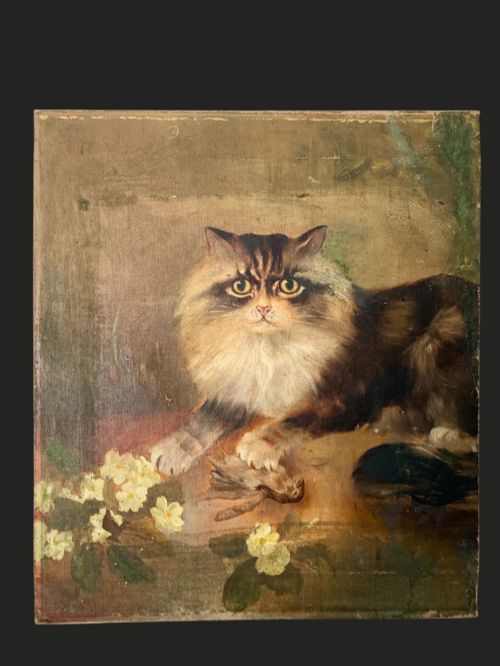
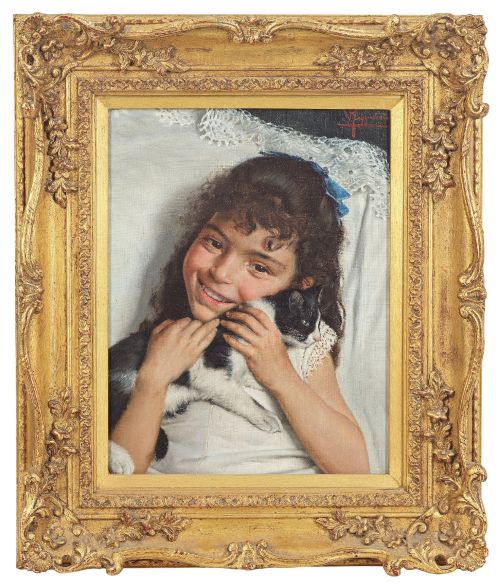
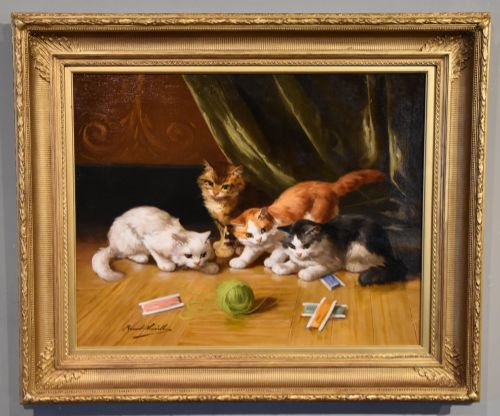
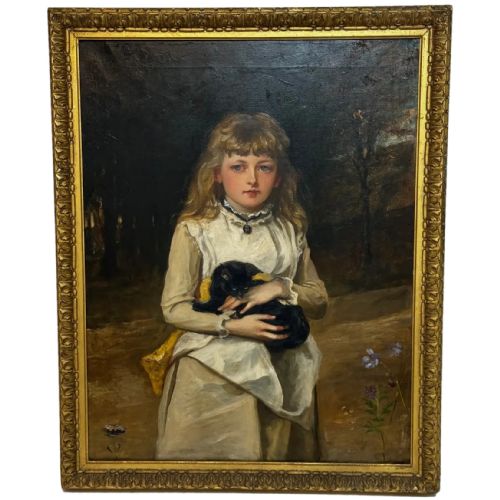
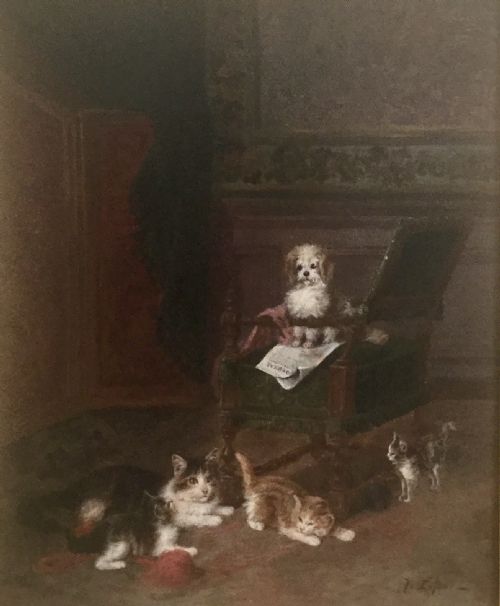
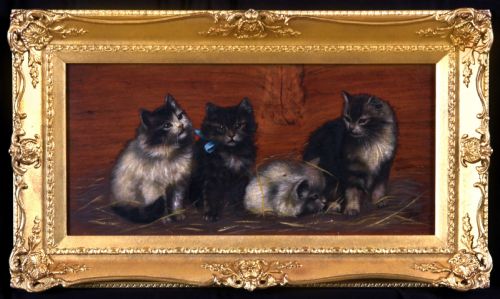
A canvas cat portrait painting depicts felines ranging from single naive studies to elaborate Victorian groups at play. You meet nineteenth-century examples most frequently, often rendered in oil on canvas.
The subjects extend from individual prized pets to playful kittens and elaborate compositional scenes by named artists. These works reflect both provincial charm and academic skill across the Victorian and modern periods.
How they were made
Painters applied oil paint directly to woven canvas supports, sometimes mounted onto gesso or gilt wood frames. The physical fabric carries the texture of the brushwork and the preparation layers applied by the maker.
Artists utilised traditional pigments bound in oil to build depth in fur, eyes, and surrounding domestic interiors. Many surviving works retain their original giltwood or gesso framing, which completes the structural object.
Cats in these paintings frequently supervise tea parties, chase fish, and share canvas space with lions and peacocks.
What varies in quality
Quality rests in the handling of anatomical proportion, the rendering of light upon fur, and the expressiveness of the animal's gaze. A finer hand captures personality and texture with loose, confident strokes rather than stiff outlines.
The integrity of the canvas support and the preservation of the original paint surface dictate the standing of a piece. Works retaining undisturbed oil layers and period framing command greater regard from collectors.
Vittorio Reggianini·Alfred Arthur Brunel de Neuville·Agnes Augusta Talboys·Henry Weigall·Horatio Henry Couldery·Francisco Jose Domingo y Marques·Raymond Arthur Roadnight·Geza Vastagh·Cuthbert Edmund Swan·Jules Le Roy·Bessie Bamber·Michael Dahl·Sir Anthony Van Dyck·Francois de Troy·John Michael Wright
The Canvas Cat Portrait Painting Glossary
- Canvas
- A heavy woven fabric used as a surface for oil painting. It provides the flexible yet durable foundation upon which the artist works.
- Gesso
- A plaster-like mixture applied to frames or canvases to prepare the surface for painting or gilding. It creates a smooth, absorbent base for subsequent layers.
- Gilt wood
- Wood decorated with a thin layer of gold leaf or gold paint. It forms the ornate borders common to period picture frames.
- Naive school
- An art movement characterised by a childlike simplicity in perspective and proportion. These works rely on direct observation rather than academic rules.
- Animalier
- A style focusing on the realistic depiction of animals. It gained significant popularity during the nineteenth century.
Canvas Cat Portrait Painting: Frequently Asked Questions
How do I date a canvas cat portrait painting?
Examine the preparation of the canvas, the style of the giltwood frame, and the painting technique. Nineteenth-century works often display specific handling of animal subjects that differ from later periods.
Signatures, stamps, or labels on the reverse of the canvas or stretcher frames provide additional clues. Comparing the depiction to documented works by known schools helps narrow the timeframe.
Are these paintings executed in oil?
The vast majority utilise oil paint applied to a stretched canvas support. This medium allowed artists to achieve rich tonal gradations in feline fur.
Some pieces feature canvases laid onto board for additional structural stability. The presence of gesso and gilt wood framing further supports traditional construction methods.
Where should I hang a canvas cat portrait?
Select a wall away from direct sunlight and excessive moisture to protect the oil paint and canvas. Stable indoor temperatures prevent the fabric and wooden stretcher from warping.
Pairing the work with period furniture or traditional wall colours enhances its visual presence. Ensure the hanging hardware securely supports the weight of the framed piece.
What distinguishes naive school cat paintings?
Naive works exhibit a flat perspective and charmingly direct proportions rather than strict academic realism. They reflect provincial observation rather than formal academy training.
This style emphasises character and immediate appeal over anatomical precision. Collectors value them for their distinct sincerity and regional British or European origins.