
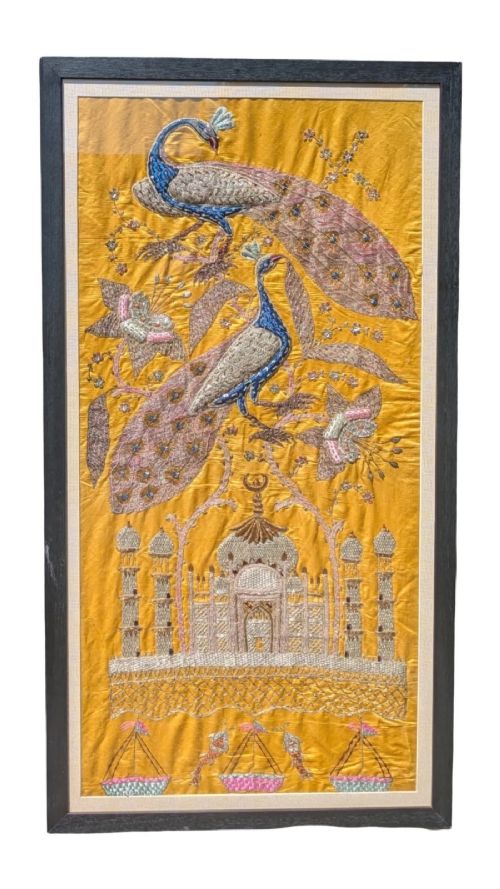
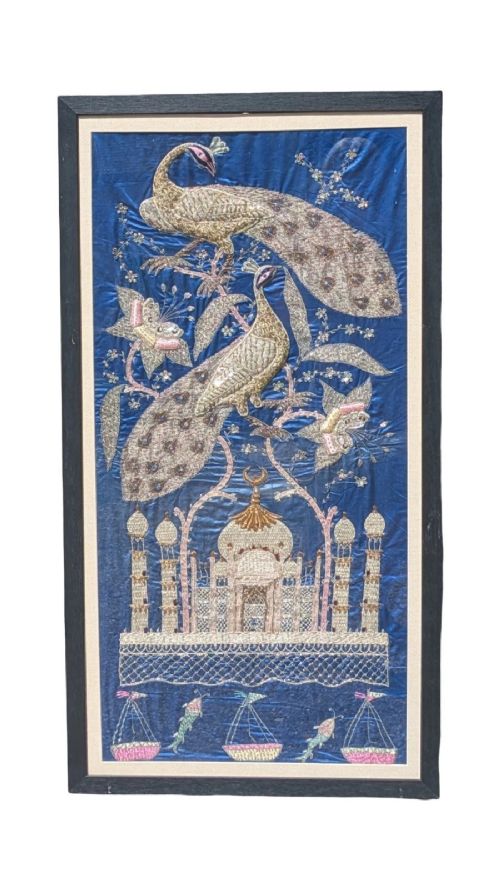

Framed Textile Panel
A framed antique textile panel brings centuries of handwork indoors, offering textured history in wood and glass.
Framed Textile Panel
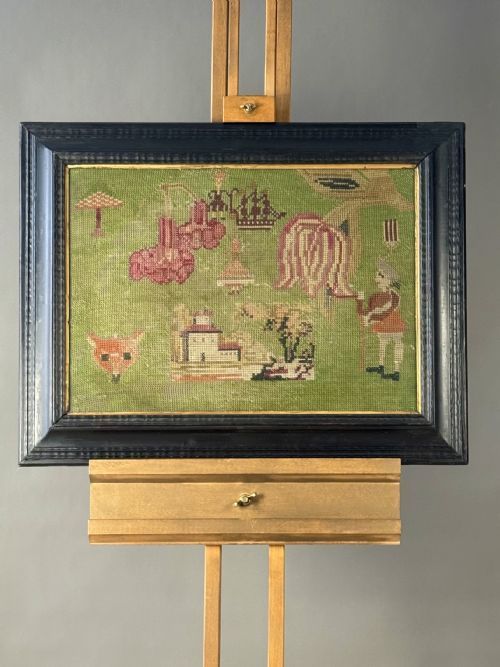
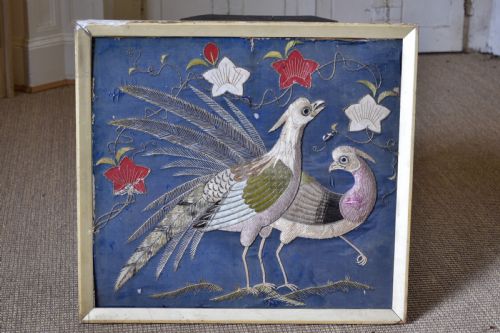
A framed antique textile panel gathers centuries of needlework, tapestry, and embroidery preserved behind glass within timber frames. These wall hangings originate from diverse traditions spanning 17th-century European workshops to 20th-century Asian ateliers.
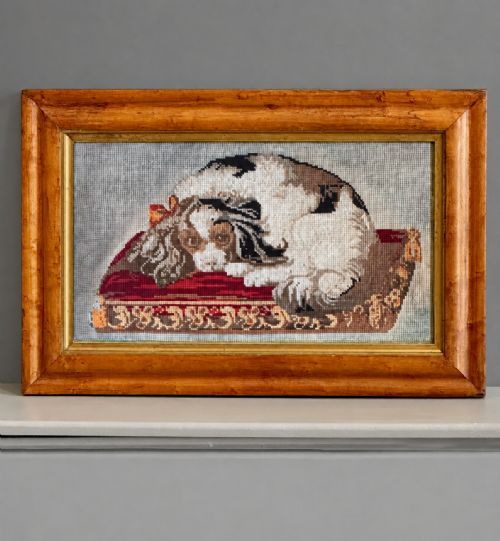
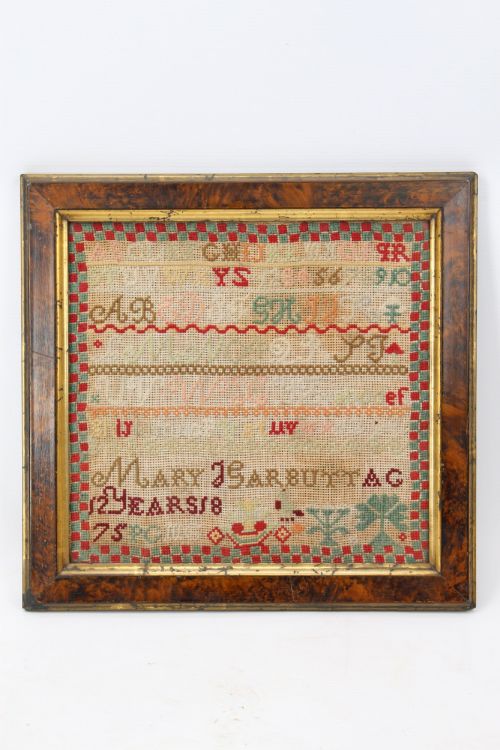
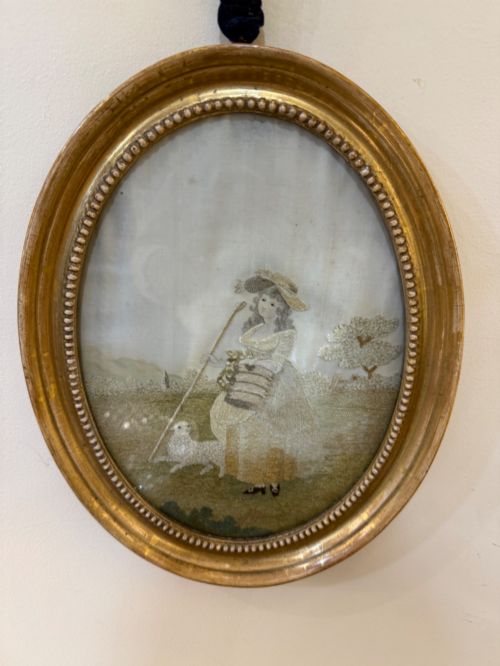
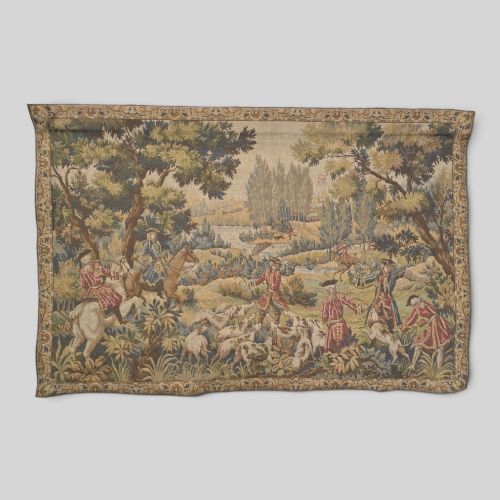
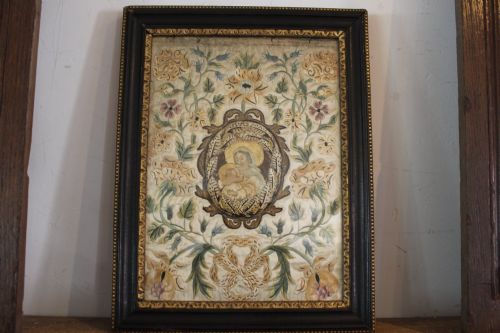
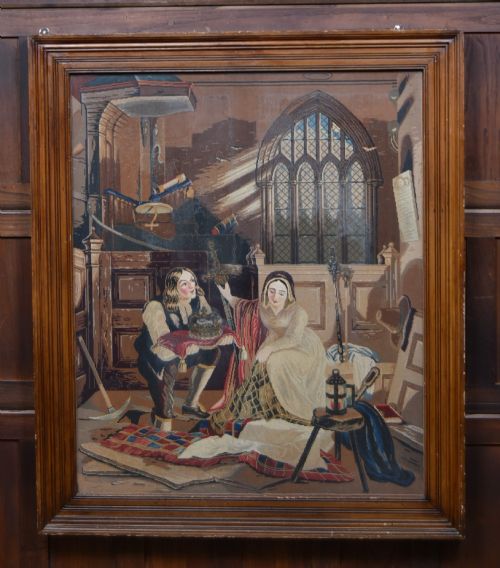
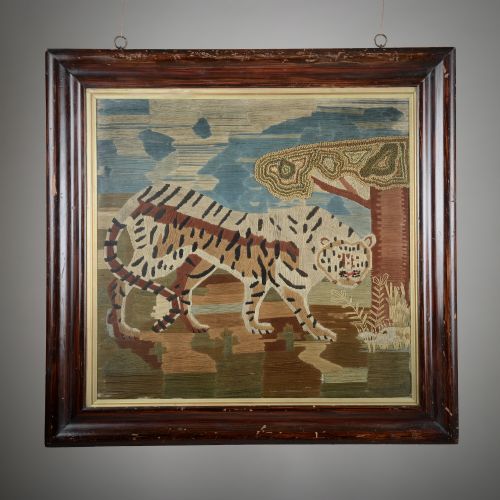
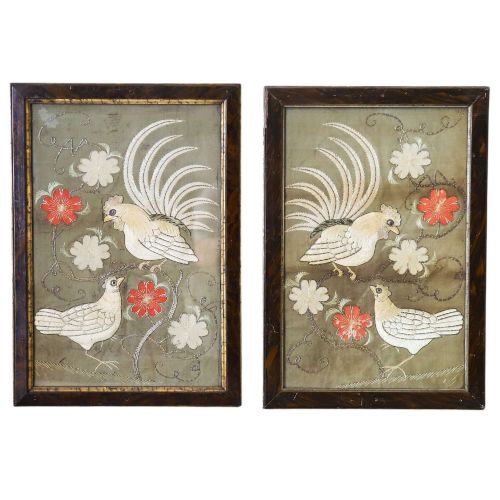
The selections encountered most frequently on this page belong to the 19th century, featuring Berlin work, alphabet samplers, and pictorial silk embroideries. Earlier pieces from the 17th and 18th centuries appear as fragments of verdure tapestries, stumpwork panels, and metallic thread embroideries.
Makers utilised canvas, linen, and silk grounds, working with wool, cotton, silk floss, and metal threads to depict pastoral scenes, portraits, and botanical subjects. Each mounted panel preserves historic textiles for interior display, safeguarding fragile fibres from handling.
Materials and construction
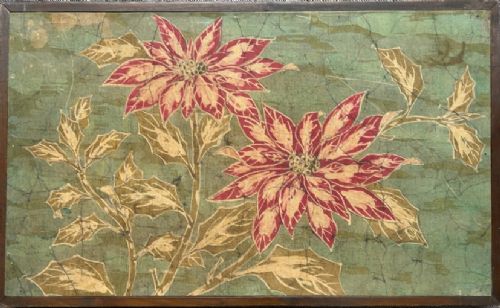
Artisans constructed these panels using woven grounds of linen, silk, wool, and canvas, upon which they applied needlework stitches using silk floss, wool yarn, and metallic thread. Many examples incorporate hand painting on silk alongside the embroidery, combining brushwork with needle craft.
Framing methods protect these textiles behind glass, often set within period surrounds like burr maple, faux tortoiseshell, or simple moulded wood. Fragments of larger tapestries or church vestments are frequently mounted onto modern or historic linen backings to provide structural support for wall hanging.
Materials recorded across the inventory include wool, silk, cotton, linen, glass, wood, canvas, and metallic thread.
Assessing quality and execution
Quality rests in the precision of the needlework and the complexity of the design, distinguishing fine stumpwork or detailed silk embroidery from simpler schoolgirl samplers. The survival of original materials, such as untarnished metal threads and vibrant silk floss, elevates the execution.
The integrity of the mounting and the character of the surrounding frame contribute significantly to the piece. Original timber frames that complement the age of the textile provide a more cohesive historic object than later replacements.
The Framed Textile Panel Glossary
- Berlin work
- A type of coloured wool needlework popular in the 19th century, stitched onto canvas using printed grid patterns. This technique allowed domestic makers to create elaborate pictorial scenes and portraits.
- Stumpwork
- A raised embroidery style from the 17th century that uses padded elements, wire supports, and wrapped threads to create three-dimensional figures. It frequently depicts historical or biblical scenes with remarkable detail.
- Sampler
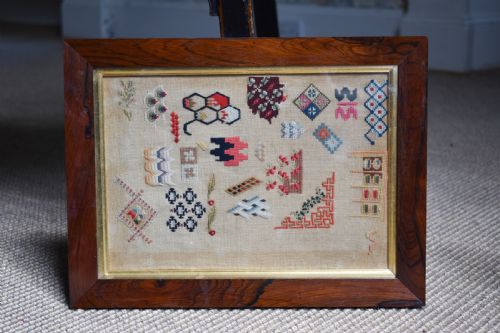
- A piece of needlework produced to demonstrate a worker's proficiency in various stitches, alphabets, or motifs. Early examples often served as reference pieces or educational exercises for young makers.
- Tapestry
- A form of textile art woven by hand on a loom, combining different coloured warps and wefts to form pictorial designs. Fragments of these large wall hangings are frequently mounted and framed for domestic interiors.
- Rank badge
- An embroidered insignia used in imperial China to denote the civil or military rank of an official. These square panels typically feature symbolic animals or birds worked in silk and metallic threads.
Framed Textile Panel: Frequently Asked Questions
How do I hang a textile panel safely?
Keep framed panels away from direct sunlight to prevent the silk and wool threads from fading. Ensure the hanging wire and wall fixings match the weight of the timber frame.
maintain stable room humidity to protect the historic fibres and paper backings from moisture damage. Professional picture hooks suited to your wall type provide the secure support required.
What is the difference between a sampler and an embroidery?
A sampler functions as a showcase of various stitches, alphabets, and numbers, traditionally worked by learners to prove skill. They often include names and dates.
An embroidery focuses purely on creating a pictorial image, such as a landscape, portrait, or floral arrangement, using a consistent set of stitches.
Are these panels mounted in original frames?
Some pieces retain their period surrounds, such as burr maple or faux tortoiseshell frames dating from the 19th century. These original housings complement the age of the textile.
Other panels are mounted in later frames or reframed to ensure the textile remains properly sealed behind glass for modern display.
How can I tell a 17th-century panel from a 19th-century one?
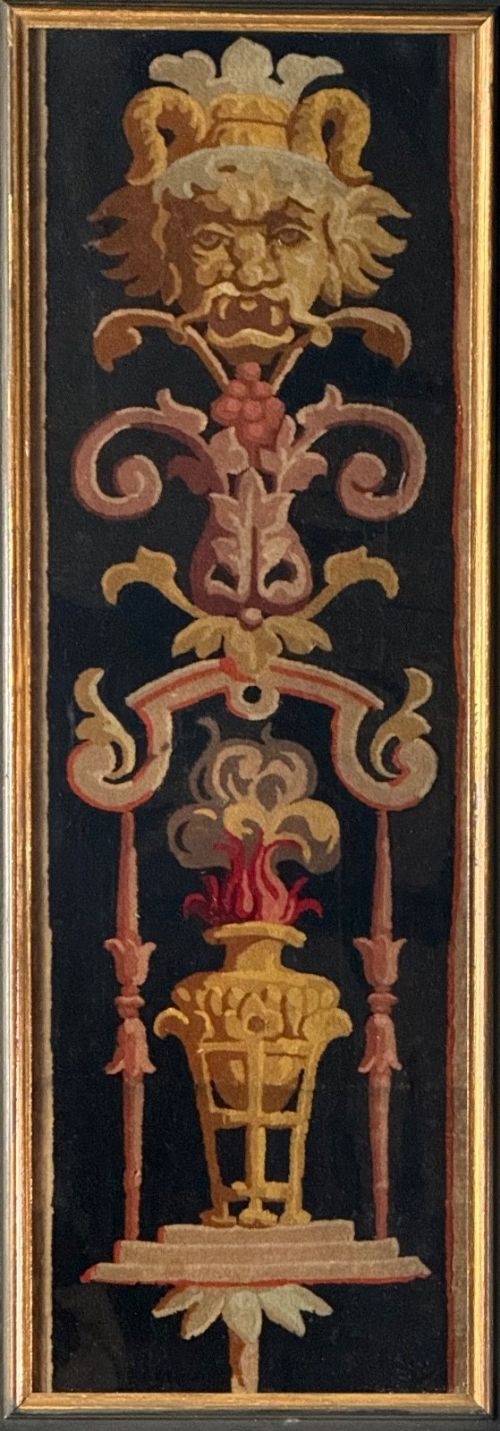
Seventeenth-century pieces often feature stumpwork, metallic threads, or coarse linen grounds with classical or courtly motifs like royal figures and grotesques. The materials reflect the hand-spun fibres of the period.
Nineteenth-century works typically employ Berlin wool work, printed canvas foundations, or bright silk floss in pictorial subjects like animals and school samplers.