



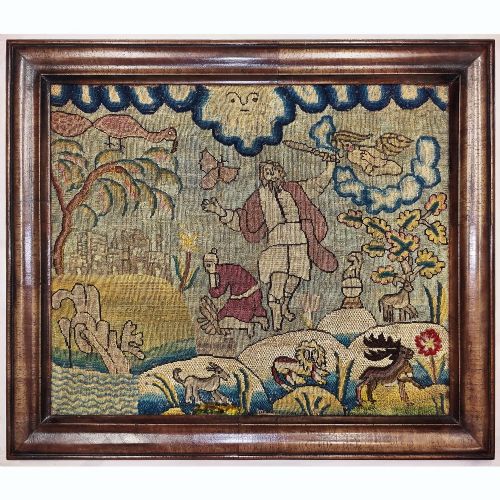


17th Century Embroidery Panel
A 17th century embroidery panel brings historical narrative and intricate needlework into a room, offering a tangible piece of Stuart or Baroque artistry.
17th Century Embroidery Panel
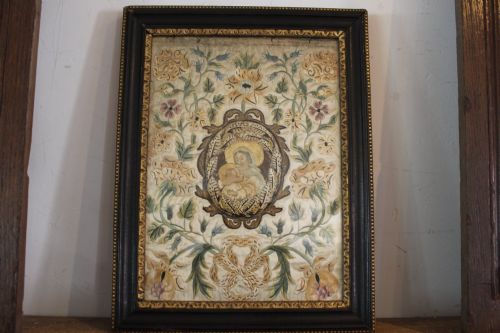
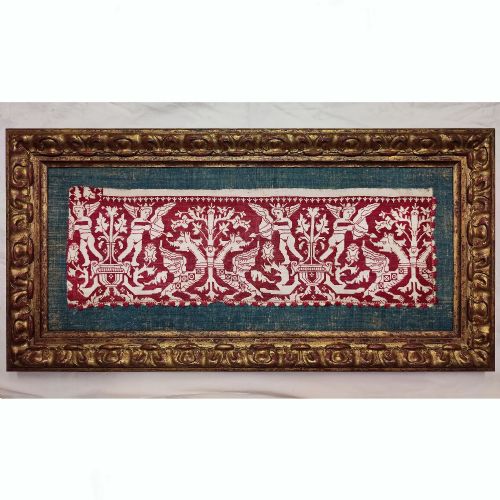
When you search for a 17th century embroidery panel, you encounter framed textile art, needlework pictures, and wall art spanning the 17th and 18th centuries. These works include Stuart stumpwork panels, beadwork fragments of royal hunting scenes, band samplers, embroidered borders, and silk velvet textiles.
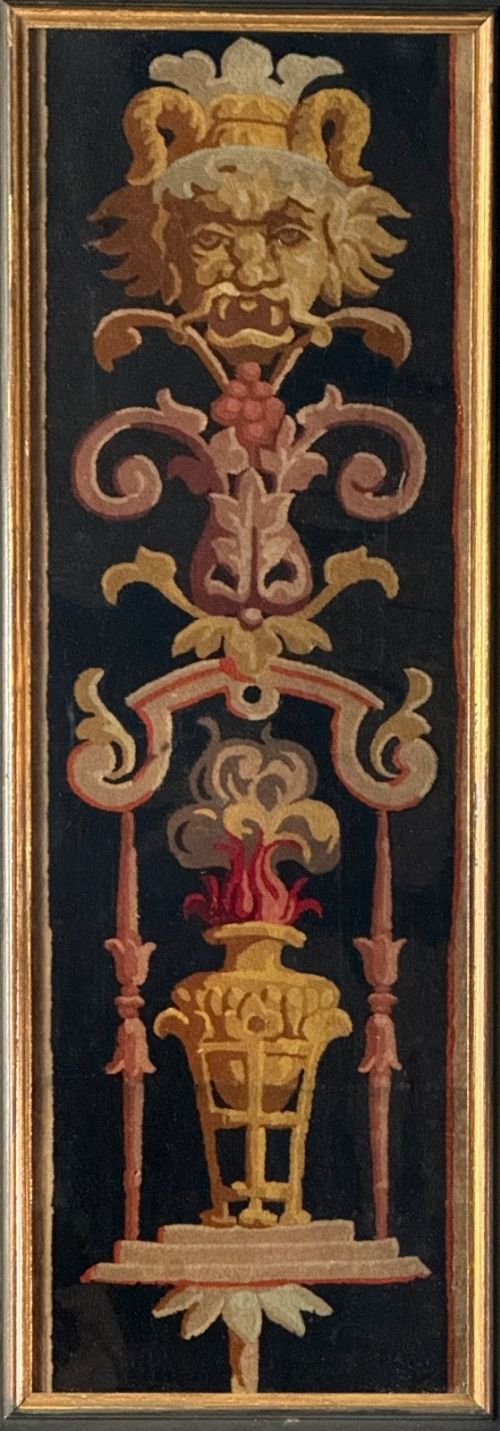
The versions most likely to meet you on this page are framed pieces executed in silk, linen, wool, and metallic thread, often incorporating glass beads and mounted on wood. Continental classical pieces with grotesque masks appear alongside English works depicting figures such as King Charles I, Henrietta Maria, and King Charles II.
Origin and style vary from English Stuart and Jacobean designs to 17th century Italian borders and continental classical compositions. Each panel presents a distinct narrative or decorative scheme rooted in needlework techniques of the period.
How they were made
Maker execution relies on linen and silk as foundational fabrics, worked upon with wool, silk, and metallic threads. Artisans incorporated raised stumpwork techniques and glass beads to create depth and texture within the narrative scenes.
Completed textile works are housed within wooden frames, occasionally utilising gilded wood to complement the metallic threads and rich fabrics. The combination of thread types and beadwork creates the characteristic relief seen in Stuart panels.
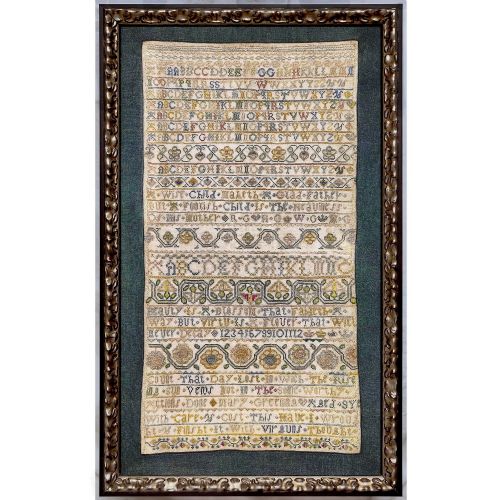
Mary Greening stitched her band sampler with such steady care that her 17th-century needlework still teaches us patience today.
What varies in quality
Condition of the base linen or silk velvet and the integrity of the glass beads and framed structure govern the overall standard. Richness in stylistic expression, whether Stuart, Baroque, or Italian classical, determines the visual impact of the textile.
Mary Greening
The 17th Century Embroidery Panel Glossary
- Stumpwork
- A raised embroidery style popular in the 17th century where figures and motifs are padded or built over wooden moulds to create a three-dimensional effect. This technique brings remarkable relief to royal portraits and narrative scenes.
- Sampler
- A piece of needlework produced as a demonstration or test of skill, often featuring alphabets, bands of patterns, and maker names. Band samplers show horizontal rows of varied embroidery stitches.
- Coif
- A close-fitting cap worn in the 17th century, frequently decorated with detailed embroidery executed in silk and metallic thread. Surviving examples showcase domestic needlework skills.
- Grotesque
- A style of decorative ornamentation featuring fantastical human and animal forms intertwined with foliage. These classical motifs appear on continental panels from the period.
- Needlework picture
- A framed textile composition designed purely for display as wall art rather than for functional wear. These panels often depict historical or allegorical subjects.
17th Century Embroidery Panel: Frequently Asked Questions
How were these panels originally displayed?
In the 17th century, many embroidered panels formed parts of furnishings, cushions, or cabinets rather than hanging flat on walls. Over time, surviving fragments and complete pictures were framed to protect the fragile textiles.
Today, framing preserves silk, wool, and metallic thread from further handling while allowing the intricate stitchwork to be appreciated as wall art.
What is stumpwork embroidery?
Stumpwork is a raised embroidery technique that creates a three-dimensional effect using padding, wire foundations, and carved wooden moulds. It was especially popular during the Stuart period for depicting royalty and biblical scenes.
The technique allows figures such as kings and queens to project outward from the background fabric, accompanied by raised animals, fruit, and architectural elements.
How do I care for an antique embroidery panel?
Protect the textile from direct sunlight to prevent silk threads and dyed wools from fading over time. Keep the piece in a stable environment away from excessive moisture and fluctuating temperatures.
Ensure the frame and glass remain secure, and avoid placing the artwork near heat sources that could dry out antique wood and delicate fibres.