


Four Tier Display Stand
A four tier display stand organises precious objects across open levels, bringing vertical elegance to domestic spaces through time-tested craftsmanship.
Four Tier Display Stand
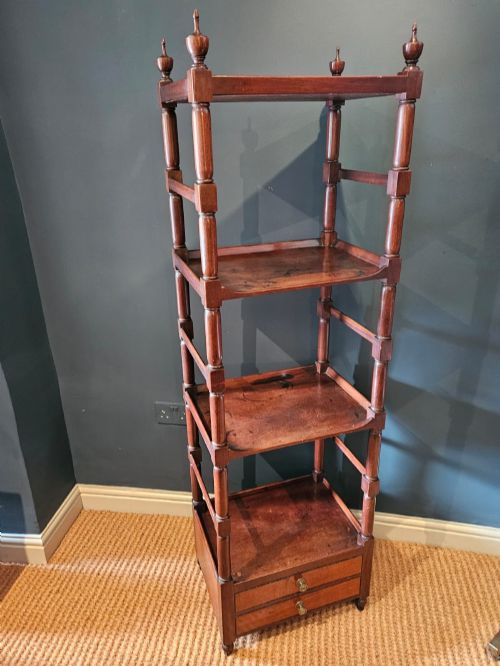
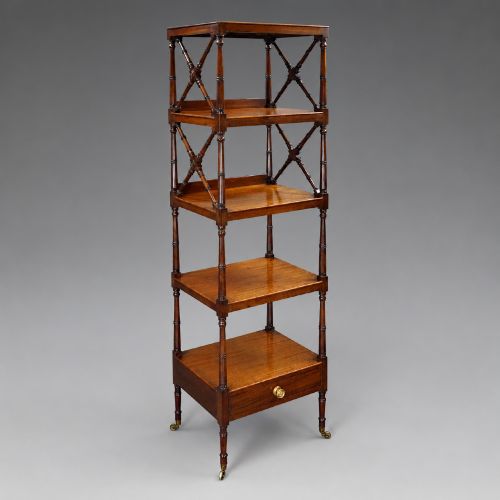
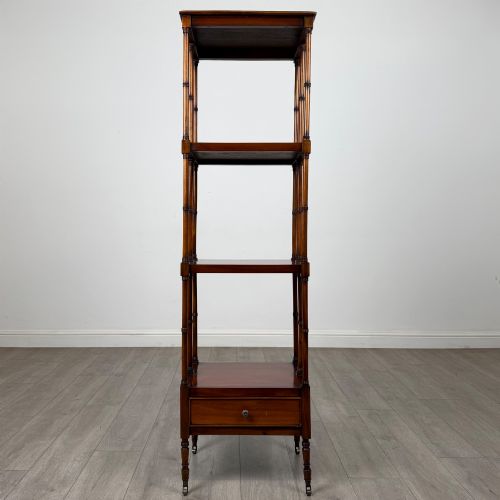
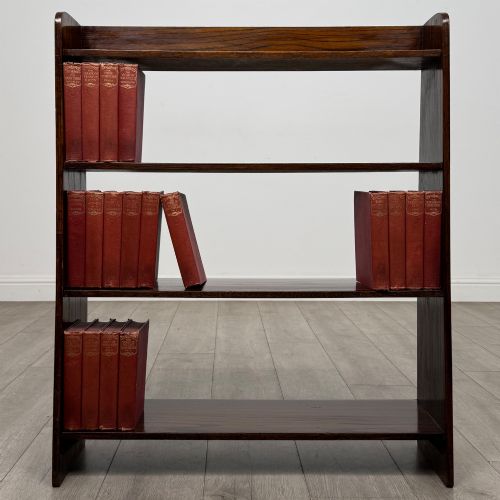
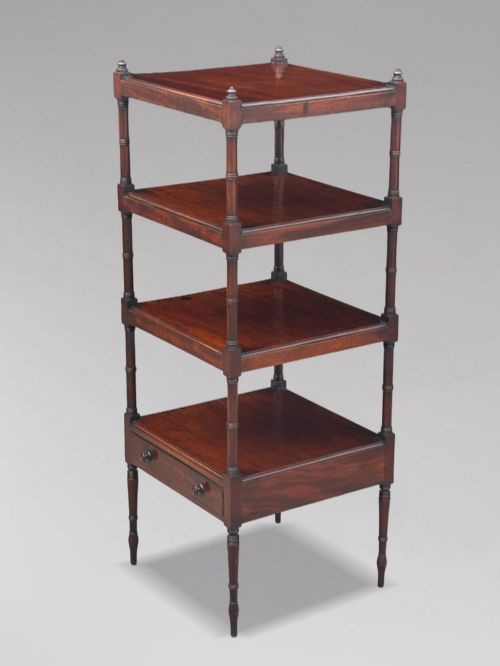
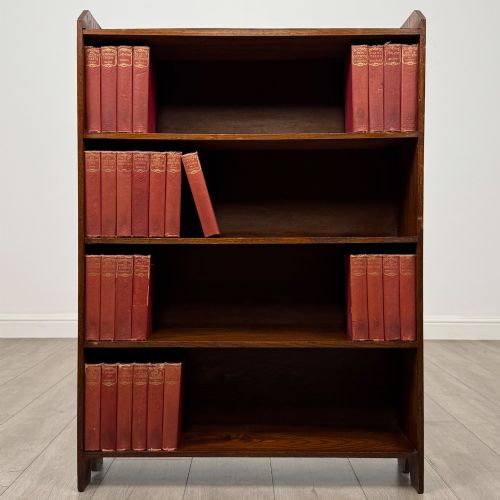
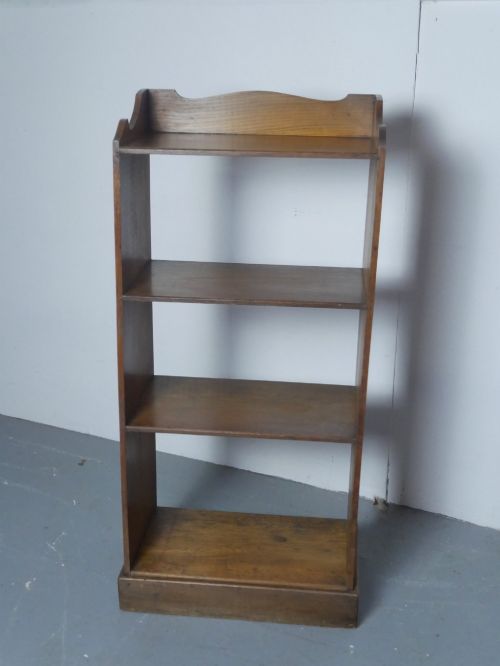
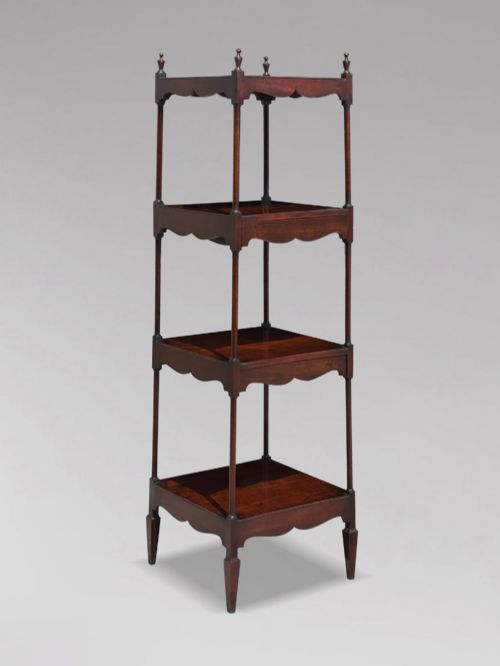
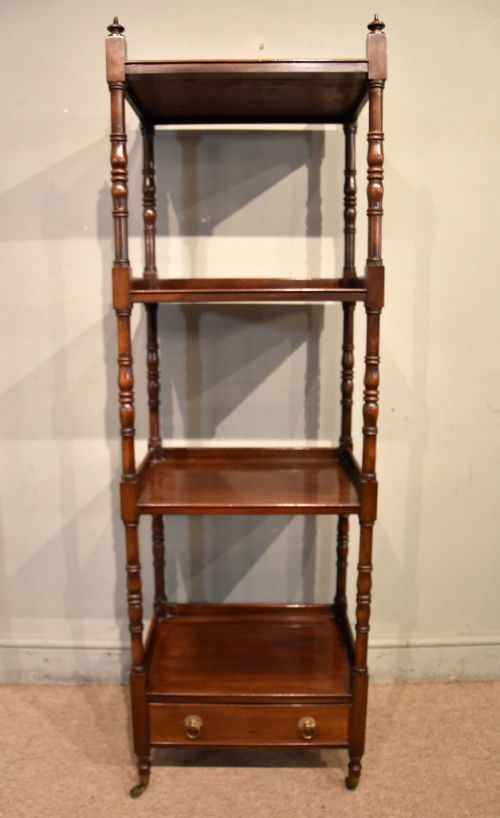
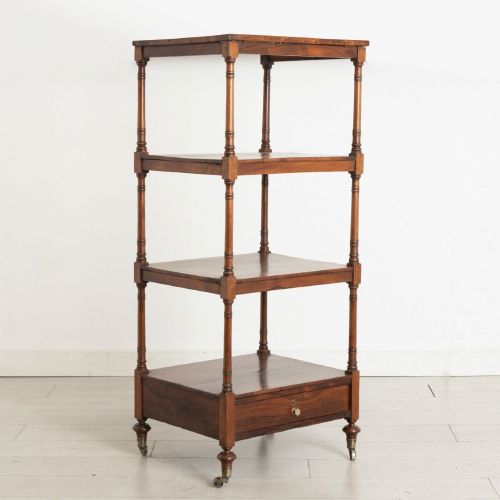
A four tier display stand appears across this selection primarily as a whatnot, etagere, or open bookcase designed to display ornaments, books, and collections. These pieces emerge from Georgian, Regency, and Victorian periods, stretching into Edwardian and later twentieth-century iterations.
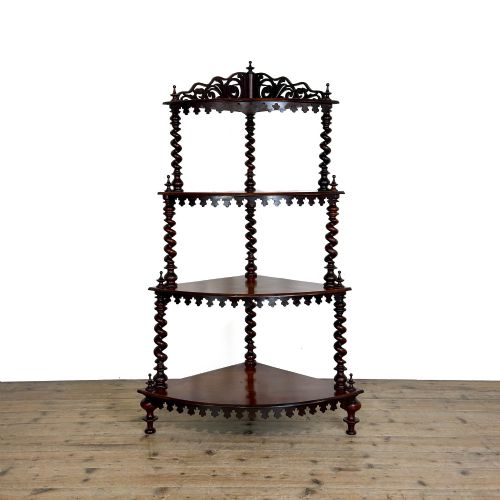
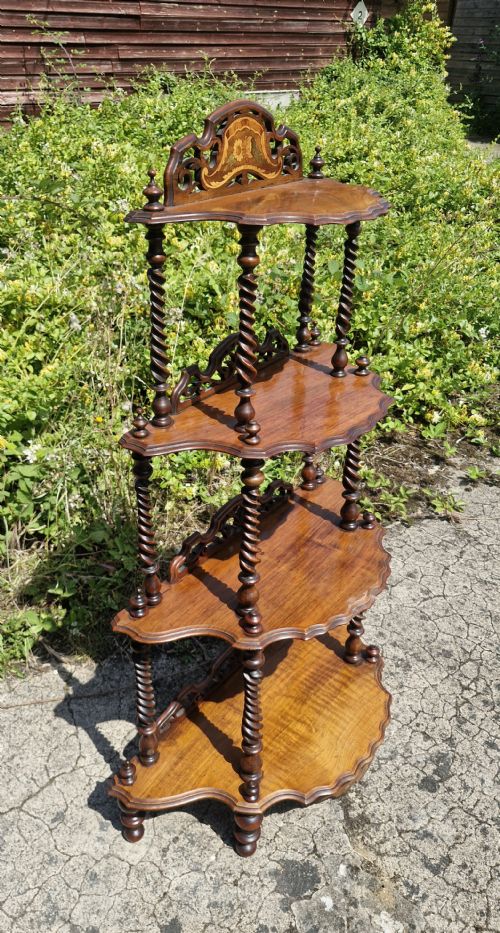
The most common formats on this page are mahogany and walnut whatnots, often built with graduating shelves supported by turned or column uprights. Buyers encounter both freestanding rectangular units and corner variations intended to maximise spatial utility.
Earlier examples display Georgian and Regency restraint, while Victorian iterations incorporate burr walnut, intricate wood inlay, and elaborate turning. The form serves as both a functional display surface and a distinct architectural element within a room.
Quality and Distinction
The standard of a four tier display stand rests upon the choice of timber veneer, the crispness of the turning on the uprights, and the refinement of any inlay work. Superior items employ highly figured burr walnut or carefully selected flame mahogany across every tier.
Structural harmony also separates standard production from exceptional work, visible in the proportional balance between shelves and the integrity of the joints. Finer pieces maintain solid timber mouldings and precise corner fits that endure decades of weight and movement.
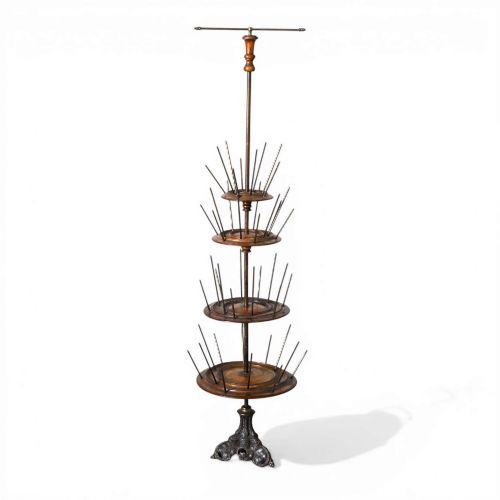
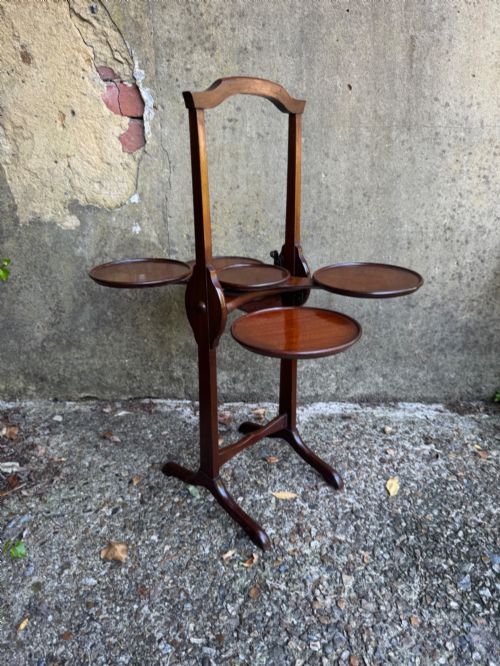
One exceptional nineteenth-century shop fitting takes the form of a cotton reel display tree with four tiers.
Gillows
The Four Tier Display Stand Glossary
- Whatnot
- A piece of furniture with multiple open shelves for displaying small objects, developed in the late eighteenth century. It remains one of the most versatile display items.
- Etagere
- A set of open shelves for displaying ornaments, closely related to the whatnot. The term often describes French-influenced or lighter decorative designs.
- Burr Walnut
- A figured wood grain obtained from the wart-like growths on walnut trees. It creates highly decorative patterns prized by nineteenth-century cabinet makers.
- Inlay
- The technique of inserting contrasting materials into a wood surface to form decorative patterns. This ornament appears frequently on Victorian and Edwardian pieces.
- Corner Whatnot
- A specialised display stand shaped to fit snugly into a room angle. This form makes efficient use of overlooked spaces.
Four Tier Display Stand: Frequently Asked Questions
What is a four tier display stand used for?
These pieces serve primarily to hold books, ceramics, silver, and decorative ornaments across graded open shelves. Historically, they occupied drawing rooms and parlours to showcase household collections.
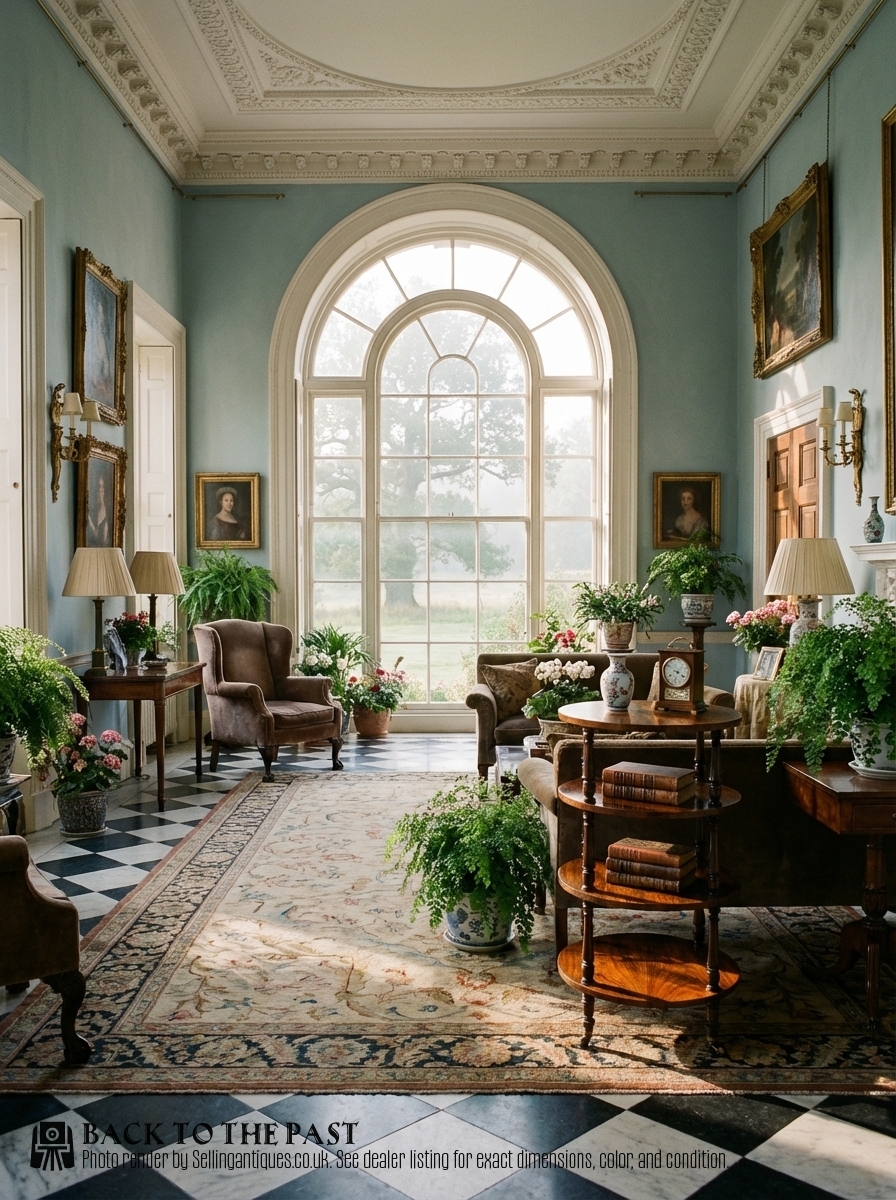
Today, buyers utilise them in living spaces and hallways to display modern collections while adding period character to an interior.
How do I tell a Georgian stand from a Victorian one?
Georgian and Regency versions typically rely on clean architectural lines, linear mahogany grains, and simple column supports. They prioritise structural restraint and proportion.
Victorian and Edwardian pieces introduce heavier timbers, burr walnut veneers, decorative inlay, and more elaborate turning on the upright posts.
Are corner stands less stable than standard ones?
Corner units distribute weight against two walls, which provides natural stability when positioned correctly in a room. Their triangular footprint anchors them securely into the corner.
Cabinet makers designed these frames with substantial rear posts to ensure they hold heavy collections of books or ceramics safely.
How do I care for antique wood shelves?
Maintain the timber by keeping the display stand away from direct sunlight and sudden temperature fluctuations, which can dry out veneer. Apply a traditional beeswax polish occasionally to nourish the grain.
Avoid placing damp items directly onto the unsealed wooden tiers to prevent ring marks and surface staining.