



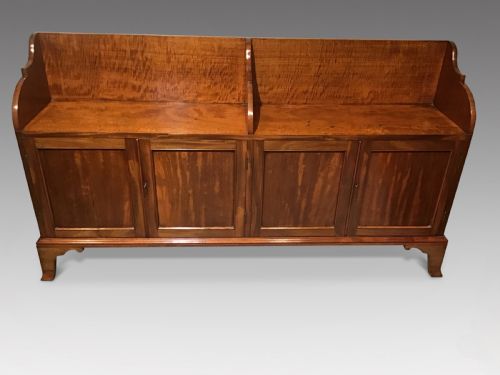


Four Door Victorian Credenza
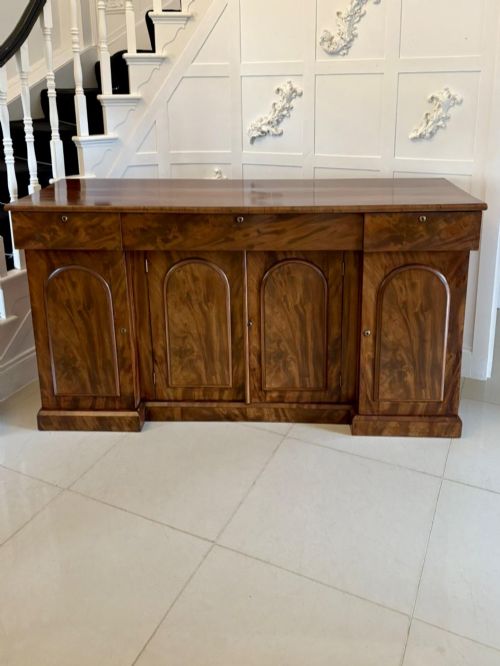
A four door victorian credenza is a substantial nineteenth-century timber cabinet designed to anchor a formal interior.
Four Door Victorian Credenza
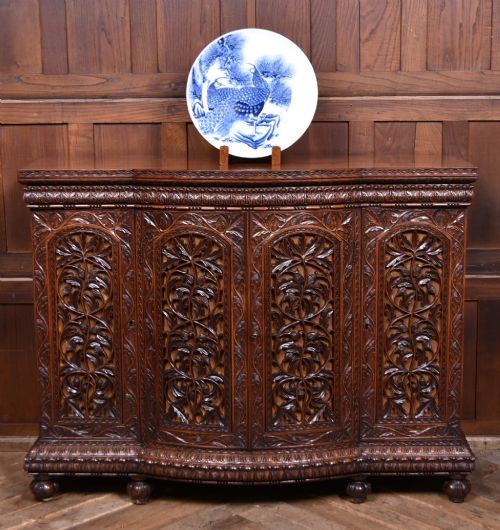
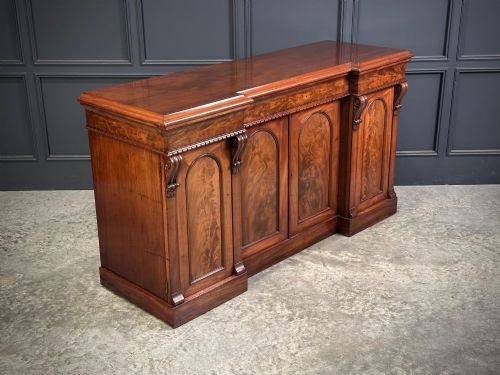
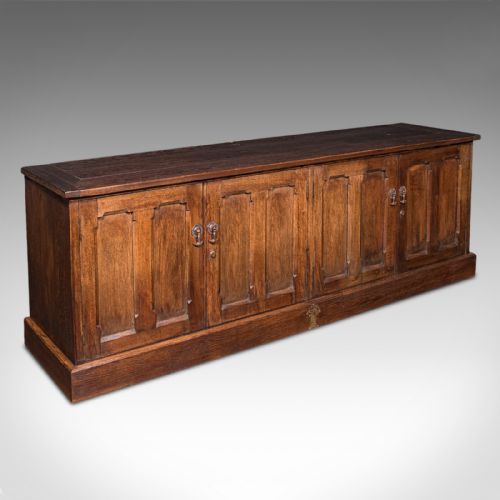
A four door victorian credenza sits firmly in the nineteenth century, taking the form of a long, low cabinet built to furnish formal reception rooms. The pieces recorded here span from eighteen fifty to nineteen hundred, encompassing Victorian, Regency, and Gothic Revival styles alongside specific regional variations.
Most examples appear in walnut, burr walnut, mahogany, and rosewood, frequently fitted with four central or flanking doors. Alongside standard credenzas, the category expands into breakfront sideboards, glazed display cabinets, and side cabinets sharing the same extended footprint.
What varies in quality
The choice of surface timber dictates the visual impact, ranging from plain mahogany boards to heavily figured burr walnut and exhibition-grade marquetry. Finer pieces demonstrate superior timber selection that creates symmetrical grain matching across the four doors.
Execution of decorative details separates standard workshop production from exhibition-quality cabinet work. Precision in brass inlay, porcelain plaques, and cast ormolu mounts marks the upper tier of nineteenth-century manufacture.
Listings feature nineteenth-century pieces constructed from mahogany, burr walnut, rosewood, and oak across Victorian and Gothic Revival styles.
The Four Door Victorian Credenza Glossary
- Credenza
- A low nineteenth-century cabinet used for display and storage, typically featuring doors along the front. These pieces often incorporate glazed sections and decorative mounts.
- Burr Walnut
- A timber veneer harvested from walnut tree growths, prized for its swirling, intricate grain patterns. It forms the primary decorative surface on high-status Victorian credenzas.
- Marquetry
- Decorative woodwork where thin pieces of various coloured woods are fitted into a veneer design. It frequently adorns the door panels of exhibition-quality nineteenth-century cabinets.
- Ormolu
- Gilded bronze applied as decorative mounts and feet on Victorian furniture. It provides a bright metallic contrast against dark woods like rosewood and mahogany.
- Breakfront
- A furniture facade where the central section projects forward from the flanking wings. This architectural arrangement breaks up the length of large nineteenth-century sideboards.
Four Door Victorian Credenza: Frequently Asked Questions
Where did these cabinets sit?
These large cabinets stood against the main walls of nineteenth-century dining rooms and drawing rooms. Their extended length suited the generous proportions of Victorian reception spaces.
They provided a surface for serving food or displaying ornaments while offering enclosed storage underneath for household silver and linens.
How do I clean the wood?
Maintenance requires gentle dusting with a soft, dry cloth to protect the nineteenth-century polish. Avoid modern silicone sprays that can damage antique timber finishes.
Application of traditional beeswax helps nourish dry burr walnut and mahogany surfaces when applied sparingly by hand.
What is inside a credenza?
Interiors typically feature adjustable timber shelving fitted behind the four main doors. Deeper carcasses often incorporate short banks of shallow drawers for cutlery.
Dividers and partitions vary depending on whether the piece served as a sideboard, a bookcase, or a display cabinet.
How can I date a piece?
Dating relies on observing construction methods, timber choices, and stylistic markers recorded across the nineteenth century. Pieces from eighteen fifty often showcase heavy mahogany, while eighteen eighty examples favor burr walnut and applied ormolu.
Inlay types and secondary timbers like pine help narrow down the period between the early Victorian era and nineteen hundred.