


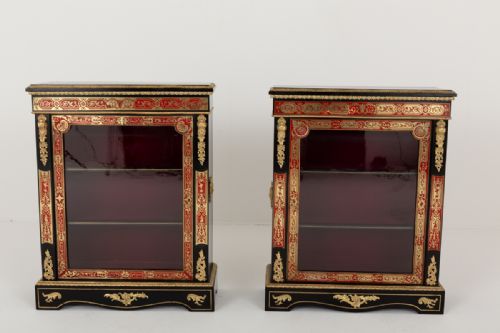


Ebonised Brass Side Cabinet
An ebonised brass side cabinet brings deep dark timber and bright metallic inlay together, offering a striking display surface for any room.
Ebonised Brass Side Cabinet
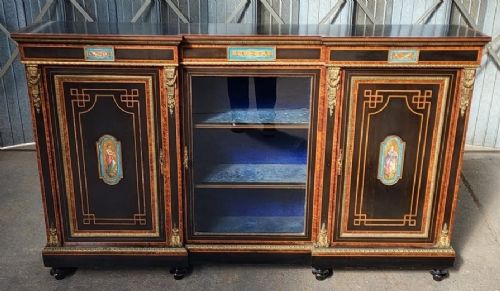
When you search for an ebonised brass side cabinet, you encounter nineteenth-century furniture built to anchor a formal interior. These pieces range from compact pier cabinets and display cabinets to substantial three-door credenzas and serpentine fronted sideboards.
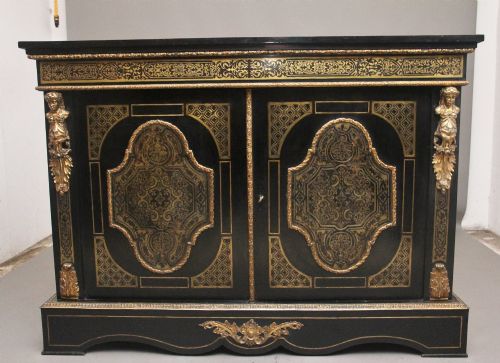
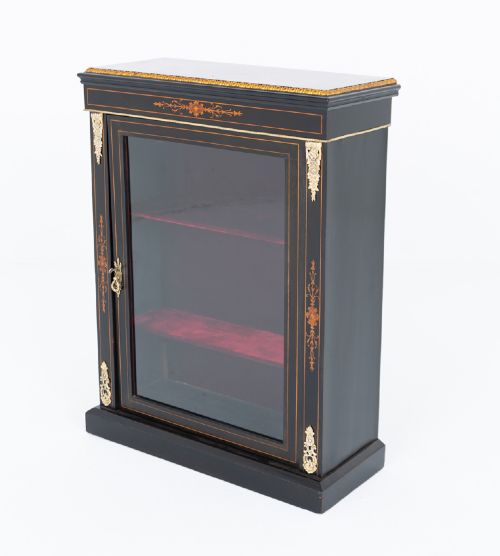
You are most likely to meet Victorian and French Napoleon III examples on this page. They combine dark ebonised wood with intricate brass inlay, often taking the form of pier cabinets designed to fit narrow wall spaces between windows.
How they were made
Cabinet makers utilised dense timbers finished with a dark ebonised coating to imitate costly ebony. Into this prepared surface, artisans cut precise recesses to receive delicate brass scrollwork and tortoiseshell marquetry.
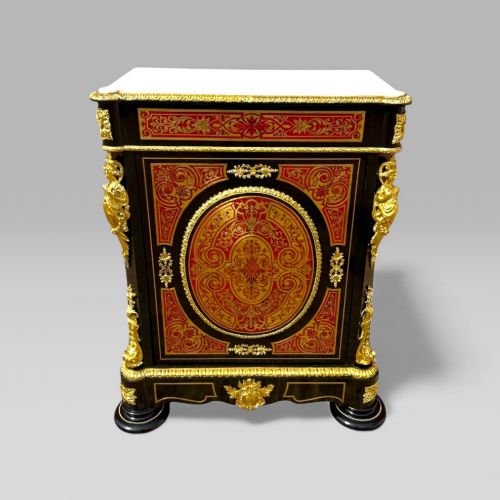
Mounts in ormolu and gilt bronze were cast and chased then fixed to corners and doors to accent the dark ground. Marble tops and porcelain plaques appear frequently, secured above glazed or panelled doors.
Materials recorded on this page include ebonised wood, tortoiseshell, ormolu, gilt bronze, and brass inlay across various cabinet forms.
What varies in quality
The precision of the brass inlay separates standard production from exceptional pieces. Sharply rendered cuts in the brass and tightly fitted tortoiseshell indicate superior workshop output.
Castings for ormolu mounts vary significantly in crispness and weight. Finer examples display deep chasing and secure integration with the underlying ebonised structure.
The Ebonised Brass Side Cabinet Glossary
- Ebonised
- Wood treated with stain or paint to achieve the appearance of solid ebony. This dark finish provides a high-contrast background for brass inlay.
- Boulle
- A form of marquetry employing brass and tortoiseshell inlaid in contrasting patterns. Named after the royal cabinet maker André-Charles Boulle, it defines French Napoleon III pieces.
- Ormolu
- Gilded bronze mounts applied to furniture for decoration and edge protection. The metal is cast and finished to produce a bright metallic lustre.
- Pier cabinet
- A small display cabinet designed to stand against a pier wall between windows. These narrow vertical forms typically feature glass doors and marble tops.
- Credenza
- A large low cabinet used for storage and display, often featuring multiple doors. Nineteenth-century versions frequently incorporate brass inlay and porcelain plaques.
Ebonised Brass Side Cabinet: Frequently Asked Questions
Where should I place a side cabinet?
These cabinets suit reception rooms and hallways where their reflective brass inlay and dark timber catch the light. A narrow pier version fits neatly between windows or in smaller alcoves.
Larger credenzas require a substantial wall to anchor the room. Their flat tops provide an ideal surface for lamps or decorative objects.
How do I clean ebonised wood?
Dust the ebonised surfaces regularly with a soft, dry cloth. Avoid moisture and commercial polishes that can dull the dark finish.
Treat the brass elements with care, using a gentle cloth without abrasive cleaners. Keeping the room at a stable humidity protects the delicate marquetry.
What is the difference between a pier cabinet and a credenza?
A pier cabinet is tall and narrow, built to stand in the wall space between windows. These pieces usually feature a single glass door enclosing shelves.
A credenza is a wider, lower storage piece often fitted with two, three, or four doors. Credenzas provide significantly more surface area and internal capacity.
How do I date a nineteenth-century cabinet?
Examine the internal construction, timber choices, and secondary woods used for the carcase. Victorian and 1860s examples often display specific revival styles like French Napoleon III.
Hardware, screw types, and the method of hinge attachment offer further clues. Comparing the brass work and mounts to dated examples helps narrow the decade.