


Victorian Brass Mounted Credenza
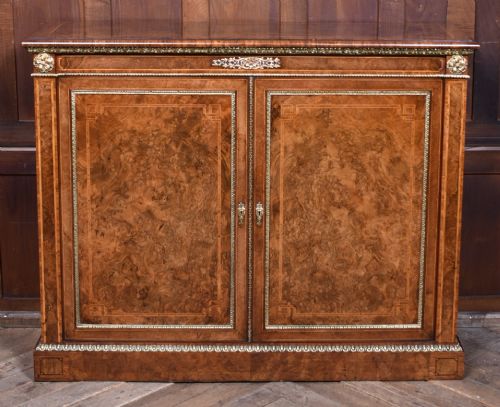
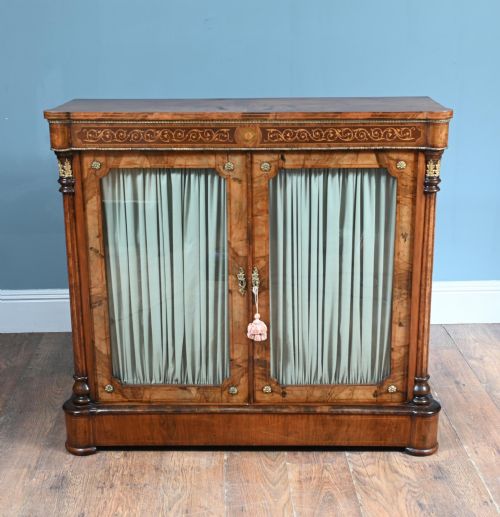
These Victorian brass mounted credenza pieces are grand display furniture built to anchor a formal room and showcase prized possessions.
Victorian Brass Mounted Credenza
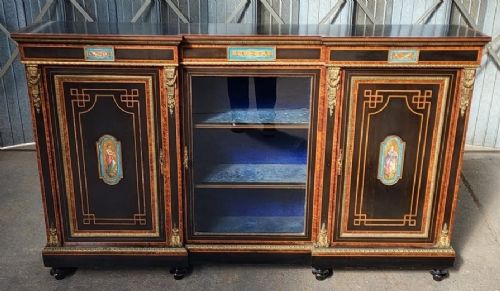
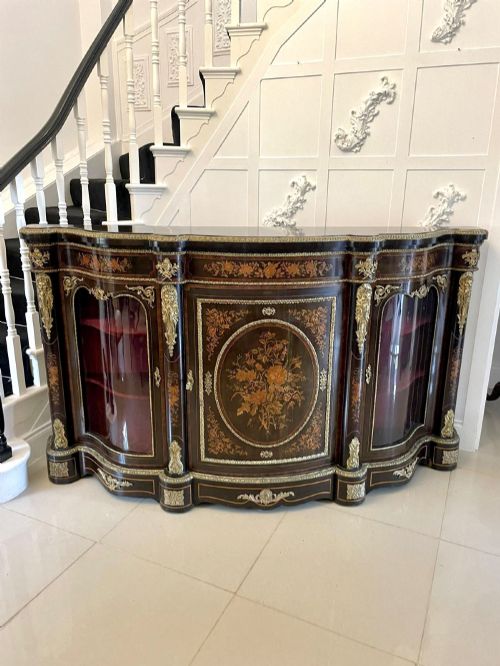
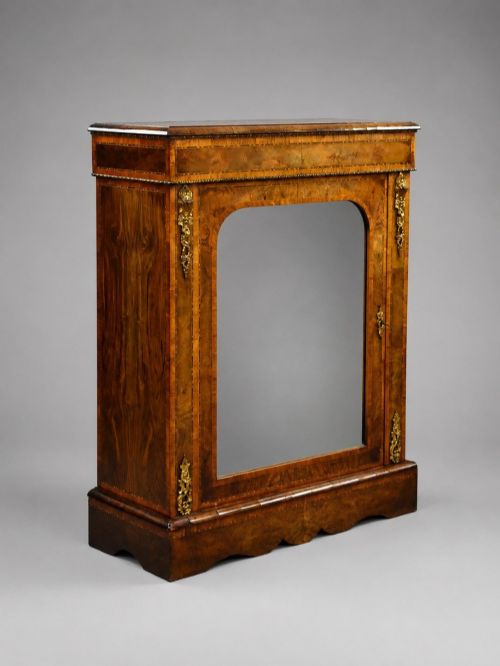
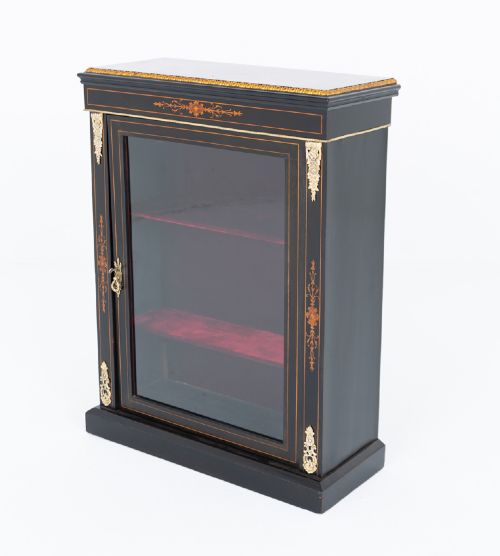
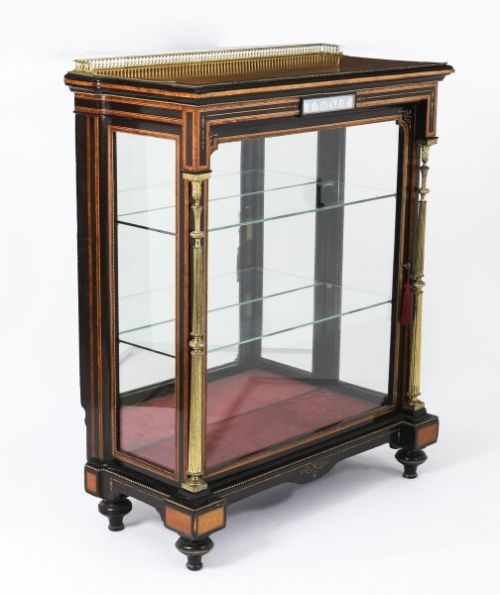
A victorian brass mounted credenza is a substantial piece of display furniture typically encountered in walnut, ebonised wood, or rosewood from the nineteenth century. These cabinets combine enclosed storage with glass-fronted display sections designed for formal reception rooms. The selection includes serpentine credenzas, breakfront formats, and narrower pier cabinets housing shelves for ceramics and books.
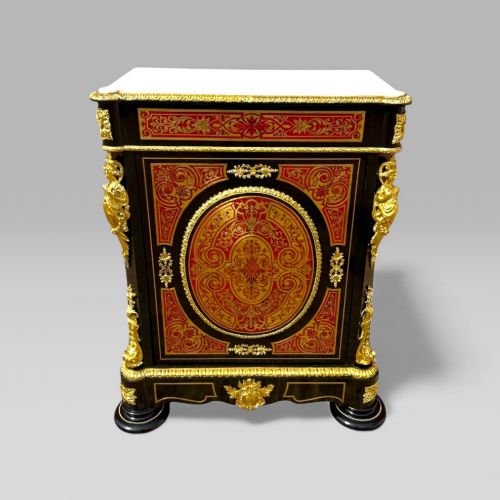
Most examples originate from the Victorian period and French Napoleon III workshops, often incorporating classical revival details. The form ranges from single-door pier cabinets to expansive three-door credenzas fitted with central glass display areas. Ormolu mounts and brass stringing define the visual character across these diverse configurations.
What varies in quality
Quality rests on the depth of the timber figuring, the precision of the marquetry, and the crispness of the cast brass or ormolu mounts. Finer pieces display meticulous hand-chasing on the metalwork and complex floral marquetry rather than simpler printed or stamped ornamentation.
The choice of secondary woods, the weight of the glass, and the integration of Sevres-style porcelain plaques distinguish standard production from exceptional cabinet work. Cohesion between the timber selection, such as figured walnut or amboyna, and the intricacy of the brass inlay dictates the standing of each piece.
Listings feature eighteenth and nineteenth-century periods, dominated by Victorian and Regency pieces in walnut, rosewood, and ebonised wood.
The Victorian Brass Mounted Credenza Glossary
- Credenza
- A low cabinet designed for storage and display, frequently fitted with glass doors and decorative mounts. This form anchors nineteenth-century reception rooms.
- Ormolu
- Gilded bronze used for decorative mounts, feet, and borders on cabinet furniture. The metal is cast and hand-chased to achieve sharp relief.
- Boulle
- A marquetry technique using brass and tortoiseshell inlaid in contrasting patterns. Named after French cabinet maker Andre-Charles Boulle, it defines Napoleon III pieces.
- Pier Cabinet
- A narrow display cabinet designed to fit the wall space between windows. These upright cases often feature glazed doors and velvet-lined interiors.
- Marquetry
- The art of applying pieces of veneer to a structure to form decorative patterns. Craftsmen utilise woods like walnut, tulipwood, and amboyna for tonal variation.
Victorian Brass Mounted Credenza: Frequently Asked Questions
Where should I place a credenza?
These cabinets suit principal reception rooms or long hallways with sufficient wall space to display their proportions and mounted brasswork.
Keep them away from direct sunlight and heat sources to protect nineteenth-century veneers and polished wood finishes from drying out.
How do I clean the brass mounts?
Dust the brass and ormolu mounts gently with a dry, soft cloth to prevent accumulation in the chased recesses.
Avoid liquid metal cleaners that might seep onto the surrounding ebonised wood or walnut veneer and damage the polish.
Can these cabinets hold heavy books?
Most pier cabinets and credenzas are built for decorative ceramics, glassware, and lighter display volumes rather than dense libraries.
Check the internal shelf support and timber thickness before loading the cabinet with heavy items.
How do I distinguish French and English styles?
French Napoleon III and revival pieces frequently incorporate heavier boullework, tortoiseshell, and elaborate ormolu mounts on ebonised carcases.
English Victorian examples often favour figured walnut, burr walnut, and rosewood with more restrained marquetry and brass stringing.