



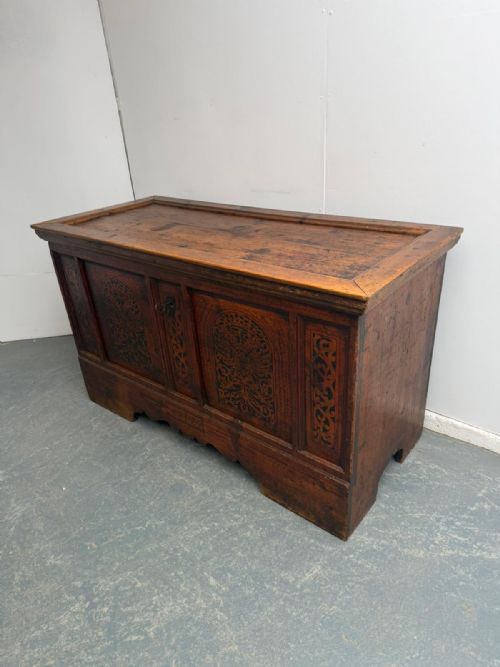


Folk Art Blanket Chest
A folk art blanket chest brings the hand of the maker into a room through pigment and pine.
Folk Art Blanket Chest
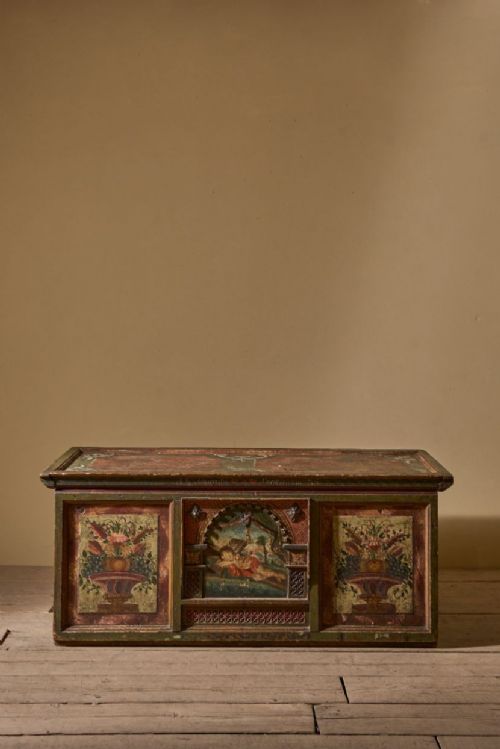
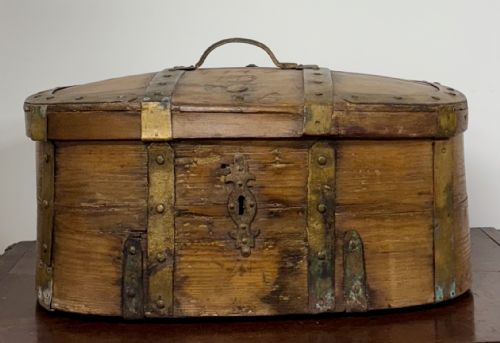
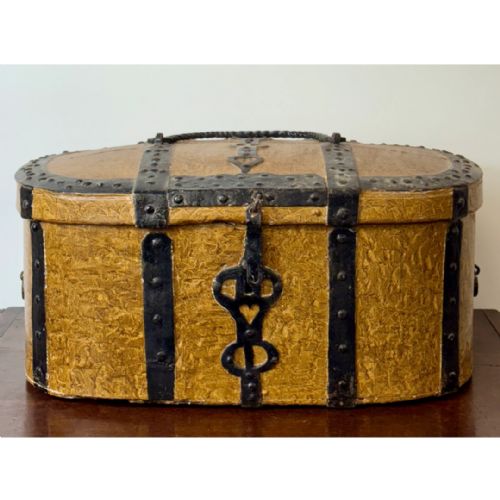
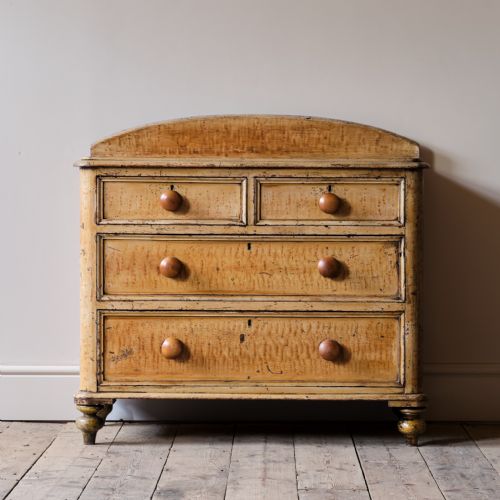
A folk art blanket chest is a sturdy storage piece built from pine or hardwood and finished with painted decoration or hand carving. These objects range from small boxes and dome top coffers to large marriage and dowry chests made to hold household linens and valuables.
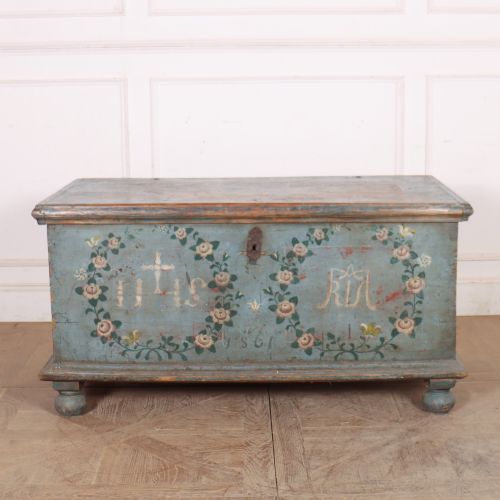
The versions most commonly found here originate from nineteenth-century Scandinavia, Hungary, and the Alpine region, alongside domestic British examples. They often display regional motifs, floral patterns, or original painted surfaces that reflect local traditions.
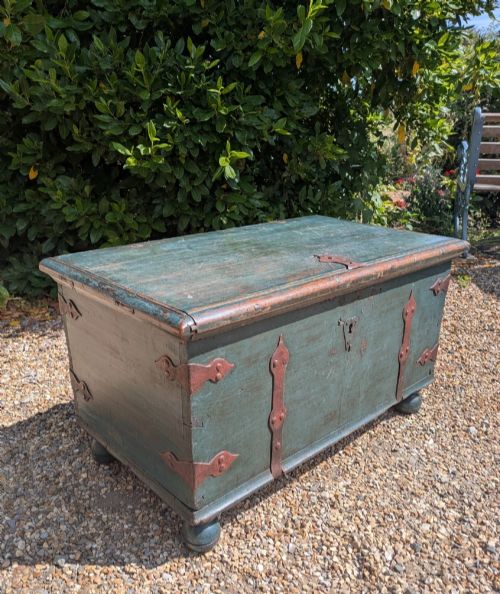
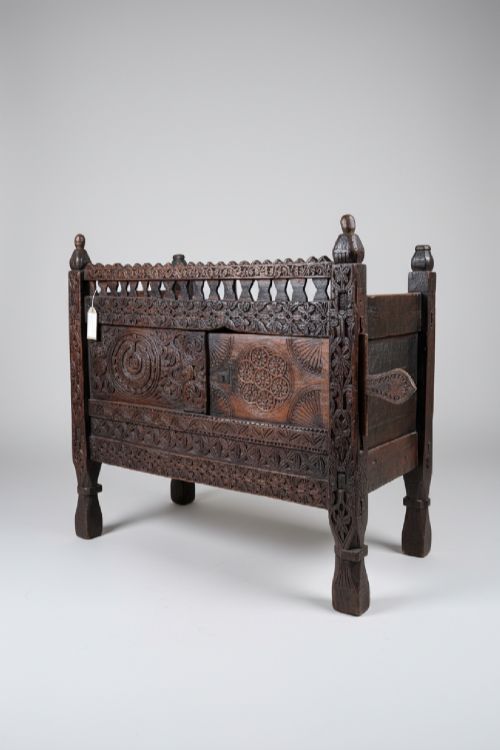
Makers constructed these pieces for daily utility in rural homes, resulting in robust forms like mule chests, strong boxes, and shaped boxes on stands. Their survival in original paint makes them central to country house and rustic interiors.
How they were made
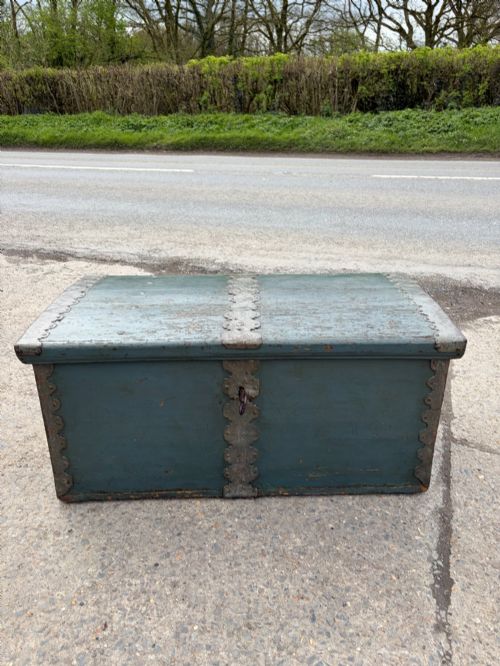
Carpenters built these chests primarily from solid pine or oak using pegged joints and hand-forged iron strapwork or brass fittings for reinforcement. The timber was locally sourced and shaped with basic hand tools, yielding straightforward forms with thick plank construction.
Painters and artisans applied natural pigments directly onto the wood, sometimes laying down an initial coat of ground colour before adding detailed floral or geometric decoration. Iron hinges, locks, and handles were hand-wrought by blacksmiths to secure the lids and corners of heavy domestic trunks.
Some nineteenth-century Swedish marriage chests carry secret internal compartments designed purely for hiding love letters from prying family members.
What varies in quality
The survival and integrity of the original paint layer separate a standard utilitarian trunk from a prized decorative example. Pieces retaining their unretouched, first-applied pigment and vibrant surface decoration command stronger visual presence than those stripped or heavily repainted over time.
Construction details such as dovetailed corners, hand-forged strapwork, and well-executed dome tops indicate the care taken by the original maker. The balance of proportion, from small intimate caskets to massive marriage chests, also defines the success of the piece.
The Folk Art Blanket Chest Glossary
- Mule chest
- A storage chest fitted with one or more drawers beneath the main compartment. This form bridges the gap between the traditional trunk and the chest of drawers.
- Cassone
- A large Italian storage chest, often richly decorated and used historically for marriage dowries. These pieces functioned both as furniture and as displays of family wealth.
- Strapwork
- Ornamental metal bands, usually of iron, fixed across the exterior of a chest to reinforce the joints and protect the wood. Hand-forged examples show individual hammer marks.
- Dowry chest
- A trunk prepared for a bride to store her household linens, clothes, and valuables prior to marriage. They frequently bear initials, dates, or symbolic regional painting.
- Dome top
- A rounded lid construction designed to shed water and provide extra internal headroom. This profile appears frequently on nineteenth-century travel and strong boxes.
Folk Art Blanket Chest: Frequently Asked Questions
What is a folk art blanket chest?
A folk art blanket chest is a utilitarian wooden storage box embellished with hand-applied paint, pigment, or carvings by regional artisans. These pieces were built for rural households to store textiles and valuables.
They combine robust carpentry with local decorative traditions, making each chest a distinct record of its geographic origin and period.
How were these chests used historically?
Families used these chests primarily to hold blankets, winter garments, and domestic linens in domestic settings. Marriage and dowry chests specifically held the bride's personal possessions and property.
Strong boxes and seaman's chests also functioned as secure transport for valuables and personal effects during travel.
How do I identify original paint?
Original paint shows natural craquelure, fading, and wear consistent with age, adhering closely to the underlying pine or hardwood. Under close inspection, the layers reveal early pigment compositions without modern synthetic touch-ups.
Surfaces that remain untouched often exhibit a dry, chalky texture rather than a glossy, modern finish.
Where did regional folk art chests originate?
The pieces available on this page stem largely from nineteenth-century Scandinavia, Hungary, the Alpine region, and Britain. Each region developed distinct painting styles, colour palettes, and structural proportions.
Swedish and Hungarian workshops were particularly prolific in producing floral marriage chests and painted coffers.
How do I live with a painted chest?
A painted chest functions well as a coffee table, end-of-bed storage, or a standalone statement piece in a hallway. Keep them out of direct sunlight to protect the fragile original pigments from fading.
Maintain stable indoor humidity to prevent the old pine or hardwood timbers from splitting.