
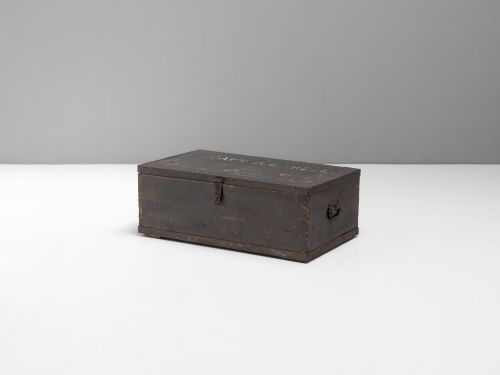
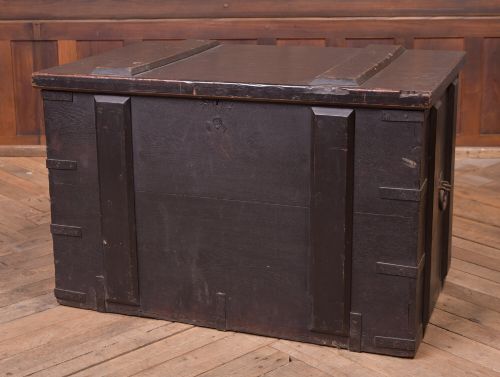
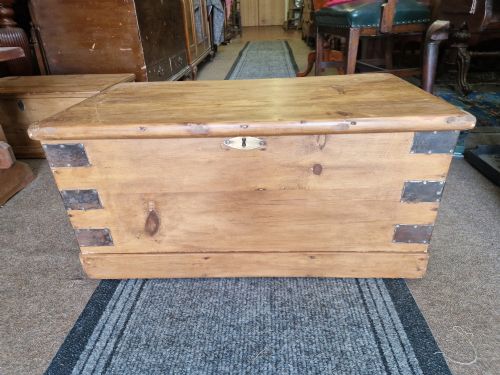
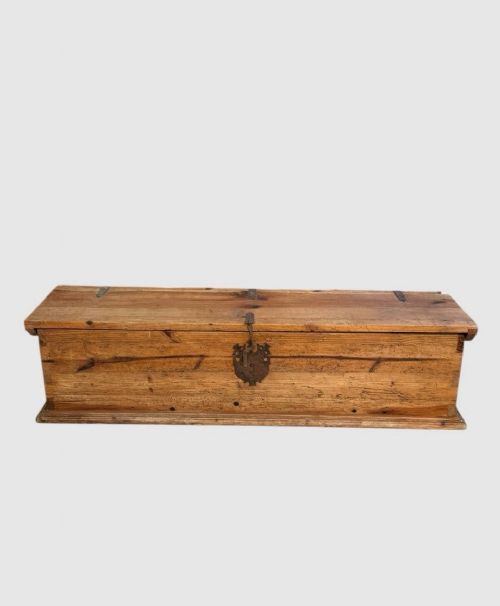

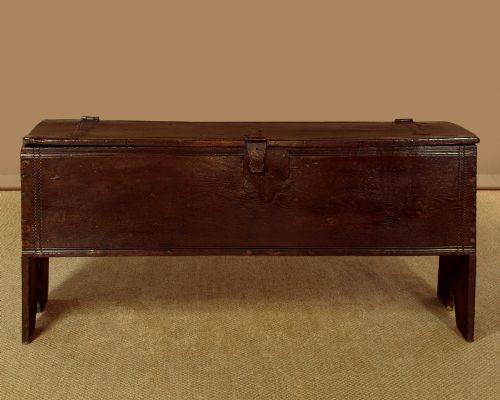
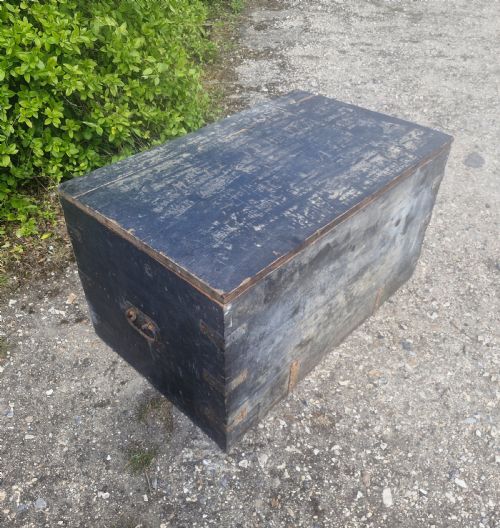

Iron Bound Wooden Trunk
An iron bound wooden trunk brings together robust timber and heavy metalwork to solve practical storage with enduring character.
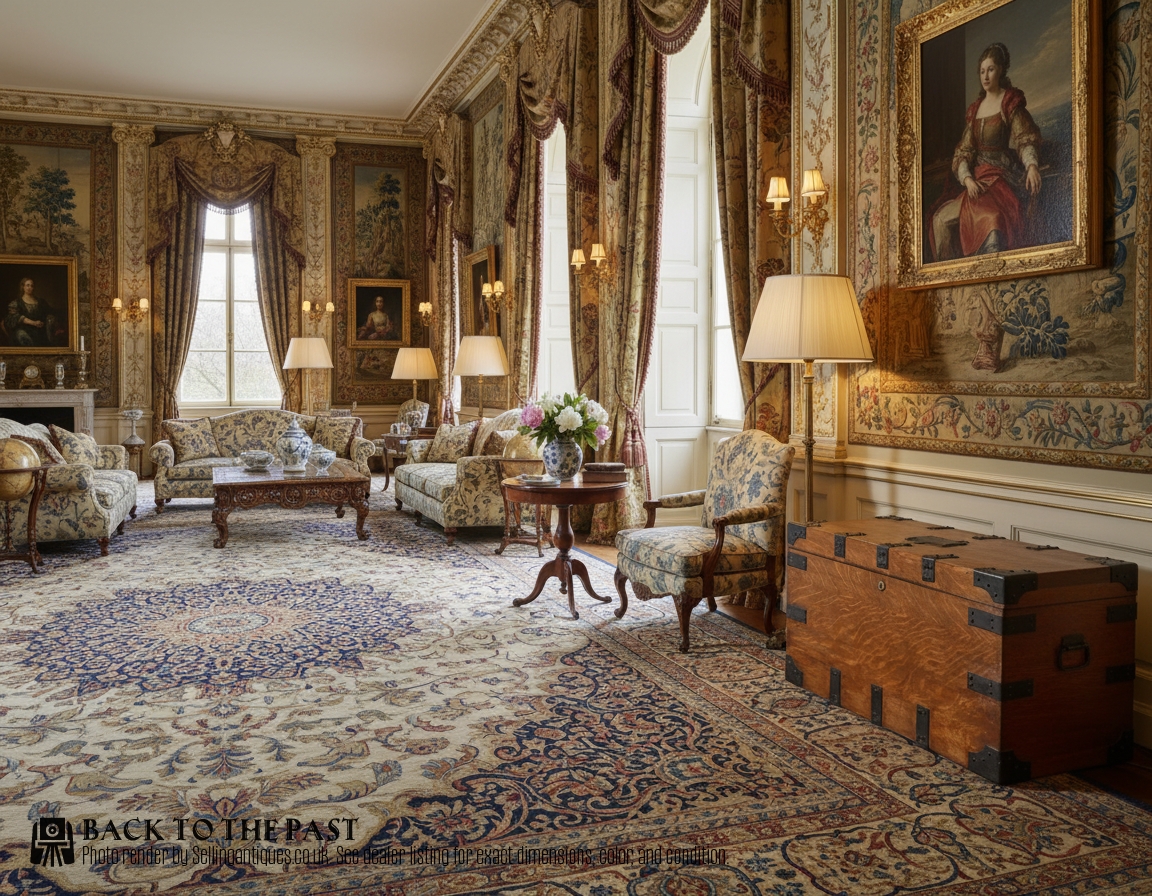
Iron Bound Wooden Trunk
When a buyer searches for an iron bound wooden trunk, they find heavy utilitarian storage items designed to withstand travel, domestic relocation, and secure transport. These objects bridge the gap between functional utility and decorative folk tradition.
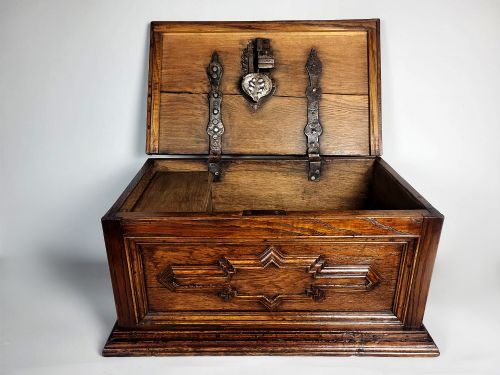
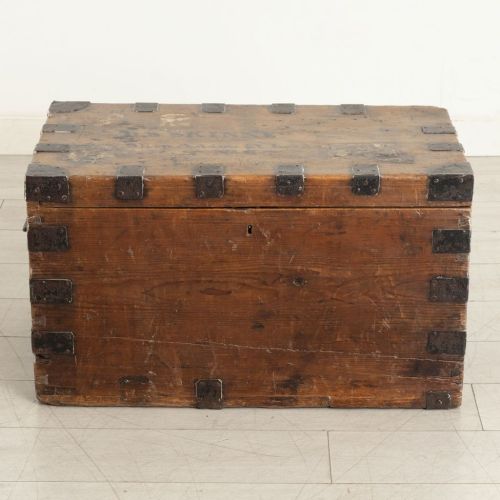
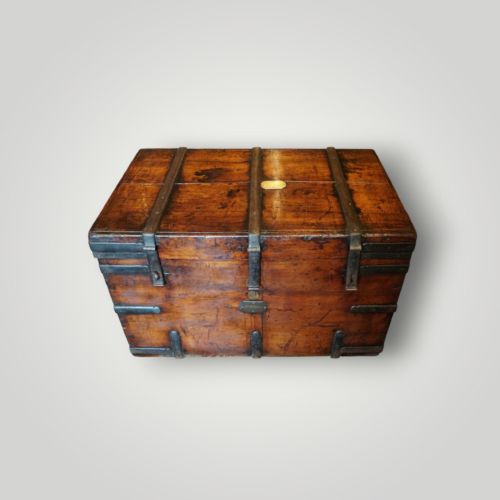
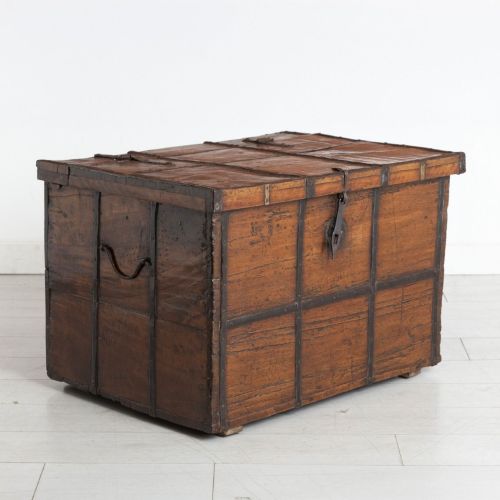
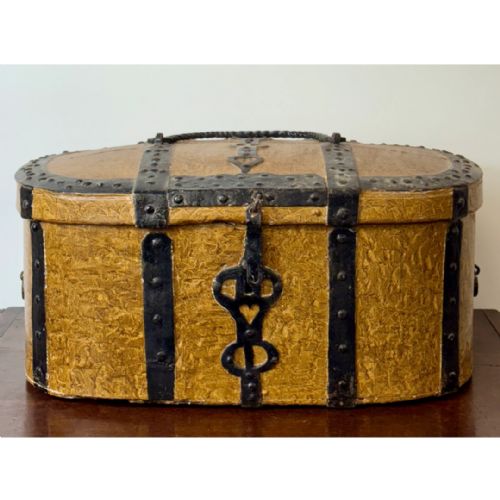
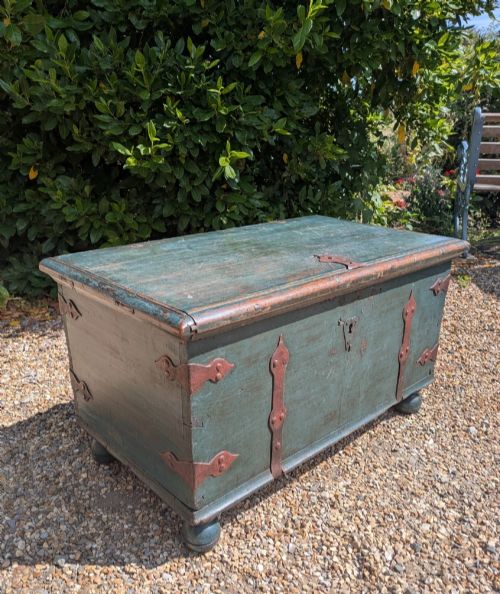
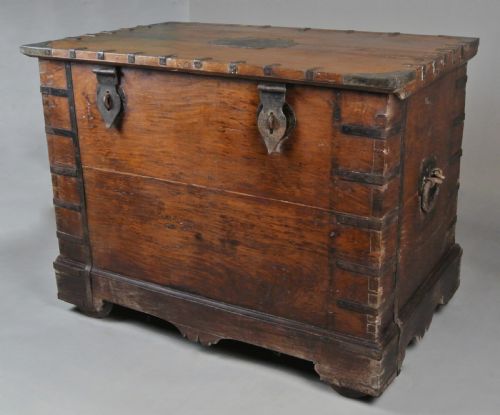
The examples available range widely in origin and format, from British campaign boxes and domestic blanket chests to brightly painted Scandinavian marriage chests and heavy oak strongboxes. Pine and oak predominate as the primary timbers, reinforced with functional iron straps and complex locks.
Early specimens dating back to the sixteenth and seventeenth centuries sit alongside nineteenth-century travel luggage and colonial dowry chests. This variety ensures that every piece carries a distinct history rooted in its specific period of manufacture.
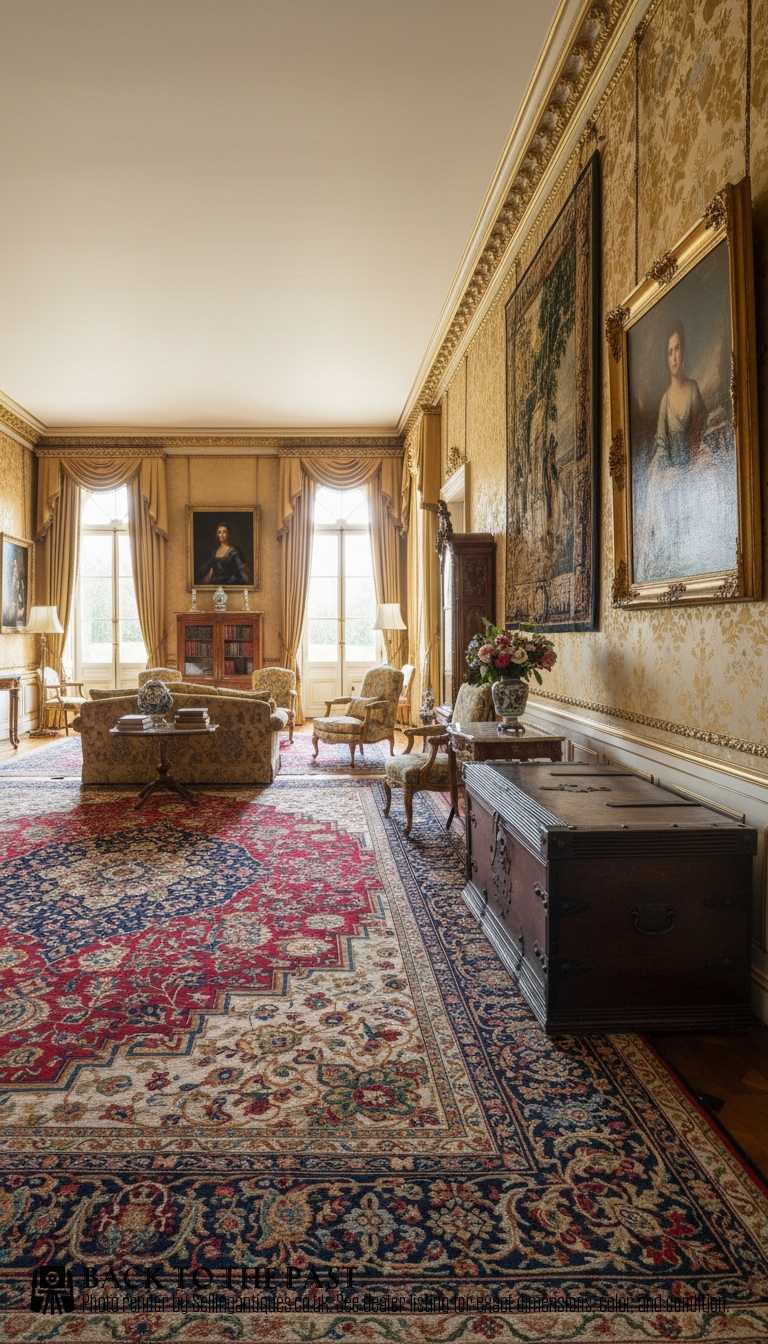
How they were made
Construction relies upon solid timbers such as pine, oak, mahogany, and teak, joined through dovetail or pegged methods to endure heavy loads. Blacksmiths shaped iron and steel strapwork by hand to reinforce corners, lids, and seams against the rigours of transit.
Many examples utilise protective paint finishes, particularly in Scandinavian folk traditions where green or patterned pigments decorate the exterior wood. Complex internal mechanisms, including original steel locks and hidden compartments, demonstrate advanced metalworking skills of the period.
Iron Bound Wooden Trunk Retail Price Guide 2026
Typical asking prices for iron bound wooden trunk among the pieces listed under this phrase on Sellingantiques today, from the lower quarter to the upper quarter. They describe what is for sale here now, not the wider market.
Several trunks retain secret compartments and complex steel locks designed to outwit highwaymen and inquisitive servants.
What varies in quality
The standard of craftsmanship depends heavily upon the integrity of the original hardware and the preservation of surface finishes. Retaining original hand-forged strapwork, working locks, and untouched painted decoration elevates a piece significantly.
Proportion and timber selection also dictate worth, as denser hardwoods like oak and teak or richly figured walnut command attention alongside well-balanced pine country pieces. Retained historical provenance, such as original owner plaques or documented military deployment, adds another layer of distinction.
Seabrook of St Pauls
The Iron Bound Wooden Trunk Glossary
- Strapwork
- Flat bands of iron or steel fixed across the exterior of a trunk to reinforce the wooden joints and protect the body from impact. These bands are typically secured with hand-beaten rivets.
- Campaign chest
- A portable trunk or set of drawers engineered to be easily dismantled or transported by military officers during active service. They often feature recessed brass handles and corner brackets.
- Dowry chest
- A large storage box traditionally prepared for a bride to collect household linens and possessions for her future marriage. They frequently display regional painted folk art or elaborate carved decoration.
- Strongbox
- A secure container constructed from thick timber and heavily fortified with iron bands, designed to protect valuables and currency. They usually incorporate complex internal locking mechanisms.
Iron Bound Wooden Trunk: Frequently Asked Questions
What were iron bound trunks used for originally?
These trunks served primarily to transport personal belongings, valuable goods, and military equipment securely across long distances. Their robust construction protected contents from rough handling during travel by sea, rail, or horse-drawn carriage.
In domestic settings, they functioned as heavy-duty storage for blankets, silver, and legal documents. The addition of iron bands and secure locks ensured that contents remained safe from theft and environmental damage.
How do I date an antique wooden trunk?
Dating relies upon examining the construction techniques, timber species, and ironwork hardware used in the piece. Hand-forged strapwork and dovetailing typical of earlier centuries differ visibly from later industrial manufacturing methods.
Hardware details such as keyhole escutcheons and lock mechanisms offer precise clues to the period of manufacture. Historical labels, inscriptions, and original paint finishes also help narrow down the decade or reign.
Are these trunks strong enough for daily use?
Solid construction using timbers like oak, teak, and pine makes these trunks exceptionally durable for modern domestic environments. They easily support everyday weight when utilised as coffee tables, blanket boxes, or end-of-bed storage.
Care should be taken to protect antique finishes from excessive moisture and direct heat sources. Regular maintenance of the wood and metal components preserves their structural integrity.
How do I care for painted Scandinavian chests?
Painted surfaces require gentle cleaning with a dry or barely damp cloth to avoid lifting historic pigments. Avoiding harsh chemical cleaners preserves the original decorative folk art layers intact.
Keeping the timber away from direct sunlight prevents the painted decoration from fading over time. Maintaining stable room humidity protects the underlying wood from expanding and cracking.