


Folding Leaf Console Table
A folding leaf console table offers a clever surface that expands when guests arrive and folds flat against a wall when floor space matters.
Folding Leaf Console Table
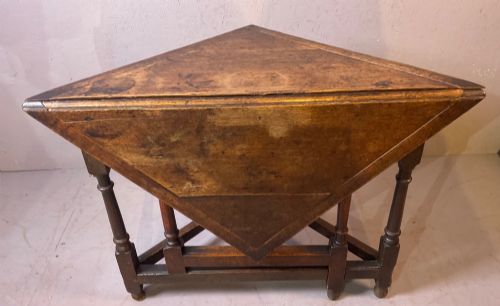
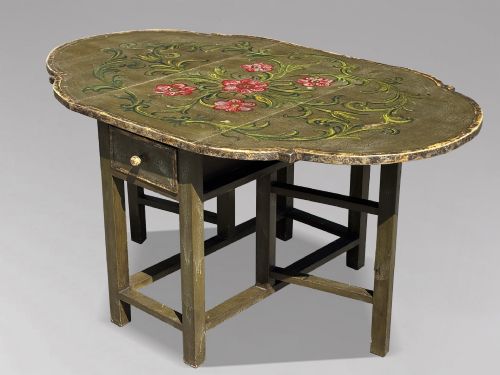
When hunting for a folding leaf console table, you encounter versatile forms that span Georgian, Regency, and Victorian periods. These pieces frequently manifest as card tables, games tables, and drop-leaf tables that transform from slim console depth into larger dining or display surfaces.
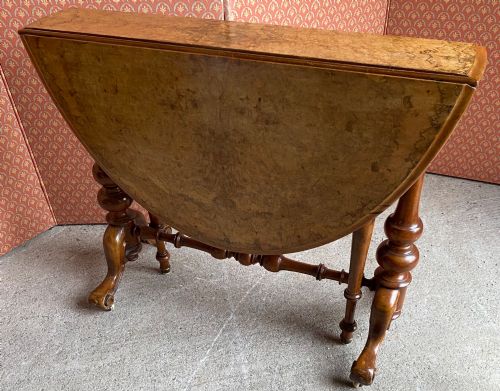
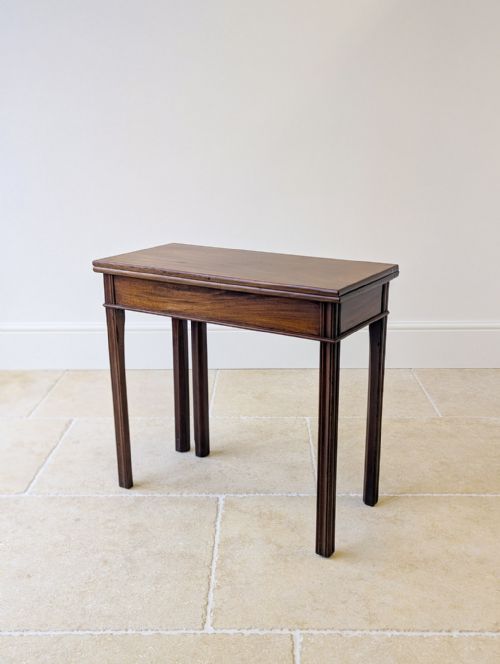
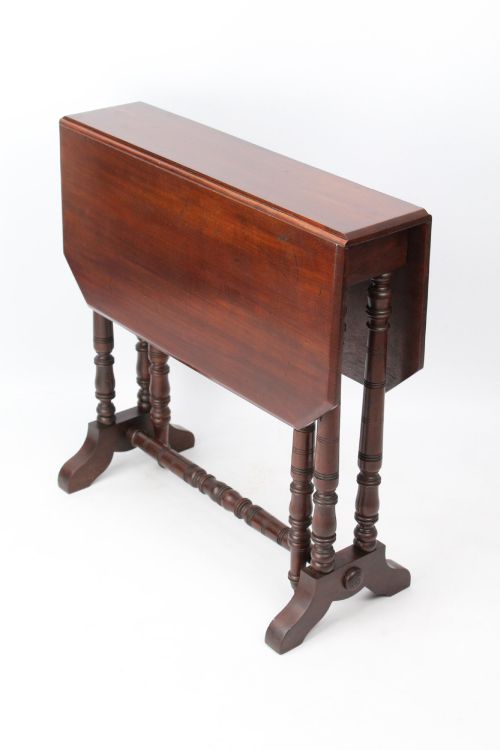
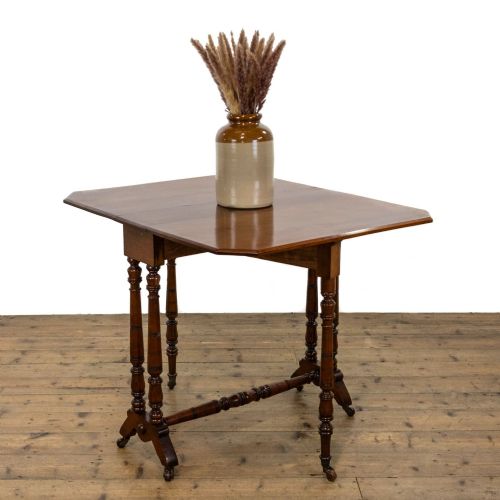
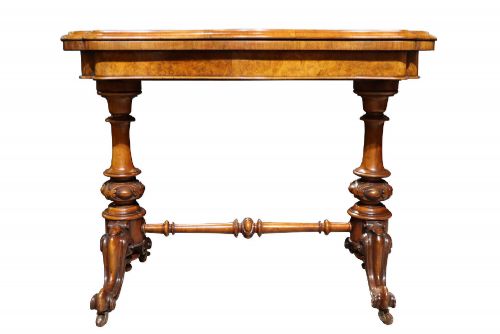
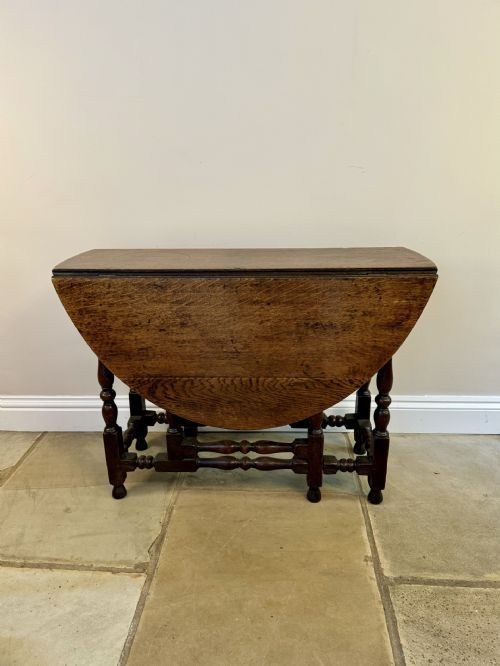
The versions most common on this page are Victorian burr walnut Sutherland tables and Georgian mahogany drop-leaf or card tables. Makers from the 18th century onward utilised folding leaves, gatelegs, and turn-over tops to maximise utility in smaller rooms.
The inventory covers oak, mahogany, walnut, and satinwood examples spanning the 17th century through the Edwardian era. You will spot specialised forms like tea tables, supper tables, and occasional tables that adapt hinged surfaces for daily domestic life.
Materials and Construction
Cabinet makers built these folding tables primarily in timber solids and veneers, selecting figured mahogany, burr walnut, and sturdy oak for durability and visual warmth. Secondary materials like brass hinges, ceramic castors, and iron fittings provided the necessary hardware for smooth leaf movement and folding actions.
Joinery methods focused on stability under weight, utilising gatelegs, swing-out rear frames, and pivoting hinges to support cantilevered leaves. Marquetry, painted decoration, and satinwood banding finished the decorative surfaces on formal card and tea tables.
Several tables hide secret wells beneath their fold-over tops once used to store heavy bone gaming counters.
Judgments of Quality
The distinction between ordinary and exceptional pieces rests upon timber selection and the crispness of secondary details like carved supports or marquetry. High-end examples display richly figured burr walnut or flame mahogany veneers matched symmetrically across the folding top.
Mechanical integrity defines the superior piece, where hinges, pivots, and gateleg actions operate smoothly without sagging when the leaves are fully extended. Lesser examples suffer from loose joints in the folding mechanism or poorly aligned leaves that disrupt the symmetry of the console profile.
Jenks & Woods
The Folding Leaf Console Table Glossary
- Sutherland table
- A narrow drop-leaf table with exceptionally slim legs and leaves that fold down almost vertically. This form became particularly popular during the Victorian period for occasional parlour use.
- Gateleg table
- A table with hinged legs that swing outward to support a drop-leaf when opened. The extra legs provide sturdy support beneath the extended leaves.
- Card table
- A folding table designed specifically for playing cards, often featuring a baize-lined interior and a folding or pivoting top. Georgian and Victorian examples frequently include small wells for counters.
- Drop-leaf table
- A table featuring a fixed central section and hinged flaps on either side that rise to expand the surface area. These pieces serve as dining tables, console tables, or occasional tables depending on their scale.
- Turn-over top
- A table top hinged along the back edge that folds open to double the surface area, revealing a polished wood or lined interior. This mechanism is standard on many Georgian and Regency games and tea tables.
Folding Leaf Console Table: Frequently Asked Questions
What is a folding leaf console table used for?
These tables function primarily as space-saving furniture that provides a narrow console surface against a wall when folded. Opening the leaves creates an instant dining surface, tea table, or card table.
Historically, households utilised these adaptable pieces in parlours, drawing rooms, and dining spaces where floor space needed to adapt quickly for guests or evening entertainment.
How do I tell a Georgian folding table from a Victorian one?
Georgian tables typically feature cleaner architectural lines, simpler mahogany timbers, and restrained inlay or carving. You see classic styles from the George II and George III eras focusing on proportion and structural restraint.
Victorian pieces often embrace richer wood grains like burr walnut, elaborate floral marquetry, and more complex turned or carved supports. The Victorian era also introduced the slender Sutherland table design with its distinctive drop leaves.
Are these tables sturdy enough for daily dining?
Most solid oak, mahogany, and walnut folding tables were built for heavy domestic use and easily withstand daily dining or desk work. The structural integrity relies on the quality of the gateleg or swing-frame mechanism supporting the leaves.
Care should be taken not to lean excessive weight on the unsupported outer edges of drop leaves. Properly maintained hinges and tight joints ensure the leaves remain level during use.
How do I care for antique wood folding mechanisms?
Keep wooden folding tables away from direct heat sources and dramatic humidity changes to prevent the timber and veneers from warping or cracking. Periodically check the brass hinges and pivot screws to ensure they remain snug without biting too deeply into the old wood.
Apply a quality beeswax polish occasionally to nourish the timber grain and protect the surface from minor spills. Avoid using harsh chemical cleaners that strip the original polished finish.