
Antique English Drop Leaf
An antique English drop leaf table offers folding flaps that extend surface space on demand, pairing domestic utility with centuries of fine cabinet-making.
Antique English Drop Leaf
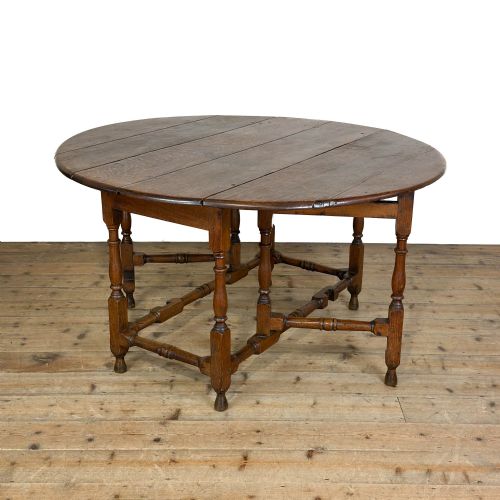
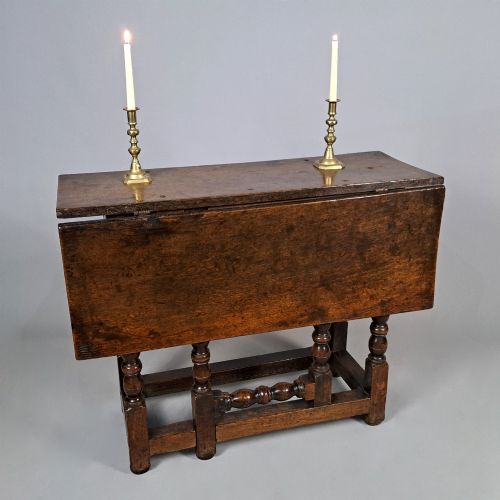
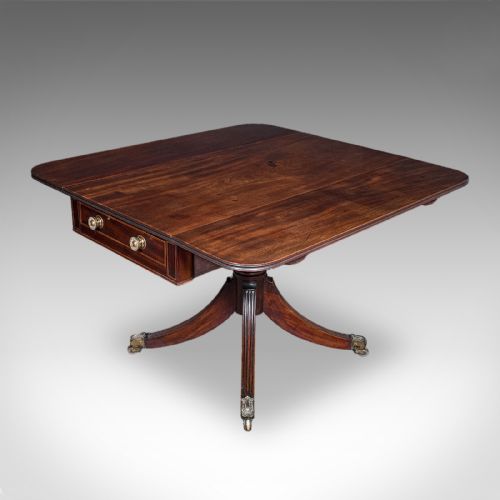
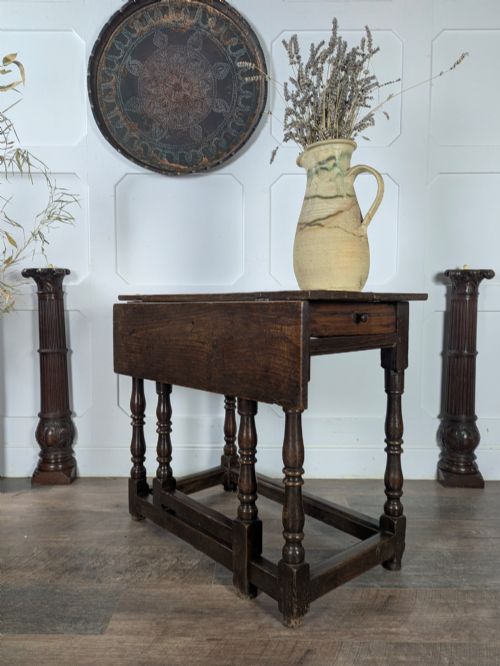
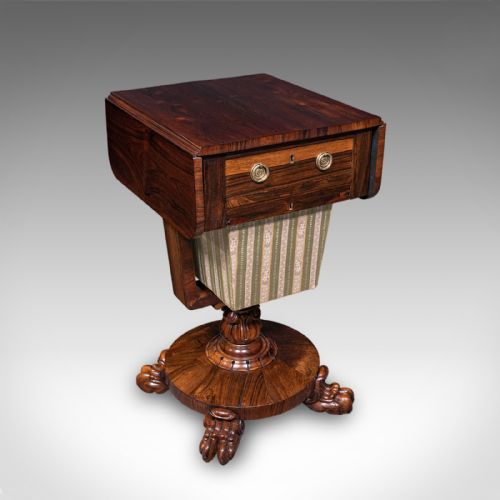
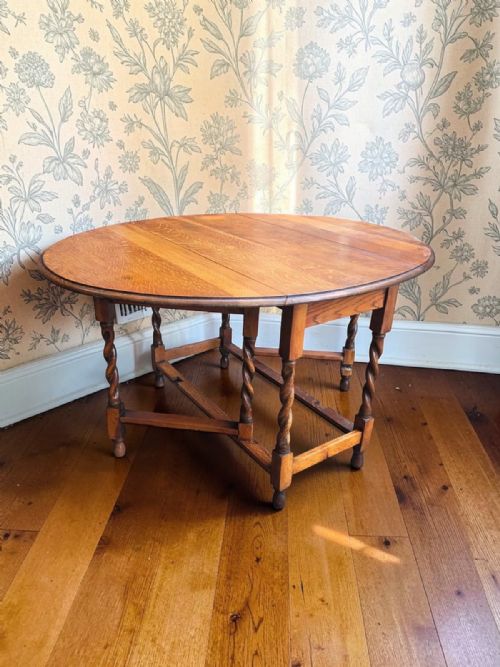
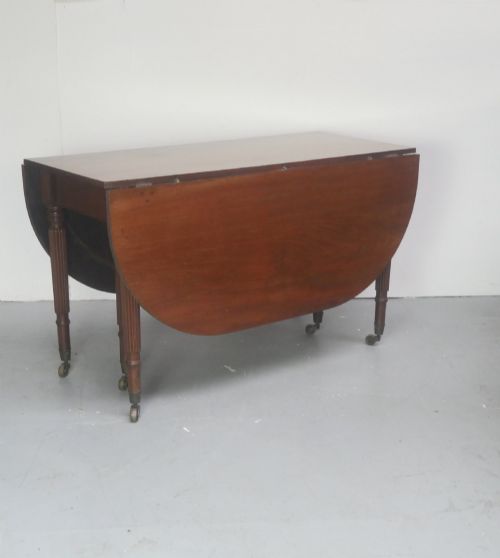
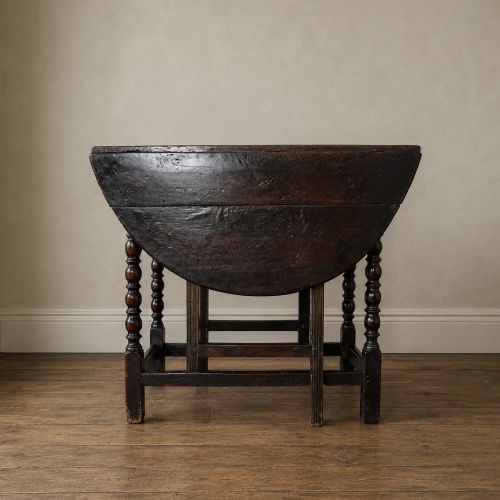
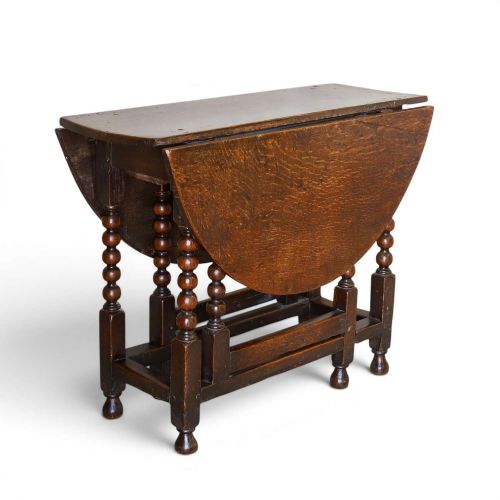
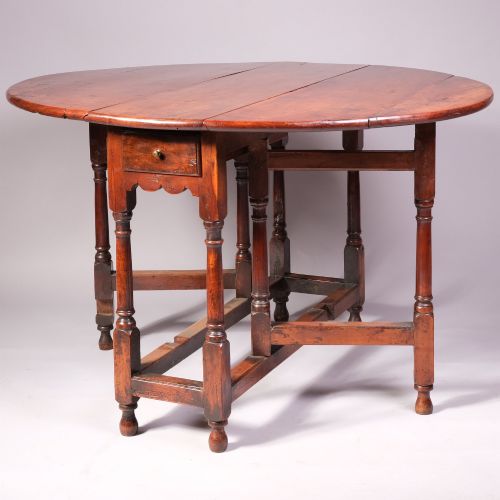
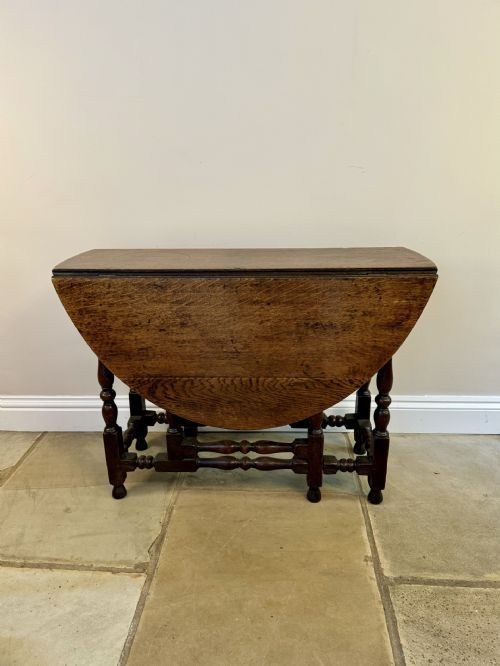
An antique English drop leaf table spans several centuries of domestic furniture, appearing in heavy seventeenth-century oak gateleg designs and lighter Georgian mahogany pembroke forms. Buyers encounter seventeenth and eighteenth-century oak dining pieces alongside nineteenth-century rosewood sofa tables and walnut sutherland tables.
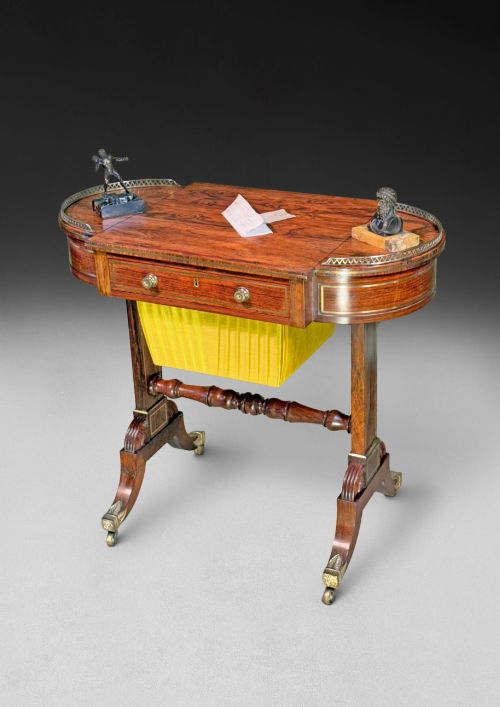
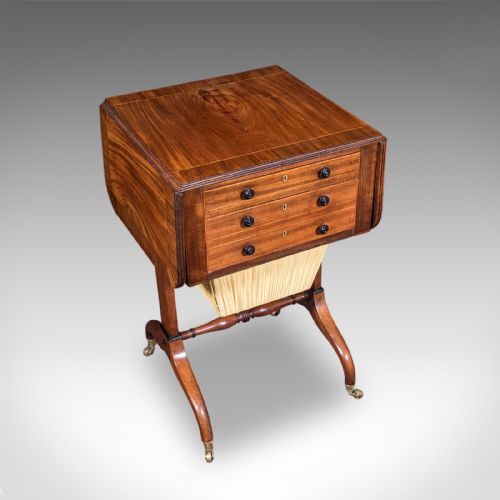
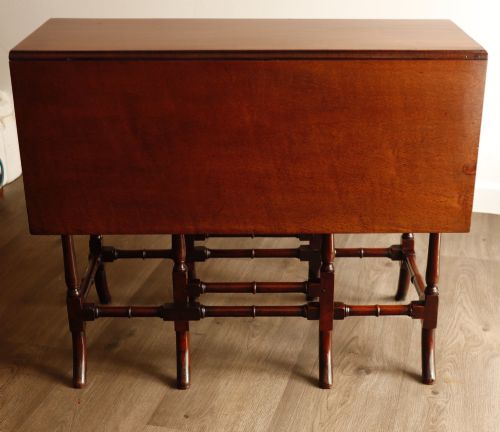
The selection includes compact tea tables, ladies work tables fitted for sewing and writing, and substantial dining tables designed to seat four to twelve persons. Earlier examples rely on sturdy gate legs to support the dropping leaves, while later Regency and Victorian versions utilise pivoting brackets or slender spider legs.
Materials and construction
Cabinet-makers relied heavily on native oak for early seventeenth and eighteenth-century pieces, later transitioning to imported dense timbers such as mahogany, rosewood, walnut, and satinwood. Brass hinges, castors, and drawer pulls frequently accent the primary woods, alongside occasional iron bracing in structural joints.
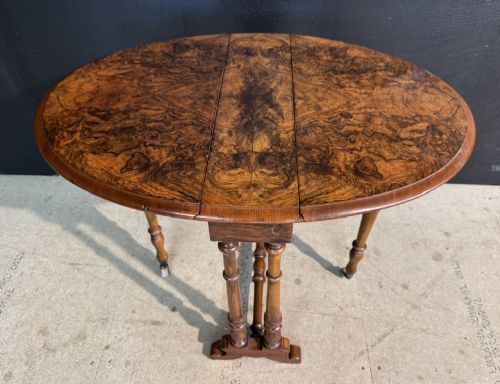
Joinery techniques evolved from robust pegged mortise and tenon frames in gateleg tables to precise dovetailing in drawers and delicate turning on barley twist or spider legs. Surfaces were finished to highlight the natural grain, utilising wax or polish on figured mahogany, burl walnut, and flame veneers.
Listings feature oak, mahogany, rosewood, and walnut across periods from the seventeenth century through the Victorian era.
Assessing the craftsmanship
Quality rests upon the selection of timber figures, such as highly figured flame mahogany or richly grained burr walnut, matched evenly across the folding leaves and top. Superior examples demonstrate tight, uniform joinery in the hinge mechanisms and smooth operation of supporting gates or drop brackets.
The sophistication of the leg turning, from simple baluster posts to intricate bobbin or barley twist configurations, dictates the refinement of the piece. Proportion, stability when the leaves are raised, and the retention of original brass hardware further distinguish workshop standards.
The Antique English Drop Leaf Glossary
- Gateleg table
- A table featuring hinged flaps supported by pivoting legs that swing out like a gate to hold the leaves.
- Pembroke table
- A small rectangular side or occasional table with two folding leaves on opposite sides and usually a single drawer.
- Sutherland table
- A narrow table with exceptionally slender folding leaves that drop down almost vertically on each side.
- Sofa table
- A rectangular occasional table traditionally placed before a sofa, featuring drop leaves and often twin pedestal supports.
- Spider leg
- A table designed with exceptionally thin, delicate turned legs braced by fine stretchers for lightweight stability.
Antique English Drop Leaf: Frequently Asked Questions
How did people use drop leaf tables?
These tables served primarily as flexible furniture for dining, tea service, and sewing within domestic parlours and dining rooms. Households expanded the folding leaves only when guests arrived or meals were served, returning the flaps to the dropped position to reclaim floor space.
Smaller variants like pembroke and work tables equipped bedrooms and drawing rooms with writing surfaces and storage drawers. Their adaptable footprint made them essential for rooms that served multiple daily functions.
How do I tell oak pieces from mahogany ones?
Oak pieces generally date from the seventeenth and eighteenth centuries, displaying a pronounced open grain, sturdy timber weight, and traditional gateleg frames. They often feature hand-turned baluster, bobbin, or barley twist legs suited to vernacular and revival interiors.
Mahogany tables typically date from the Georgian era onward, showing a smoother reddish-brown grain and finer detailing like slender tapered or spider legs. Cabinet-makers used mahogany for formal dining and pembroke tables, whereas oak dominated earlier country and farmhouse workshops.
Where should I place a drop leaf table?
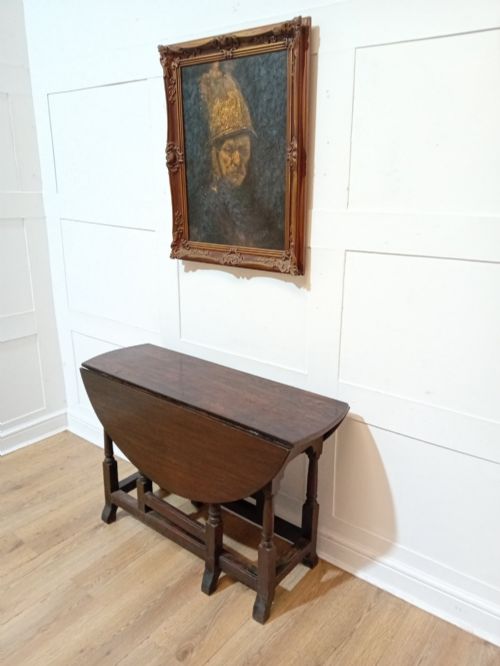
A drop leaf table fits well in entryways, against living room walls, or behind sofas where the leaves can remain lowered to save space. Pulling the table into the centre of a room and raising both flaps instantly creates a functional dining or display surface.
Compact sutherland and occasional tables work effectively beside armchairs as lamp stands or book holders. Their flexible design allows them to adapt to changing spatial requirements in modern or traditional rooms.