


Georgian Period Gateleg Table
A georgian period gateleg table offers clever folding leaves and sturdy timber construction, making it a practical antique for modern rooms.
Georgian Period Gateleg Table
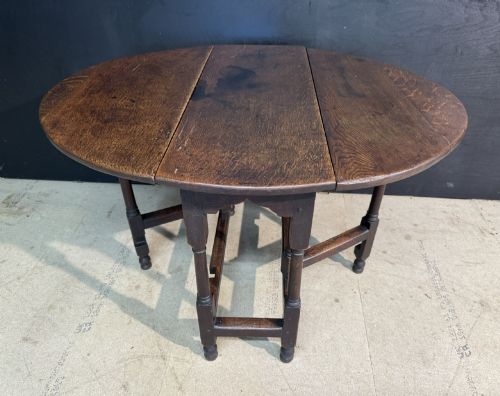
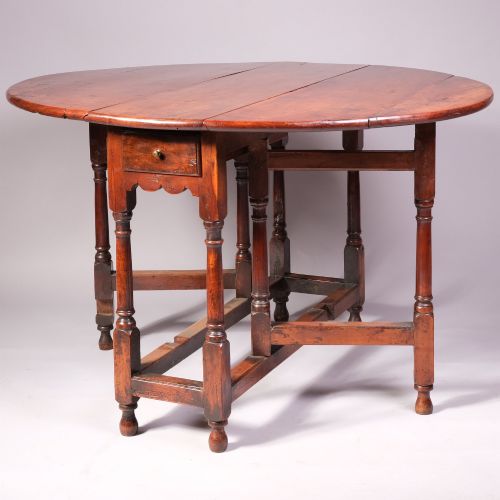
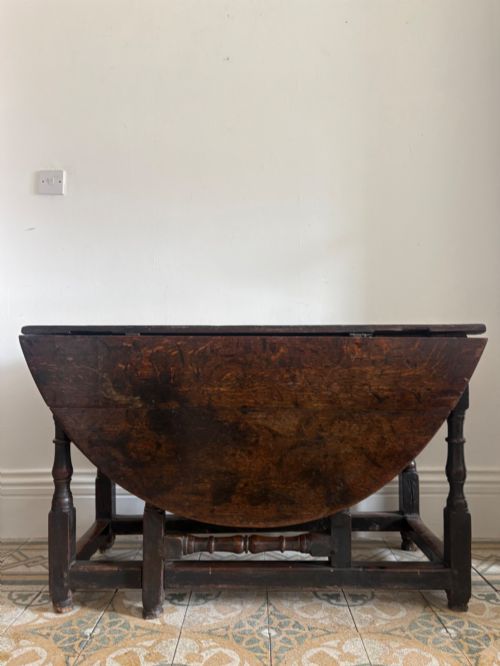
A georgian period gateleg table provides a versatile surface with hinged flaps supported by pivoting legs that swing out like gates. These pieces serve primarily as dining tables, drop-leaf tables, or occasional tables depending on their overall scale and proportions.
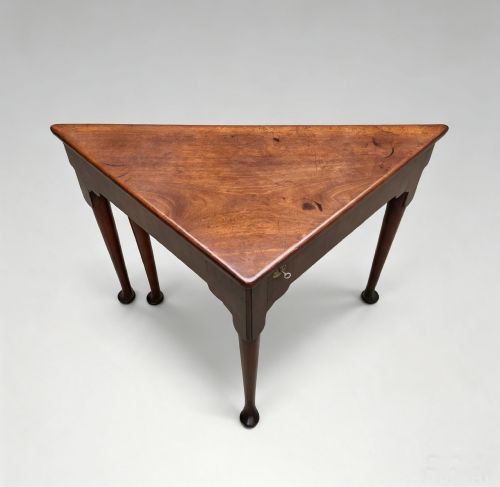
The versions most frequently met on this page date from the eighteenth century, spanning periods from Queen Anne and George II to George III and Chippendale styles. Oak and mahogany dominate the selection, alongside rarer examples in yew wood and walnut.
How they were made
Cabinetmakers constructed these tables using solid timbers such as oak, mahogany, and walnut, frequently selecting Cuban mahogany for substantial grain figure. Turned baluster legs support many of the oak examples, whilst spider legs appear on lighter mahogany variations.
Hardware elements incorporate brass and iron hinges or pivots to secure the moving drop leaves and folding gate legs. Plank tops feature on early examples, while later iterations utilise finely polished mahogany boards for formal dining use.
Listings feature oak, mahogany, Cuban mahogany, walnut, and yew wood across the eighteenth and nineteenth centuries.
What varies in quality
The standard of timber selection and proportion governs the distinction between ordinary and superior examples. Large scale tables executed in Cuban mahogany with balanced proportions sit at the higher end of the range.
Refinement in leg turnings and the crispness of joinery detail separate standard utility furniture from sophisticated pieces designed in the Chippendale or Queen Anne taste.
The Georgian Period Gateleg Table Glossary
- Gateleg table
- A table with hinged leaves supported by legs that swing outward on a gate action. This design allows the surface to expand for dining and fold down compactly when not in use.
- Baluster leg
- A turned vertical furniture support shaped with a swelling contour resembling a small architectural column. These turned members are commonly found on seventeenth and eighteenth century oak tables.
- Cuban mahogany
- A dense, dark timber harvested in the Caribbean and prized for cabinetmaking during the eighteenth century. It exhibits a rich grain and deep patina over time.
- Drop-leaf table
- A table featuring a central fixed section and two hinged flaps that drop down at the sides. The leaves require supplementary supports such as swinging legs or brackets to remain horizontal.
Georgian Period Gateleg Table: Frequently Asked Questions
What is a gateleg table?
A gateleg table is a form of drop-leaf table where the hinged leaves are supported by legs that pivot outward on a gate-like frame.
This clever mechanism allows the surface area to expand or contract easily according to the needs of the room.
How were these tables used?
These pieces functioned primarily as dining tables or occasional tables in domestic interiors.
Their folding design made them adaptable for smaller spaces, allowing them to sit against a wall until required for meals.
What woods were used for these tables?
Cabinetmakers utilised a variety of native and imported timbers depending on the period and style.
Oak appears frequently in earlier pieces, whilst mahogany, Cuban mahogany, walnut, and yew wood define the eighteenth century examples.
How do I tell periods apart?
Differentiating periods relies on observing the timber choice, leg turning styles, and overall architectural influence.
Early pieces often feature solid oak with turned baluster legs, whereas later eighteenth century items display mahogany, spider legs, or Chippendale details.