


Floral Porcelain Dessert Dish
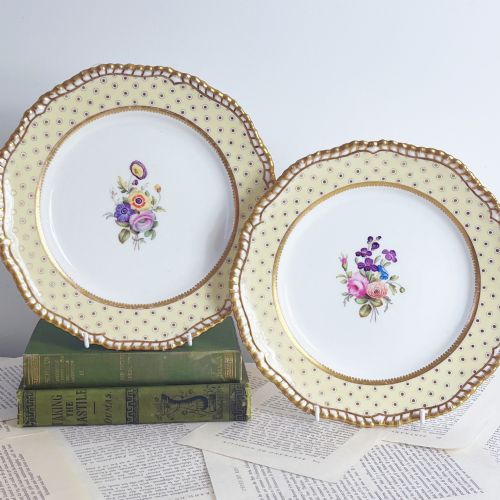
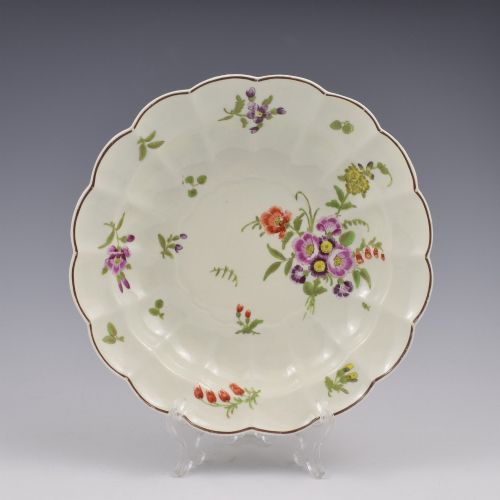
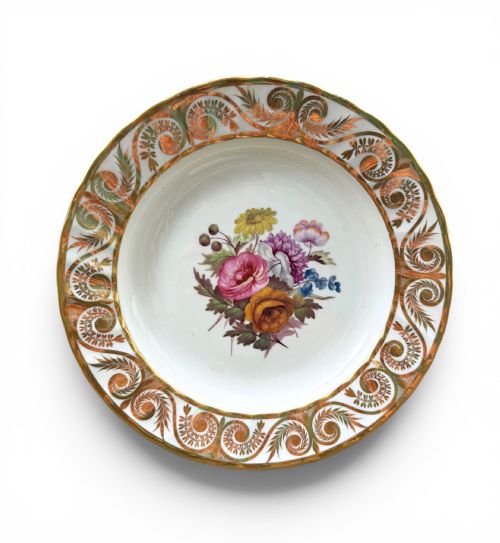
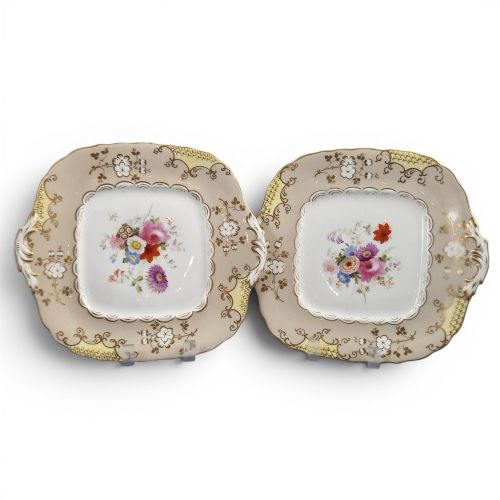
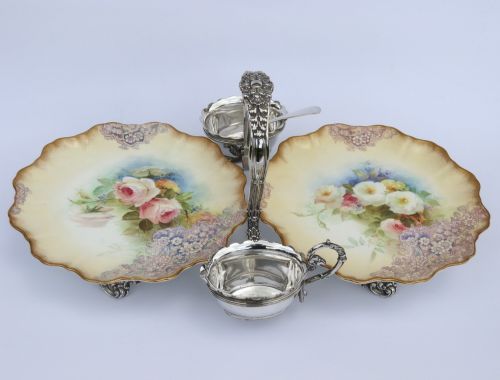
A floral porcelain dessert dish brings botanical painting directly to the table, offering a colourful centrepiece for serving fruit and sweets after a meal.
Floral Porcelain Dessert Dish
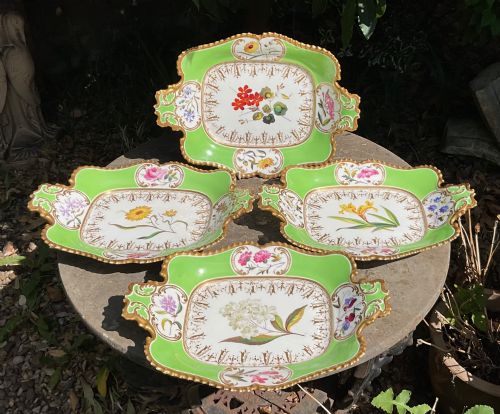
A floral porcelain dessert dish forms part of a wider service intended for the final course of a formal dinner, designed to hold fruit or confections. You will encounter individual plates, shaped serving dishes, and basketweave forms across this selection.
The pieces span multiple periods from the eighteenth through to the twentieth century, with Regency and nineteenth-century examples appearing most frequently. Makers decorated these items with hand-painted botanical studies, botanical serving dishes, and gilt highlights.
How they were made
Potters shaped these dessert dishes using porcelain, bone china, and ironstone, often employing moulded or basketweave bodies before firing. Artisans then applied polychrome enamel painting by hand alongside gold leaf and gilding.
Factories utilised distinct glaze formulas and transfer-printing combined with brushwork to secure the painted floral motifs. Skilled hands applied final touches of enamel colour and gold leaf prior to a secondary kiln firing.
Even dessert plates needed a proper botanical education when painters botanised floral specimens straight onto the kiln.
What varies in quality
Quality rests upon the execution of the hand painting and the crispness of the porcelain moulding, where botanical accuracy and brushwork set superior examples apart. Finer pieces demonstrate careful control of enamel colours and substantial application of gold leaf.
The distinction between standard production and top-tier output involves the prestige of the factory, such as Worcester or Coalport, and the complexity of the shaped edges. Well-preserved gilding and finely detailed floral studies elevate the standing of a dessert service.
Spode·Worcester·Chamberlains Worcester·Coalport·Doulton Burslem·John Ridgway·Rockingham Pottery·Minton·Flight, Barr and Barr·Wedgwood·Bloor Derby·Royal Crown Derby
The Floral Porcelain Dessert Dish Glossary
- Bone china
- A type of porcelain containing bone ash that produces a strong, bright white body suitable for intricate moulding. This material allowed makers to form thin yet durable dessert plates.
- Enamel
- Opaque vitreous composition applied to pottery and fired to create coloured decorative designs. Artisans used enamel to render botanical flower specimens upon the porcelain surface.
- Gilding
- The application of gold leaf or powdered gold to ceramic surfaces for decorative effect. This technique highlights the rims and moulded borders of dessert dishes.
- Ironstone
- A heavy, durable earthenware developed to resist chipping while mimicking porcelain. It provides a robust alternative for nineteenth-century service wares.
- Servicing
- A complete or partial set of matching tableware created for a specific course. A dessert service typically includes plates and larger serving dishes.
Floral Porcelain Dessert Dish: Frequently Asked Questions
What were floral porcelain dessert dishes used for?
These dishes served fruit, nuts, and sweetmeats during the final course of a formal nineteenth-century dinner party. They formed part of an extensive matching service displayed prominently on the table.
Guests selected sweet items from these plates while conversation continued after the main meal concluded. The botanical paintings provided a decorative talking point for diners.
How do I care for antique porcelain dishes?
Wash these pieces gently by hand using mild detergent and lukewarm water to protect the hand-painted enamels. Avoid dishwashers and harsh abrasive sponges that damage delicate gilding.
Store them securely in cabinets using plate dividers to prevent rim friction. Handle serving dishes with two hands due to their age and weight.
How do I distinguish Regency pieces from Victorian ones?
Regency dessert dishes often feature classical moulded borders, apple green grounds, and precise botanical painting from the early nineteenth century. Makers during this era favoured refined shapes and distinct factory marks.
Victorian pieces frequently display heavier moulding, vibrant transfer-printed outlines filled with colour, and broader floral arrangements. Look at the style of the gilding and the body weight for period clues.
Can I use these antique dishes for serving food today?
You can use these pieces for serving dry foods such as fruit, biscuits, or small cakes during special occasions. Ensure you wash them by hand immediately after use.
Avoid serving highly acidic foods that might affect antique glazes over extended periods. Most owners prefer to display them in cabinets or on walls as decorative plates.