
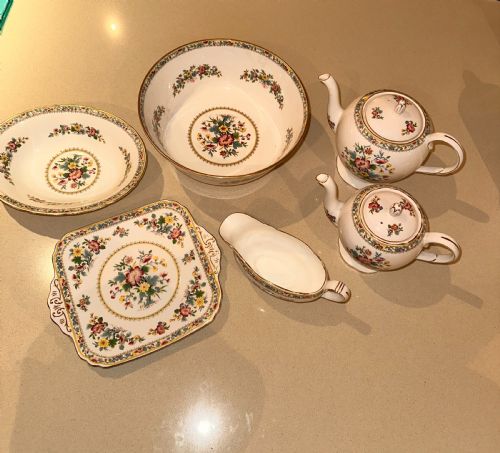


Floral Painted Teapot
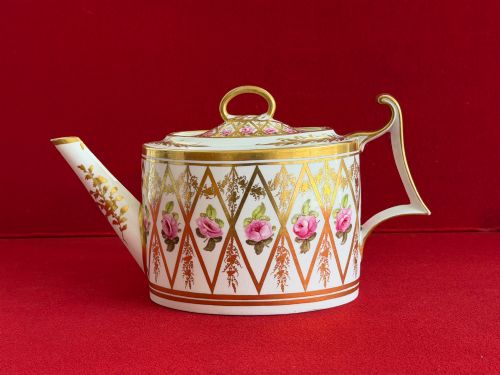
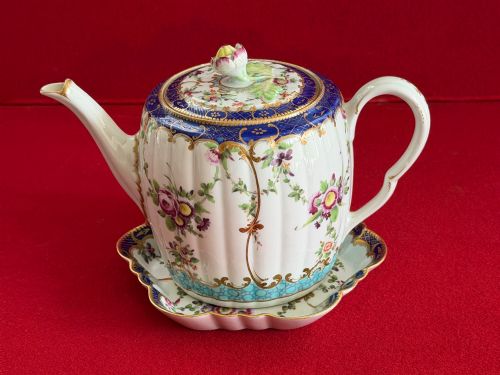
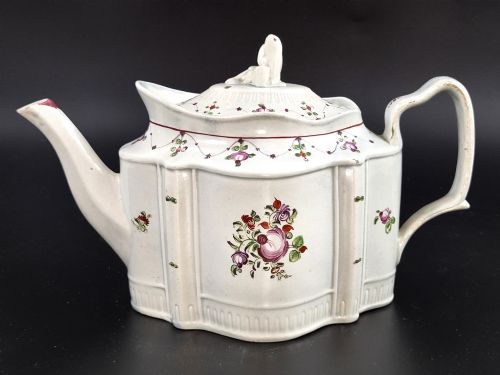
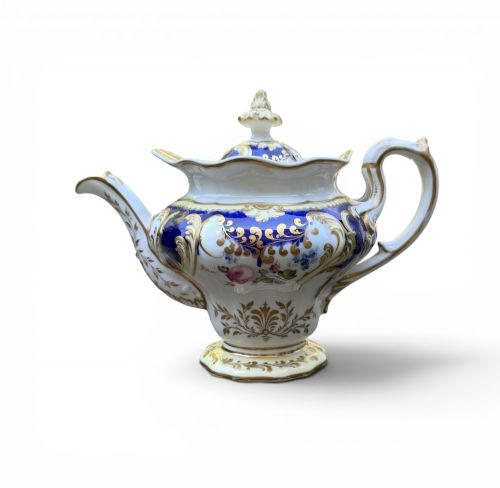
These floral painted teapot examples bring hand-painted botanicals to the table, spanning Georgian elegance down to Art Deco designs.
Floral Painted Teapot
A floral painted teapot serves as a focal point for historic tea services and standalone table settings. When you search for this phrase, you encounter forms ranging from Georgian barrel shapes and commode-shaped earthenware to 1930s sets.
The material origins stretch from eighteenth-century porcelain to nineteenth-century earthenware and ceramic. Pieces originate from English factories, continental makers, and Chinese export traditions.
Vessels take various structural forms, including globular bodies, toy sizes, and octagonal profiles. Surviving examples often arrive accompanied by matching stands or part of larger breakfast sets.
How they were made
Potters shaped porcelain, earthenware, and ceramic bodies using traditional moulding and throwing techniques before applying protective glazes. Bodies were then fired to receive hand-applied enamel floral decoration.
Finishing touches incorporated gilding, gold leaf accents, and moulded elements such as flower head knops or widow finials. Certain vessels received specific pattern numbers and factory marks during production.
Listings feature pieces spanning from 1750 through the 1930s, utilising porcelain, earthenware, enamel, and gold leaf.
What varies in quality
Quality rests in the precision of the hand-painted enamel botanical details and the crispness of the porcelain or earthenware moulding. Superior examples display carefully balanced floral compositions and finely rendered gilding.
The refinement of form distinguishes finer pots, from delicate Dr Wall period pieces to robust Staffordshire shapes. Intricate decorative elements like specialised handles, knops, and accompanying stands elevate the standing of a piece.
Royal Worcester·Thomas Wolfe·Thomas Harley·Clarice Cliff·James Kent
The Floral Painted Teapot Glossary
- Enamel
- Opaque glass used for colourful decoration painted over or under the glaze. Enamel flowers provide the vibrant palette seen across these pots.
- Gilding
- The application of gold or gold leaf to ceramic surfaces for highlights and borders. Gilding frames the floral painted panels on many eighteenth and nineteenth-century vessels.
- Knop
- The small decorative knob on the lid of a tea vessel. Flower head knops serve both a functional and aesthetic purpose on period pots.
- Commode-shaped
- A bulbous, swelling ceramic body style popular in early nineteenth-century earthenware. This form provides a generous capacity for brewing tea.
- Dr Wall period
- The initial formative period of Worcester porcelain production named after its founder. Pieces from this era command attention for their softpaste bodies and delicate painting.
Floral Painted Teapot: Frequently Asked Questions
How do I date an old floral painted teapot?
Dating relies on examining the ceramic body, glaze characteristics, and factory marks underneath the base. Stylistic clues like rococo handles or Art Deco geometry also point to specific periods.
Comparison with documented patterns helps narrow down the decade of production. Eighteenth-century pieces typically show softer porcelain pastes compared to later nineteenth-century earthenware.
Can I still use these teapots for daily tea?
Most collectors treat antique and vintage teapots as display pieces or gentle use items rather than daily drivers. Hairlines, crazing, and fragile historic gilding require careful handling.
Hand washing in lukewarm water is essential to preserve the hand-painted enamels. Sudden temperature changes can crack aged ceramic bodies.
What is the difference between porcelain and earthenware teapots?
Porcelain is vitrified, denser, and often translucent when held to the light. Earthenware is porous before glazing and generally heavier in the hand.
Georgian and eighteenth-century makers favoured porcelain for fine tea wares, while nineteenth-century utilitarian pots frequently utilised earthenware.
Why do some teapots include a matching stand?
Stands protected polished wooden tables and tablecloths from hot tea drips and condensation. They were manufactured en suite with the teapot to create a uniform table setting.
Finding a teapot with its original matching stand adds significantly to the completeness of the set.