
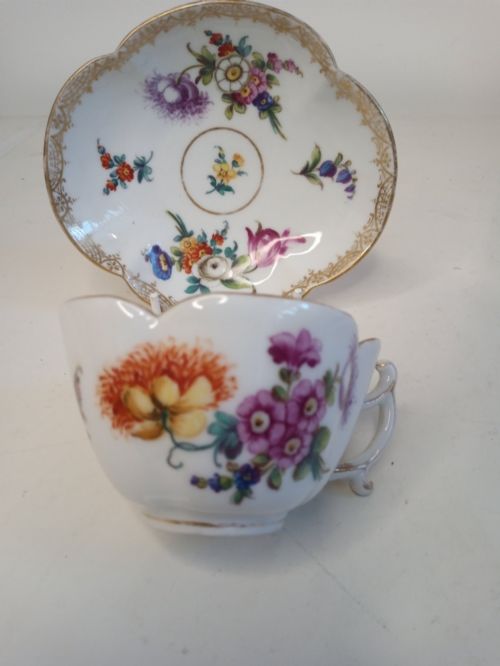
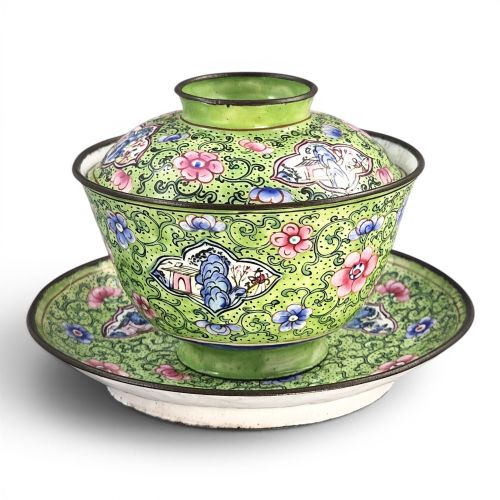


Floral Painted Teacup
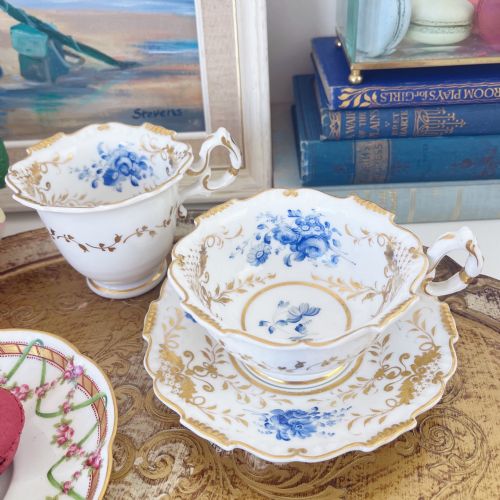
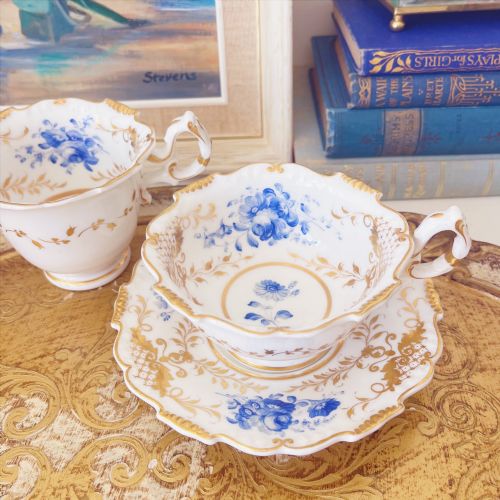
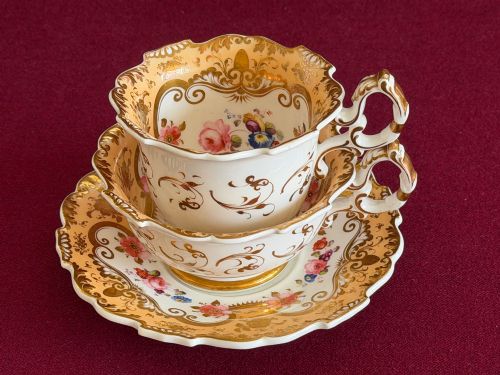
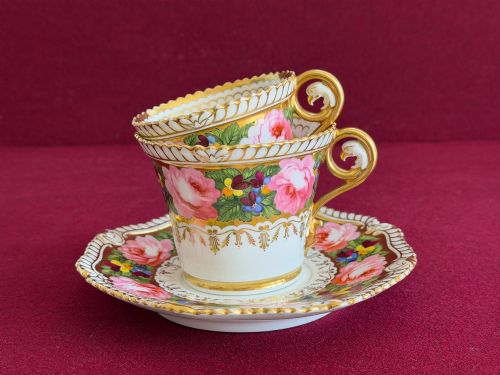
A floral painted teacup brings delicate botanical brushwork and bright gilding directly to the table.
Floral Painted Teacup
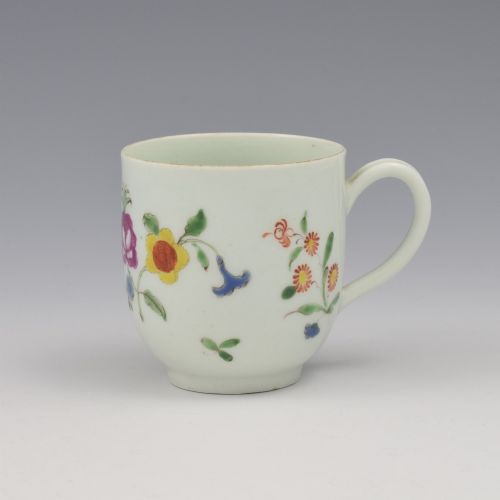
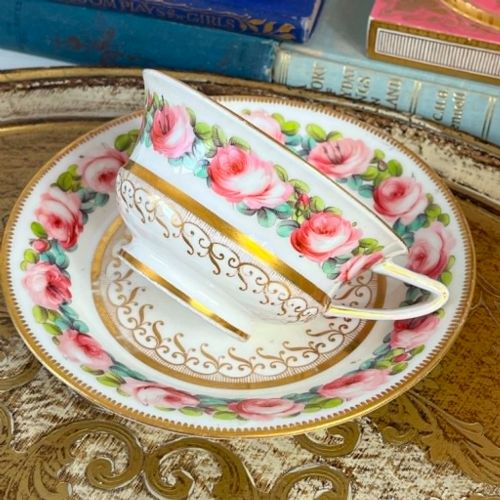
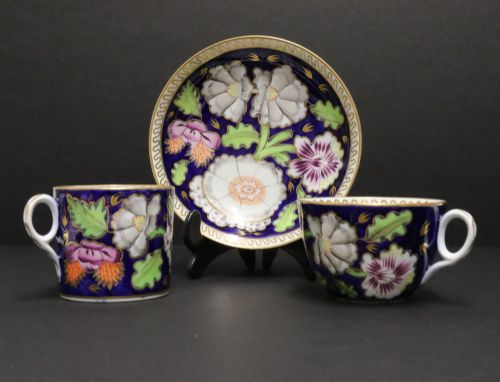
A floral painted teacup is a handheld vessel decorated with botanical motifs, often paired with a matching saucer or forming part of a larger trio. These items span periods from the eighteenth century through the Victorian era and into the early twentieth century.
The pieces appearing on this page include fragile creamware pottery, bone china, and fine porcelain vessels. Buyers frequently encounter nineteenth-century English trios alongside Continental porcelain and Chinese export wares.
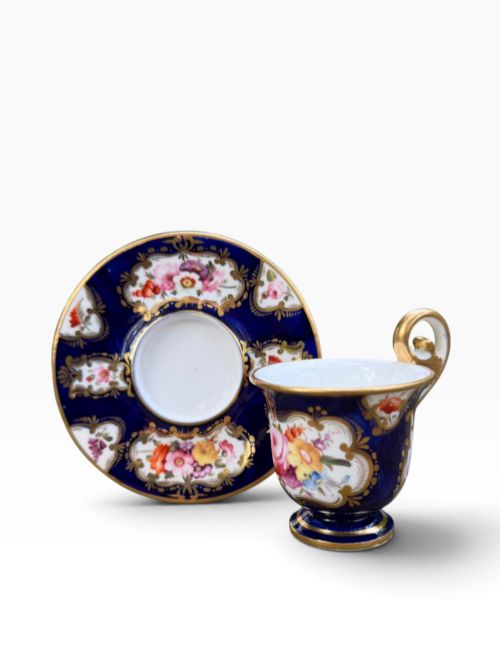
Forms range from simple morning cups to elaborate cabinet cups and demitasse vessels. Many incorporate gilded highlights or delicate saucers designed for social tea-drinking rituals.
How they were made
Potters shaped these vessels using hard-paste porcelain, soft-paste porcelain, bone china, or creamware, often throwing them on a wheel or pressing them into moulds. Artisans then applied underglaze colours or handpainted enamels directly onto the ceramic body.
Gilding was added using gold leaf or liquid gold highlights, which required a secondary firing in a kiln to adhere the metal to the glaze. Skilled painters rendered floral sprays, roses, and Dresden flowers by hand before the final glazing process.
The selection includes cabinet cups, demitasse vessels, and complete trios from English and Continental factories.
What varies in quality
Quality rests in the precision of the handpainted botanical details and the crispness of the porcelain form. Superior examples display delicate, lifelike brushwork rather than mechanical transfer-printed outlines.
The application of gold leaf and gilding dictates the grade of the piece, with heavier, burnished gold finishes marking the upper tier of production. Finer bodies show greater translucency when held to the light, separating everyday tablewares from top-tier cabinet pieces.
H & R Daniel·Chamberlain Worcester·Richard Chaffers·Davenport·Coalport·Royal Worcester·Moscow Factory Gardner·Meissen·Hirsch Dresden·KPM
The Floral Painted Teacup Glossary
- Trio
- A matched set consisting of a teacup, a coffee cup, and a matching saucer. These became popular breakfast and tea accessories during the Georgian and Regency periods.
- Demitasse
- A small cup used for serving strong coffee or espresso. They frequently feature elaborate handpainted floral motifs and generous gilding.
- Cabinet cup
- A decorative cup intended primarily for display in a cabinet rather than for daily use. These pieces often exhibit superior porcelain bodies and intricate artistic detail.
- Creamware
- A type of fine earthenware developed in the eighteenth century, characterised by its pale cream-coloured glaze. It provided an affordable and smooth surface for painted decoration.
- Gilding
- The application of gold leaf or gold paint to ceramic surfaces for ornamentation. High-quality pieces often feature burnished gold highlights along the rims and handles.
Floral Painted Teacup: Frequently Asked Questions
What is a floral painted teacup?
A floral painted teacup is a ceramic vessel adorned with hand-painted botanical motifs, flowers, or rose sprays. These pieces were produced by various European and Asian factories over the eighteenth, nineteenth, and early twentieth centuries.
They often come as part of a duo or trio with a matching saucer. Many were designed for refined social gatherings or as ornamental cabinet display items.
How were floral teacups used?
These cups were utilised for drinking tea, coffee, or chocolate during formal morning and afternoon social rituals. Wealthy households displayed finer cabinet cups in glass-fronted furniture rather than drinking from them.
Over time, changing fashions transformed them from functional tableware into collectable decorative objects. Today, collectors preserve them as examples of historic ceramic artistry and hand-painted design.
How do I identify the period?
Dating a floral teacup involves examining the ceramic body, glaze characteristics, and factory marks on the underside. Eighteenth-century pieces often show softer bodies and hand-potted irregularities, while nineteenth-century items display sharper moulded forms and refined gilding.
Stylistic cues such as Regency shapes or Victorian floral palettes also help narrow down the decade of production. Comparing the piece to documented factory patterns provides the most reliable timeline.
Are these cups safe for daily use?
Most antique floral teacups are delicate museum-quality objects composed of soft-paste porcelain, bone china, or earthenware. Historic glazes and handpainted enamel or gold leaf decorations can wear down or degrade with modern dishwashers and hot liquids.
Collectors generally recommend gentle hand-washing for sturdy pieces and preserving fragile cabinet cups purely for display. Treating them with care ensures the handpainted details remain intact for years to come.