






Floral Painted Imari Plate
A floral painted imari plate brings together rich cobalt underglaze, enamel and ironstone across Japanese and English traditions, offering a striking display for a cabinet or wall.
Floral Painted Imari Plate
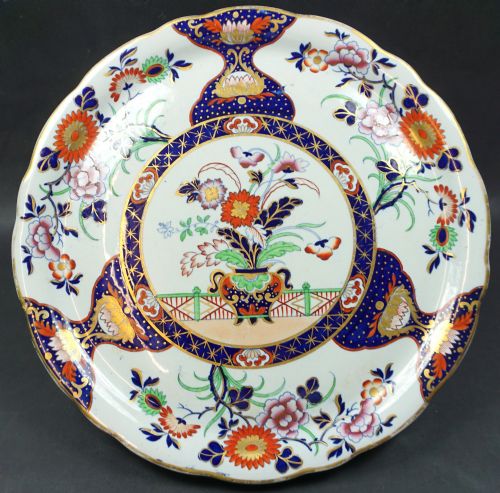
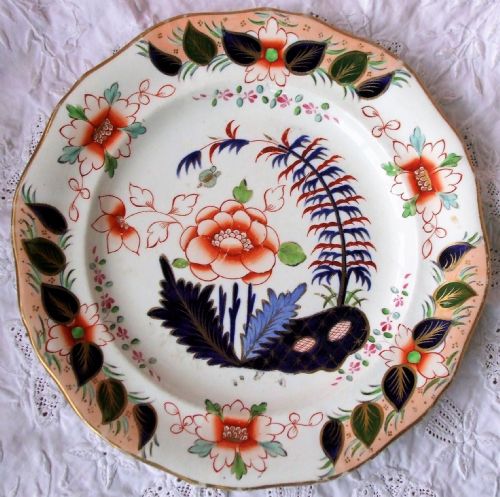
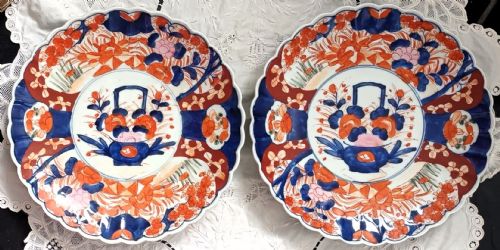
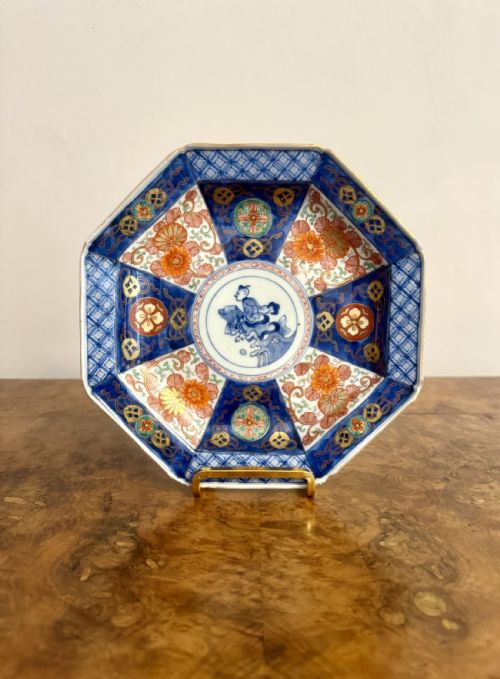
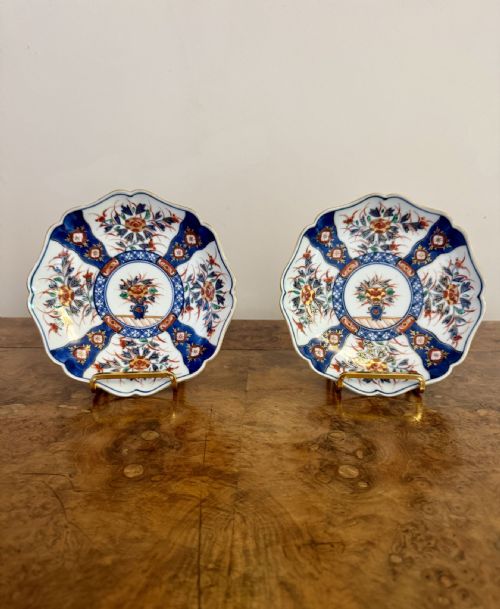
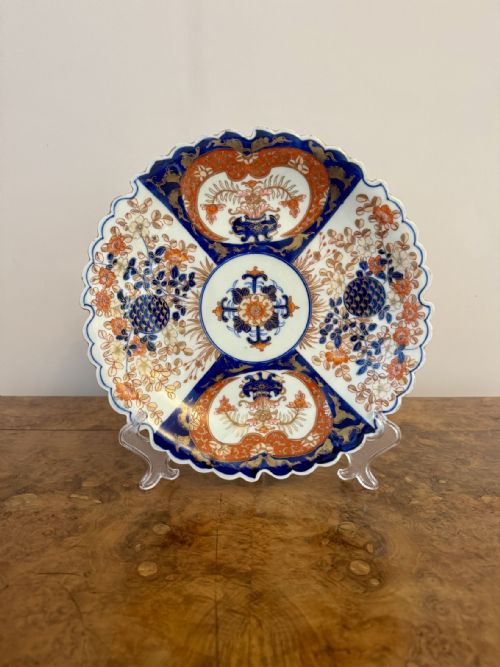
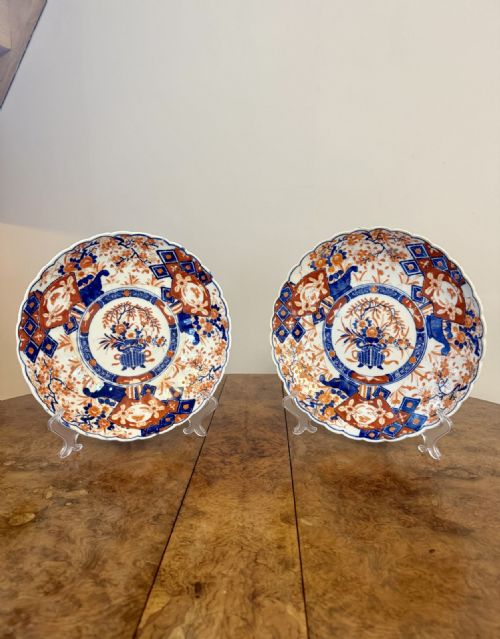
A floral painted imari plate represents a rich tradition of decorative ceramics produced across Japanese Meiji, Edo and English Georgian periods. Buyers encounter varied forms on this page, including large chargers, scalloped edge dishes, hexagonal plates and deep serving vessels.
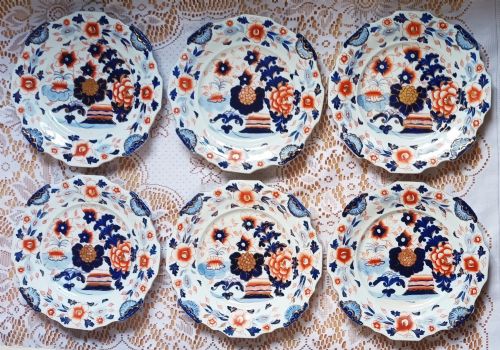
The aesthetic bridges several origins, featuring authentic Japanese porcelain alongside English ironstone interpretations inspired by eastern palettes. These pieces range in date from the mid-eighteenth century up to the early twentieth century.
Most examples found in current selections date from the nineteenth and early twentieth centuries, spanning Victorian and Edwardian periods. They function primarily as decorative chargers and wall plates due to their generous diameters and striking pigments.
How they were made
Potters built these wares using ceramic, porcelain and ironstone bodies, shaped by hand or moulded into hexagonal, scalloped and circular profiles. Artisans applied cobalt underglaze beneath a clear protective finish to establish the foundational blue tones.
Overglaze decoration followed, employing vibrant enamel pigments and gold leaf or gilding to highlight intricate floral and avian motifs. Firing in traditional kilns fused the metallic oxides and enamel layers to the ceramic surface.
Early potters occasionally hid small floral flourishes on the reverse of chargers, rewarding anyone curious enough to turn a plate over.
What varies in quality
Quality depends upon the precision of the hand painting and the crispness of the cobalt underglaze against the enamel highlights. Superior pieces display confident brushwork and balanced compositions without blurring or bleeding of the pigments.
The application of gold leaf and gilding dictates the refinement of the surface, with finer items retaining brilliant metallic lustre. Physical condition, structural symmetry and the crispness of moulded edges such as scallops or hexagonal facets also separate standard examples from exceptional ones.
Hicks & Meigh·John Davenport of Longport
The Floral Painted Imari Plate Glossary
- Imari
- A style of decorative ceramic originating in Japan, characterised by a palette of cobalt blue, iron red and supplementary gilding. English potteries later adopted this distinct visual scheme.
- Charger
- A large ornamental plate typically measuring over twelve inches in diameter, designed for display on walls or sideboards rather than dining use. These pieces often feature complex central medallions.
- Ironstone
- A heavy, durable type of ceramic developed in nineteenth century England to imitate porcelain. It provides a robust body for painted patterns.
- Cobalt Underglaze
- A blue pigment applied to raw ceramic body before glazing and firing, ensuring the colour remains permanent and protected beneath the glass layer.
- Meiji Period
- An era in Japanese history spanning from 1868 to 1912, noted for detailed porcelain production and export ceramics destined for western markets.
Floral Painted Imari Plate: Frequently Asked Questions
Were these plates used for dining?
Many larger examples function primarily as decorative chargers and wall plates rather than tableware, owing to their substantial weight and size. Smaller dishes served functional roles in domestic settings before becoming cabinet pieces.
Collectors generally display them on plate stands or mount them on walls to protect the delicate enamel and gilding from daily wear.
How do I date an imari plate?
Dating relies on examining the ceramic body, the manufacturing marks on the reverse and the characteristics of the painted palette. Eighteenth century pieces often display heavier porcelain bodies and softer underglaze tones.
Nineteenth century and later pieces exhibit sharper transfer or hand-painted details, sometimes accompanied by maker names associated with English ironstone or Japanese export stamps.
What is the difference between Japanese and English imari?
Japanese versions utilise true porcelain bodies with traditional cobalt underglaze and hand-painted enamel floral motifs originating from Arita. English interpretations frequently employ heavy ironstone bodies produced by potteries copying the eastern aesthetic.
Both traditions share the signature blue and red palette accented with gilding, yet the underlying clay and potting techniques remain distinct.
How should I care for antique ceramic plates?
Keep pieces out of direct sunlight to prevent the enamel colours and gilding from fading over extended periods. Dust them gently with a soft dry cloth rather than using liquid cleaning agents.
Avoid submerging antique ceramics in water, particularly pieces featuring delicate overglaze enamel or gold leaf application.