

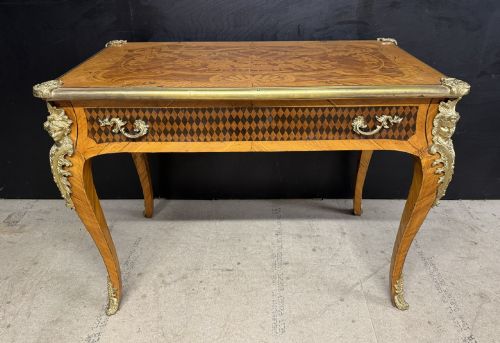
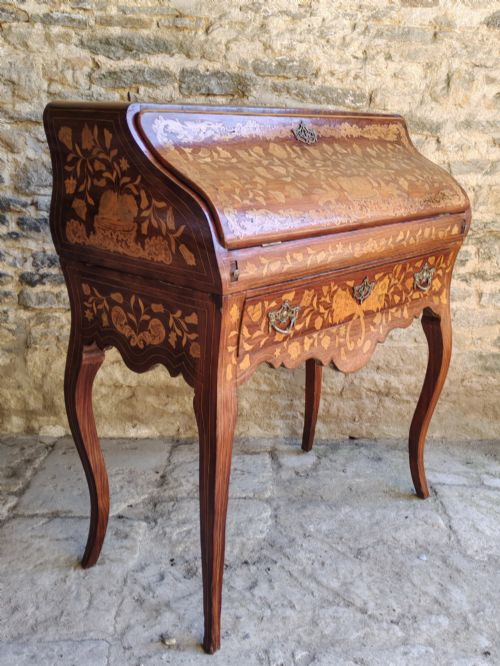
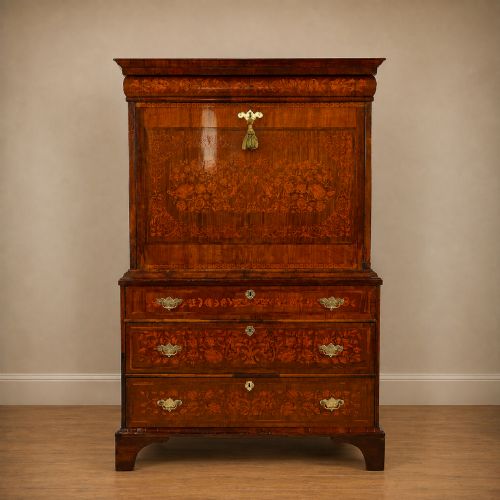
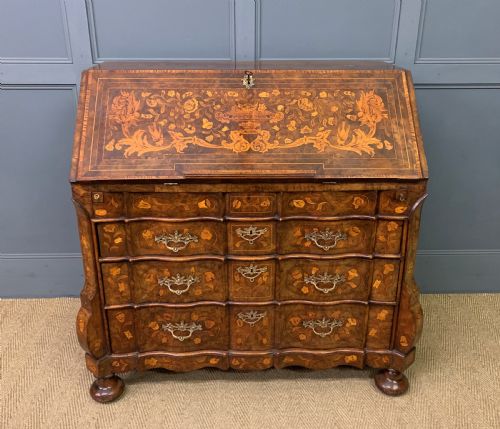


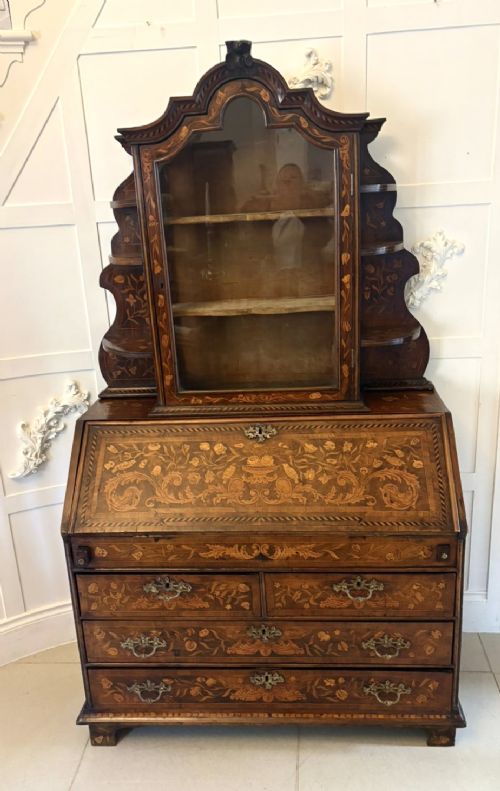
Floral Inlay Bureau
A floral inlay bureau brings together practical writing storage and intricate botanical woodwork, creating a striking centrepiece for a room.
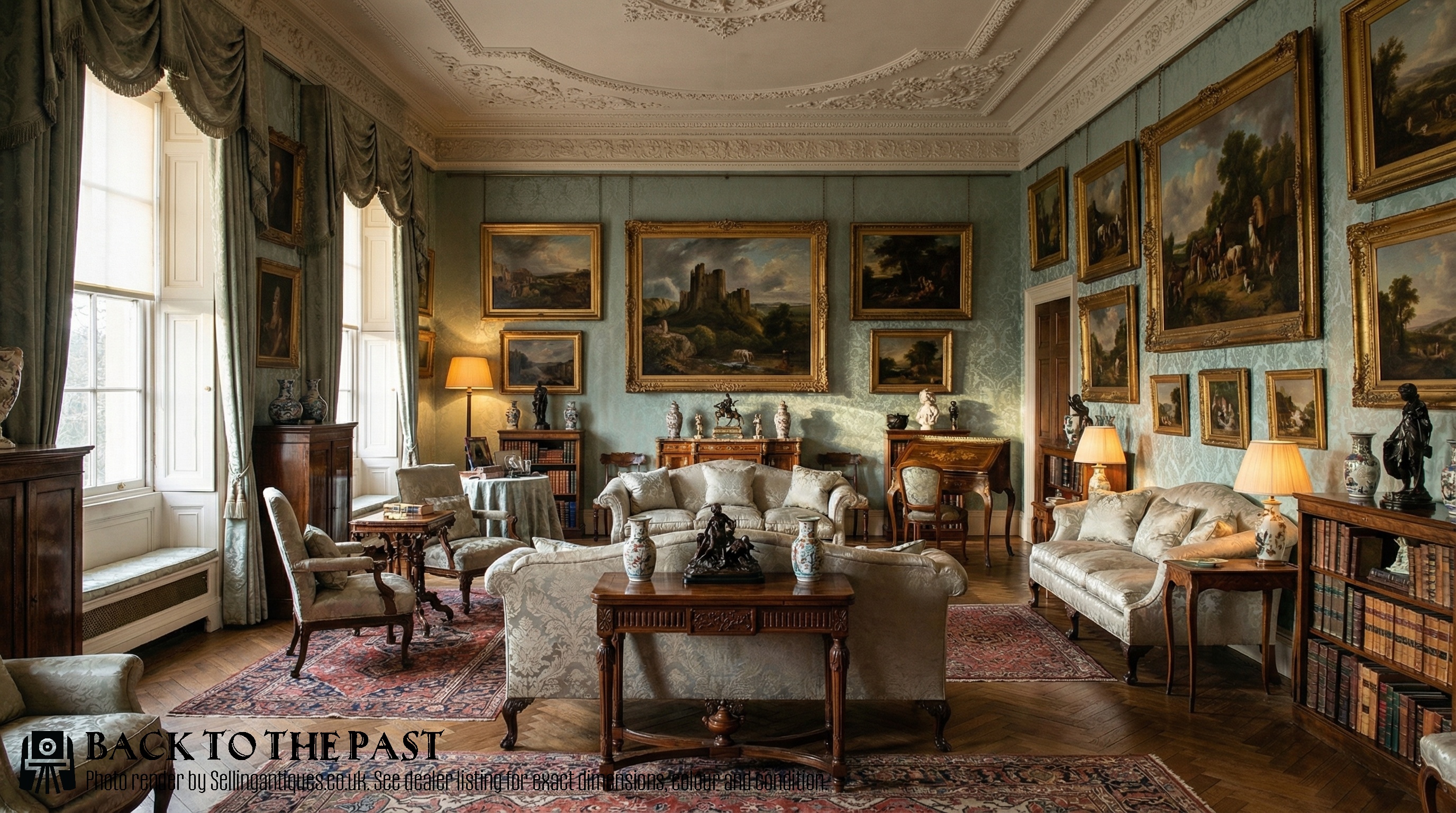
Floral Inlay Bureau
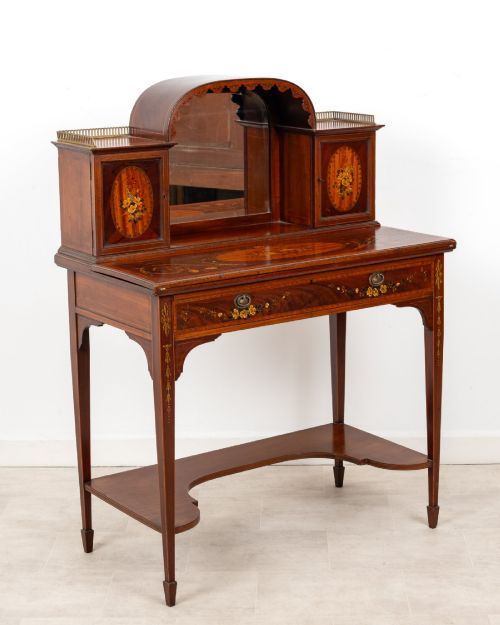
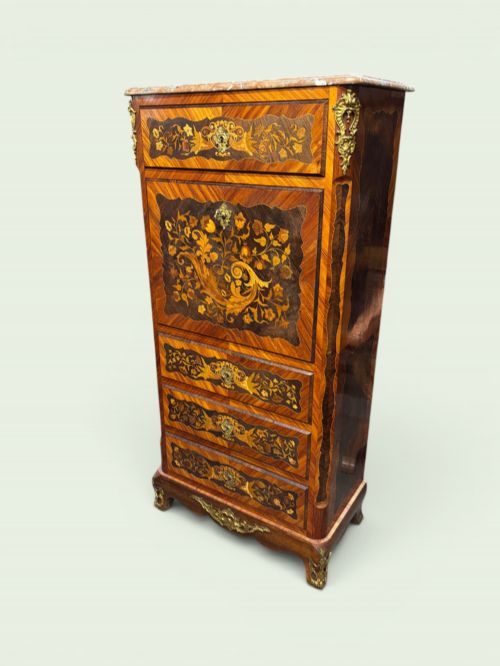
A floral inlay bureau serves as a dedicated writing desk that conceals compartments behind a sloping lid or drop-front panel. When searching for a floral inlay bureau, buyers frequently encounter pieces originating from Dutch and French workshops spanning the eighteenth and nineteenth centuries.
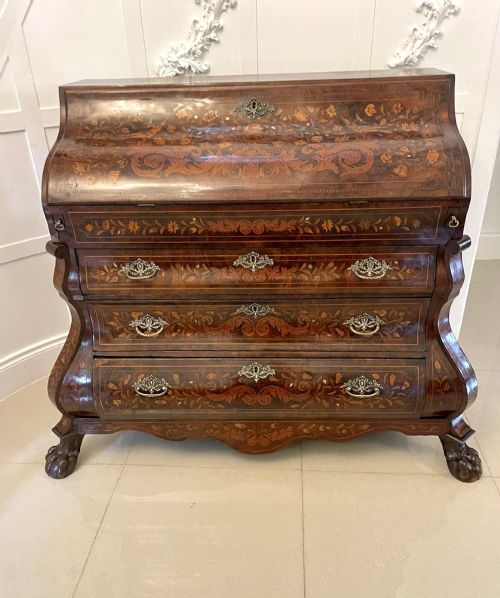
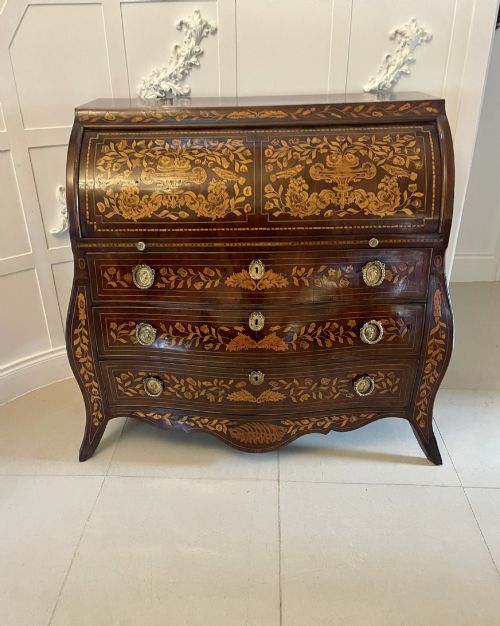
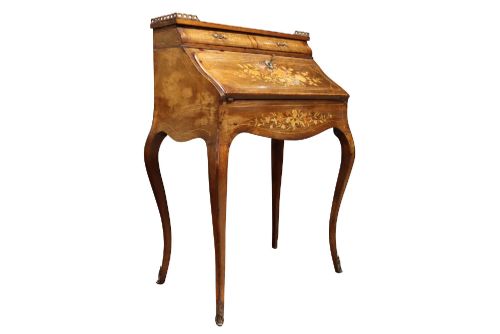
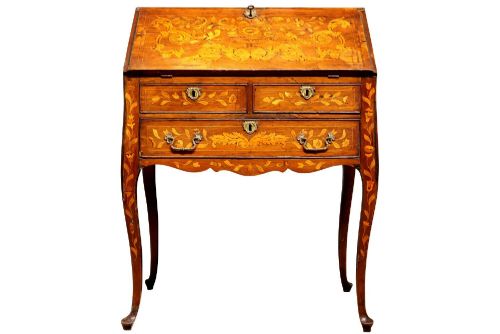
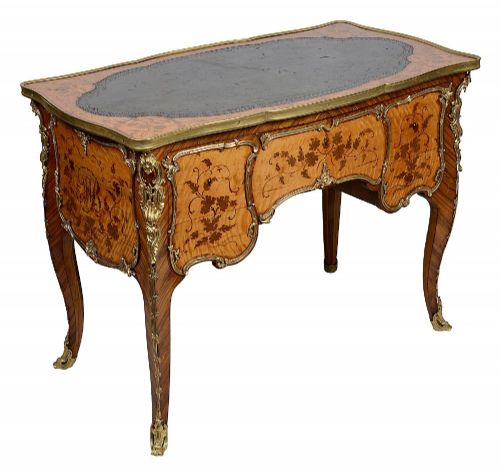
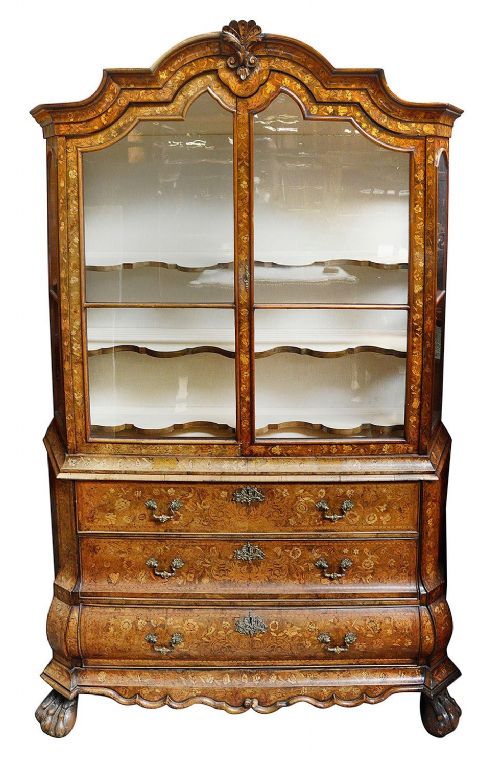
The selection ranges from compact bureau de dame forms to large bureau bookcases featuring display cabinets and bombe shaped facades. Walnut, mahogany and rosewood form the structural foundation for these elaborate botanical designs.
Makers utilised contrasting woods to build up detailed floral imagery across the fall fronts, drawer faces and writing surfaces. These items combine utilitarian storage with decorative craftsmanship that dominated European cabinet making during the Georgian and later revival periods.
Materials and construction methods
Cabinet makers constructed the carcass using solid timbers like walnut, mahogany or oak before applying veneers of burr walnut, kingwood, fruitwood and satinwood. Marquetry cutters sliced thin sheets of different coloured woods to assemble elaborate floral motifs by hand.
Craftsmen embedded these delicate wood mosaics into recesses carved into the primary surface, securing them with animal glue. Brass hardware, glass panels and cast ormolu mounts frequently finished the exterior of French and Dutch examples.
Bombe forms required skilled shaping of timber to achieve the characteristic swelling silhouette, while cylinder fronts demanded precise mechanical joinery to allow the curved wooden shutter to slide smoothly.
Object types documented in the inventory include cylinder desks, bureau bookcases, display cabinets and bonheur-du-jour writing tables.
Distinguishing quality across examples
The fineness of the marquetry cutting separates superior examples from simpler ones, with top pieces displaying meticulous shading achieved through hot sand scorching. The variety of timbers employed in the floral clusters indicates the maker's investment of time and material.
Structural integrity of the fall front hinges and interior pigeonholes dictates how well a piece survived daily use. Selection of burr walnut veneers with symmetrical grain patterns points to higher workshop standards.
Proportion and execution of the bombé shaping or ormolu mounts govern the overall visual balance. Secondary timbers used inside the drawers often reveal the age and geographic origin of the construction.
The Floral Inlay Bureau Glossary
- Marquetry
- Decorative veneer work forming pictures or patterns using various woods. Craftsmen assemble these thin wooden pieces to depict floral sprays across desk lids.
- Bombe
- A swollen or bulging outward curve on the front and sides of furniture. This profile appears frequently on eighteenth century Dutch pieces.
- Bureau
- A sloping desk used for writing, typically containing internal compartments and drawers. The lid drops down to provide a flat writing surface.
- Ormolu
- Gilded bronze mounts applied to furniture for decoration. French cabinet makers integrated these cast metal elements around drawers and corners.
- Secretaire
- A cabinet or desk with a pull down writing flap. These items often feature internal banks of small drawers.
- Escritoire
- A writing cabinet equipped with a hinged writing surface. The form provides enclosed storage for correspondence and writing materials.
Floral Inlay Bureau: Frequently Asked Questions
How do I use a bureau?
Lower the sloping front panel to reveal the interior writing surface, pigeonholes and small drawers. This drops down to create a convenient space for writing letters or placing a laptop.
Close and lock the fall front when finished to conceal papers and maintain a tidy room appearance.
Where should I place it?
Position the piece against a flat wall in a study, drawing room or living area where natural light reaches the floral marquetry. Ensure adequate clearance in front of the desk for a chair when the writing flap is open.
Keep wooden items away from direct heat sources and strong sunlight to prevent veneer drying or fading.
How do I date these desks?
Examine the secondary woods inside the drawers, construction joints and overall style to determine the period of origin. Eighteenth century examples often feature Dutch floral marquetry on walnut carcasses, while later nineteenth century pieces lean towards French Louis XV revival styling.
Observe the complexity of the floral inlay and the presence of specific hardware like cast ormolu mounts to narrow down the decade.
What is the difference between Dutch and French styles?
Dutch examples frequently utilise robust walnut carcasses with pronounced bombe shaping and dense, multi-coloured floral marquetry. French pieces often favour lighter wood veneers, cabriole legs and gilded ormolu mounts associated with Louis XV and Louis XVI revivals.
Understanding these distinct decorative vocabularies helps identify the regional workshop traditions behind individual pieces.