



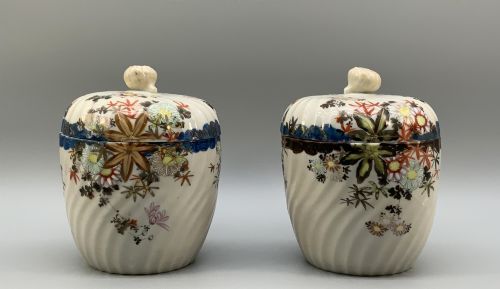




Floral Enamel Ginger Jar
These floral enamel ginger jar examples combine vibrant surface decoration with traditional lidded forms, offering an accessible entry point into Asian decorative arts.
Floral Enamel Ginger Jar
When you search for a floral enamel ginger jar, you encounter lidded vessels and pots originating from Asian regional workshops, predominantly Chinese and Japanese. These pieces encompass forms described in listings as vases and urns, decorative jars, and lidded jars.
The versions you are most likely to meet on this page span the nineteenth and twentieth centuries, incorporating periods such as the Meiji era and Republic Period. They arrive in various scales, from large lidded vessels to smaller gourd pots.
Makers utilised porcelain, ceramic, and metal bodies to create these lidded containers. The surface designs consistently lean towards botanical and floral motifs executed through hand painting or enamelling techniques.
How they were made
Artisans built the bodies using ceramic, porcelain, copper, or brass, shaping them into lidded jars and vases. Metal versions often employed wirework to partition the surface before applying enamel pastes.
Glazing, gilding, and cloisonne enamel techniques provided the colourful exterior finishes. Workers fired these pieces to fuse the enamel and glaze to the underlying substrate.
Floral Enamel Ginger Jar Retail Price Guide 2026
Typical asking prices for floral enamel ginger jar among the pieces listed under this phrase on Sellingantiques today, from the lower quarter to the upper quarter. They describe what is for sale here now, not the wider market.
Several listed pots take the unusual shape of gourds rather than standard cylinders, proving potters enjoyed playing with botanical forms.
What varies in quality
The precision of the enamelling and the crispness of the hand-painted floral details dictate the upper tiers of quality. Finer pieces demonstrate careful control over wire boundaries in cloisonne work and smooth, even glaze distribution on porcelain.
Overall structural integrity and the retention of original matching lids significantly influence the standing of an individual piece. Lesser examples display uneven colour application or less refined botanical draughtsmanship.
The Floral Enamel Ginger Jar Glossary
- Cloisonne enamel
- A metalwork technique where fine wires form compartments on the vessel surface to hold coloured enamel pastes. These partitions create distinct outlines around the floral patterns.
- Meiji period
- A Japanese historical era spanning the late nineteenth and early twentieth centuries. Pieces from this time often showcase intricate metalwork and enamel decoration.
- Republic Period
- A phase in Chinese history covering the early twentieth century. Ceramics and enamelware from this era display specific decorative styles distinct from earlier dynasties.
Floral Enamel Ginger Jar: Frequently Asked Questions
What were ginger jars used for originally?
These lidded vessels served primarily to store and transport spices, salt, and oils in Asian households. Their wide shoulders and snug covers kept contents secure from moisture and pests.
Over time, Western markets adopted them purely for decorative display on mantelpieces and tables, leading to larger matched pairs becoming popular interior ornaments.
How do I tell cloisonne from painted enamel?
Cloisonne pieces feature visible thin metal wires soldered to the metal base, creating raised borders that separate the different coloured enamel fills. Running your finger lightly across the surface reveals these distinct metallic ridges.
Painted enamel lacks these wire compartments, presenting a smooth continuous surface where the floral design is applied directly onto the glazed or metal ground with a brush.
Are pairs harder to find than single jars?
Matched pairs of lidded jars occur less frequently in survival rates because centuries of handling, cleaning, and moving often result in one vessel breaking or losing its companion.
When two matching lidded pots or vases survive together, they command greater attention from collectors who seek symmetrical arrangements for display.
How do I clean and care for enamel jars?
Dust these decorative objects gently with a soft, dry cloth to prevent surface accumulation without risking the delicate metal or ceramic finishes. Avoid harsh chemical cleaners or abrasive scrubbing.
Keep them away from direct sunlight and damp environments to protect the integrity of the glazes, gilding, and enamel work over the long term.