
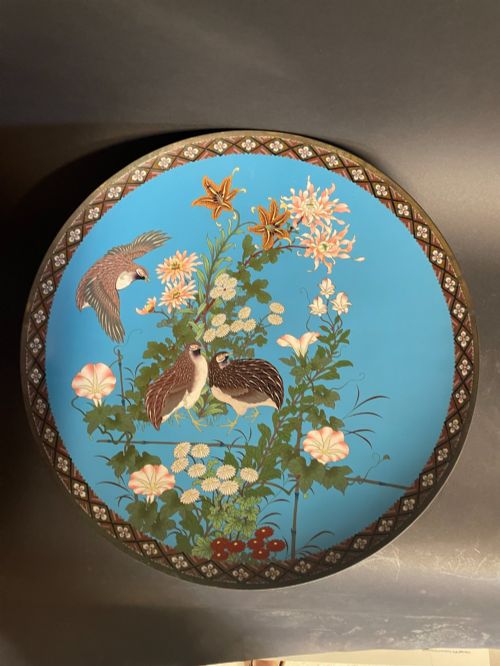
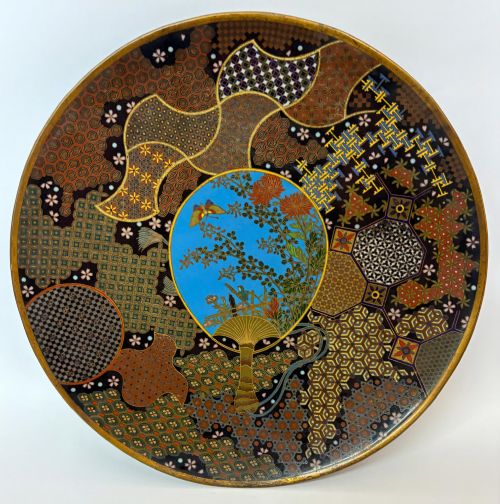


Floral Cloisonne Dish
A floral cloisonne dish brings intricate wirework and vibrant enamel into a room, offering centuries of artistry in a single decorative bowl or charger.
Floral Cloisonne Dish
A floral cloisonne dish typically takes the form of a decorative bowl, charger, plate, or tray adorned with detailed botanical motifs. These pieces showcase natural subjects such as chrysanthemums, irises, and peonies rendered through traditional metalwork techniques.
The selections on this page span from the nineteenth century into the early twentieth century, drawing on Japanese Meiji period workshops and Qing dynasty origins. Buyers will frequently encounter large chargers and decorative plates alongside lidded bowls and tazza forms.
Materials and construction
Craftsmen built each floral cloisonne dish using a foundation of copper, bronze, or brass, shaping the metal into plates, bowls, and chargers. Fine metal wires were soldered onto the base to create compartments, known as cloisons, which mapped out the floral design.
These individual cells were then filled with coloured enamel paste before undergoing multiple firings and polishings to achieve a smooth surface. Gilt bronze or gilt metal mounts occasionally completed the edges of these elaborate vessels.
Listings feature items built from copper, bronze, and brass, utilising both Japanese Meiji and Chinese Qing dynasty styles.
Distinguishing quality and craftsmanship
The refinement of a floral cloisonne dish depends heavily on the precision of the wirework and the complexity of the enamel palette. Finer examples display exceptionally thin, even wire borders that delineate intricate subjects like birds, butterflies, and layered flower petals without visible flaws.
Subtlety in shading and the density of the decorative scheme further separate masterworks from standard production pieces. The depth of the polished finish and the harmony of the coloured enamels reveal the skill invested by the original workshop.
Kinkozan
The Floral Cloisonne Dish Glossary
- Cloisonne enamel
- A technique where thin metal wires form raised barriers on a metal body to hold coloured glass pastes before firing. This method allows artisans to create intricate pictorial designs across bowls and chargers.
- Charger
- A large decorative plate traditionally used for display rather than dining. These substantial pieces provide a broad canvas for elaborate floral and landscape compositions.
- Meiji Period
- A Japanese historical era spanning from 1868 to 1912 noted for extraordinary advancements in decorative arts and metalwork. Pieces from this time often exhibit remarkable technical perfection.
- Plique-a-jour
- An enameling technique resembling translucent stained glass where the enamel is fired without a backing metal substrate. Light passes directly through the coloured cells.
- Tazza
- A shallow ornamental cup or bowl raised on a pedestal foot. These elevated vessels offer a distinctive silhouette among flat plates and trays.
Floral Cloisonne Dish: Frequently Asked Questions
How were these dishes displayed?
Large chargers and plates were typically shown on stands or hung on walls to showcase their intricate enamel work and botanical scenes.
Smaller trays and bowls sat on tables or cabinets as decorative accents within period interiors.
What motifs appear on these pieces?
Designs frequently incorporate botanical subjects like chrysanthemums, irises, peonies, and landscape views.
Birds, butterflies, frogs, and auspicious symbols also enrich the compositions across many of the chargers and bowls.
How do I identify a Meiji period piece?
Meiji period works generally date between 1868 and 1912, exhibiting high technical skill in wirework and vibrant enamel palettes.
They often feature naturalistic subjects rendered with exceptional precision and refined surface polishing.
What is the difference between a charger and a plate?
Chargers are significantly larger in diameter, intended primarily for grand decorative display rather than utility.
Plates offer more modest proportions while retaining the same intricate cloisonne enamel techniques.