
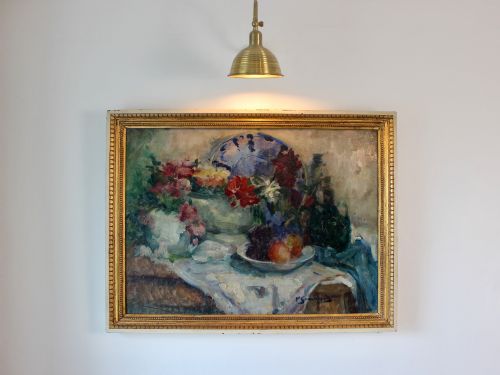
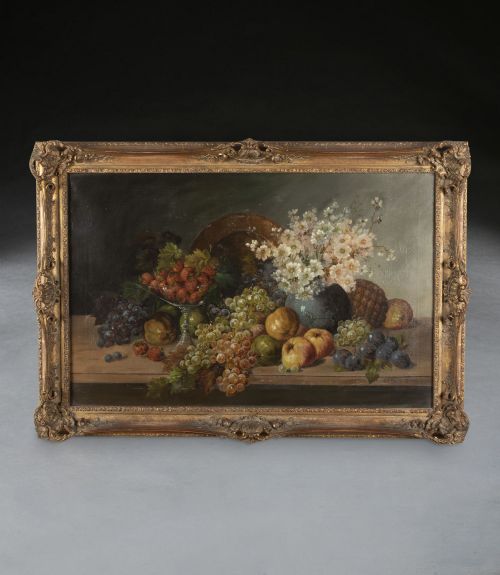


Floral and Fruit Art
Floral and fruit art brings natural abundance indoors through enduring depictions of blossoms and harvests across canvas, ceramic and glass.
Floral and Fruit Art
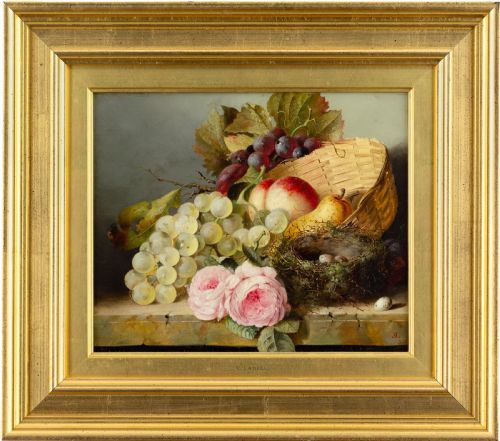
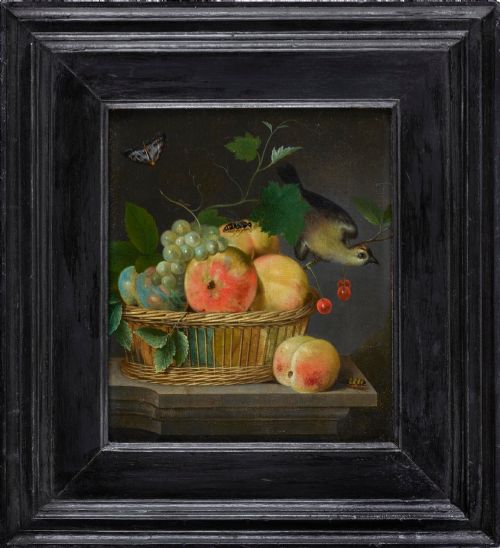
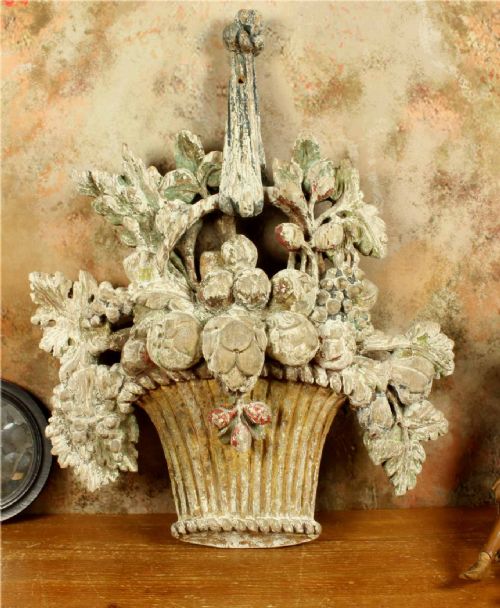
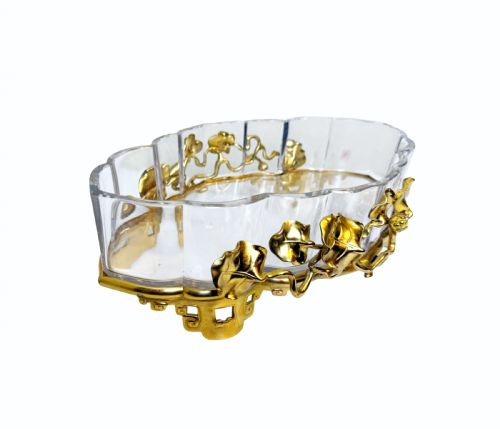
Floral and fruit art encompasses oil paintings, watercolours, ceramic bowls, vases, wall reliefs and glass centrepieces depicting natural subjects. The selection spans the Victorian period, Art Nouveau, Art Deco and Mid-Century Modern designs, alongside earlier Flemish Baroque compositions.
Oil paintings on canvas dominate the selection alongside earthenware pottery and pressed glass. These pieces record botanical and harvest subjects through diverse stylistic lenses from the nineteenth century into the mid-twentieth century.
Materials and construction
Makers utilised oil paint on canvas, carved wood, earthenware with glaze, and moulded glass often combined with gilt bronze frames. These varied mediums required distinct artisan techniques ranging from fine brushwork on canvas to throwing and firing pottery.
Ceramic vessels incorporate hand-painted patterns or raised moulded motifs, whilst glassware relies on opalescent or crystal moulding techniques. Wood carvings and wall reliefs demonstrate manual chiselling to render botanical forms in relief.
The listings combine oil paintings, watercolours, wood carvings, earthenware pottery, crystal, and opalescent glass.
Assessing quality
Quality rests upon the execution of the subject matter, whether through the fine detail of brushstrokes in an oil painting or the crisp definition of moulded patterns in ceramics and glass. Superior examples show skilled handling of light, form and colour balance.
The sophistication of the design and the reputation of the maker distinguish finer pieces, such as signed works by known artists or stamped pottery from established factories. Materials like crystal, gilt bronze and quality oil paint elevate the construction standard.
Edward Ladell·Gaspar Peeter Verbruggen·Victor Simonin·James Tower·Bela Balogh·Charlotte Rhead·William Moorcroft·Eichwald·René Lalique·Oliver Clare
The Floral and Fruit Art Glossary
- Still life
- An artwork depicting inanimate subject matter, typically featuring fruit, flowers and domestic objects arranged on a surface.
- Oil on canvas
- Pigments bound in an oil medium applied to a stretched woven fabric support, prevalent in traditional painting.
- Earthenware
- Porous pottery fired at lower temperatures, commonly glazed and utilised for decorative bowls and vases.
- Gilt bronze
- Metal objects treated with a thin layer of gold or gold-coloured alloy applied to a bronze base.
- Opalescent glass
- Glass displaying milky, iridescent or pearl-like visual effects that shift according to the light.
Floral and Fruit Art: Frequently Asked Questions
What periods do these pieces span?
The items range from seventeenth-century Baroque compositions through Victorian, Edwardian and Art Nouveau eras into Art Deco and Mid-Century Modern designs.
This broad timeline shows how artists and makers returned continually to botanical and harvest themes across different centuries.
How are canvas paintings and pottery related here?
Both categories share a common focus on botanical and harvest imagery, translating flowers and fruit into decorative and fine art objects.
Painters rendered these subjects with oil on canvas, whilst potters shaped them into three-dimensional bowls, vases and wall reliefs.
How do I care for oil paintings and ceramic bowls?
Oil paintings require stable indoor humidity away from direct sunlight to protect the canvas and pigment layers from degradation.
Ceramic bowls need gentle dusting or cleaning with soft, dry cloths to preserve their glazed surfaces and hand-painted patterns.
Are glass centrepieces functional or purely decorative?
Moulded glass and crystal pieces were produced to serve as decorative centrepieces on dining tables or display surfaces.
Their substantial weight and intricate opalescent or gilt frames indicate their primary role as ornamental focal points in a room.