
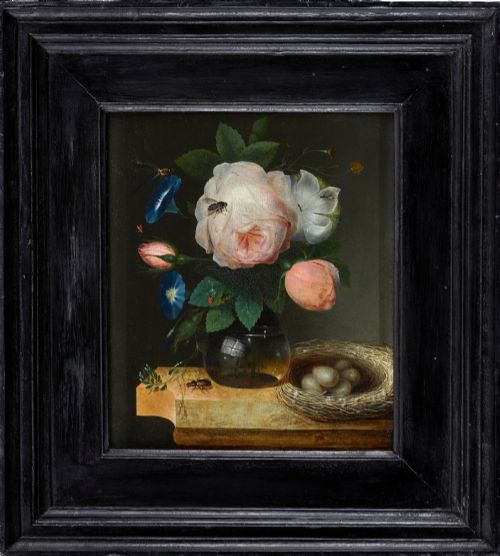
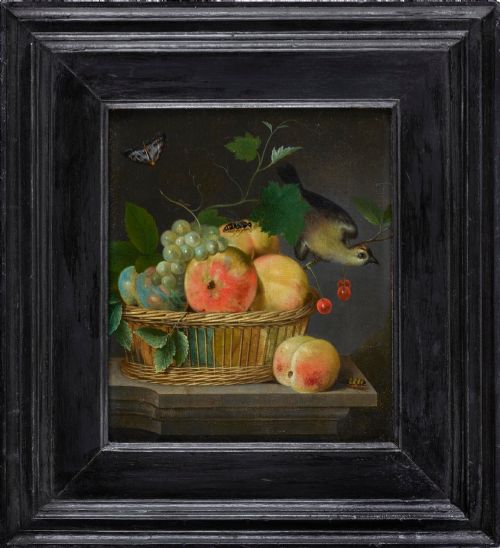
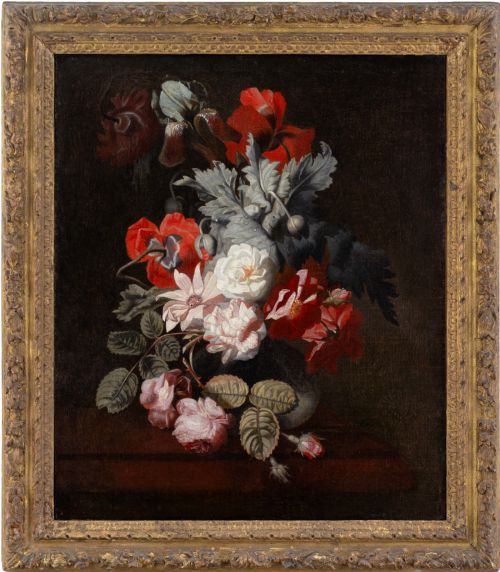


Baroque Floral Artwork
Baroque floral artwork brings dramatic seventeenth-century botanical splendour into your interior, combining rich oil painting and textile traditions to anchor a room.
Baroque Floral Artwork
Baroque floral artwork encompasses oil paintings and textiles created within the Flemish and Dutch traditions, focusing heavily on lush compositions of roses, tulips, and fruit. When you explore this selection, you encounter seventeenth-century canvases alongside later interpretations that echo the same theatrical botanical arrangements.
The objects span oil paintings on canvas and oak panel, accompanied by rarer textile forms such as seventeenth-century tapestry cushion covers. Most pieces on this page lean towards traditional European still life painting, capturing rich floral subjects designed for formal wall display.
How they were made
Makers utilised oil paint applied to prepared canvas, oak panel, or board, building up deep tones to create shadow and light behind the botanical subjects. Giltwood, gesso, and carved wood often frame these canvases, adding substantial decorative weight to the overall presentation.
Textile examples such as cushion covers employ woven wool depicting floral and classical motifs, requiring skilled hand labour to achieve lasting durability. Painters layered pigments to render petals, insects, and glassware with striking realism.
A solitary bird occasionally perches beside the wicker fruit baskets, keeping watch over the seventeenth-century petals.
What varies in quality
Quality rests in the finesse of the brushwork and the naturalism of the floral arrangement, distinguishing confident master compositions from stiffer decorative copies. The depth of the colour palette and the preservation of the original paint surface or woven fibres dictate the visual power of the piece.
The integration of secondary elements like wicker baskets, glass vases, or birds reveals the painter's anatomical and spatial skill. Finer panels and canvases show careful ageing and stable grounds that hold the original pigment layers intact.
Gaspar Peeter Verbruggen·Simon Pietersz Verelst·Calzolari
The Baroque Floral Artwork Glossary
- Still life
- A painting or drawing depicting inanimate subject matter, typically commonplace objects which may be either natural or man-made. In these listings, they focus on flowers, fruit, and vases.
- Gesso
- A plaster mix used as a base coat for painting on wood panels or for preparing carved wooden frames before gilding. It provides a smooth, bright white surface.
- Giltwood
- Wood that has been covered with a thin layer of gold leaf or gold paint. It appears frequently on antique picture frames.
- Trompe l'oeil
- An art technique that uses realistic imagery to create the optical illusion that the depicted objects exist in three dimensions. It appears in several painted floral compositions.
- Oak panel
- A rigid wooden support made from oak timber used by artists as an alternative to canvas. It offers a stable ground for historic oil paintings.
Baroque Floral Artwork: Frequently Asked Questions
What subjects appear in these works?
These artworks primarily depict elaborate floral arrangements featuring roses, tulips, and various garden blooms, often accompanied by fruit, wicker baskets, and birds. The compositions follow classical and Baroque traditions established in Northern Europe.
Secondary subjects include trompe l'oeil arrangements and woven botanical scenes on historical textiles, offering variety beyond standard framed canvases.
How do I hang a heavy oil painting?
Heavy oil paintings in giltwood or carved wooden frames require secure wall fixings anchored directly into masonry or substantial wall studs. Using appropriate picture wire and rated hooks ensures the weight distributes safely.
Keep these artworks away from direct sunlight and fluctuating radiator heat to protect the underlying canvas, panel, and gesso frame.
Are these pieces strictly from the seventeenth century?
While the core style originates in the seventeenth-century Dutch Golden Age and Flemish Baroque periods, the selection includes works from later centuries. You will find eighteenth-century examples alongside twentieth-century revivals created in the classical style.
Each listing specifies the exact period or estimated century of creation to help you identify the age of the piece.