
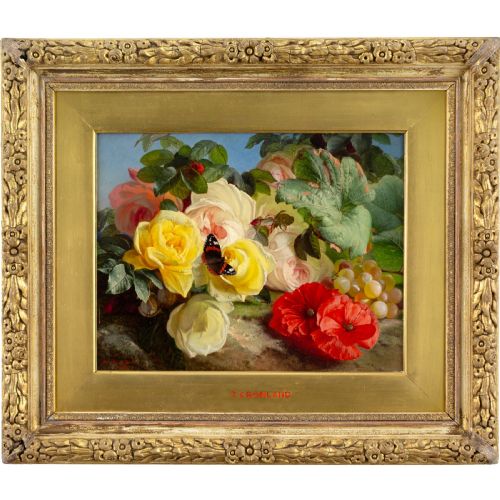
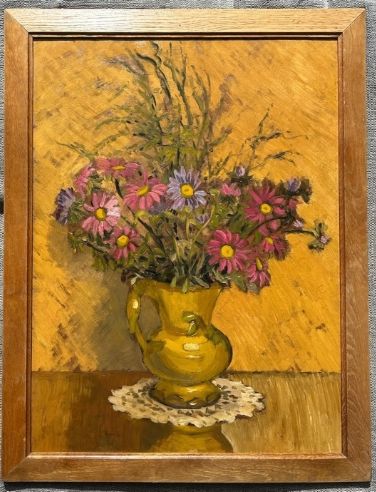
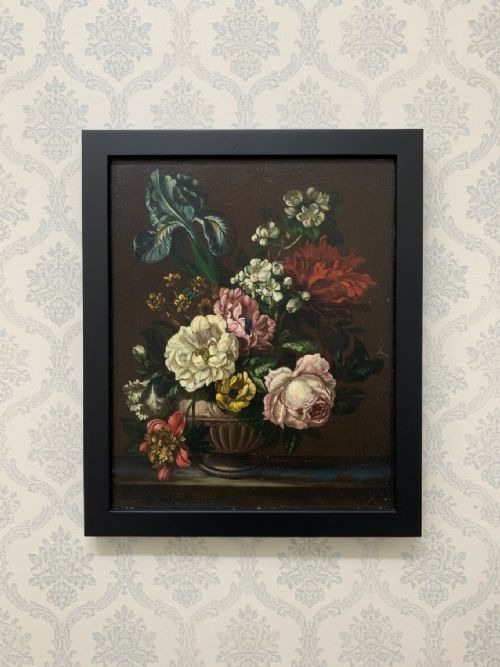
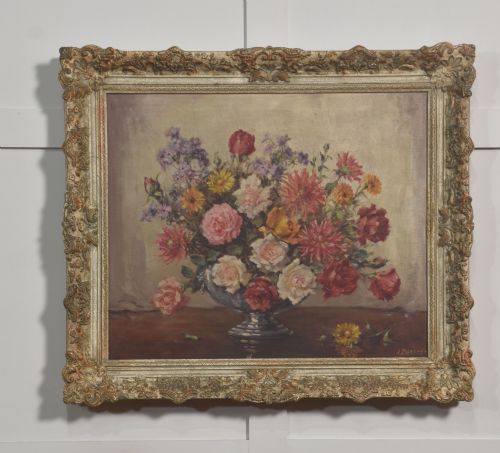

Framed Flower Oil Painting
A framed flower oil painting brings botanical stillness to a wall, capturing blooms across centuries of technique and style.
Framed Flower Oil Painting
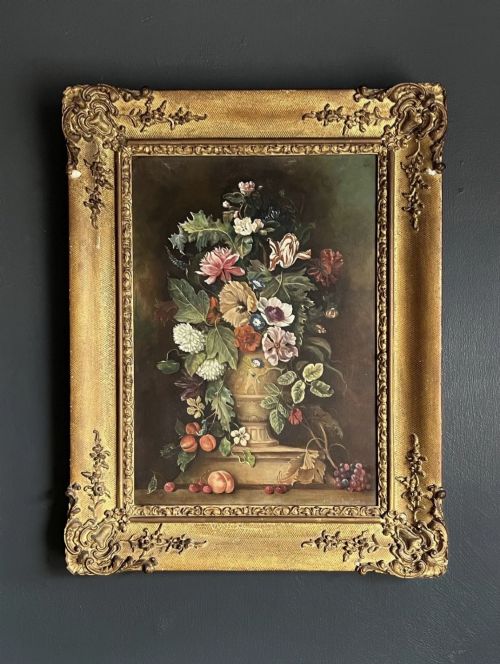
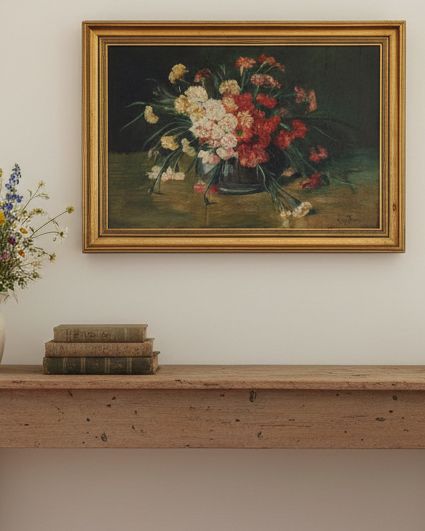
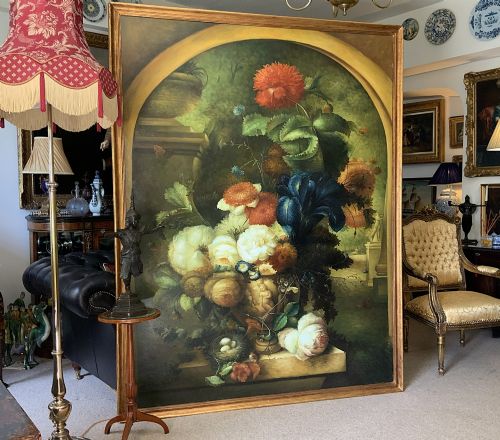
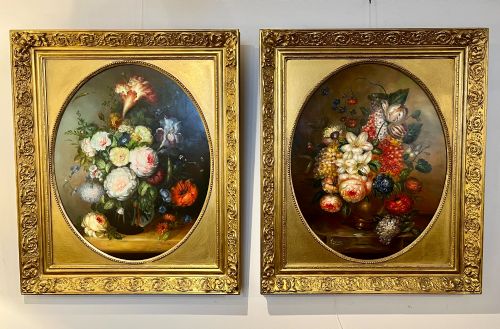
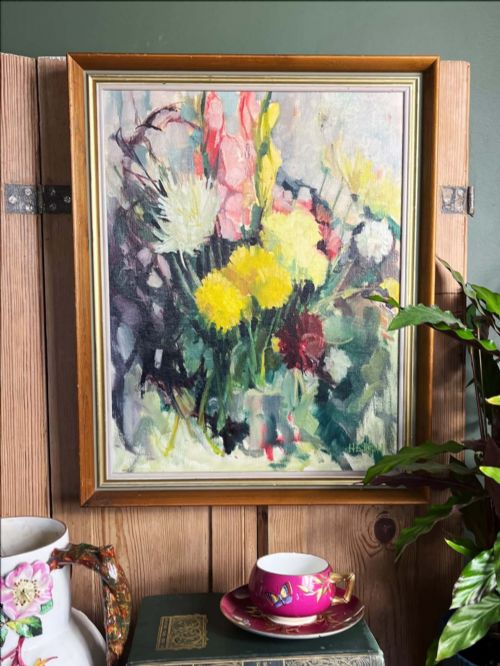
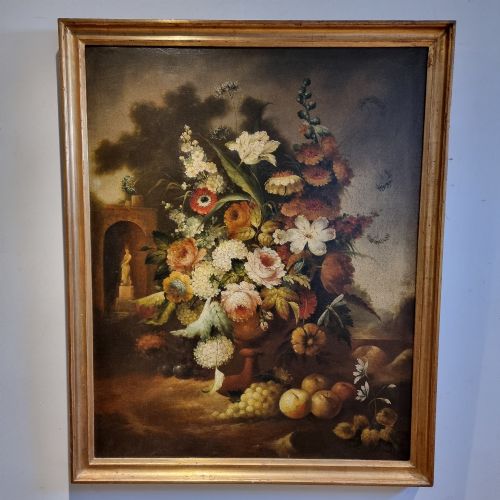
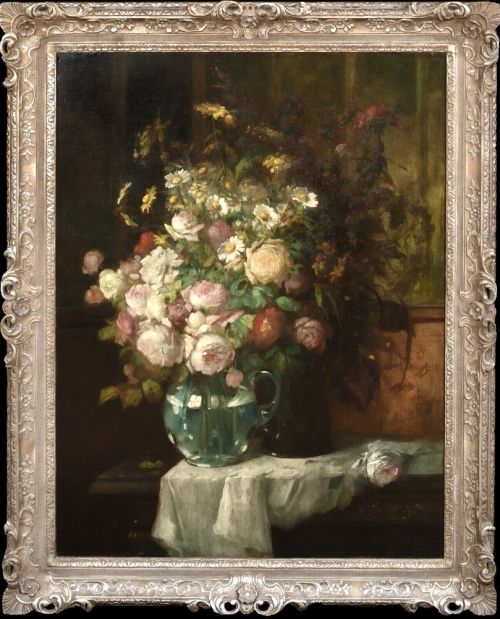
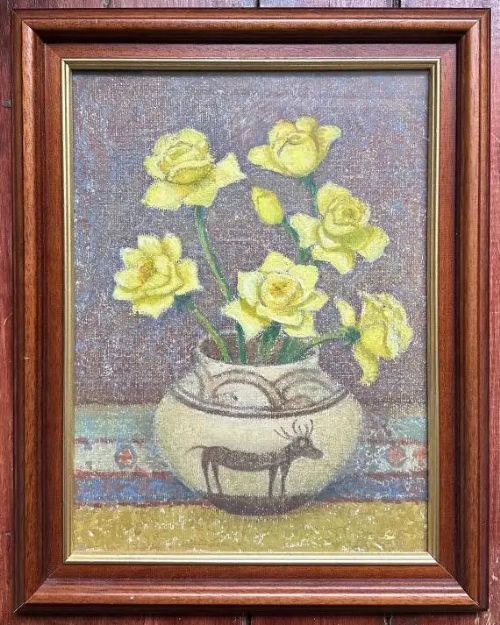
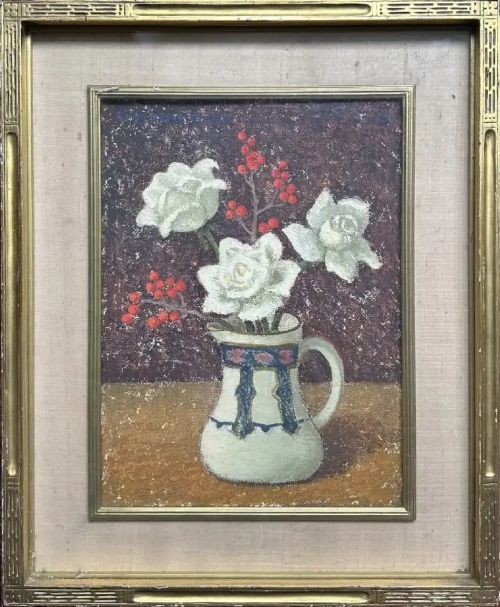
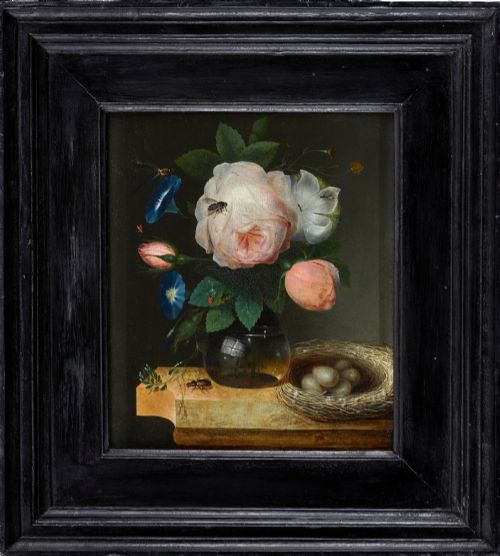
When you search for a framed flower oil painting, you encounter still life studies, botanical arrangements, and floral displays spanning from the seventeenth century to the mid-twentieth century.
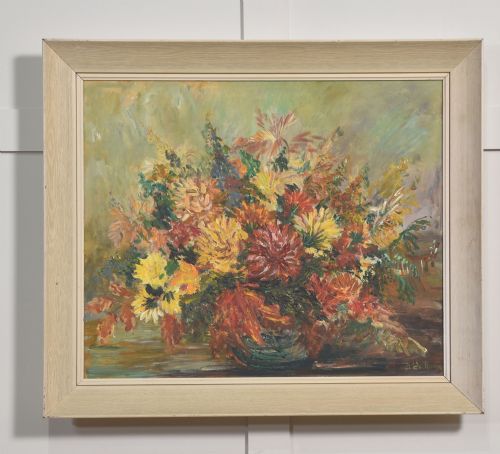
The selections on this page lean heavily toward twentieth-century interpretations, including mid-century impressionism and post-impressionism, alongside nineteenth-century works and earlier Dutch style compositions.
Subjects range from roses and peonies in vases or baskets to water lilies on lakes, housed in period wooden and gilt frames.
Materials and methods
Artists painted primarily with oil paint on stretched canvas, wooden panels, or oil boards, building up rich textures and deep colour fields.
Many works are housed in decorative wood frames finished with gilt gesso or gold leaf, completing the presentation of the artwork.
Listings span from the seventeenth century to the mid-twentieth century, featuring canvas, wood panels, oil paint, and gilt frames.
Judging quality
Quality rests in the handling of brushwork and the management of light, where skilled impressionist or realist execution brings depth to petals, leaves, and vases.
The harmony between the painting and its original or period frame, such as moulded gilt gesso, elevates the overall integrity of the piece.
Theude Grönland·Kenneth Cozens·I Berezny·D L Williams·Robert Byng·Konstantin Stoitzner·Emma Fordyce MacRae·Gaspar Peeter Verbruggen·Edwin Steele·Manuela Bonati·William Watt Milne·Owen Bowen·Gertrude Hayes·Simon Pietersz Verelst·Winifred Turner·Amile Coppieters·Florence Hess·A Nikolokov
The Framed Flower Oil Painting Glossary
- Oil paint
- A slow-drying paint made by combining pigment grains with a drying oil, typically linseed oil. This medium allows artists to blend tones smoothly and build rich impasto textures.
- Gesso
- A plaster-like mixture applied to wooden frames or panels as a base for painting or gilding. It provides a smooth, prepared surface for subsequent layers of gold leaf or paint.
- Impressionism
- A nineteenth-century painting style characterised by relatively small, thin yet visible brush strokes and an emphasis on accurate depiction of light. Artists working in this manner focus on spontaneous moments rather than rigid academic detail.
- Still life
- A work of art depicting mostly inanimate subject matter, typically commonplace objects which may be either natural or man-made. Floral subjects form a prominent subgenre within this tradition.
- Gilt
- Covered thinly with gold leaf or gold paint. This finish enhances the decorative framing around antique artworks.
Framed Flower Oil Painting: Frequently Asked Questions
How do I date a framed flower oil painting?
Dating relies on the style of the brushwork, the canvas preparation, and the framing materials used by the artist. Comparing the signature and subject matter to known periods helps narrow down the decade of creation.
Evidence on this page shows works ranging from the seventeenth century through to the mid-twentieth century, each carrying distinct stylistic markers of their era.
Are these paintings supplied with their frames?
The listings typically include the original or period frame housing the canvas or panel. These frames often feature wood, gilt gesso, or gold leaf finishes appropriate to the age of the artwork.
Inspect the descriptions to confirm whether the specific gilt or wooden frame is included with the purchase.
What is the difference between canvas and board supports?
Canvas is woven fabric stretched over a wooden frame, offering slight give and a traditional textured surface for oil paint. Board is a rigid flat panel made of wood or compressed material, providing a firm surface often used for smaller or en plein air studies.
Both supports appear across the centuries represented in these collections.
How should I care for an antique oil painting?
Keep the artwork away from direct sunlight and fluctuating temperatures to protect the oil paint and wooden frame from cracking or warping. Dust the surface gently with a soft, dry brush without applying moisture or cleaning solutions.
Professional conservationists should handle any deeper cleaning or restoration needs.