
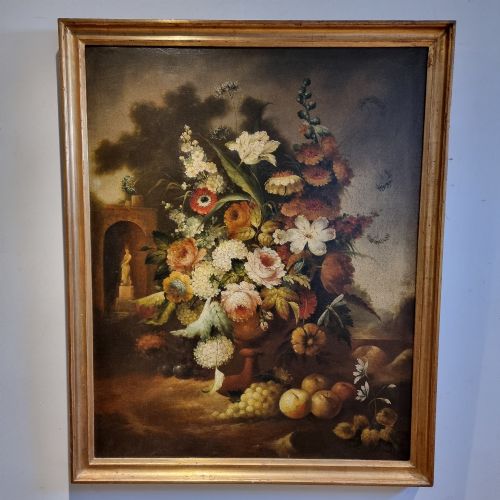
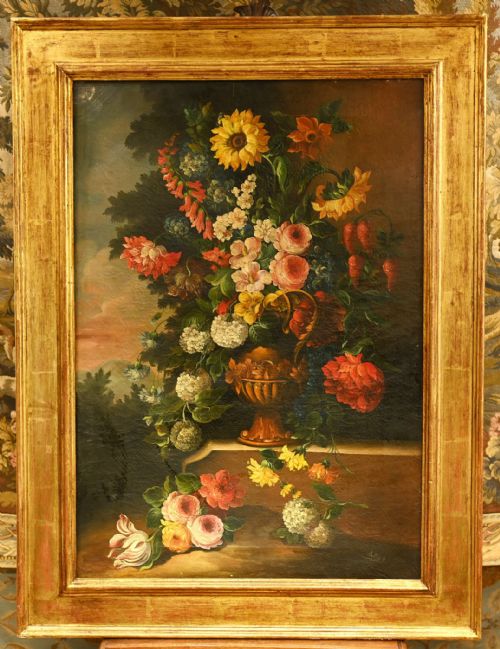
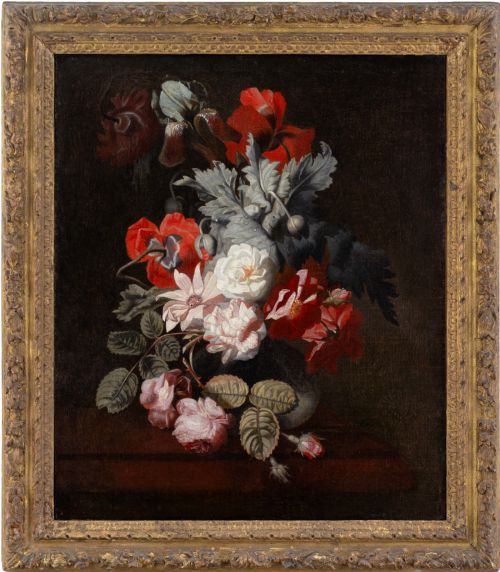


Dutch Style Floral Painting
Dutch style floral painting works bring the lush, theatrical arrangements of the seventeenth century into domestic spaces through rich oils and dark grounds.
Dutch Style Floral Painting
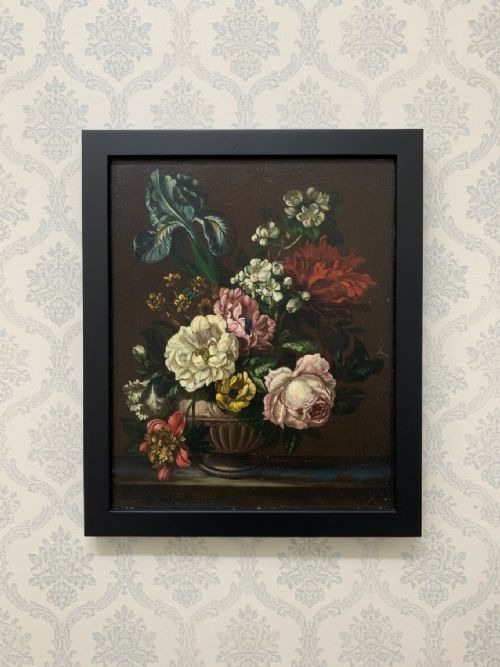
A dutch style floral painting captures arrangements of blooms, foliage and sometimes fruit against dark backgrounds, echoing the traditions of the Dutch Golden Age. Buyers seeking this phrase encounter both eighteenth century originals and later revivals spanning the Edwardian period through to the nineteen thirties.
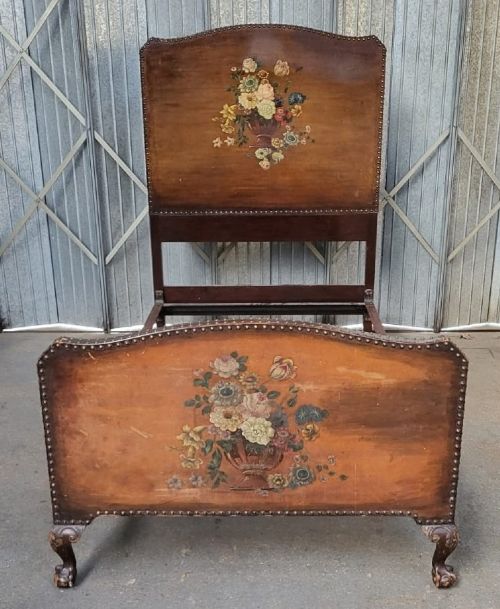
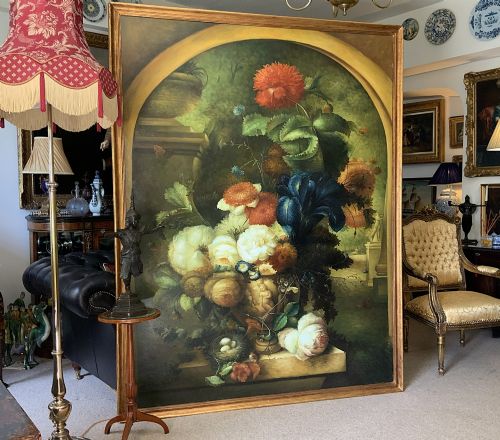
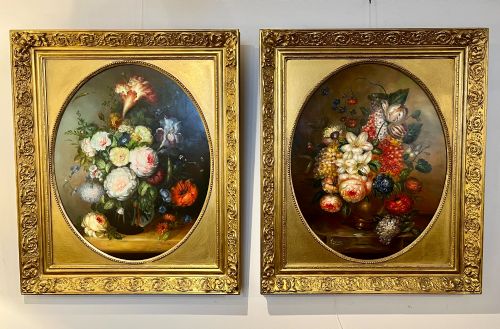
The selections on this page range from monumental canvases to intimate panels, taking the form of framed oil paintings as well as unexpected applications like hand painted leather bedsteads. These works draw upon Dutch Baroque, Flemish revival and traditional still life idioms.
Most entries reflect the enduring appeal of the botanical still life, rendered in oil paint on canvas, board or wood panels. Whether attributed to historical schools or identified by artists such as Terence Loudon, each piece centres on the display of flowers.
How they were made
Makers built these compositions using oil paint applied to prepared supports including canvas, wood panels, oak panels and board. The technique relies on building up layers of pigment to achieve depth in dark backgrounds and vibrant detail in petals and leaves.
Frames frequently complement the artwork using gilded wood, enhancing the visual weight of the paintings. Some decorative pieces integrate painted leather panels stretched over wooden bedstead frames.
Listings feature works spanning from the seventeenth century through to the nineteen fifties, encompassing canvas, wood panels, and leather substrates.
What varies in quality
Quality rests in the handling of light and shadow, where superior brushwork gives petals a translucent quality and creates convincing depth within the vase and surrounding space. Weaker examples rely on flat application and formulaic arrangements without the characteristic tension between light and dark.
The treatment of the support also distinguishes the works, from finely grained oak panels and sturdy canvases to decorative items where painting is applied to secondary surfaces like leather. The articulation of botanical detail, from drooping tulips to individual insects, reveals the painter's observance of nature.
Simon Pietersz Verelst·Terence Loudon·Calzolari
The Dutch Style Floral Painting Glossary
- Still life
- An artwork depicting inanimate subject matter, typically commonplace objects such as flowers, fruit and tableware. In the context of Dutch painting, these subjects often carried symbolic meanings regarding mortality and time.
- Oil on panel
- A painting executed on a flat piece of wood rather than stretched canvas. Wooden supports were common in earlier periods and provide a rigid ground for detailed brushwork.
- Dutch Golden Age
- A period in seventeenth century Netherlands marked by remarkable wealth and cultural achievement, producing master painters who elevated flower painting to a distinct genre. Later revivals consciously imitate this aesthetic.
- Baroque
- An artistic style prevalent from the early seventeenth century until the mid-eighteenth century, characterised by exaggerated motion, drama and deep shadow. Floral paintings in this style emphasise rich compositions and theatrical lighting.
- Trompe l'oeil
- An art technique involving extremely realistic imagery that optical illusion creates the perception that the depicted objects exist in three dimensions. Artists occasionally employed this trick to render insects or dew drops on petals.
Dutch Style Floral Painting: Frequently Asked Questions
How do I date a floral painting?
Dating relies on examining the substrate, canvas weave, stretcher construction and framing style alongside the handling of the pigment. Earlier works often utilise oak panels or hand woven canvases before the standardisation of artist supplies.
Stylistic cues also help narrow the period, as Victorian and Edwardian revivals tend to employ brighter palettes and different varnish compositions compared to seventeenth or eighteenth century originals.
Where should I hang a dark floral still life?
These pieces thrive against deeply coloured walls where the dark backgrounds of the painting can recede and the illuminated blooms step forward. Hanging them at eye level in reception rooms or hallways allows the intricate details of the petals to be appreciated up close.
Avoid placing oil paintings in direct sunlight or above active heat sources to protect the canvas and the oil pigments from drying out prematurely.
What is the difference between original and revival pieces?
Seventeenth and eighteenth century works carry the patina of age, often showing fine craquelure in the oil paint and historical repairs to the canvas or panel. Revival pieces, created during the nineteenth and twentieth centuries, adopt the dark grounds and abundant floral arrangements of the Dutch masters while using contemporary materials of their own era.
Both categories hold distinct appeal, with revivals offering robust decorative presence and period originals providing historical connection to the Golden Age tradition.
How do I care for an antique oil painting?
Maintain a stable indoor climate with moderate humidity to prevent the wood panels from warping or the canvas from slackening. Dust the surface gently with a soft, dry artist brush rather than using damp cloths or chemical cleaners.
Professional conservation should be sought if the varnish yellows significantly or if the paint layer shows signs of lifting from the support.