


Pair of Still Lifes
A pair of still lifes brings balanced symmetry and rich detail to a room, capturing arranged flowers, fruit and objects across centuries of painting and decorative arts.
Pair of Still Lifes
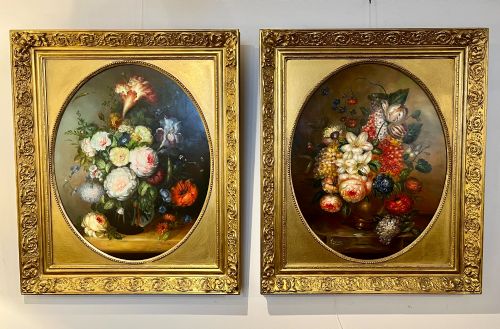
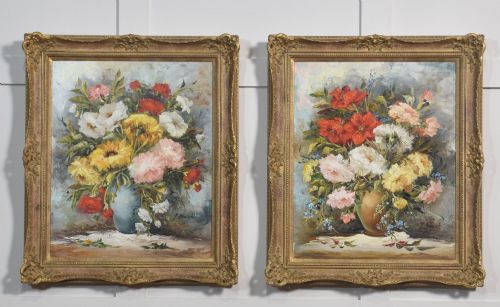
When you search for a pair of still lifes, you encounter matched works depicting composed subjects such as floral arrangements, fruit, and tabletop objects. These matched pairs provide a deliberate balance for interior placement, often designed to hang symmetrically or sit opposite one another in a room.
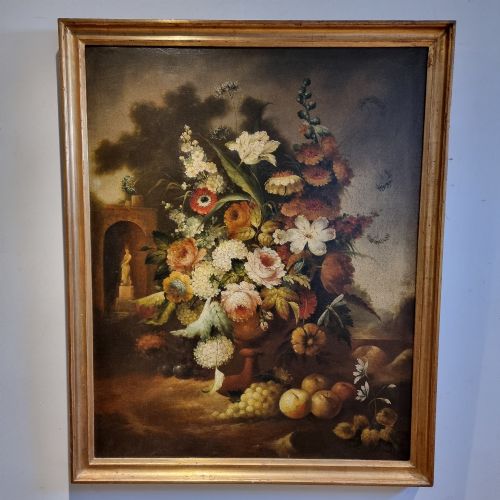
The selections span from the eighteenth century into the mid-twentieth century, encompassing oil paintings, watercolours, gouache, and decorative ceramic plates. You will find works executed in distinct historical manners, including Baroque compositions, Dutch Golden Age revivals, and French Post-Impressionist interpretations.
Canvas, wood panels, and paper serve as the primary supports for the painted works, while porcelain forms the base for cabinet and decorative plates. Many retain their original frames, incorporating gold leaf and gilded wood that complement the palettes of the art within.
Materials and construction methods
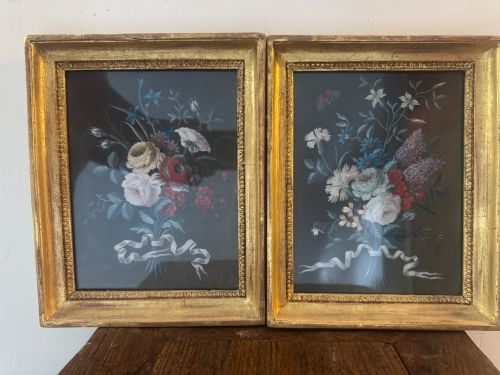
Artists applied oil paint and gouache onto stretched canvas, prepared wooden boards, and fine paper, building rich textures and vibrant colour harmonies for floral and fruit subjects. Watercolours on paper offer a lighter, translucent quality, particularly evident in botanical studies.
Ceramic plates feature hand-painted designs fired onto glazed porcelain blanks, capturing botanical and fruit motifs with precise brushwork. Frames constructed from wood incorporate carved details finished with gold leaf and gilt applications to house the paintings securely.
Listings feature works spanning the Victorian era, the nineteenth century, and the early twentieth century up to nineteen-fifty.
Distinctions in quality
The strength of a pair of still lifes rests in the confidence of the brushwork and the harmony of the composition between the two matching pieces. Superior works demonstrate careful attention to light, shadow, and naturalistic detail in rendering petals, fruit surfaces, and vessels.
Cohesion within the pair dictates visual success, where matching scale, palette, and framing create a unified statement. Pieces that retain their original execution and period framing hold greater integrity than those altered or mismatching over time.
Manuela Bonati·Evelyn Chester·Henry Schouten·Richard Budd·Royal Worcester·Oliver Clare·Arthur Dudley
The Pair of Still Lifes Glossary
- Gouache
- An opaque watercolour paint consisting of natural pigment, water, and a binding agent such as gum arabic, producing a flat, matte surface.
- Oil on board
- A painting technique where oil paint is applied directly to a prepared wooden panel or heavy cardboard support rather than stretched canvas.
- Baroque
- An artistic style from the seventeenth and eighteenth centuries characterised by dramatic lighting, deep shadows, and rich, theatrical compositions.
- Cabinet plate
- A decorative ceramic plate intended for display on a wall or within a cabinet rather than for practical dining use.
- Gilt
- A thin layer of gold leaf or gold paint applied to the surface of wood, metal, or plaster to simulate solid gold.
Pair of Still Lifes: Frequently Asked Questions
How do I hang a pair of still lifes?
Match the eye level of both pieces and space them evenly to maintain visual balance on the wall. Ensure the heavier or darker piece anchors the arrangement correctly depending on the lighting of the room.
Consider placing them above a sideboard, mantelpiece, or flanking a doorway where their symmetrical nature can create a formal focal point.
What subjects are most common in these pairs?
Floral bouquets and arrangements of fruit dominate these matched compositions, reflecting traditional Dutch and nineteenth-century tastes. You also encounter tabletop groupings featuring glassware, vessels, and botanical studies.
These subjects were chosen for their rich textures and vibrant colour contrasts, which allowed artists to demonstrate their technical skill.
How do I distinguish between oil paintings and watercolours?
Oil paintings display a textured, built-up surface with visible brushstrokes and a subtle sheen from the oil binder. They are typically executed on canvas or wooden boards.
Watercolours and gouache appear flatter and more matte, protected beneath glass within a paper mount and frame to prevent moisture damage.
Are decorative plates considered still lifes?
Painted ceramic plates featuring hand-painted fruit and floral scenes serve a similar decorative purpose to traditional canvas paintings. They capture botanical and culinary subjects within a circular format designed for display.
These pieces share the same visual goals as framed artworks, bringing arranged colour and natural forms into an interior space.
How do I care for antique painted works?
Keep framed paintings and works on paper away from direct sunlight and damp environments to protect the pigments and paper supports. Dust frames gently with a dry, soft cloth and avoid using liquid cleaners on the artwork surface.
Stable indoor temperatures prevent the wood panels and canvas from warping or cracking over time.