








Small Victorian Oil Paintings
Small Victorian oil paintings capture the domestic tastes and intimate scale of nineteenth-century interiors.
Small Victorian Oil Paintings
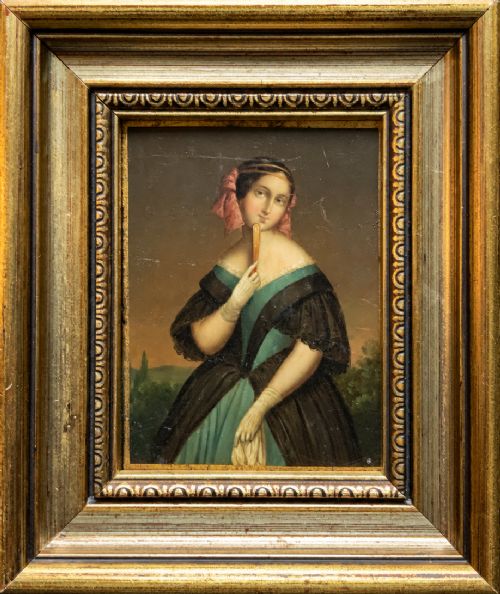
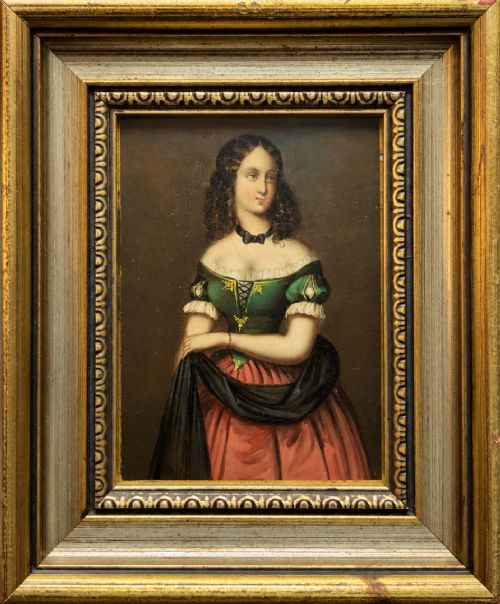
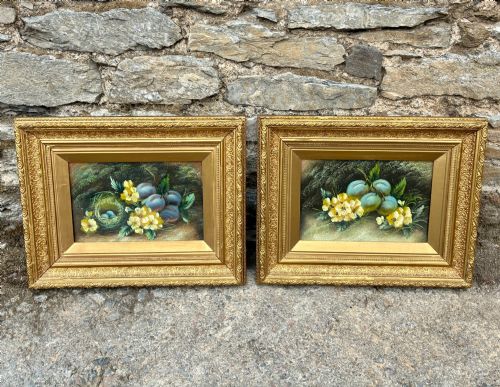
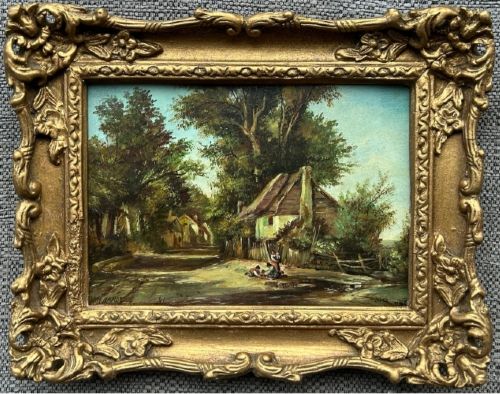
Small Victorian oil paintings encompass compact canvas, panel, board, tin, and paper works created across the nineteenth century. These intimate formats include landscapes, portraits, still lifes, and genre scenes produced within British and continental traditions.
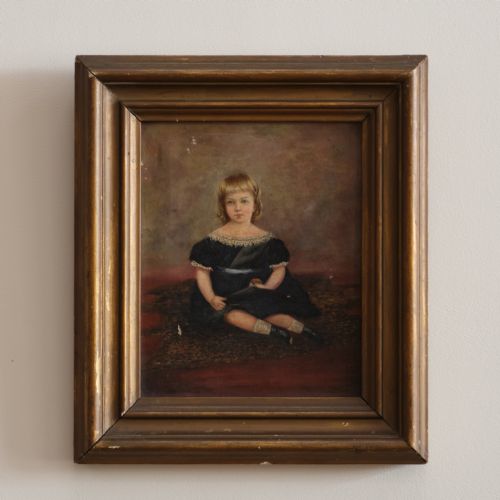
Buyers meet varied subjects on this page, ranging from naive studies and river landscapes to animal portraits and romantic compositions. Many examples arrive in their original gilt wood and gesso frames, retaining the aesthetic of the period.
Materials and methods
Artists painted primarily with oil paint on prepared wooden panels, canvas stretched over wooden frames, or rigid boards. These supports received priming layers to hold the pigment securely.
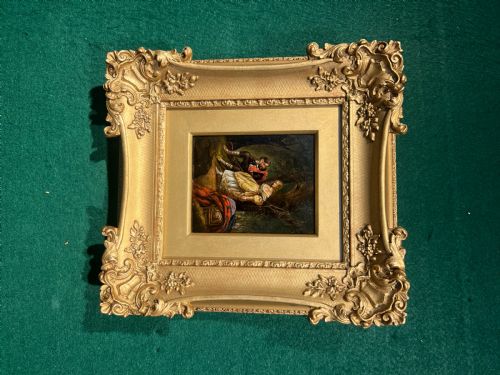
Frames frequently combined carved wood with moulded gesso, finished with gold leaf or metallic gilt layers to enhance the visual depth of the artwork.
Small Victorian Oil Paintings Retail Price Guide 2026
Typical asking prices for small victorian oil paintings among the pieces listed under this phrase on Sellingantiques today, from the lower quarter to the upper quarter. They describe what is for sale here now, not the wider market.
Listings feature works spanning the nineteenth century, utilising oil paint on wood, canvas, board, and tin.
Distinguishing quality in nineteenth-century works
Quality rests upon the confidence of brushwork, the handling of light, and the anatomical or spatial accuracy achieved by the artist. Stronger pieces display deliberate pigment application and balanced composition rather than hurried execution.
The preservation of the original surface, alongside the integrity and period match of the gilt frame, influences the standing of an individual painting.
William Howard Hardy·Florence Small·Miles Birkett Foster·Evelyn Chester·Eugene Verboeckhoven·Eliza Maddock·Richard Wilson·Ferdinand Barth·Sir John Everett Millais·Oliver Clare
The Small Victorian Oil Paintings Glossary
- Oil on panel
- A painting executed on a wooden support rather than fabric canvas. This substrate offers a rigid surface that often preserves fine detail exceptionally well.
- Gilt wood
- Wood decorated with a thin layer of gold leaf or metallic powder. It provides the characteristic bright border common to nineteenth-century display frames.
- Gesso
- A plaster mixture applied to wood or canvas as a base for painting or frame moulding. It creates a smooth, absorbent ground for subsequent layers of gilding or paint.
- Naïve art
- Artwork produced by an artist without formal academic training. These pieces possess a direct charm and unconventional perspective distinctive to folk traditions.
Small Victorian Oil Paintings: Frequently Asked Questions
How should I hang small Victorian oil paintings?
These compact works suit smaller wall spaces, alcoves, or groupings rather than vast expanses. Hang them at eye level where the intimate details and brushwork can be properly observed.
Keep them away from direct sunlight and damp environments to protect both the oil pigments and the wooden panels or canvas supports.
Are these paintings usually signed by the artist?
Signatures appear on some pieces, often tucked into a lower corner, while many nineteenth-century works remain unsigned or attribution relies on stylistic comparison and documentation. Unsigned examples are common among naive and smaller domestic studies.
Documentation or old framing inscriptions sometimes provide clues to the origin when a direct signature is absent.
What is the difference between oil on canvas and oil on panel?
Canvas involves fabric stretched over a wooden stretcher frame, giving a slightly flexible surface with visible textile texture. Panel utilises a solid wooden support, offering a completely rigid foundation for finer, smoother brushwork.
Both methods were widely used throughout the nineteenth century depending on the artist's preference.
How do I care for antique gilt frames?
Gilt wood frames require gentle dusting with a soft, dry brush to prevent the accumulation of dirt within the moulded gesso details. Avoid using water, liquid cleaners, or aggressive rubbing, which can damage the delicate gold leaf finish.
Stable room temperatures help prevent the wood underneath from expanding and cracking the gesso surface.