
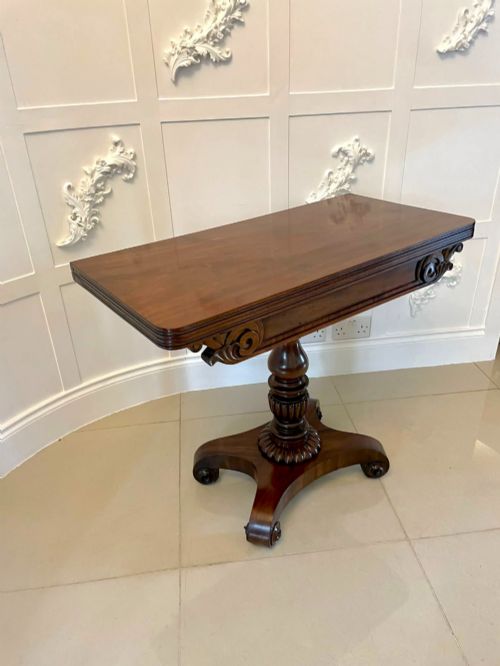
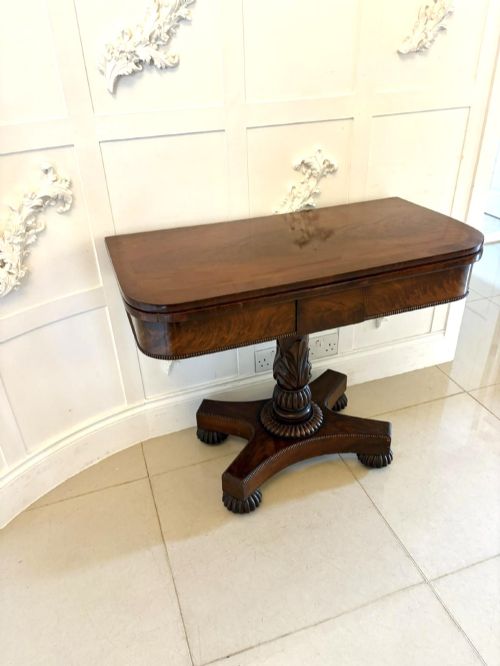
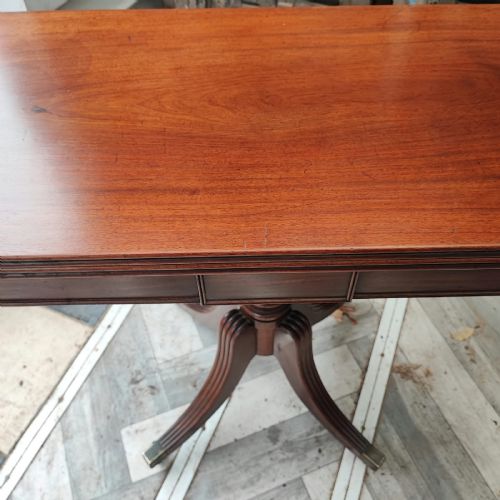
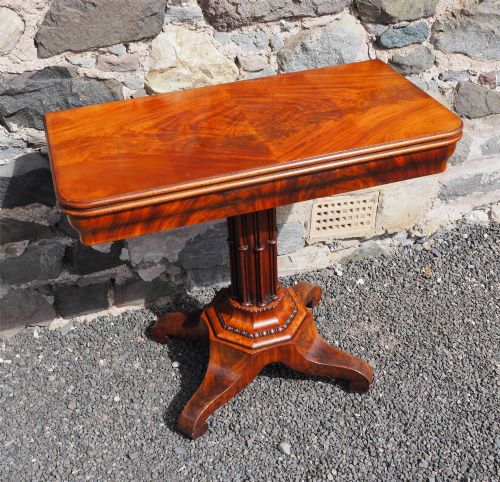
Flip Top Card Table
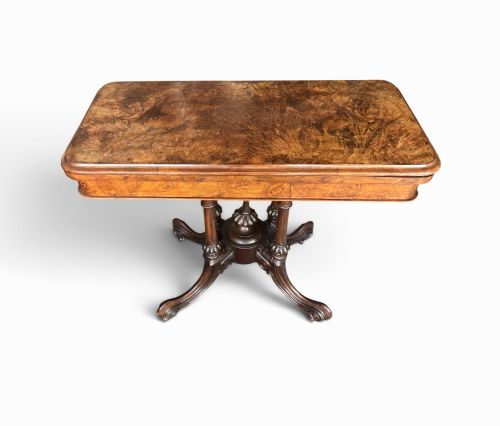
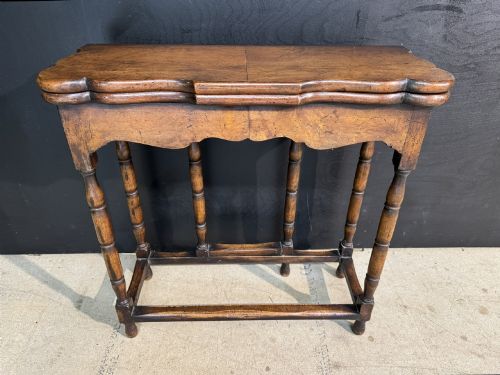
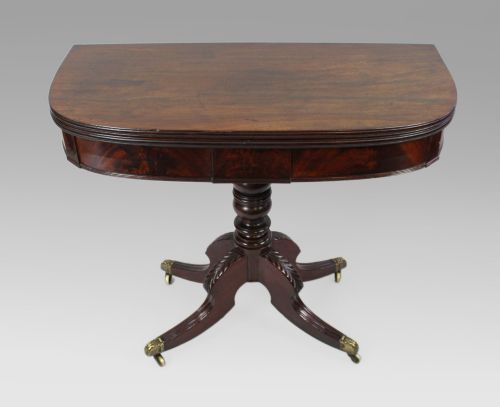
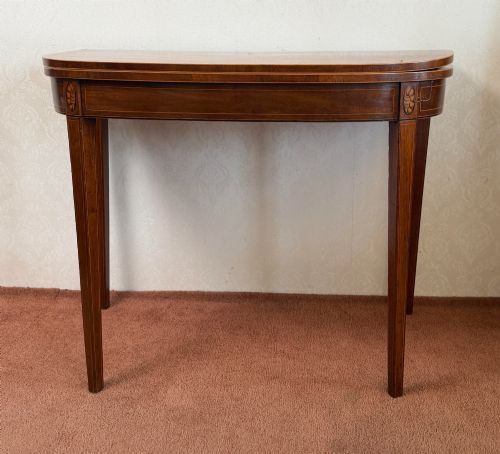
A flip top card table serves as a dual-purpose surface for social play and formal display, combining clever pivoting mechanisms with rich timber grains.
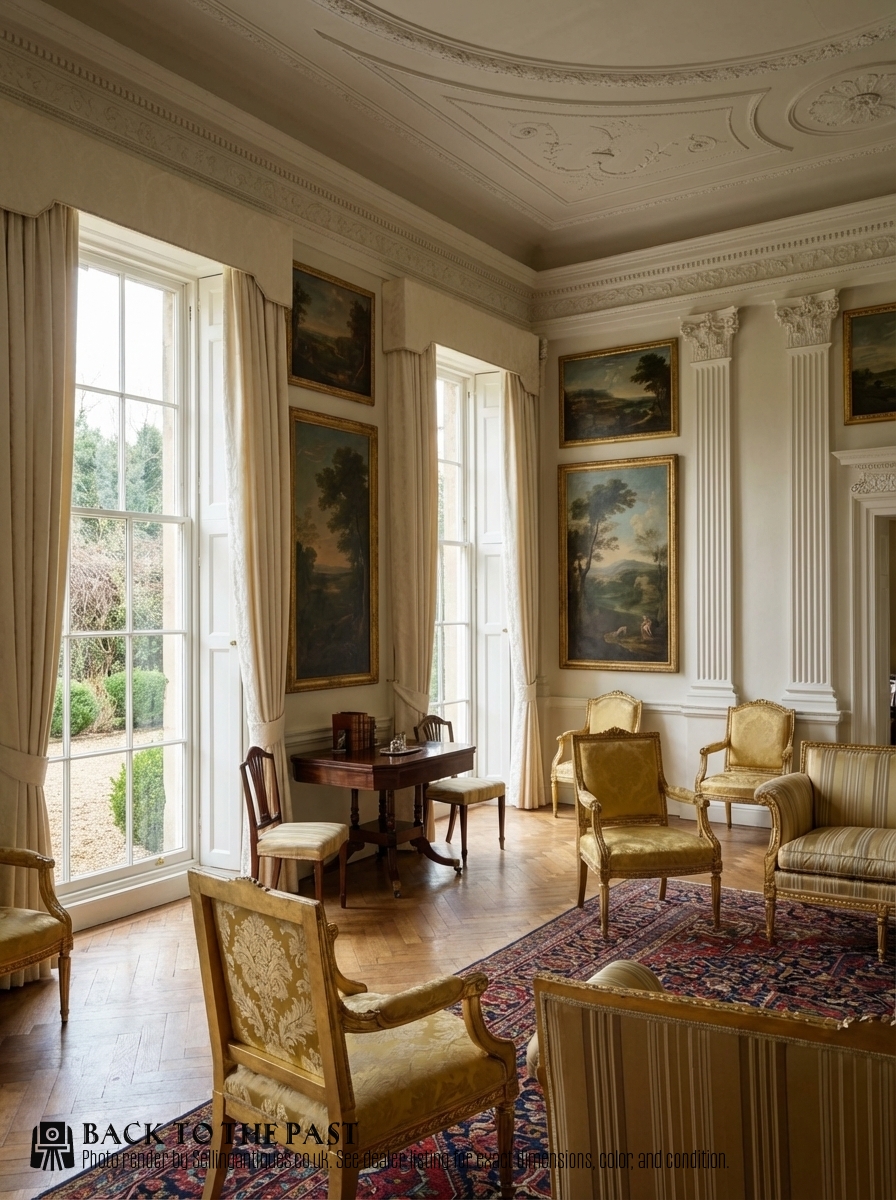
Flip Top Card Table
A flip top card table operates by folding, swinging or rotating its surface to reveal a hidden compartment or a baize-lined playing area beneath.
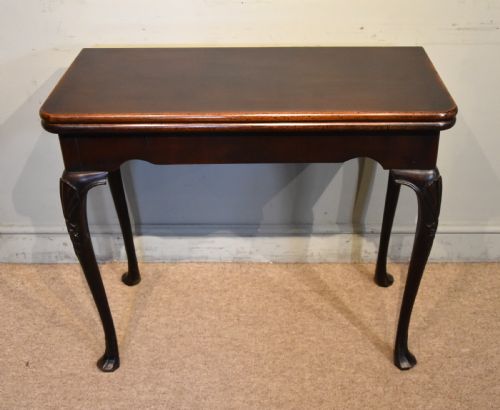
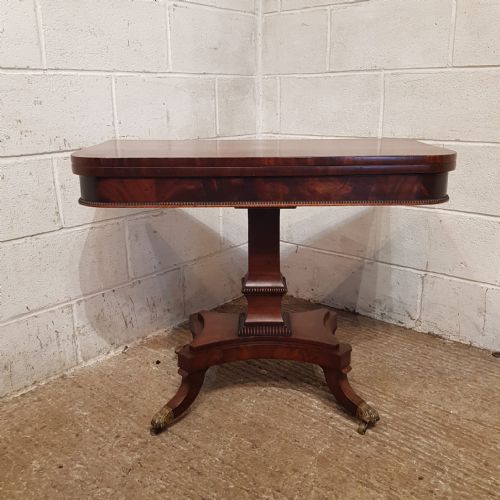
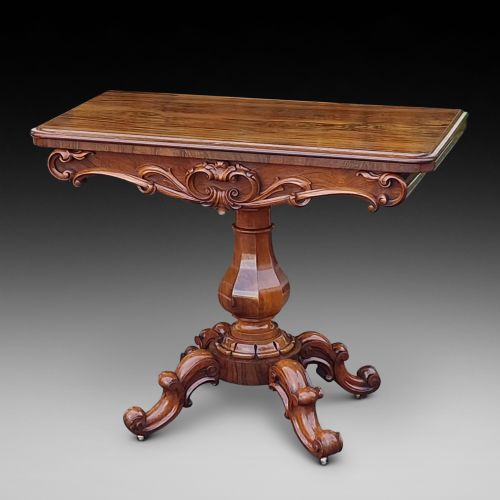
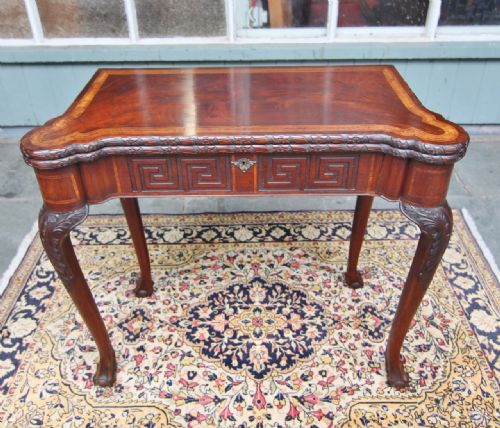
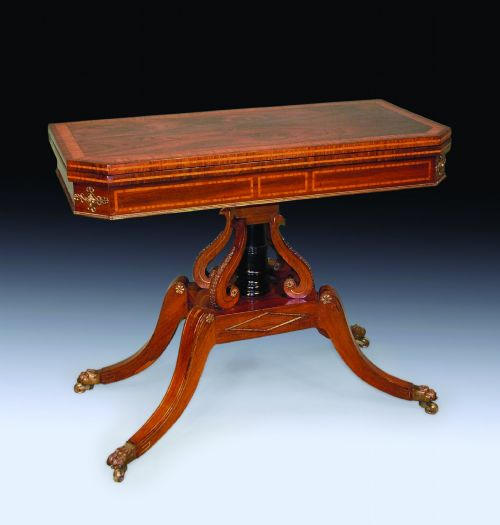
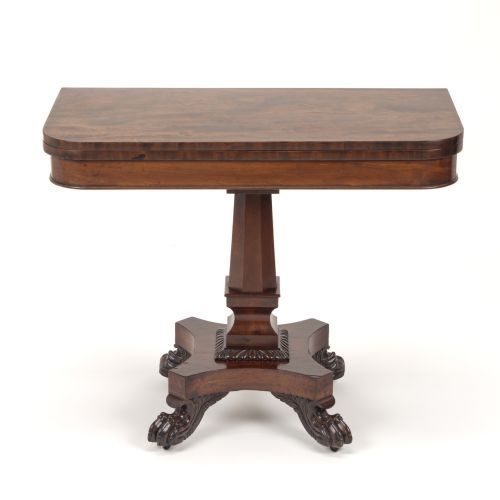
The selections available here span periods from the eighteenth century through the Victorian era, encompassing styles such as Georgian, Regency and William IV.
Makers utilised various primary timbers including mahogany, walnut and rosewood, often pairing them with satinwood inlay or ormolu mounts to enhance the visual weight of the form.
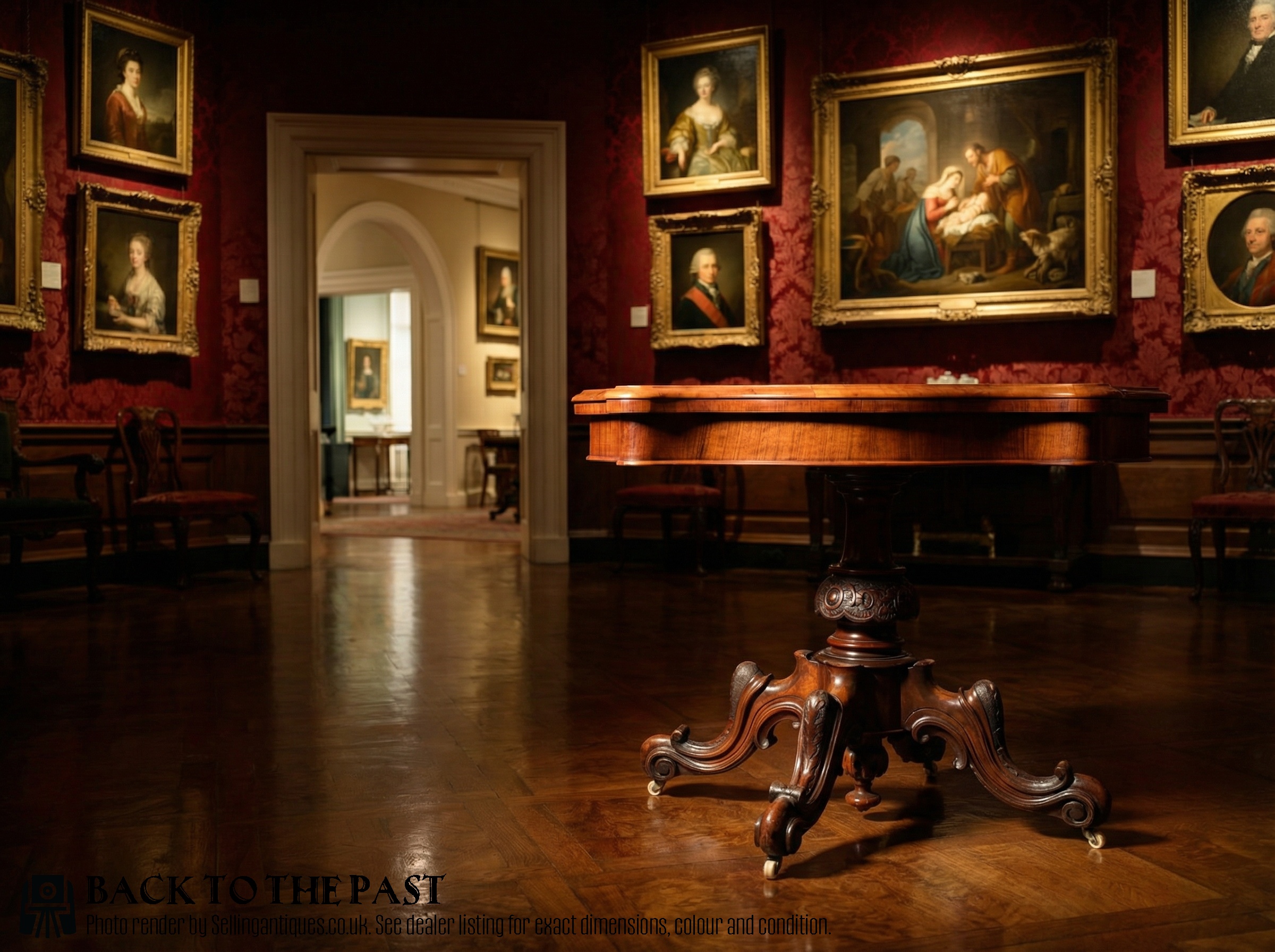
Materials and construction
Cabinetmakers selected dense hardwoods like Cuban and Honduras mahogany, walnut and rosewood to construct the hinged leaves and sturdy underframes.
Specialised pivots, concertina actions and swivel hinges allow the double tops to open smoothly without straining the timber joints.
Flip Top Card Table Retail Price Guide 2026
Typical asking prices for flip top card table among the pieces listed under this phrase on Sellingantiques today, from the lower quarter to the upper quarter. They describe what is for sale here now, not the wider market.
The listings feature mahogany, rosewood and walnut timbers spanning the Georgian, Regency, William IV and Victorian eras.
Judging quality in folding tables
Superior examples display deeply figured timber grains across the entire folding leaf, ensuring the pattern matches seamlessly when opened.
The precision of the pivoting mechanism and the stability of the supporting pedestals or legs dictate the overall rigidity of the piece.
Epstein and Co·H.OGDEN
The Flip Top Card Table Glossary
- Concertina action
- An expanding frame that pulls outward to support a folding tabletop from beneath. This mechanism allows all four legs to move outward in unison when opened.
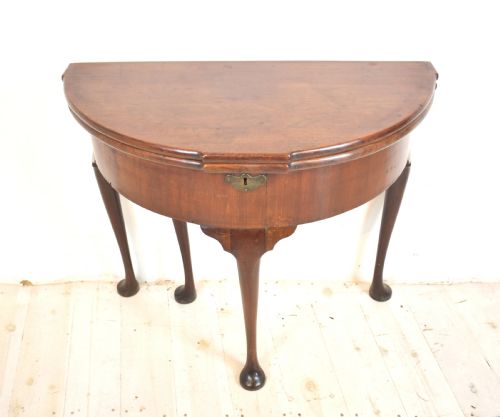
- Demi lune
- A half-moon shape used for tabletops that sit flush against a wall when folded. The straight edge faces the room once opened into a full circle.
- Figured mahogany
- Timber cut to reveal distinctive grain patterns such as flame or fiddleback. Cabinetmakers reserved these decorative boards for the primary surfaces.
- Ormolu
- Gilded bronze mounts applied to furniture for decorative contrast. Craftsmen fastened these metal details onto legs and friezes during the Regency period.
Flip Top Card Table: Frequently Asked Questions
How do you open a flip top card table?
Most tables use a hinge system where the top leaf rotates ninety degrees before folding flat onto the frame. Some models employ a concertina action that expands the apron to support the opened leaf.
Care must be taken to support the pivoting leaf evenly during movement to avoid placing undue stress on the internal wooden dowels and metal hinges.
What were these tables used for historically?
These pieces functioned primarily as social hubs for evening card games, chess and entertaining guests in drawing rooms. Between sessions, the tops folded down to serve as console tables or side tables against a wall.
Their dual nature made them essential furniture for period homes where floor space served multiple domestic functions throughout the day.
How do you distinguish a Georgian table from a Regency one?
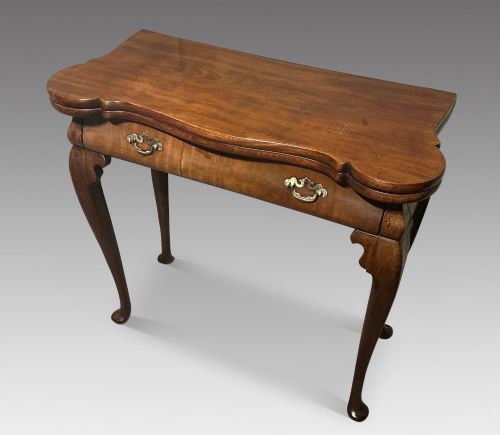
Georgian examples often feature carved cabriole legs, ball and claw feet, and solid mahogany construction dating from the eighteenth century. They lean toward restrained classical proportions and dark timber tones.
Regency pieces tend to incorporate heavier brass mounts, rosewood veneers, sabre legs and scroll pedestals influenced by classical revival motifs from the early nineteenth century.
Where should a card table be placed at home?
These tables sit comfortably against living room walls in their folded position as side or console tables. They pull into the room easily whenever extra surface space is required.
Direct sunlight and extreme temperature fluctuations should be avoided to protect antique wood finishes and prevent the folding leaves from warping over time.