



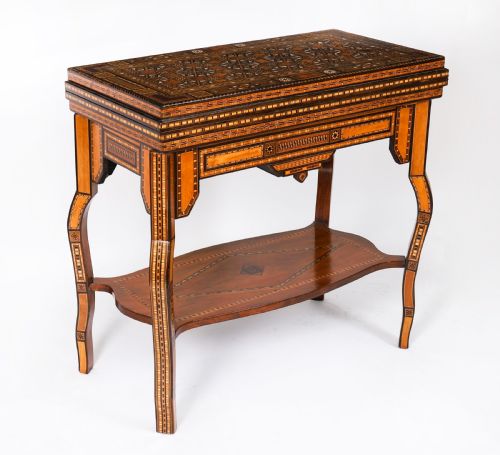
Victorian Walnut Games Table
When buying a victorian walnut games table, you are choosing a dual-purpose piece designed for parlour entertainment and refined interior display.
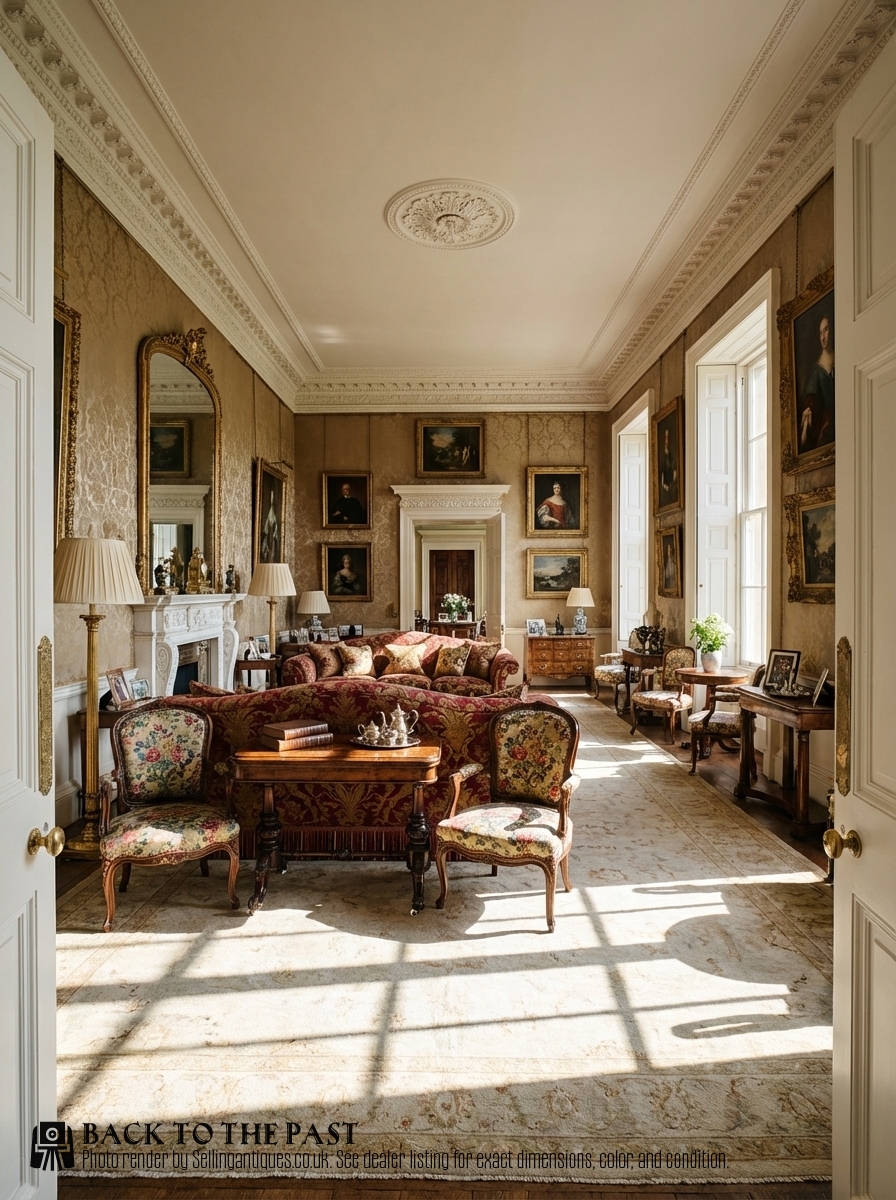
Victorian Walnut Games Table
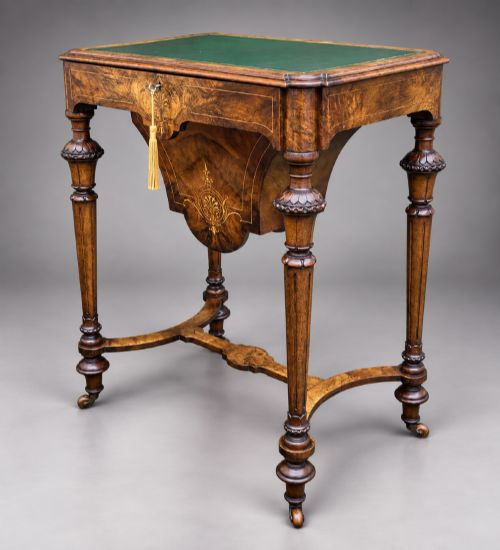
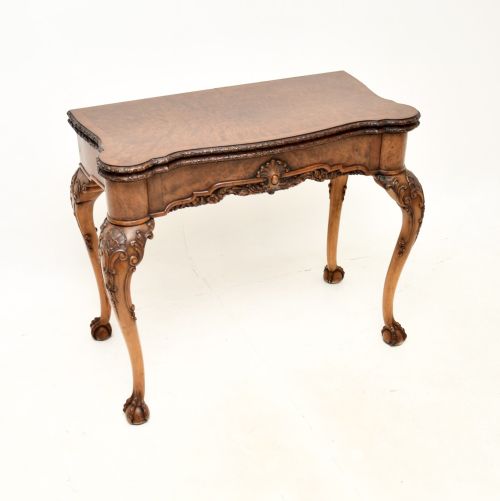
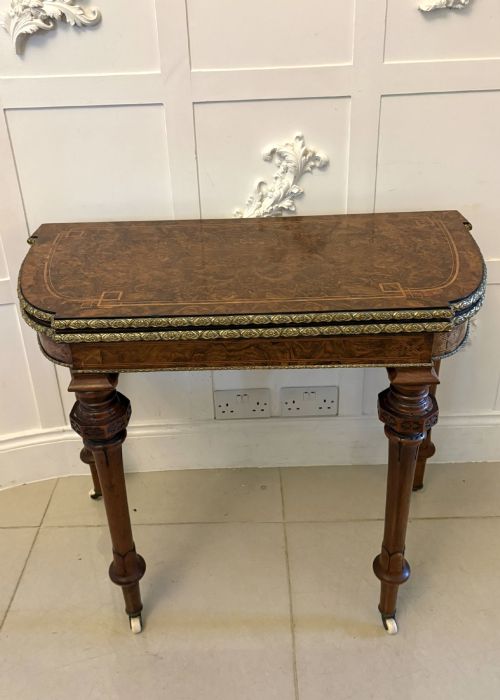
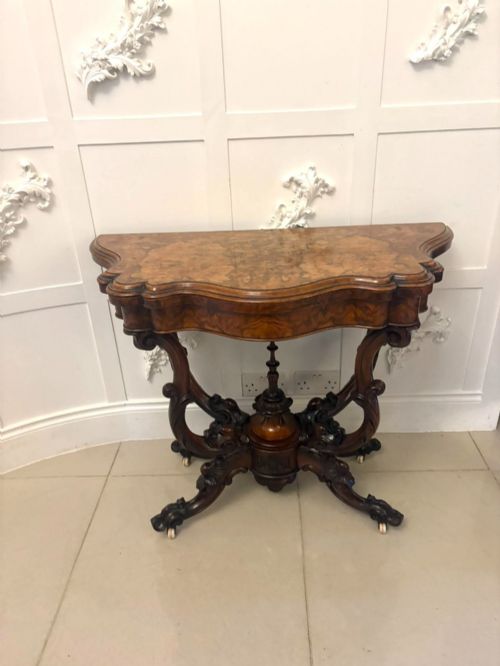
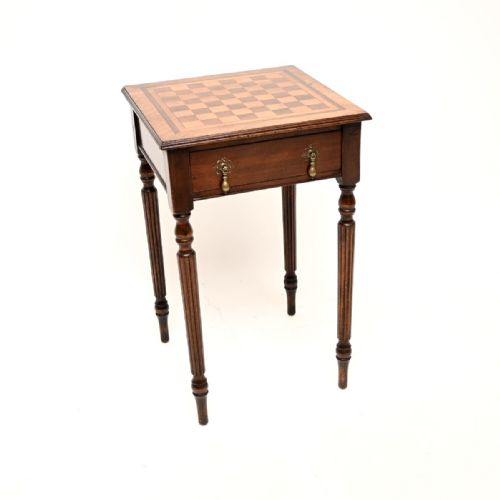
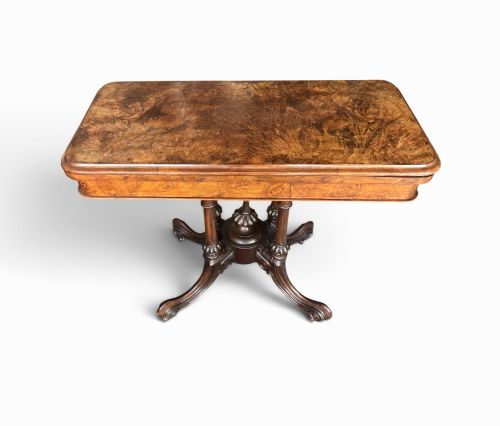
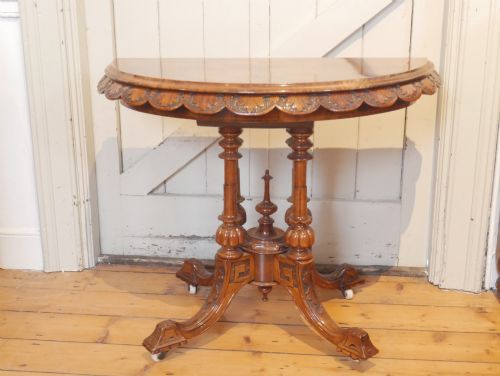
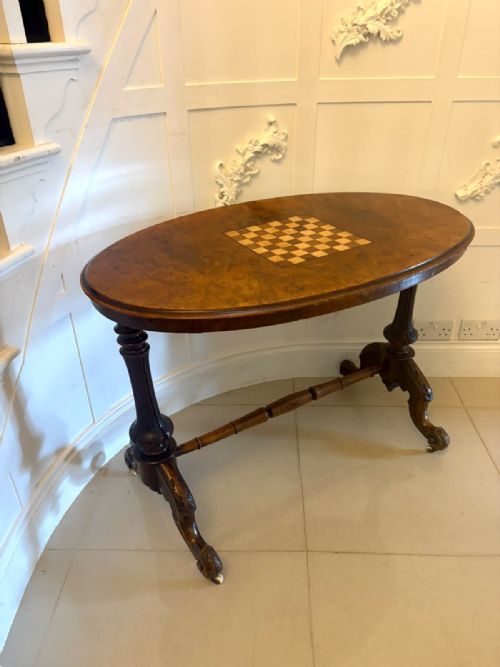
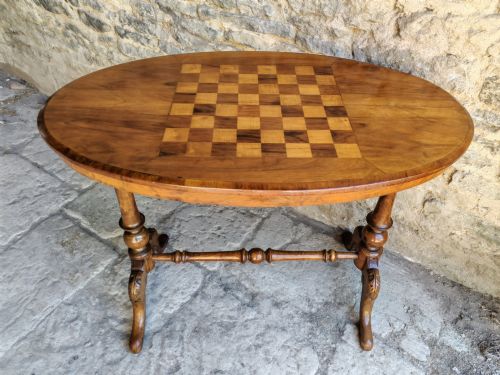
A victorian walnut games table typically presents as a fold-over card table, a combination work and sewing table, or a dedicated chess top table originating from the nineteenth century. These forms were engineered for the Victorian drawing room, serving as occasional tables that expanded or revealed integrated boards for cards, chess, and backgammon.
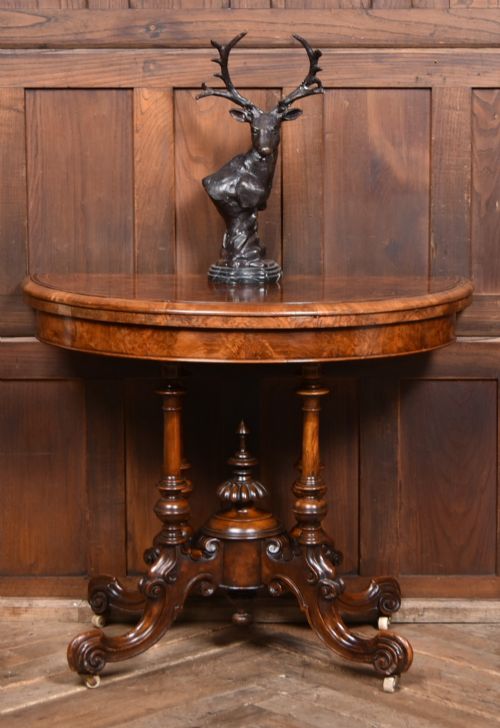
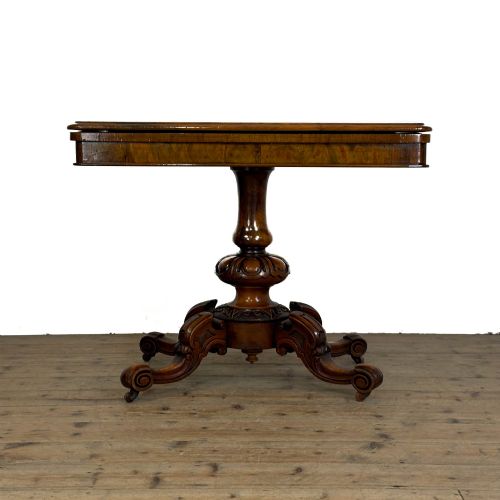
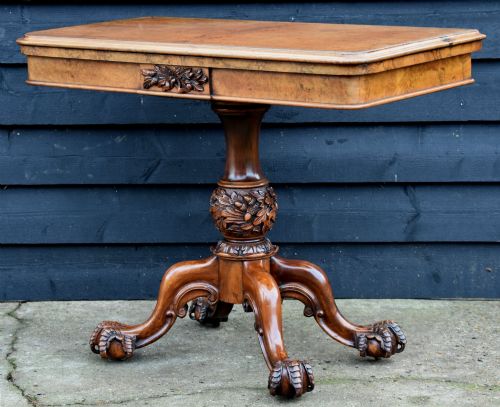
The most common formats met on this page are fold-over card tables featuring swivel tops that conceal lined playing surfaces, alongside hybrid sewing tables fitted with internal compartments and wool bags. Makers also produced tripod and pedestal bases, often supported by carved pillars or elaborate basket bases.
Stylistic variations range from restrained mid-century domestic pieces to exuberant Victorian Rococo Revival, Aesthetic Movement, and marquetry-heavy French-influenced designs. Their dual utility made them central to middle- and upper-class social rituals, balancing domestic productivity with evening leisure.
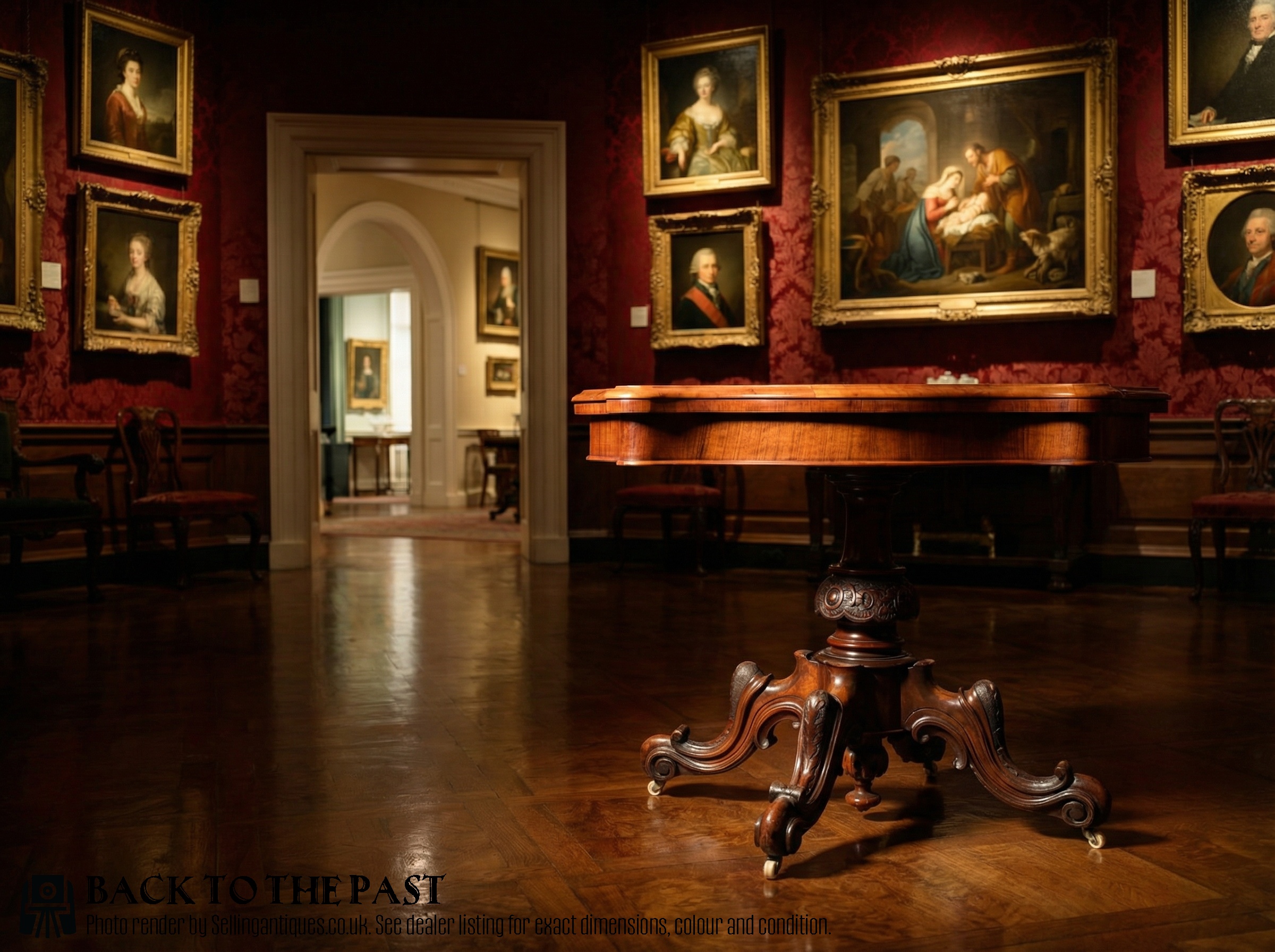
Materials and Technique
Cabinet makers relied heavily on figured walnut and burr walnut veneers applied over solid secondary timbers, utilising the rich, swirling grain patterns characteristic of the period. Burr walnut was prized for its knotty, speckled figure, usually reserved for the prominent outer surfaces of table tops and friezes.
Decoration often incorporated intricate wood inlay, marquetry, and ebonised wood details, sometimes complemented by brass mounts, ceramic elements, or ormolu accents. Surfaces were finished to a high polish, highlighting the natural tonal variations of the walnut veneer.
Structural integrity depended on clever joinery, particularly for the pivoting and fold-over mechanisms that doubled the surface area when opened. Pedestal bases were frequently anchored by carved tripod legs or heavy plinths equipped with concealed castors for mobility.
Listings feature tables spanning from the 1840s through the Edwardian period, constructed primarily in walnut, burr walnut, and ebonised wood with brass and ceramic fittings.
Assessing Craftsmanship
Quality in a victorian walnut games table rests on the depth and selection of the burr veneer and the precision of the marquetry inlay. Superior examples display continuous, book-matched grain across the fold-over top, whereas lesser items use plain walnut or mismatched veneer sections.
The sophistication of the internal mechanism dictates the mechanical standing of the piece. Top-tier tables operate smoothly on quality brass hinges and pivot blocks, with tightly fitted compartments and well-carved pedestal supports that show crisp hand-detailing rather than cast repetition.
Attribution to documented makers such as Edwards & Roberts elevates a piece, distinguished by superior timber selection and refined internal joinery. The crispness of carved foliage on the pedestal and the tightness of the marquetry joints separate standard production furniture from exhibition-grade creations.
Edwards & Roberts
The Victorian Walnut Games Table Glossary
- Burr Walnut
- A veneer taken from the excrescences or gnarled growths of a walnut tree. It produces highly figured, swirling patterns that were heavily favoured for high-status Victorian table tops.
- Marquetry Inlay
- The art of applying pieces of veneer to a structural structure to form decorative patterns. In these tables, it often depicts floral motifs or geometric borders.
- Fold-Over Top
- A hinged table top design that swings open to double the surface area. This mechanism frequently conceals a baize-lined playing surface or internal storage wells.
- Ormolu
- Gilded bronze mounts applied to furniture for decorative effect. They appear on select revival-style tables of the period.
- Ebonised Wood
- Timber treated to resemble ebony, providing dark contrast to the warm brown tones of walnut. It is frequently used for stringing lines and border details.
Victorian Walnut Games Table: Frequently Asked Questions
How do you open the top?
Most fold-over versions utilise a swivel mechanism where the upper leaf rotates ninety degrees before folding flat onto the supporting frame. This action uncovers an enclosed well used for storing cards or gaming pieces.
The weight of the folded top is supported by the pivoting frame or a pull-out rear leg drawer. Care should be taken to lift rather than drag the leaf during operation.
What games were played on them?
These tables accommodated a variety of parlour pastimes, most commonly card games like whist, alongside chess and draughts. Integrated boards were either inlaid directly into the timber or revealed by reversing the fold-over top.
Combination sewing tables often included backgammon markers alongside compartments for wool and needles, reflecting the multi-functional nature of Victorian evening entertainment.
How should I clean walnut veneer?
Maintenance requires only a soft, dry cloth to remove dust, avoiding modern silicone sprays or abrasive polishes that can degrade the historic finish. Wax can be applied sparingly to nourish the timber and protect the veneer from drying out.
Direct sunlight and sudden changes in room temperature should be avoided to prevent the walnut veneer from warping or lifting at the edges.
Are all these tables English?
While the majority of pieces found on the market reflect English cabinet making traditions, influences from French Rococo Revival and Syrian Ottoman styles are also present. Imported techniques and decorative motifs circulated widely among Victorian workshops.
Regional variations appear occasionally, such as Irish walnut tables which sometimes display distinct carving styles and native timber selections.