



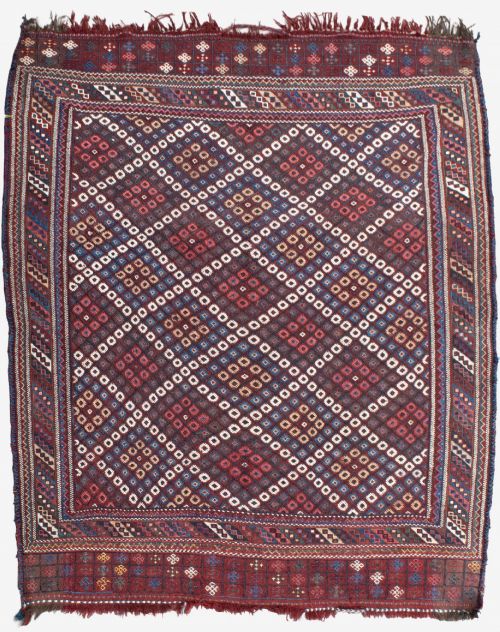
Flatweave Tribal Rug
A flatweave tribal rug brings rich geometric patterns and authentic nomadic history straight to your floor.
Flatweave Tribal Rug
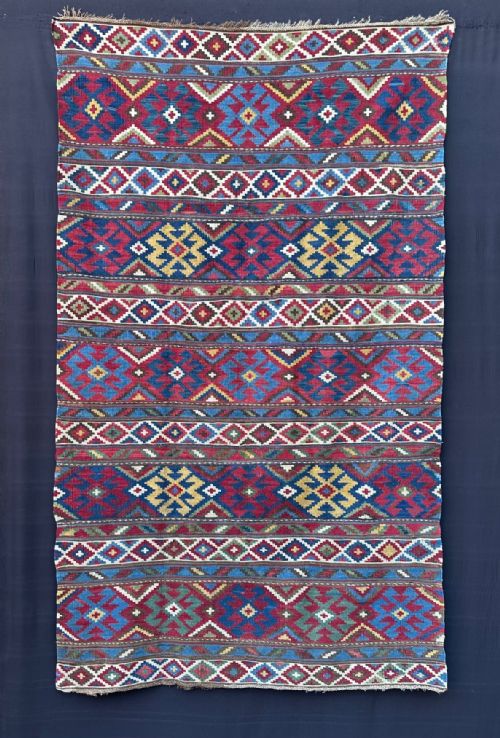
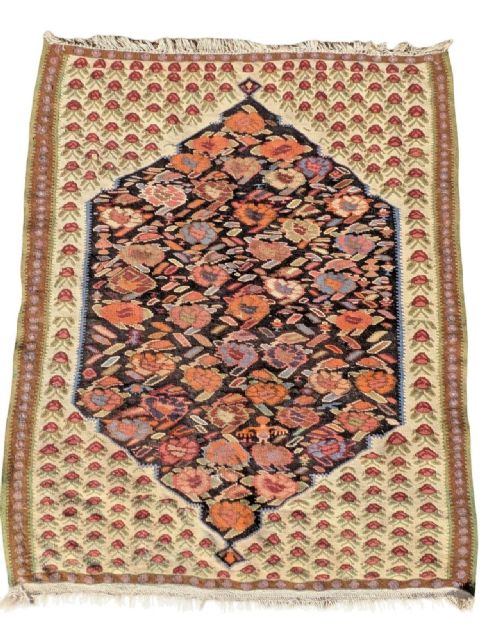
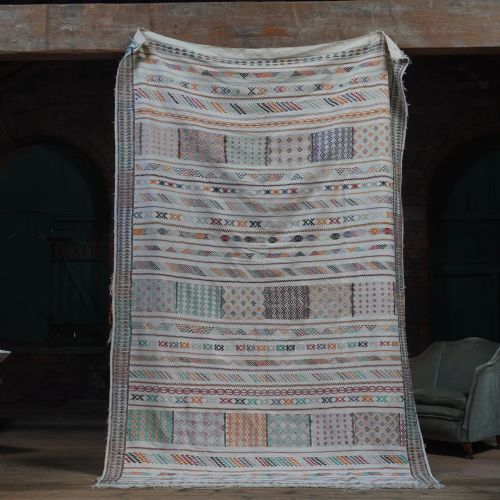
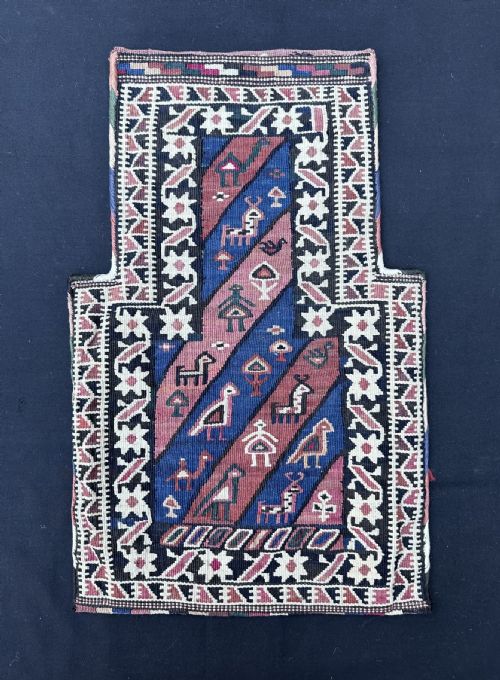
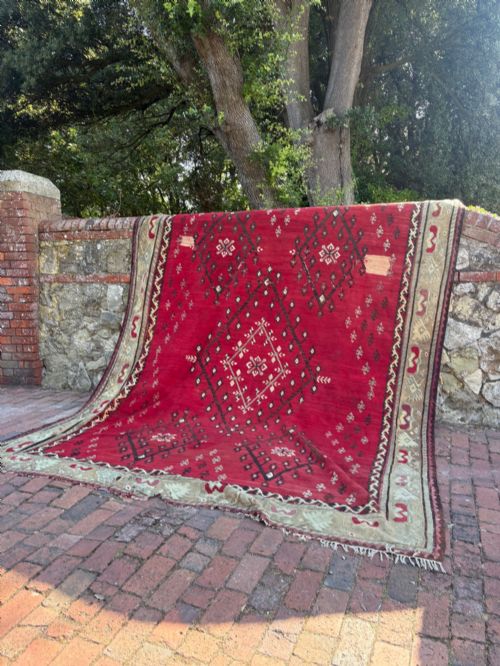
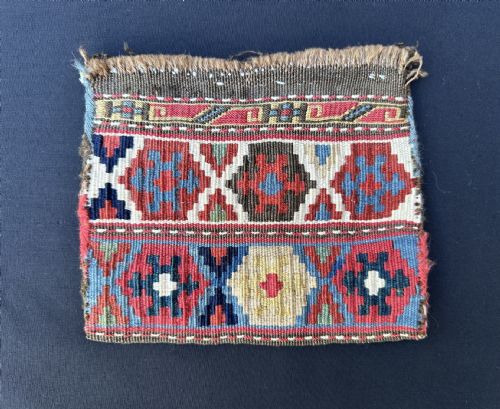
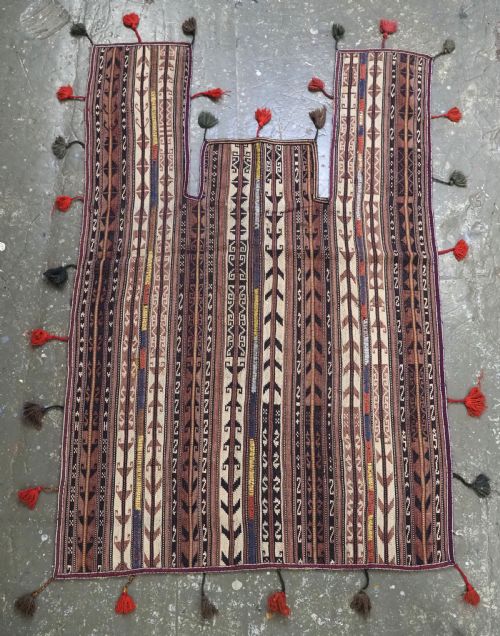
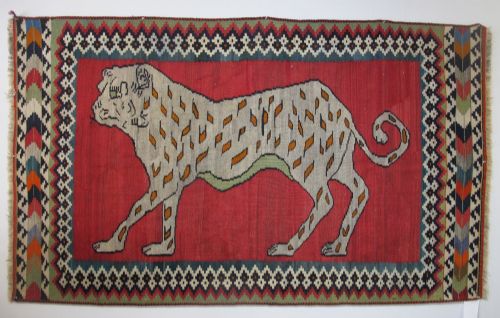
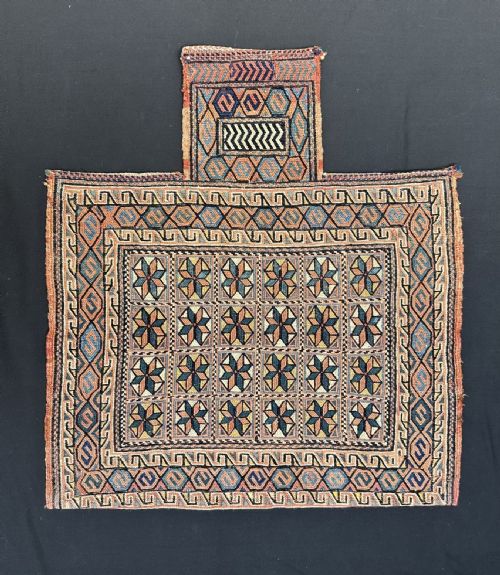
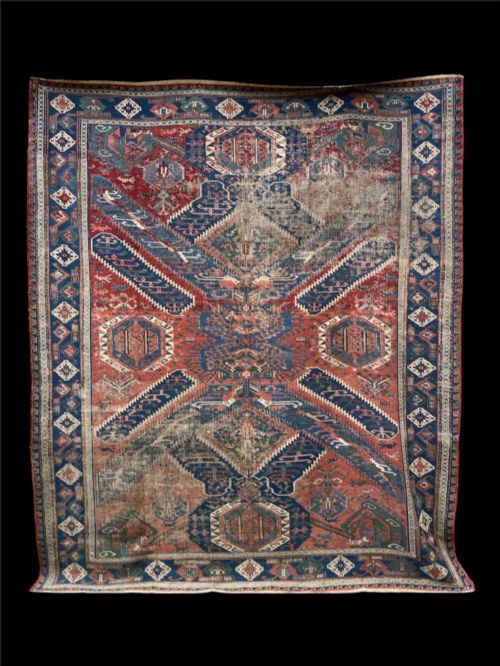
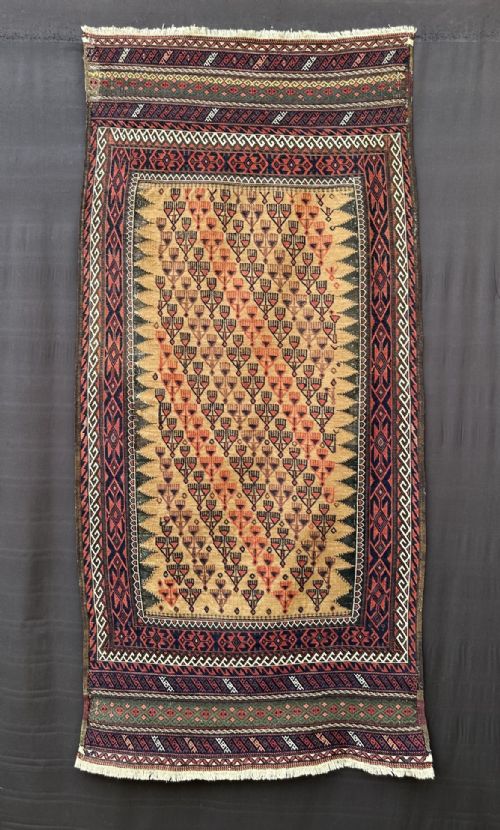
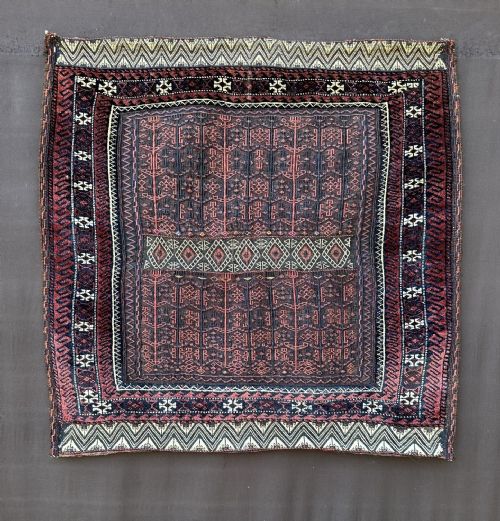
A flatweave tribal rug represents the nomadic weaving traditions of Central Asian, Caucasian, Anatolian, and Persian makers. When searching for a flatweave tribal rug, buyers encounter diverse regional forms including kilims, soumaks, and tent bands produced between eighteen seventy and nineteen twenty.
These textiles include distinctive formats such as banded designs, diamond medallions, and three medallion configurations. Pieces range from small utilitarian formats originally made from tent bands to large room-sized carpets.
Geographic origins dictate the distinct visual language of each piece. Caucasian Shirvan and Soumak pieces sit alongside Central Asian Uzbek Gajeri, Turkmen Dali, Turkish Mut, Konya Reyhanli, and Persian Kurdish Senneh or Bijar examples.
Materials and construction
These textiles are constructed entirely from natural fibres. Artisans relied upon wool for the main woven structure and pile where applicable, alongside cotton in specific structural elements.
The weaving technique relies on interlacings of warp and weft threads without a knotted pile, producing a flat surface. Certain pieces incorporate exceptionally fine weaves and specialised wrapping techniques such as those seen in Soumak construction.
Flatweave Tribal Rug Retail Price Guide 2026
Typical asking prices for flatweave tribal rug among the pieces listed under this phrase on Sellingantiques today, from the lower quarter to the upper quarter. They describe what is for sale here now, not the wider market.
Some small rugs started life holding up a nomad's tent before earning a quiet retirement on the floor.
Assessing quality and character
Quality rests upon the tightness of the weave and the precision of the graphic design. A very fine weave demonstrates superior technical skill by the weaver.
The choice of dyestuffs and the harmony of soft colours or scarce ground shades determine visual impact. Surface preservation and the integrity of the original banded or medallion layouts further distinguish individual examples.
The Flatweave Tribal Rug Glossary
- Kilim
- A flatwoven carpet or rug produced without a pile. These pieces rely on tightly packed weft threads concealing the warp to create crisp geometric patterns.
- Soumak
- A type of rug made using a wrapping technique that creates a braided texture on the face and floats of yarn on the reverse. This method yields a thicker and sturdier structure than standard flatweaving.
- Warp
- The stationary vertical threads stretched lengthwise on the loom before weaving begins. Weft threads are passed over and under these foundational yarns.
- Weft
- The horizontal threads passed back and forth through the warp to build the cloth. In flatwoven rugs, these coloured wefts completely form the pattern.
- Medallion
- A central ornamental motif dominating the field of the rug. Tribal weavers often rendered these in geometric, diamond, or multi-lobed configurations.
Flatweave Tribal Rug: Frequently Asked Questions
How are flatweave tribal rugs made?
These textiles are constructed on traditional looms using wool and cotton fibres. Artisans interlace weft threads tightly across vertical warps to create pattern without a knotted pile.
Specialised structures like Soumak involve wrapping threads around the warp to add texture and durability. Each regional group employed specific structural techniques passed down through generations.
Where do these rugs originate?
The pieces originate from nomadic and village communities across Central Asia, the Caucasus, Anatolia, and Persia. Distinctive weaving centres include regions worked by Uzbek, Turkmen, Qashqai, Kurdish, and Shirvan makers.
Geography dictates the traditional motifs, palettes, and structural variations found in each textile. Nomad groups often adapted formats for practical camp use, such as utility tent bands.
How do I date a tribal rug?
Dating relies on examining material wear, dyestuff characteristics, and structural consistency. Pieces on this page originate from the late nineteenth century through the early twentieth century.
Stylistic markers such as specific medallion layouts or traditional border designs help place textiles into distinct decades. Expert comparison with documented examples from similar origins refines the era of production.
How do I care for a flatweave?
Protect the textile by placing a quality underlay beneath it to prevent slipping and reduce friction against the floor. Regular gentle vacuuming without a rotating brush roll removes trapped dust.
Keep the rug away from direct, harsh sunlight to prevent natural dyes from fading unevenly over time. Professional cleaning tailored to antique wool textiles ensures the longevity of the weave.
What is a tent band?
Tent bands are long, narrow strips of decorative flatweaving utilised by nomadic groups to secure yurt or tent structures. Artisans wove these utilitarian bands with dense geometric patterns.
Many survive today either in their original long format or repurposed into smaller rugs and household textiles. Their tight construction reflects the heavy physical demands placed on nomad shelters.