



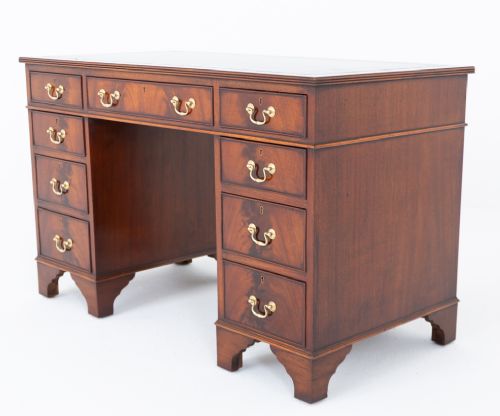
Flame Mahogany Writing Table
A flame mahogany writing table brings rich timber figure and practical workspace into a room, offering both functional utility and classic presence.
Flame Mahogany Writing Table
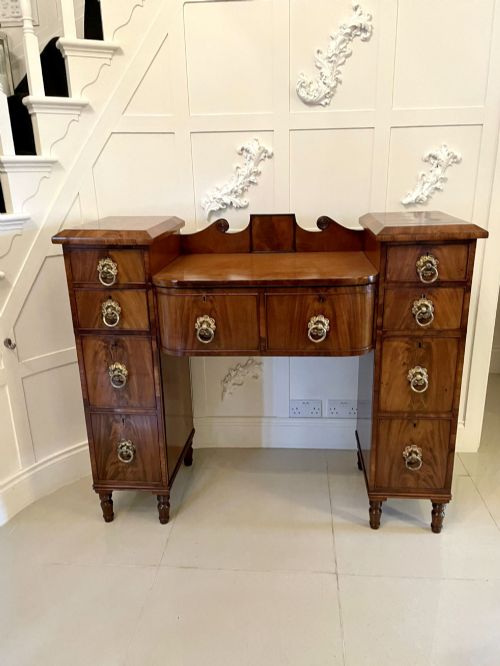
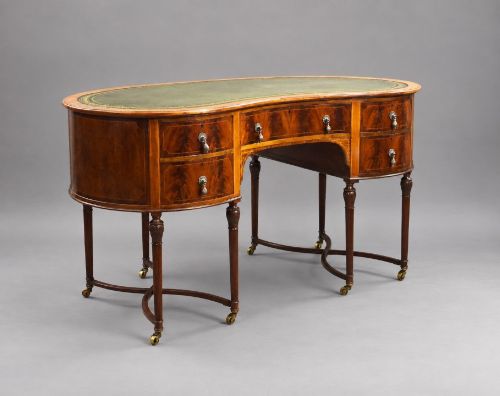
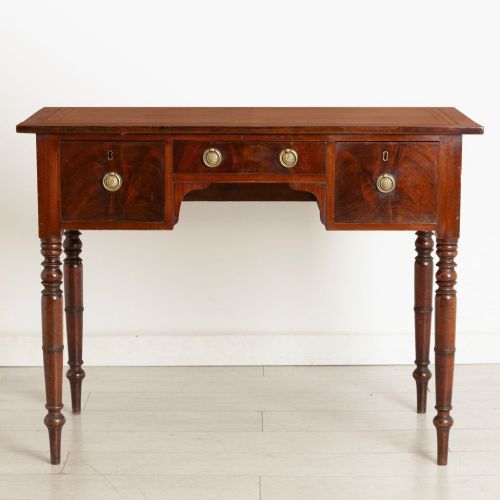
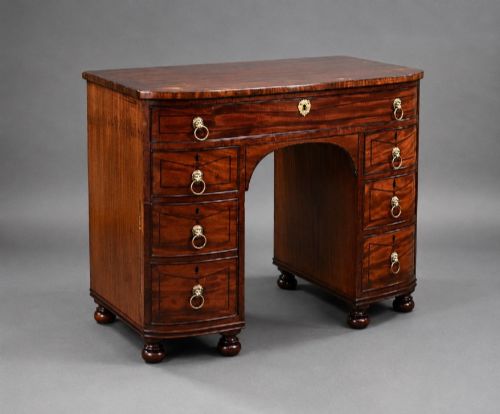
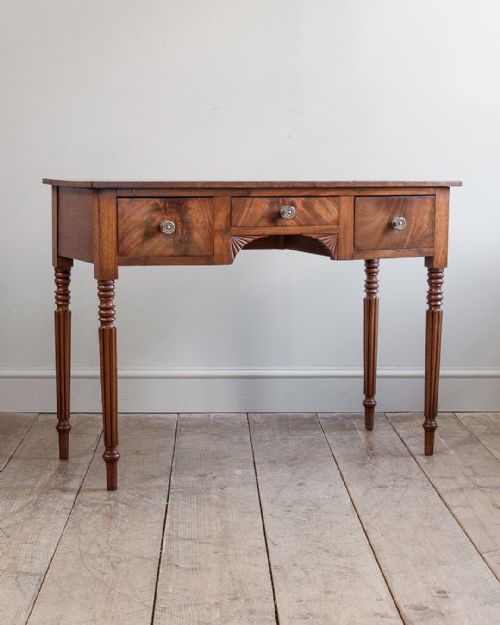
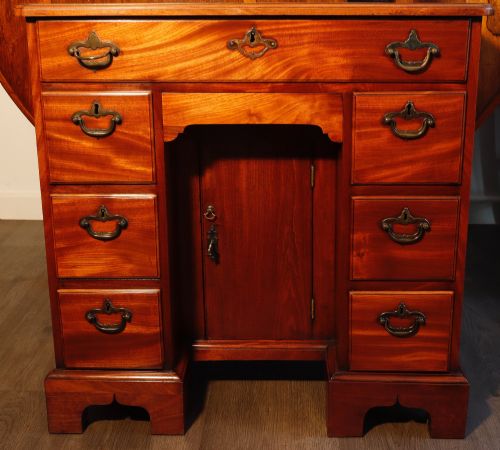
A flame mahogany writing table is a dedicated surface designed for correspondence and paperwork, distinguished by the striking, flickering grain patterns of its timber. These pieces appear in forms ranging from compact side tables and kidney-shaped desks to substantial partners pedestals and library tables.
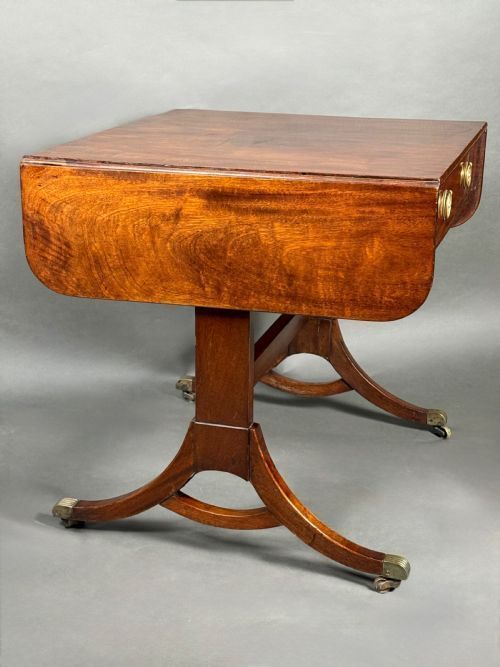
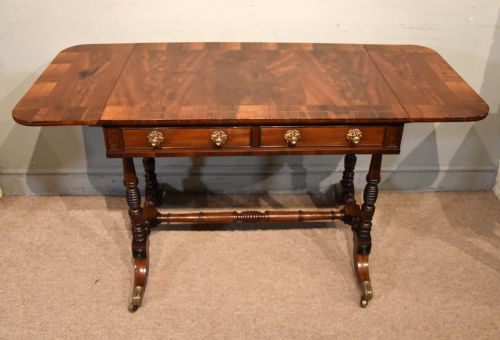
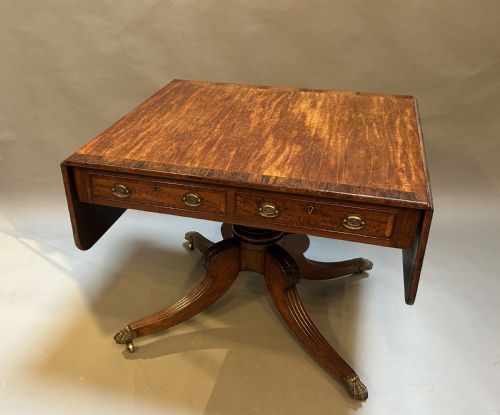
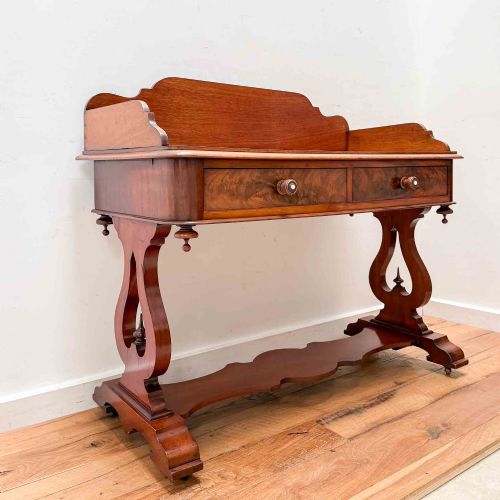
The pieces on this page emerge from several distinct periods, with nineteenth-century, Victorian, and Regency examples appearing alongside Georgian pieces and later Edwardian revivals. Buyers frequently encounter sofa tables, pedestal desks, and dressing tables adapted for writing use across these eras.
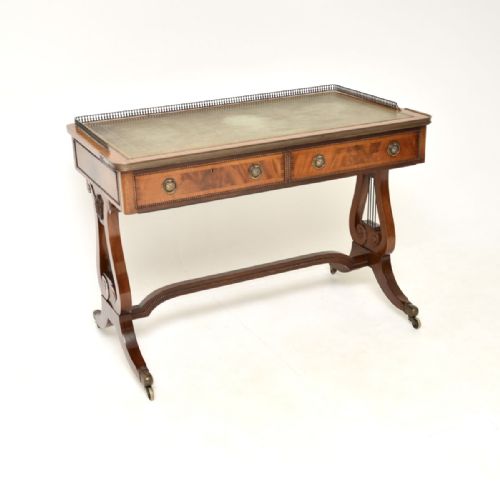
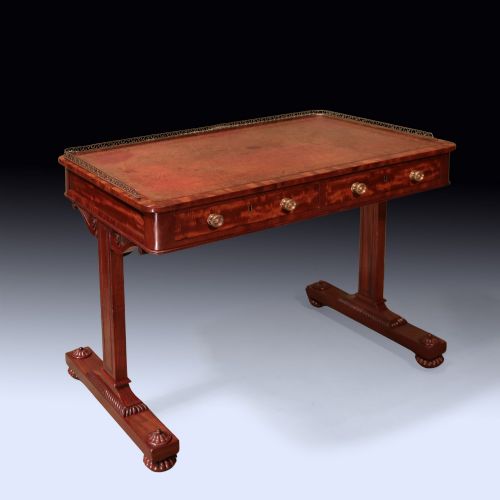
Makers and cabinet-makers utilised distinct regional proportions and decorative schemes, incorporating brass details, leather inserts, and marquetry. Selecting the right version involves balancing the desired scale against the specific configuration of drawers and writing surfaces.
What varies in quality
The visual impact of the timber grain sets individual pieces apart, depending on how skillfully the flame mahogany veneer was matched and laid across the surface. Desks with continuous, highly figured grain patterns across multiple drawers demonstrate superior cabinet-making ambition.
Structural integrity and the retention of original brass handles or leather inserts influence the overall character of a desk. Examples that maintain their original secondary woods and uncompromised internal framing represent higher execution.
Proportion and decorative restraint distinguish standard production from exceptional workshops. Pieces featuring refined inlay, well-executed crossbanding, and harmonious dimensions hold greater distinction.
Materials across the selection include solid mahogany, flame mahogany veneer, brass, leather, and satinwood.
Waring & Gillows
The Flame Mahogany Writing Table Glossary
- Flame mahogany
- A veneer figure resembling flickering flames, cut from the branch junctions of the mahogany tree. This grain creates a highly decorative surface on table tops and drawer fronts.
- Partners desk
- A large double-sided pedestal desk designed for two people to work opposite one another. These pieces feature drawers and cupboards on both sides.
- Crossbanding
- A border of veneer laid perpendicular to the grain of the main surface. This technique frames table tops and drawer fronts with a contrasting border.
- Davenport
- A compact pedestal desk with a sloping writing surface and drawers opening to the side. It was developed during the late eighteenth century as a space-saving writing cabinet.
- Library table
- A large freestanding table used for reading and writing, finished on all sides so it could sit in the centre of a room.
Flame Mahogany Writing Table: Frequently Asked Questions
What is a flame mahogany writing table?
A flame mahogany writing table is a traditional desk or table surfaced with highly figured veneer that displays a distinctive, flickering grain pattern. These pieces combine a dedicated writing surface with decorative cabinet-work developed across the eighteenth and nineteenth centuries.
They serve as functional desks for study or correspondence while functioning as statement furniture in a room. Their forms vary from slim side tables to large pedestal desks.
How do I date a mahogany desk?
Dating a mahogany desk involves examining the construction methods, drawer joinery, hardware style, and secondary timbers used in the frame. Georgian and Regency pieces typically show hand-cut dovetails and specific proportions, while Victorian and Edwardian examples often incorporate different secondary woods and revival styling.
Hardware fixings and the presence of original leather inserts or brass inlay also provide clear chronological markers. Comparing these physical traits against known period characteristics helps establish the age of the piece.
How do I care for flame mahogany?
Caring for flame mahogany requires keeping the timber away from direct sunlight and extreme temperature fluctuations, which can dry out the veneer and polish. Regular dusting with a soft, dry cloth preserves the finish without building up unwanted residues.
Applying appropriate wax polish occasionally helps nourish the wood and maintain its natural lustre. Protecting the leather writing insert from spills ensures the longevity of the working surface.