
Brown Mahogany Vanity Table
These brown mahogany vanity table pieces offer enduring timber work and polished surfaces that suit period bedrooms.
Brown Mahogany Vanity Table
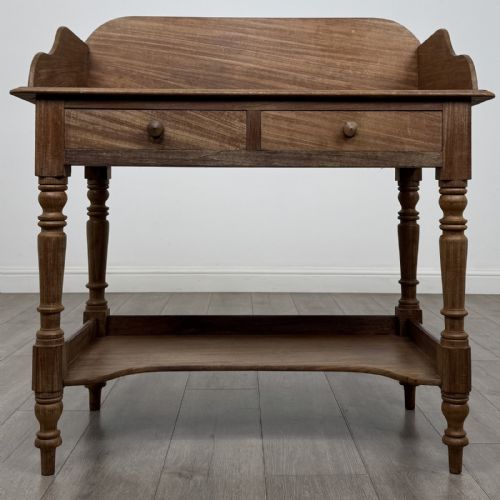
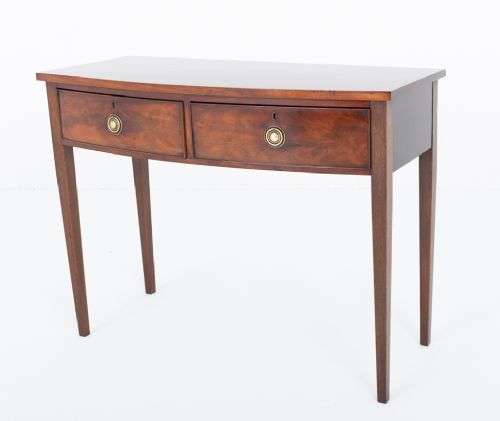
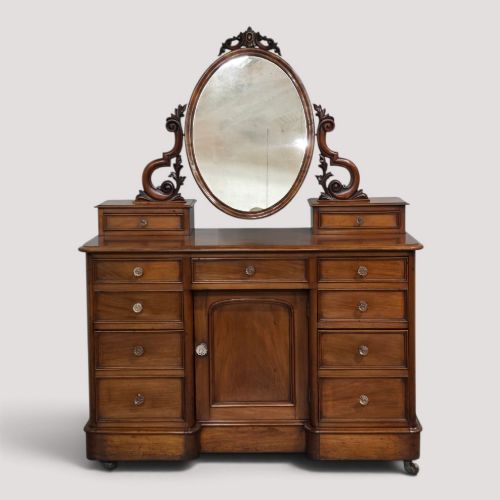
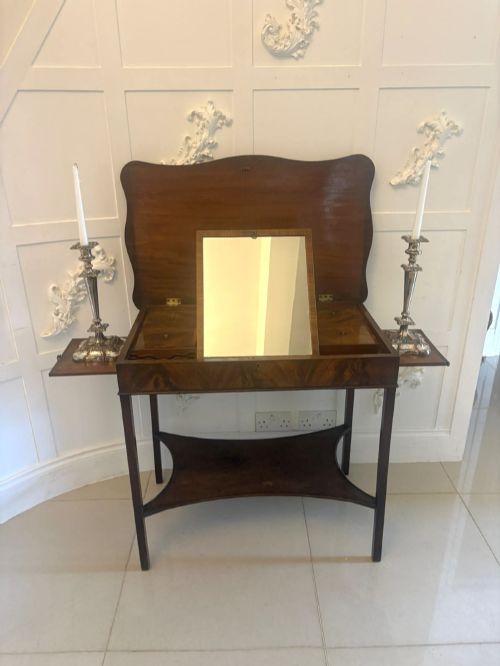
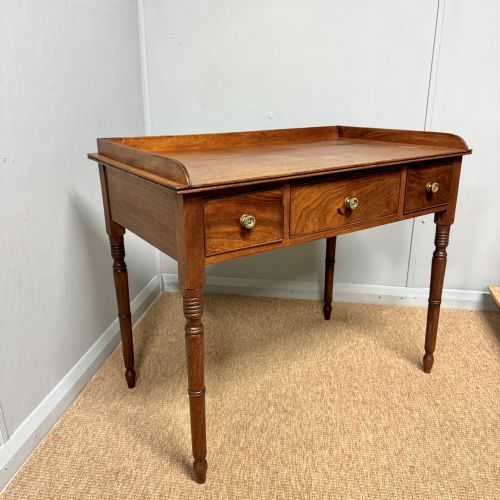
A brown mahogany vanity table appears across several historical periods, most frequently as Georgian, Victorian, and Edwardian examples designed for grooming and daily toilette.
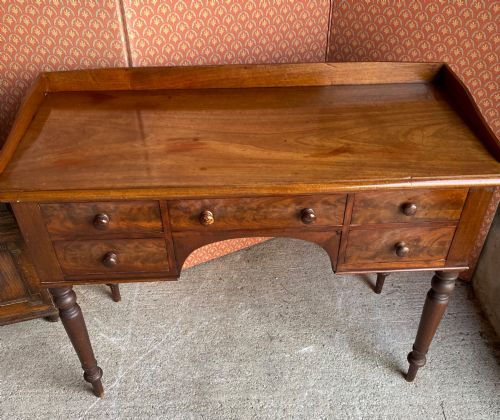
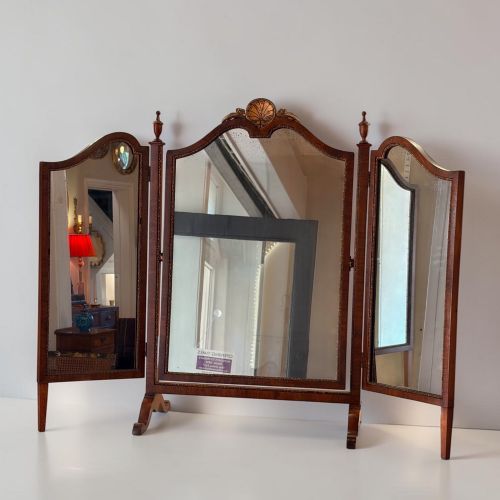
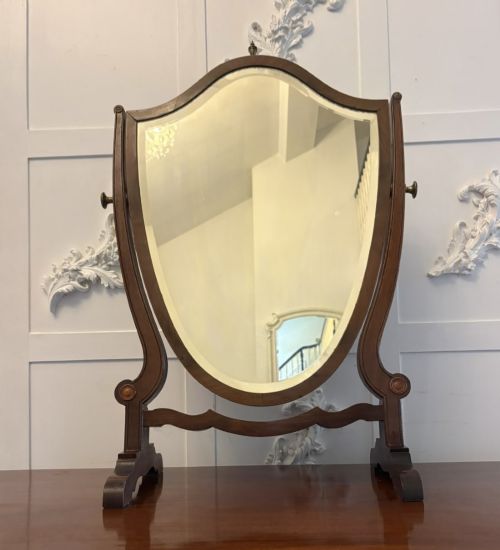
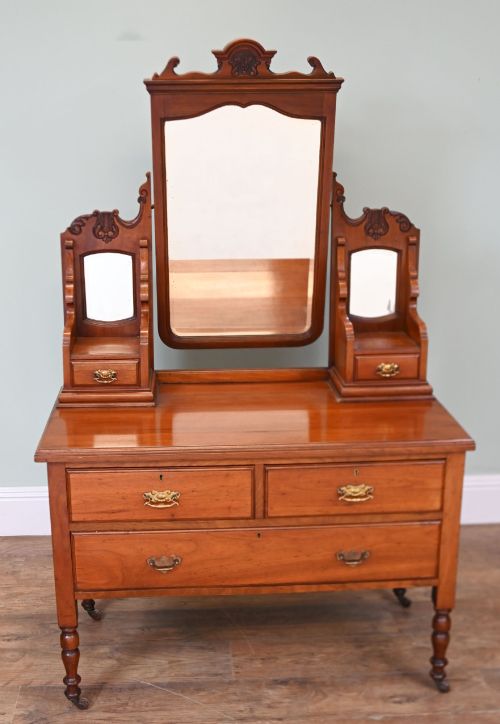
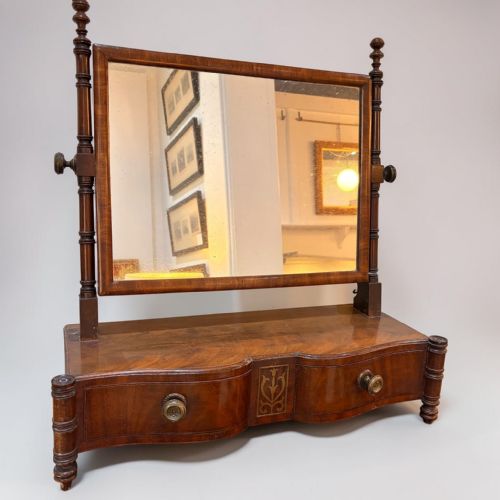
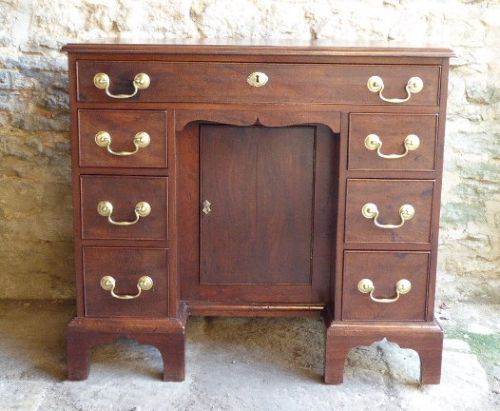
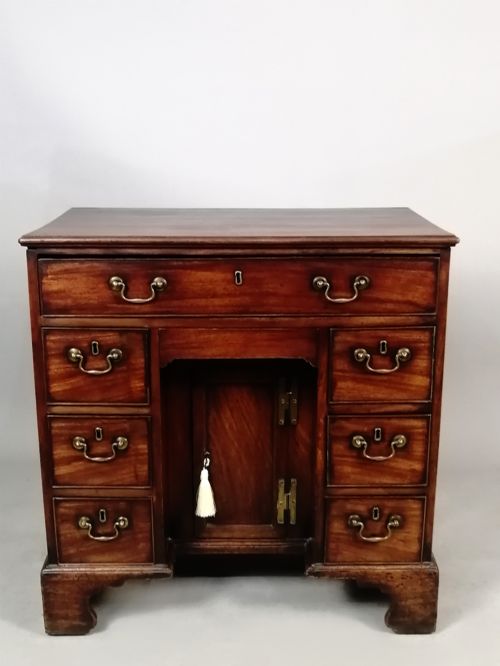
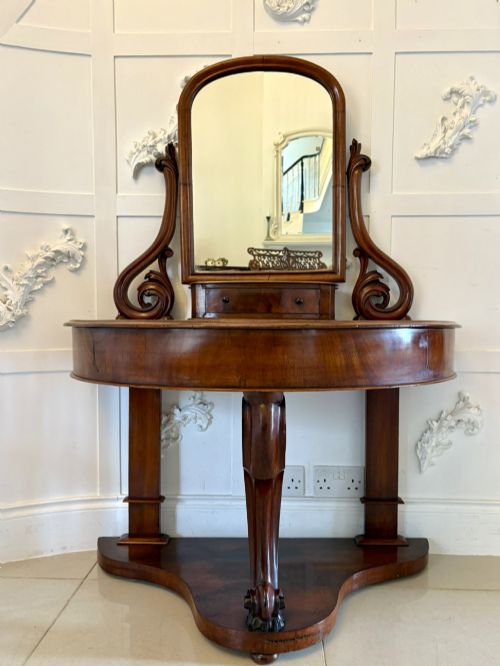
Buyers will encounter both compact table-top mirrors and substantial kneehole dressing chests featuring multiple drawers and adjustable glass plates.
Assessing craftsmanship and construction
Quality separates pieces through the selection of figured timber veneers, the precision of dovetail joinery in the drawers, and the clarity of the original glass.
Proportion and decorative restraint dictate the standing of a piece, distinguishing standard workshop production from finer cabinet work.
Several mirrors include tiny concealed drawers intended for secretive correspondence or small trinkets.
Heal & Sons
The Brown Mahogany Vanity Table Glossary
- Lowboy
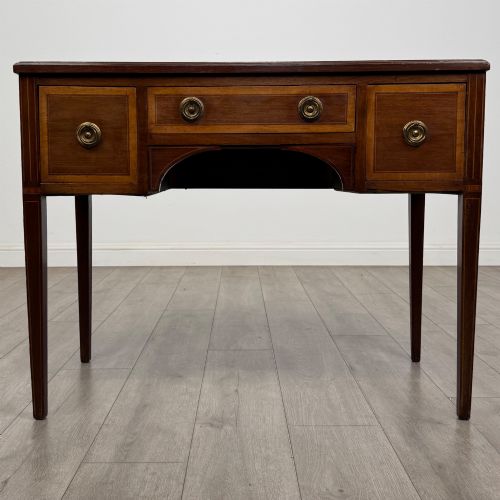
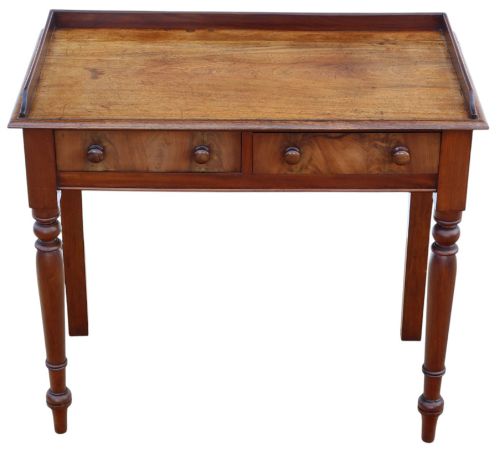
- A small chopping or dressing table with one or more rows of drawers supported on four legs. This form originated in the late seventeenth century and remained popular through the Georgian era.
- Cheval mirror
- A full-length swing mirror supported on a vertical frame with four feet. The design allows the glass to tilt on pivoting pins.
- Toilet mirror
- A smaller dressing glass mounted on a box base containing small drawers. These sat atop chests of drawers or dedicated tables.
- Kneehole
- A desk or dressing table configuration featuring a central recess for the legs flanked by banks of drawers. This layout provides comfortable clearance while seated.
- Crossbanding
- A border of veneer laid around the perimeter of a tabletop or drawer front with the grain running perpendicular to the central panel. This technique frames the primary timber.
Brown Mahogany Vanity Table: Frequently Asked Questions
How do I date a mahogany dressing table?
Dating relies on observing construction methods, timber choice, and hardware styles across periods like the Georgian and Victorian eras.
Secondary woods, drawer linings, and edge profiles provide further clues to the decade of manufacture.
Are these tables suitable for daily use?
These pieces function well in modern bedrooms when treated with care for their historic polishes and timber surfaces.
Placing protective pads beneath toiletries prevents moisture rings on antique wood and marble.
What is the difference between a toilet mirror and a cheval mirror?
A toilet mirror is designed to sit upon a chest or table, providing a half-length reflection for grooming.
A cheval mirror stands independently on the floor and offers a full-length view.
Did these tables always include mirrors?
Many dressing tables were manufactured as integrated units with attached or pivoting mirrors fixed to the superstructure.
Other examples functioned as writing desks or lowboys that owners paired with separate table mirrors.