




Flame Mahogany Wine Cooler
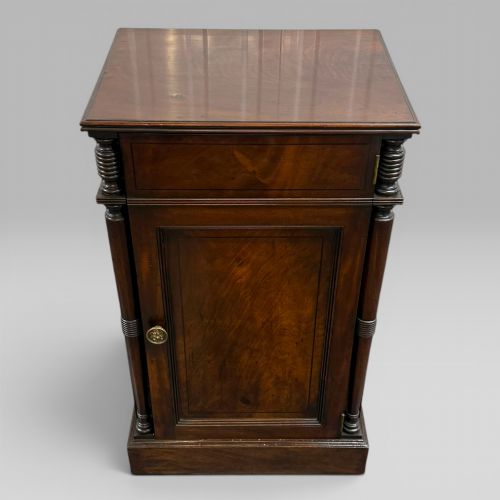
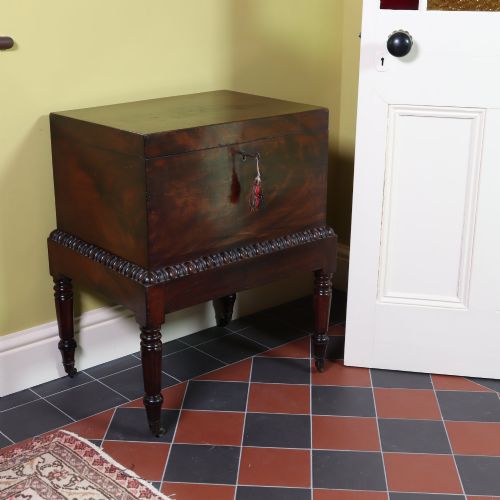
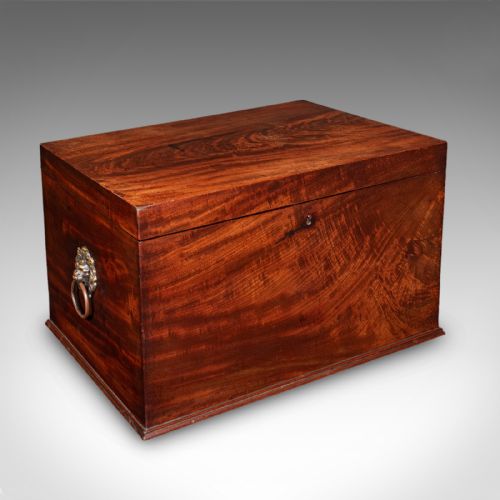
A flame mahogany wine cooler brings dramatic figure and deep grain to the dining room, housing bottles in classical style.
Flame Mahogany Wine Cooler
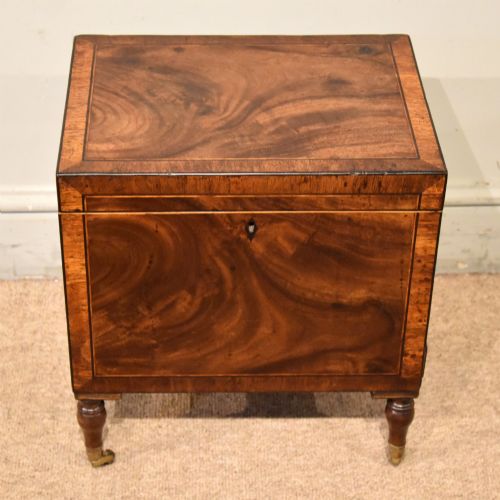
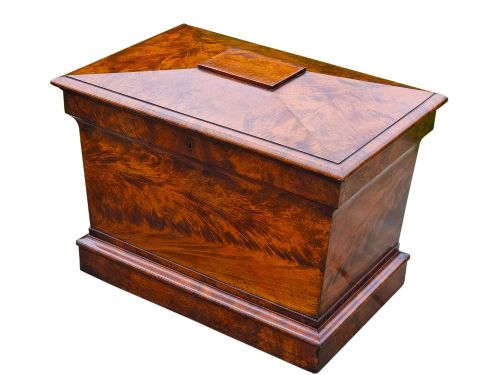
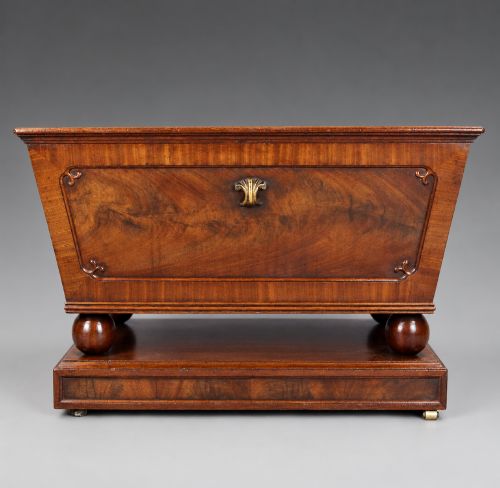
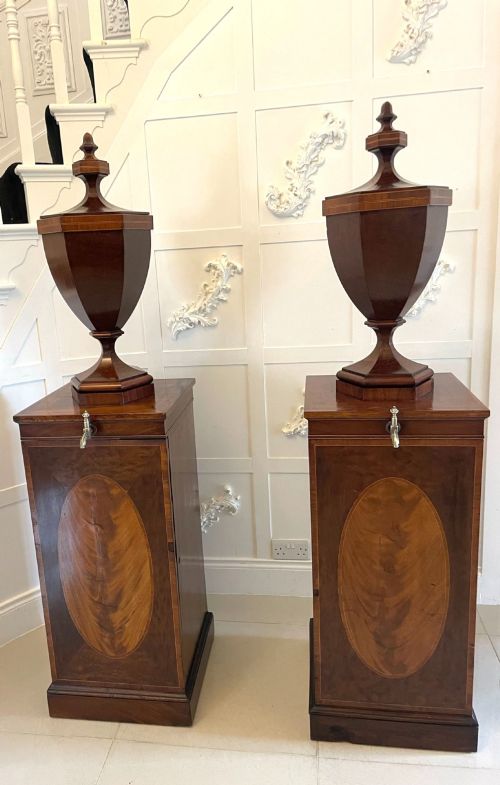
A flame mahogany wine cooler is a sturdy storage piece designed to chill or hold bottles during dining, appearing most frequently in sarcophagus, box, and pedestal forms from the Regency and Georgian eras.
The pieces listed on this page span from the eighteenth century into the Victorian period, with Regency examples dominating the selection in both sarcophagus and cellarette shapes.
Buyers will encounter substantial Irish and English vessels, often fitted with boxwood inlay, paw feet, and metal or zinc linings intended to hold ice.
Materials and construction methods
Cabinet makers applied carefully chosen flame mahogany veneer over solid timber foundations, selecting wood cuts that created striking, fiery grain patterns across the primary surfaces.
Internal spaces were lined with zinc or metal to contain ice and water safely, while exterior mounts frequently incorporated brass handles, lion paw feet, and delicate boxwood inlay.
Flame Mahogany Wine Cooler Retail Price Guide 2026
Typical asking prices for flame mahogany wine cooler among the pieces listed under this phrase on Sellingantiques today, from the lower quarter to the upper quarter. They describe what is for sale here now, not the wider market.
Some nineteenth-century Irish cellarettes travelled with hunting parties, doubling as robust storage boxes for field refreshments.
Factors determining quality
Quality rests in the intensity and symmetry of the flame mahogany veneer, where expert matching creates a continuous visual movement across the panels.
The crispness of carved details, such as paw feet and classical mouldings, alongside intact metal liners and original brass hardware, separates the finest workshop output from simpler utilitarian boxes.
Gillows·Gillingtons
The Flame Mahogany Wine Cooler Glossary
- Cellarette
- A lockable container used for storing wine bottles near the dining table. They appear in various classical shapes throughout the Georgian and Regency periods.
- Sarcophagus
- A monumental tomb-like shape with a steep lid and heavy plinth base. This form was particularly popular for Regency wine coolers.
- Flame mahogany
- A highly figured wood veneer displaying ripple patterns resembling tongues of flame. Cabinet makers reserved this timber for prominent exterior surfaces.
- Boxwood inlay
- Narrow strips of pale wood inserted into contrasting darker timber to create geometric or linear borders. It is a common decorative detail on Georgian furniture.
- Zinc lining
- A protective metal insert placed inside the internal compartment of the cooler to hold ice and bottles. It prevents moisture from damaging the surrounding mahogany timber.
Flame Mahogany Wine Cooler: Frequently Asked Questions
What is a flame mahogany wine cooler?
A flame mahogany wine cooler is a specialised dining room container utilised during the Georgian and Regency periods to keep wine bottles cool or stored near the table.
These pieces typically feature hinged lids, decorative brass handles, and internal metal linings designed to hold ice.
How were wine coolers used?
Servants filled the internal zinc or metal compartments with ice and placed wine bottles inside to chill before or during formal meals.
They stood on the floor beneath sideboards or beside dining tables, functioning as both practical equipment and status symbols.
How do I date a wine cooler?
Dating relies on examining the overall silhouette, secondary timbers, and decorative vocabulary such as paw feet or sarcophagus proportions.
Regency examples often display bolder classical motifs and heavy pedestal bases, while earlier Georgian versions tend toward simpler box forms.
Where should I place a wine cooler at home?
These large vessels sit comfortably in dining rooms, entrance halls, or living spaces as freestanding accent furniture.
Their deep timber tones and striking grain patterns allow them to function well as display surfaces or sculptural storage boxes.