

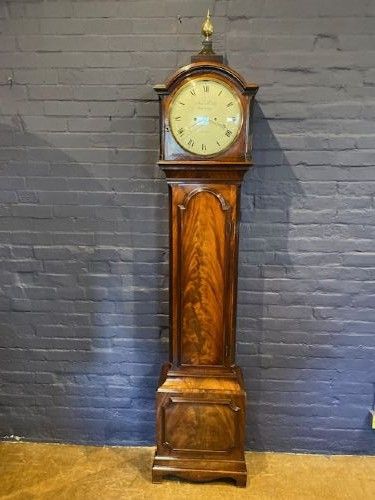
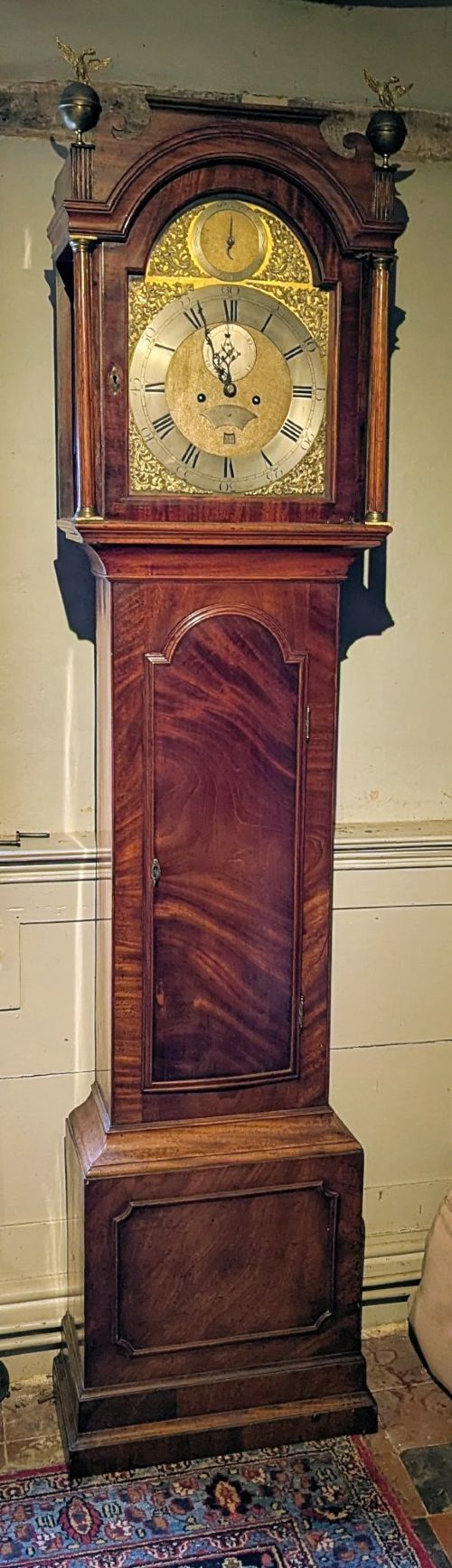
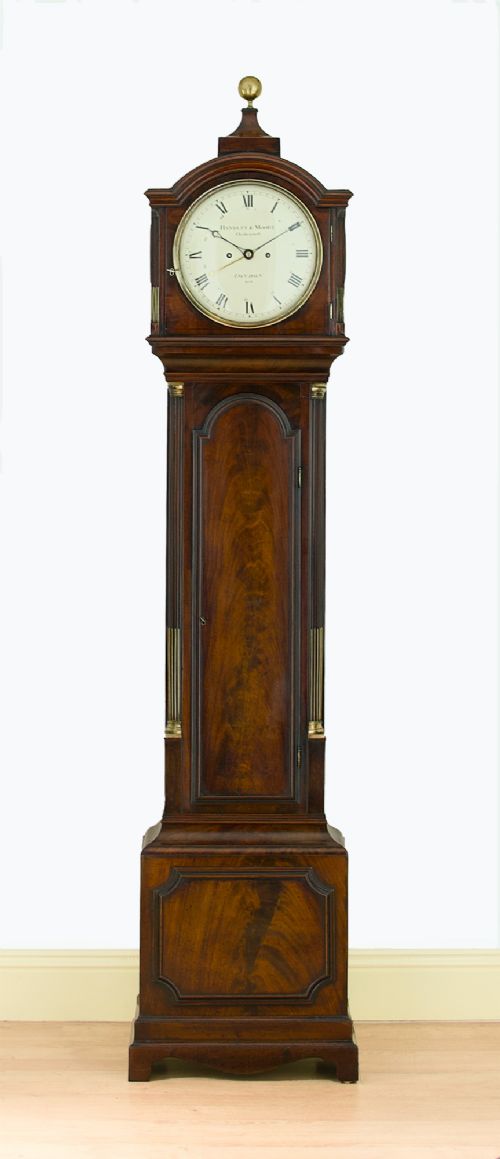
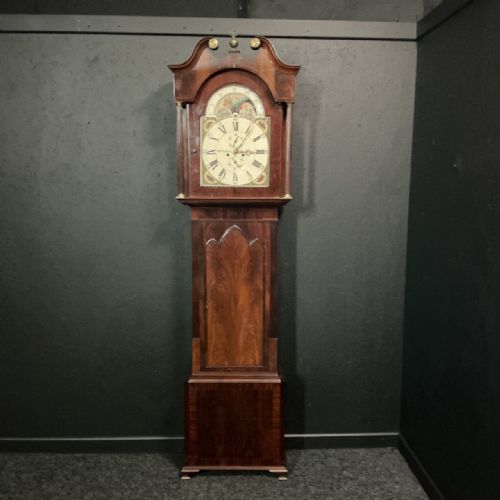


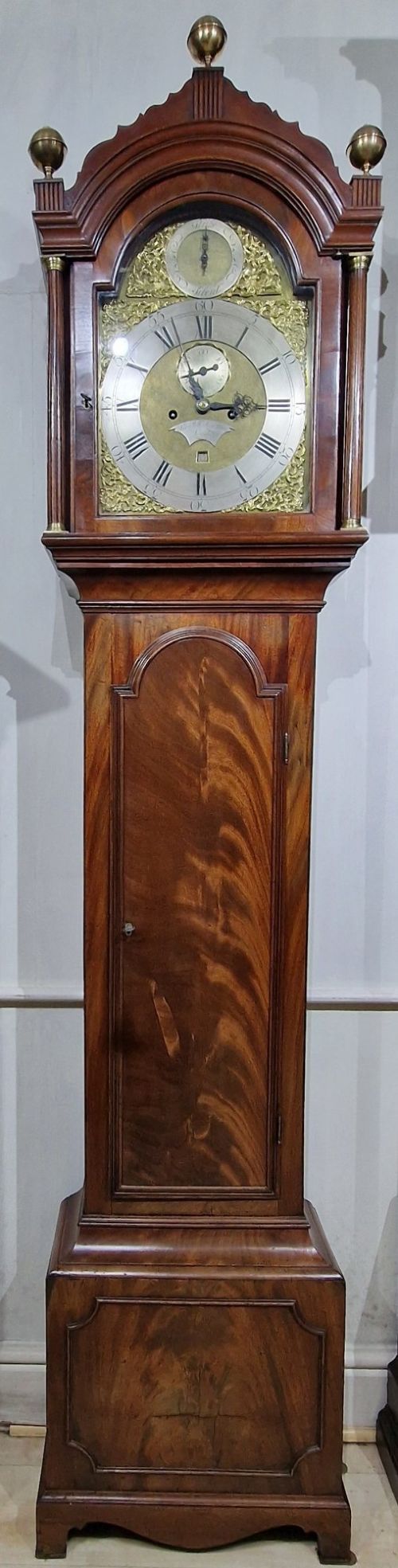
Flame Mahogany Tall Clock
Flame mahogany tall clocks combine striking timber grain with precise timekeeping, standing as focal points in traditional interiors.
Flame Mahogany Tall Clock
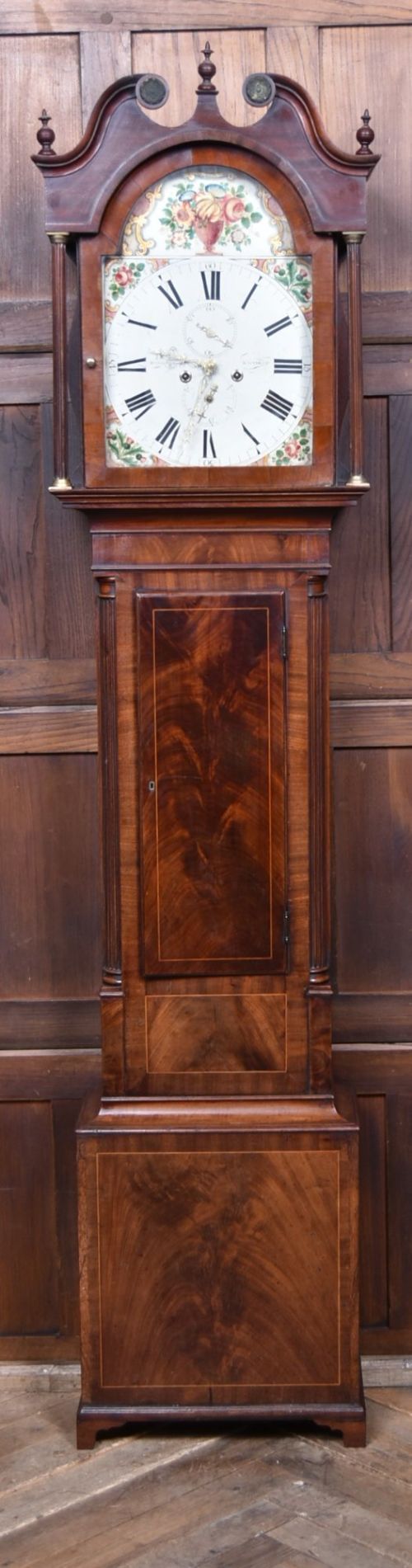
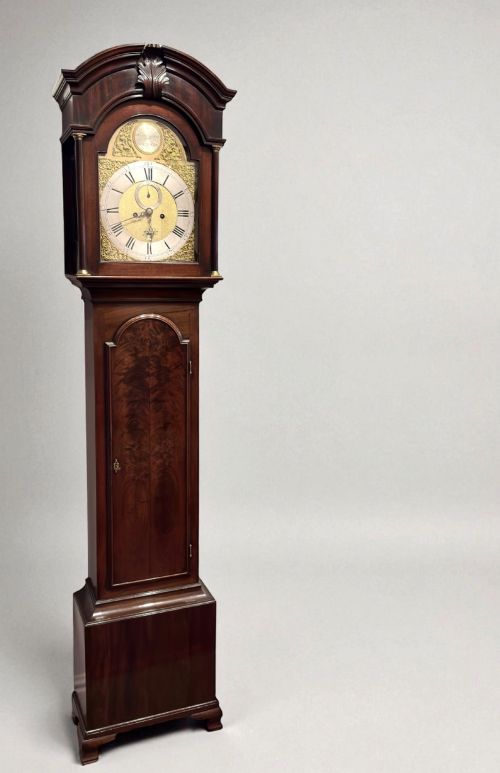
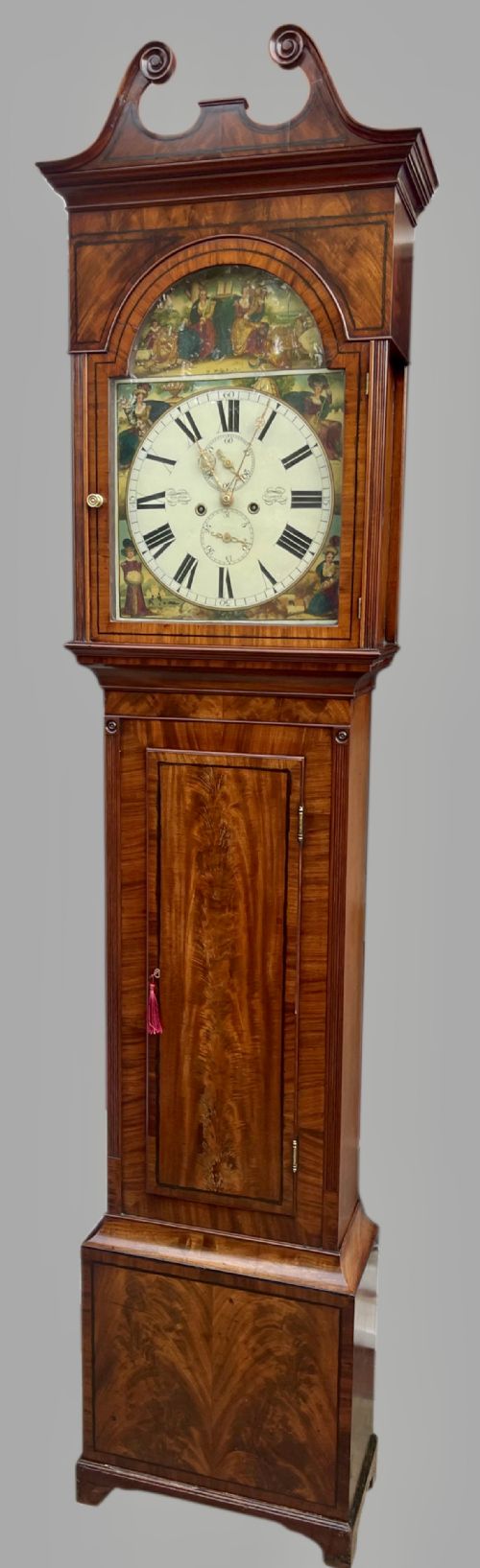
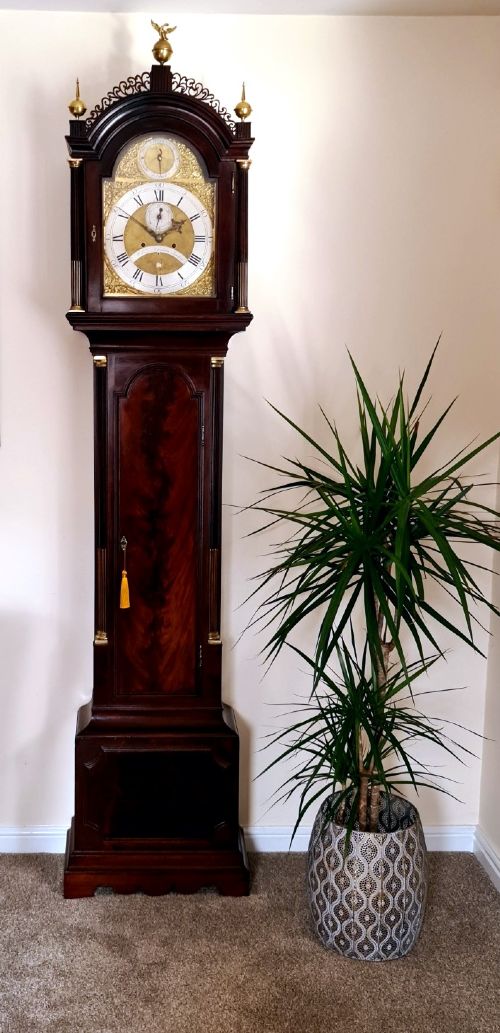
A flame mahogany tall clock stands as a major domestic timepiece, often referred to in the evidence as a longcase or grandfather clock. These floor-standing instruments house complex mechanical movements behind protective timber cases.
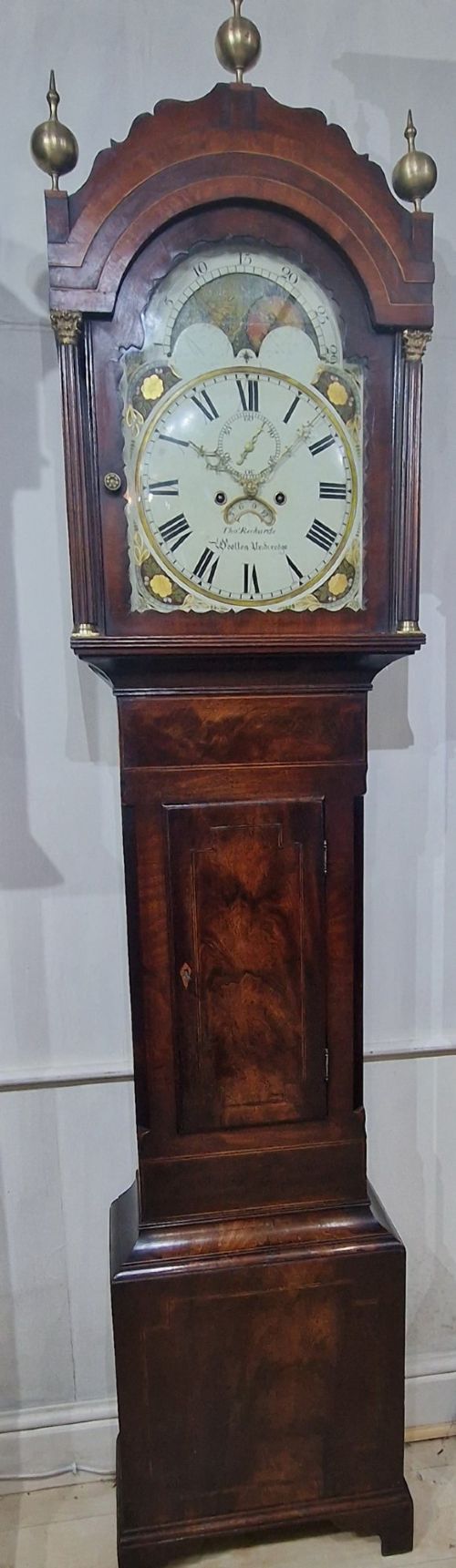
The versions most commonly met on this page date from the Georgian and nineteenth-century periods, originating from English and Scottish makers. They combine structural timber cabinetry with brass dials, painted iron faces, and glass viewing doors.
Makers from London, regional English towns, and Scottish burghs built these pieces to measure hours, minutes, and often lunar phases. Their tall proportions allow the pendulum and weights to operate with mechanical accuracy.
Materials and construction
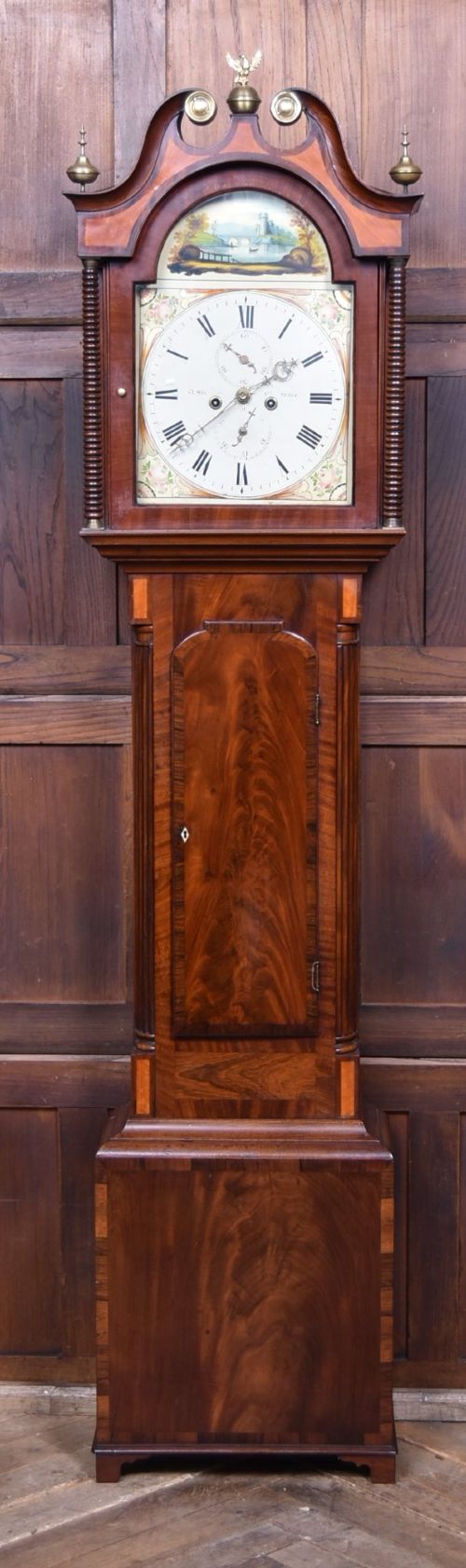
Cabinetmakers utilised solid mahogany and applied flame mahogany veneer to the primary exterior surfaces of the case. This specific timber cut creates distinct, fiery figuring across the door and trunk panels.
Interiors rely on brass and iron for the mechanical gear trains, pendulums, and dial assemblies. Painted iron and enamel provide the white ground for numerals, whilst glass protects the dial face from dust and damage.
Moonphase dials sometimes display painted maritime scenes that shift across the arch as the lunar cycle progresses.
Quality variations
The visual appeal of the timber grain separates standard examples from superior pieces, particularly the intensity and symmetry of the flame mahogany veneer. Cabinet construction details, such as moulded cornices and fine proportions, also elevate the standing of the case.
Mechanical complexity distinguishes standard timepieces from higher-tier examples that feature moonphase dials, rolling moons, or eight-day movements by notable makers. The refinement of the dial artwork and the precision of the brass movement indicate the standard of production.
Hendrie Ogg·Gordon of Aberdeen·D. Straiton·Tait Peebles·James McCabe·Handley and Moore·William Jourdain·Rickards Wotton Under Edge·Priory of Dundee·Andrew Thom·Mclennan·William McEwan·William Allam·James Tregent·Francis Perigal·Gillows·James Harvey·Upjohn of Exeter·Wightman Of London·Parkinson and Frodsham·James Wood·John Shelton·John Banks Oldham·Thos Russell Lancaster·Furnival Oldham
The Flame Mahogany Tall Clock Glossary
- Flame mahogany veneer
- A thin slice of timber cut from the fork of the mahogany tree to produce a rippling, flame-like pattern. This decorative surface defines the aesthetic of the best cases.
- Longcase clock
- A tall, weight-driven pendulum clock housed in a wooden case. This term appears interchangeably with grandfather clock in the listings.
- Moonphase dial
- A rotating disc showing the phases of the moon through an arched aperture on the clock face. This complication adds visual interest above the main dial.
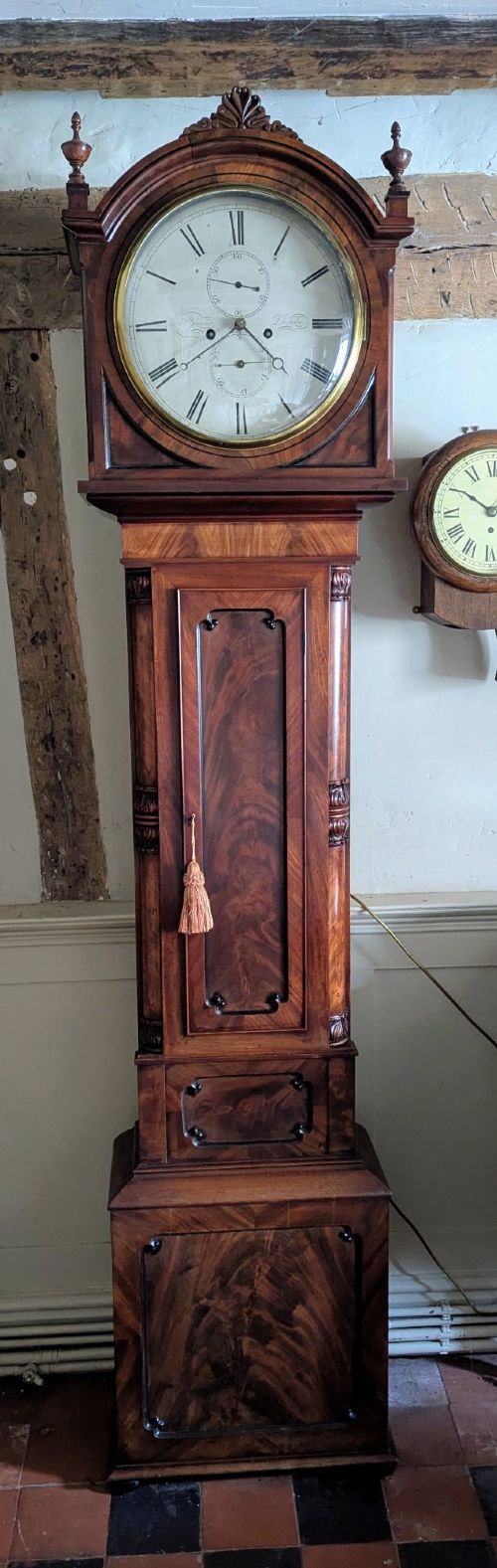
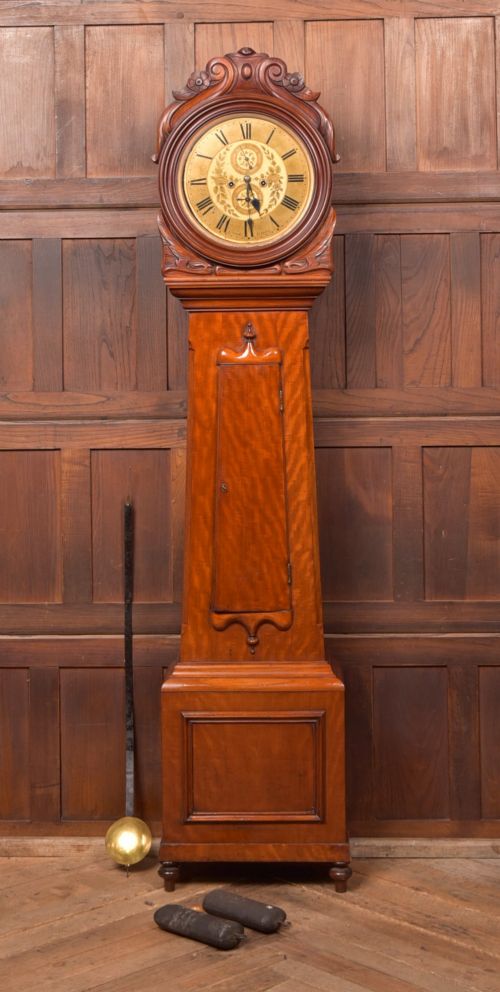
- Drumhead clock
- A style featuring a circular dial housing mounted on top of a plain or tapered trunk. This distinct regional form appears in nineteenth-century Scottish pieces.
- Regulator
- A precision pendulum clock designed to maintain exact time for scientific or domestic use. These movements prioritise mechanical accuracy over decorative complication.
Flame Mahogany Tall Clock: Frequently Asked Questions
How do tall clocks work?
These timepieces rely on hanging weights connected by cords or chains to drive the internal gear train. A swinging pendulum controls the release of power, ensuring the hands turn at a steady rate.
Most examples require manual winding using a key inserted into holes on the dial face every eight days. The tall case provides the vertical drop necessary for the weights to descend over the running period.
Where were these clocks made?
Makers constructed these timepieces across London, regional English counties, and various Scottish burghs. Urban workshops often produced highly refined movements, whilst regional makers supplied local domestic settings.
Regional variations appear in both the timber selection and dial decoration, with Scottish and Welsh workshops developing distinct local case proportions.
How do I date a tall clock?
Examining the dial style, case timber, and maker's signature provides the primary clues for dating. Painted iron dials generally indicate later Georgian or nineteenth-century production, whilst brass dial plates often point to earlier periods.
Maker records and architectural details of the hood and trunk further narrow down the decade of manufacture.
How do I set up a tall clock?
Place the case against a solid wall and ensure it stands completely vertical using a spirit level. Secure the case to the wall if necessary to prevent leaning.
Hang the weights on their respective lines and suspend the pendulum on its leader before giving it a gentle push to start the beat. Adjust the rating nut on the pendulum to correct any timekeeping gains or losses.