
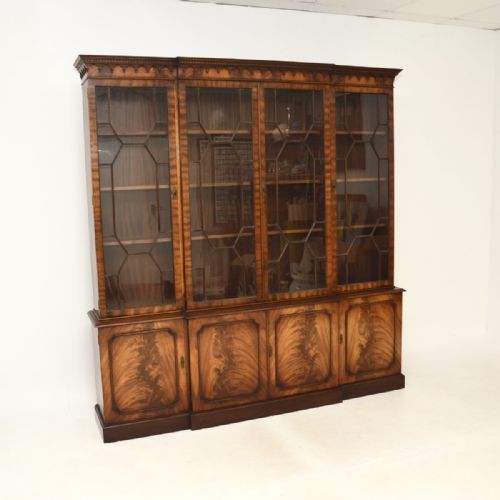
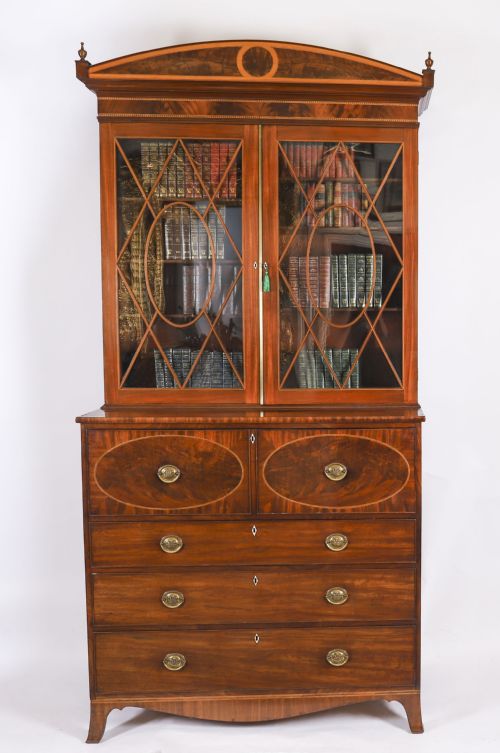
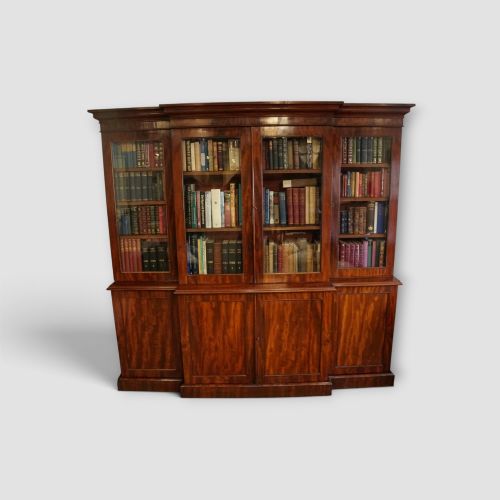
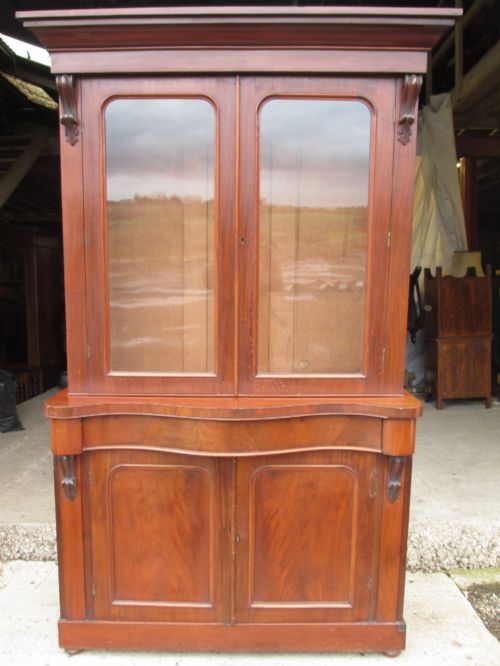
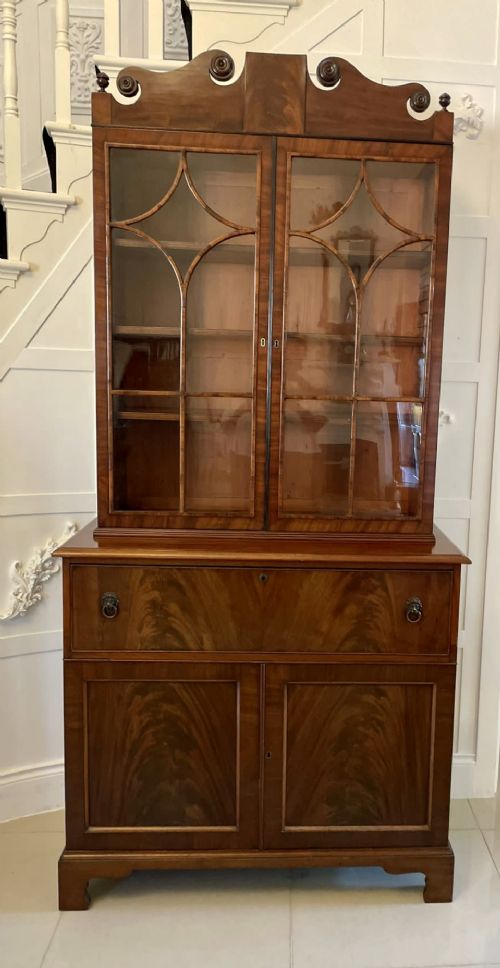
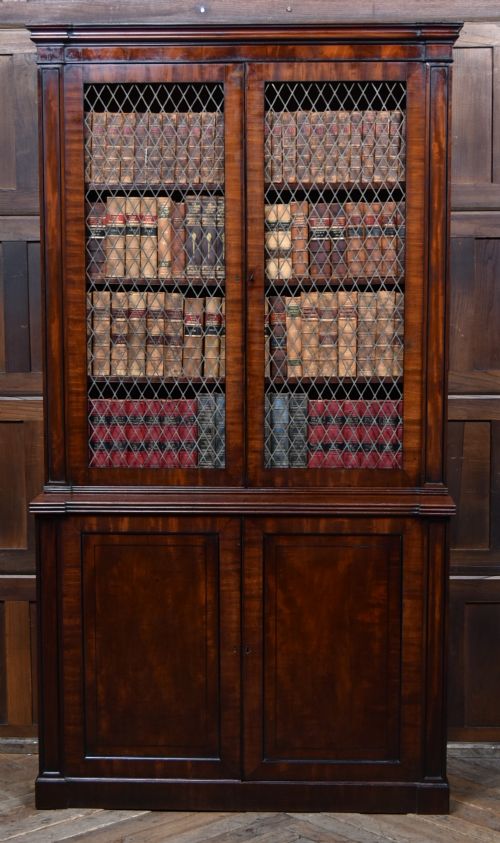
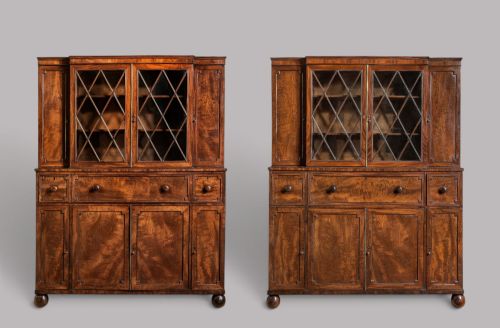
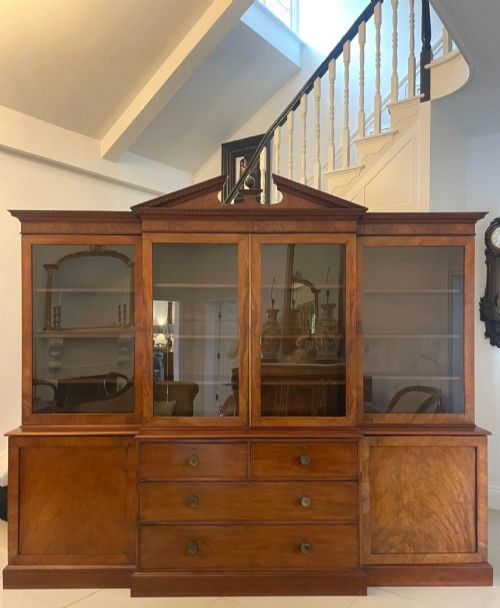
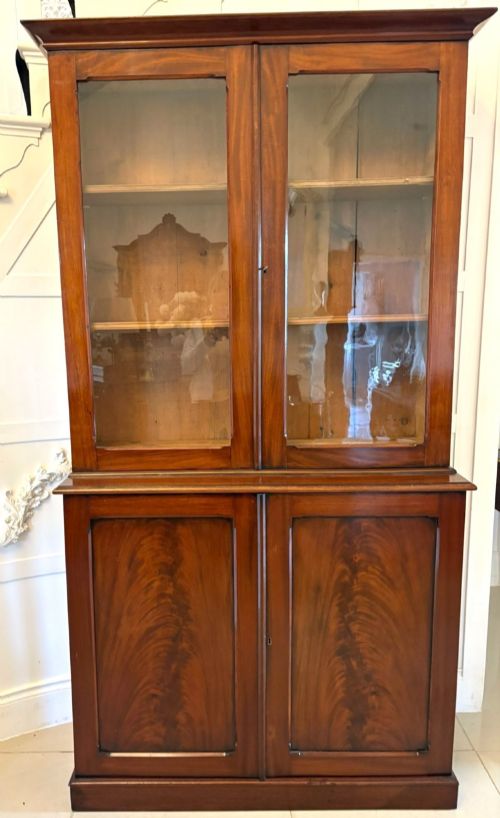
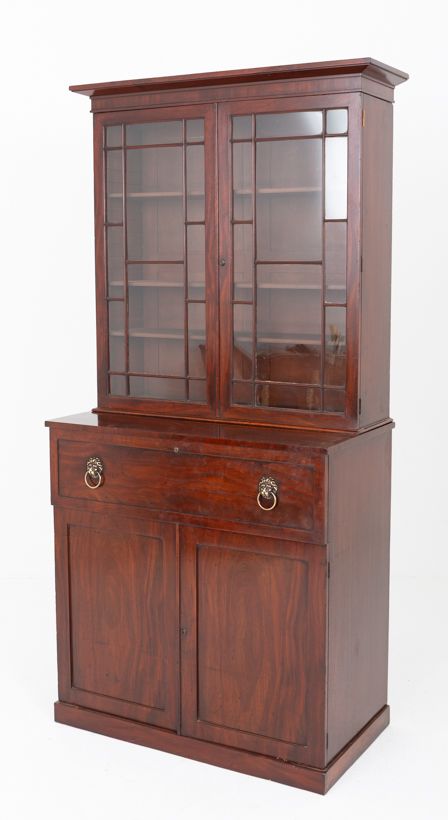
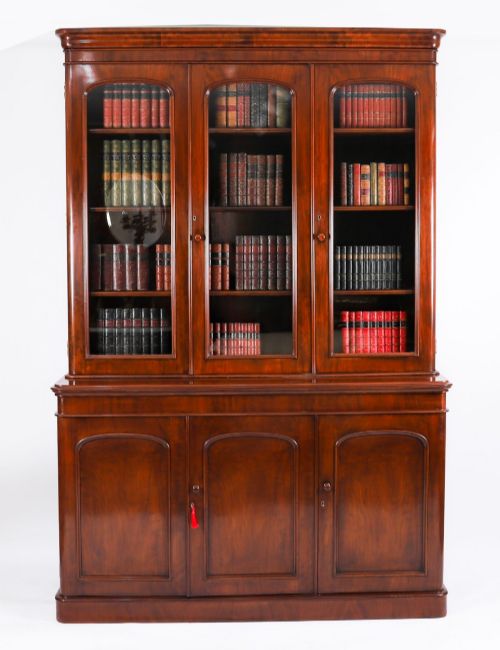
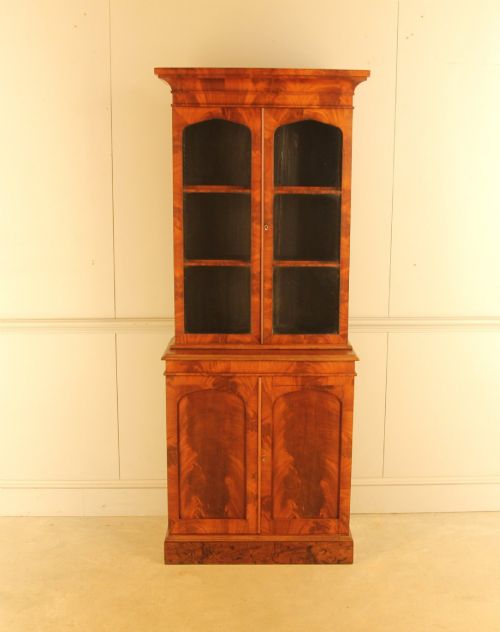
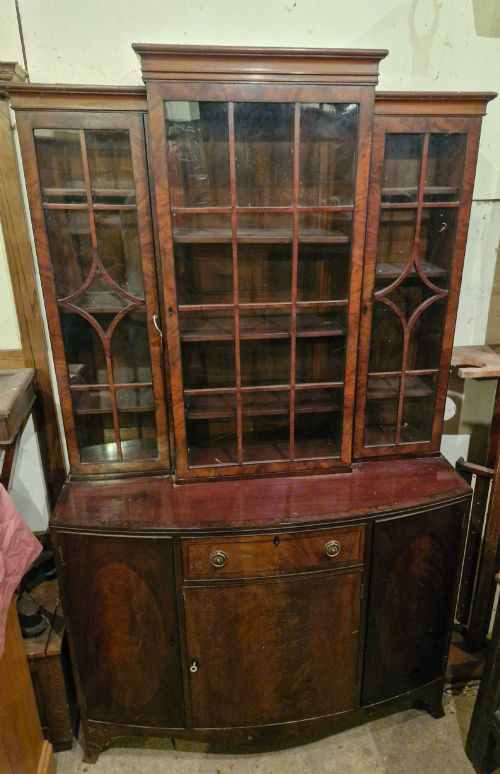
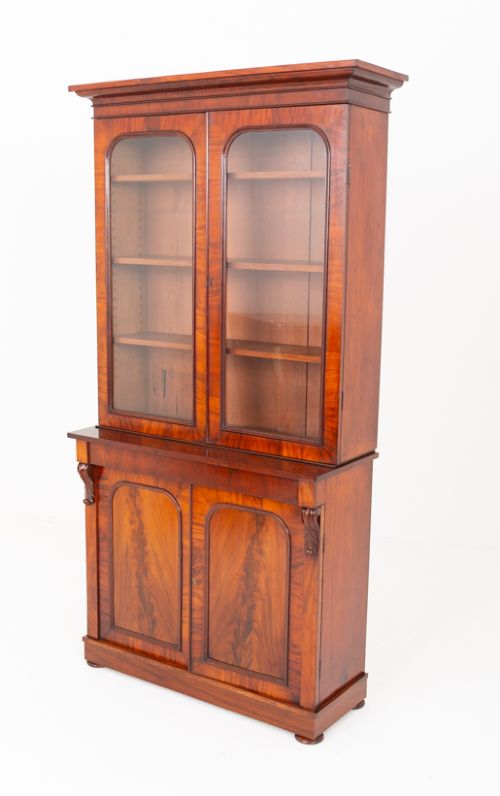
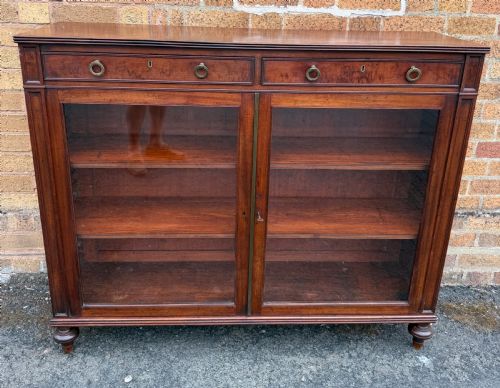
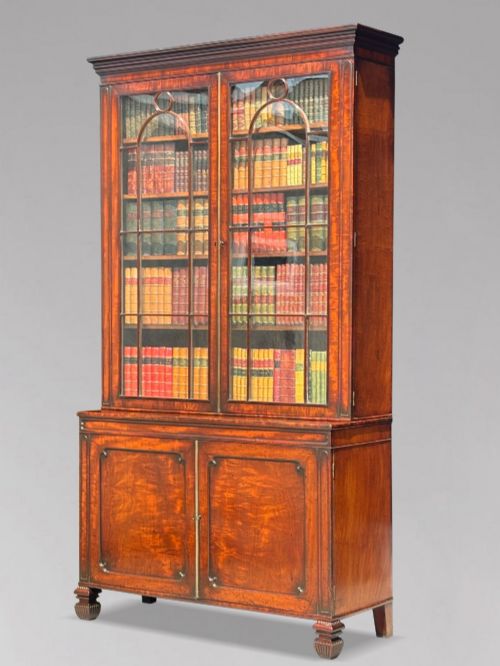
Flame Mahogany Glazed Bookcase
A flame mahogany glazed bookcase brings warmth and grand proportion to a room, offering large-scale storage behind glass doors.
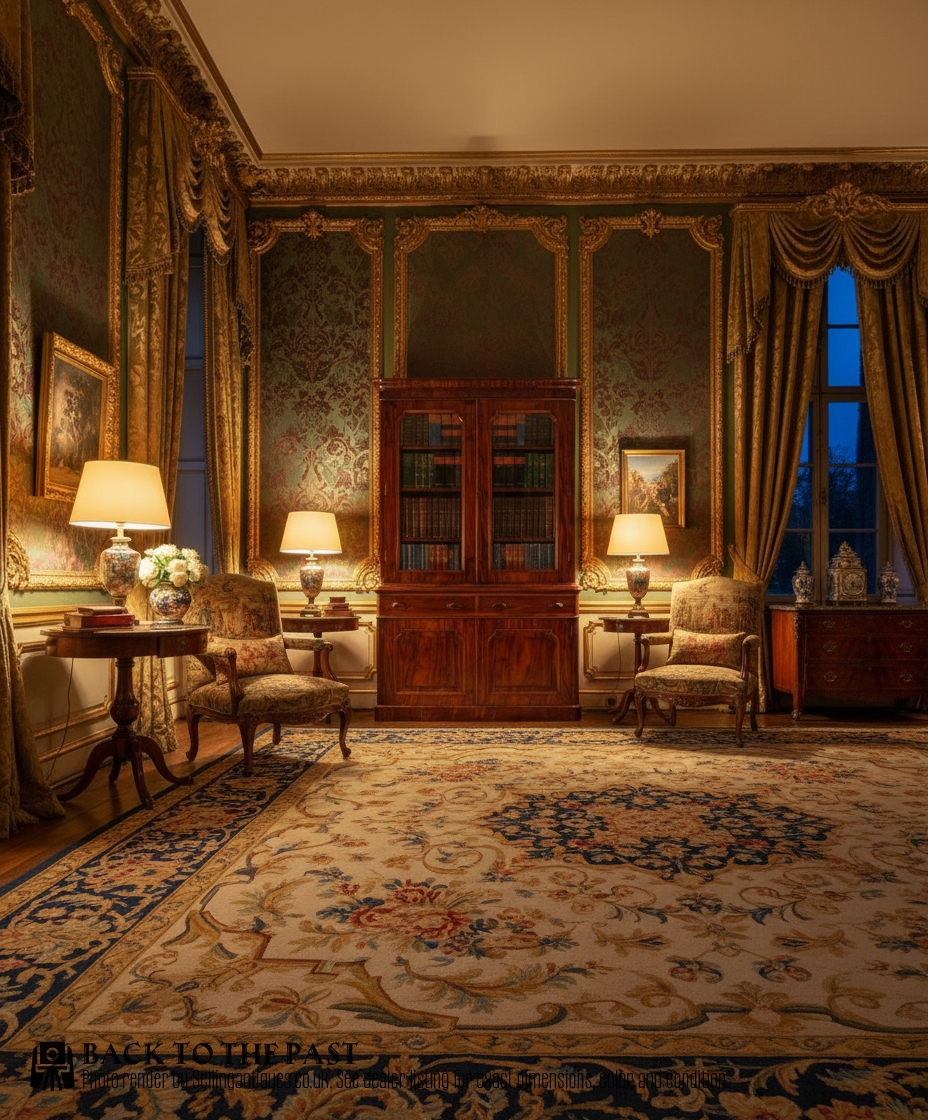
Flame Mahogany Glazed Bookcase
A flame mahogany glazed bookcase is a large storage piece designed to display books and objects behind glass upper doors while concealing lower compartments behind solid wood panels or cupboards. These tall cabinets span the Georgian, Regency, William IV and Victorian periods, alongside later revival pieces produced in the twentieth century.
The most common form met on this page is the library or breakfront bookcase, often fitted with adjustable shelving and sometimes incorporating a drop-front writing drawer known as a secretaire. Makers built these architectural units for substantial homes, utilising rich timber veneers to create striking focal points in studies and drawing rooms.
How They Were Made
Cabinet makers constructed these large pieces using solid mahogany frames overlaid with carefully selected flame mahogany veneer, which exhibits dramatic, flickering grain patterns across the primary surfaces. Glazing bars of varying thickness divide the glass doors into individual panes, sometimes arranged in astragals or geometric patterns.
Internal components frequently incorporate secondary woods alongside brass hardware, wire mesh, or fabric linings within the display sections. Drawers feature traditional hand-cut dovetail joints, reflecting the high standard of joinery typical of nineteenth-century workshops.
Some secretaire drawers hide secret spring-loaded compartments behind miniature pigeonholes for storing confidential letters.
What Varies In Quality
Quality rests primarily on the choice of veneer and the depth of figure in the flame mahogany, where symmetrical matching across doors indicates superior craftsmanship. The finesse of the glazing bars and the proportion of the architectural cornices further separate standard workshop production from finer cabinet work.
Originality of the glass panes, brass fittings and internal locks elevates the standing of a piece, as does the survival of well-executed inlay and untouched surface finishes that display the natural warmth of the timber.
Gillows·S and H Jewell·Wylie and Lochhead
The Flame Mahogany Glazed Bookcase Glossary
- Flame mahogany
- A veneer cut from the branch forks of the mahogany tree, producing a distinctive, swirling ripple pattern resembling flickering flames. This figured timber was favoured for high-status furniture fronts.
- Secretaire
- A desk compartment disguised as a standard drawer, featuring a drop-front panel that conceals small pigeonholes and letter drawers. It turns a tall bookcase into a functional writing station.
- Breakfront
- A large cabinet design where the central section projects forward from the flanking wings, creating strong architectural depth. This form is common in substantial library bookcases.
- Astragal
- A narrow moulding used in glazed doors to hold individual glass panes in place. Delicate astragals denote finer cabinet making than heavy, thick wooden bars.
- Cornice
- The decorative architectural moulding that caps the top of a tall bookcase. It defines the period style, ranging from simple classical lines to carved dentil details.
Flame Mahogany Glazed Bookcase: Frequently Asked Questions
Are the shelves adjustable in these bookcases?
Most period examples include adjustable shelving supported by wooden ratchets, brass pegs or metal track systems. This allows library collections of varying book heights to fit inside.
Checking the interior reveals whether the shelf supports are original to the cabinet construction.
What is the difference between Georgian and Victorian proportions?
Georgian and Regency bookcases often display lighter architectural lines with refined cornices and delicate astragal glazing bars. Victorian examples tend to be heavier, taller, and built with deeper proportions and broader mouldings.
Figured and flame mahogany veneers appear across both eras, but the underlying carcass construction reflects the changing tastes of each century.
How do I maintain flame mahogany veneer?
Keep the wood away from direct sunlight and steady heat sources to prevent the polished surface from drying out. Consistent indoor humidity protects the delicate veneer from lifting.
Applying traditional wax polish occasionally nourishes the timber and preserves the depth of the flame figure.
Can breakfront bookcases be dismantled for moving?
Large breakfront units usually separate into distinct sections, including a heavy projecting cornice, upper glazed cabinets, a central base tier, and lower cupboards. This modular construction helped tradesmen transport oversized library furniture into rooms.
Professional removal requires unbolting the modular carcass parts rather than attempting to lift the entire assembly as one piece.