
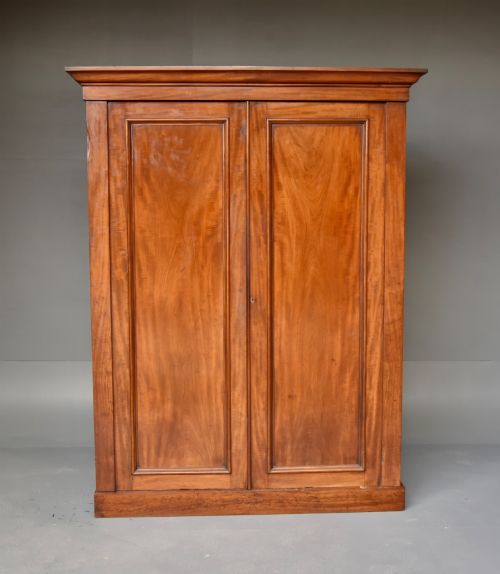
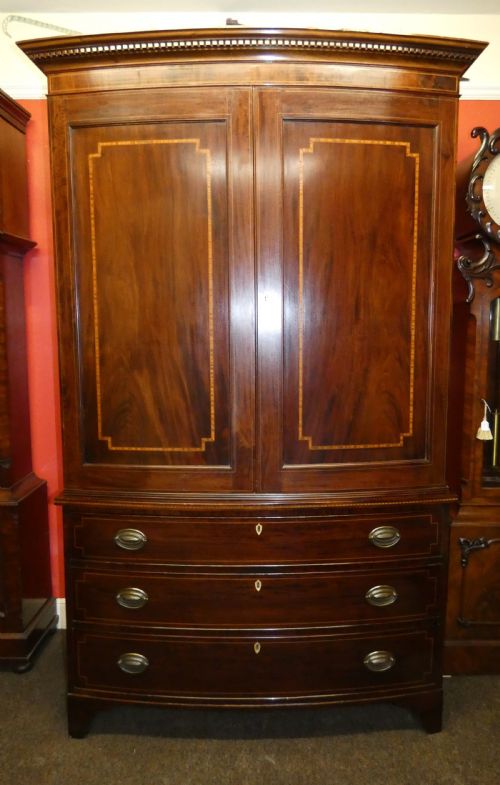
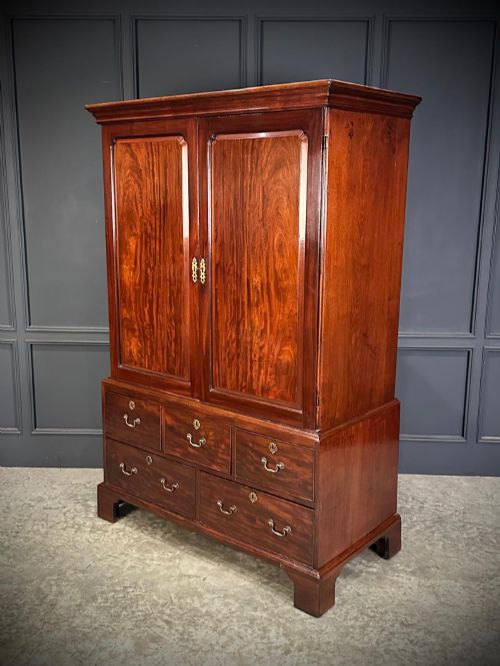
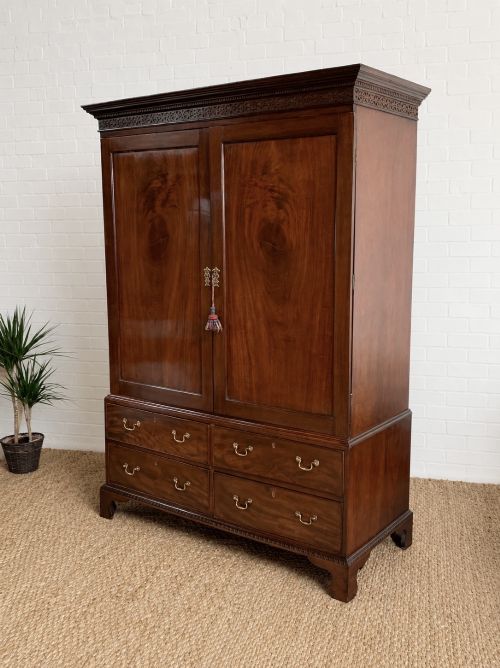
Flame Mahogany Clothes Press
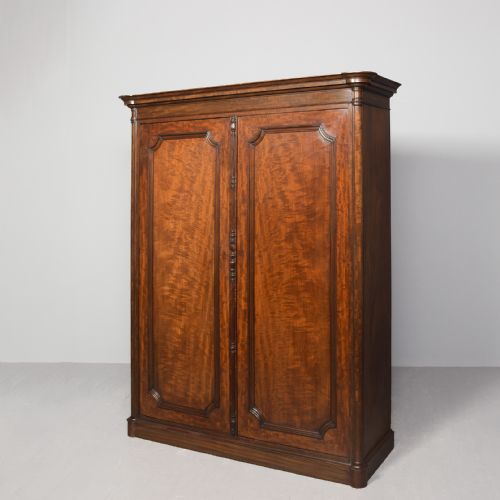
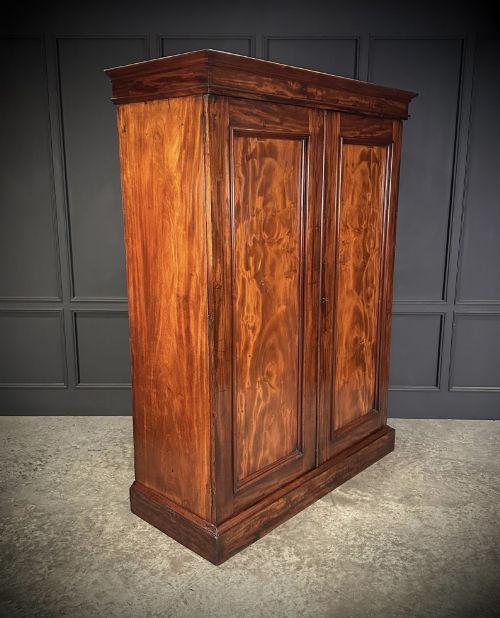
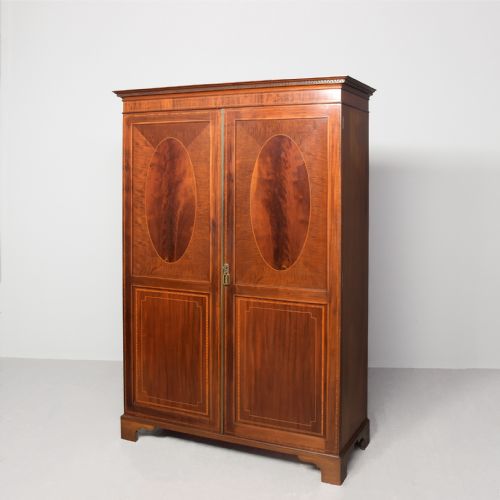
A flame mahogany clothes press brings deep grain figures and substantial storage to a room, built by cabinetmakers across Georgian, Regency and Victorian periods.
Flame Mahogany Clothes Press
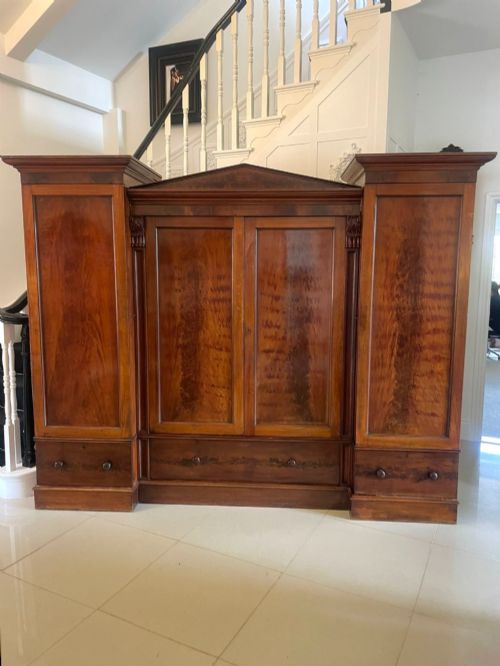
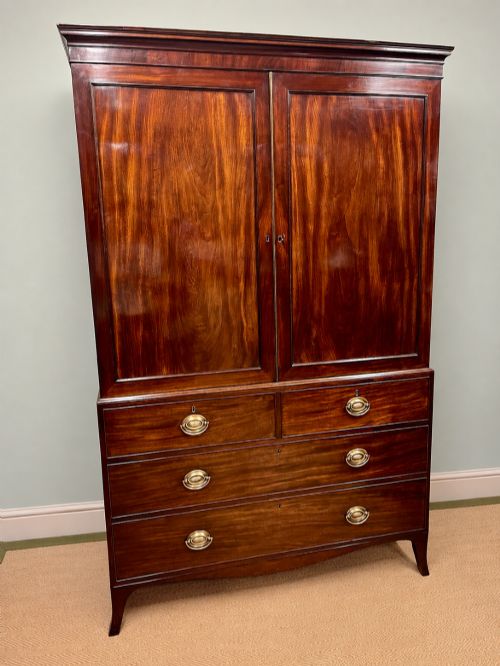
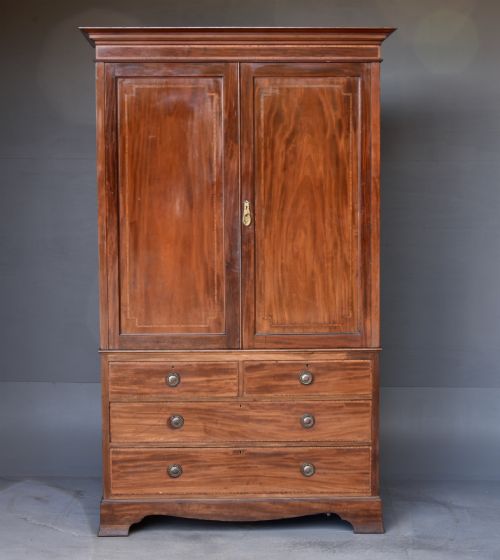
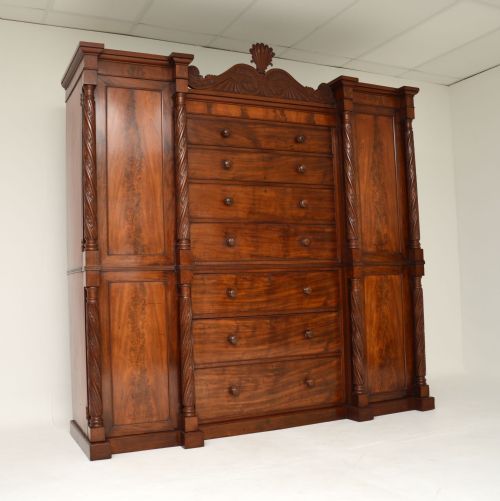
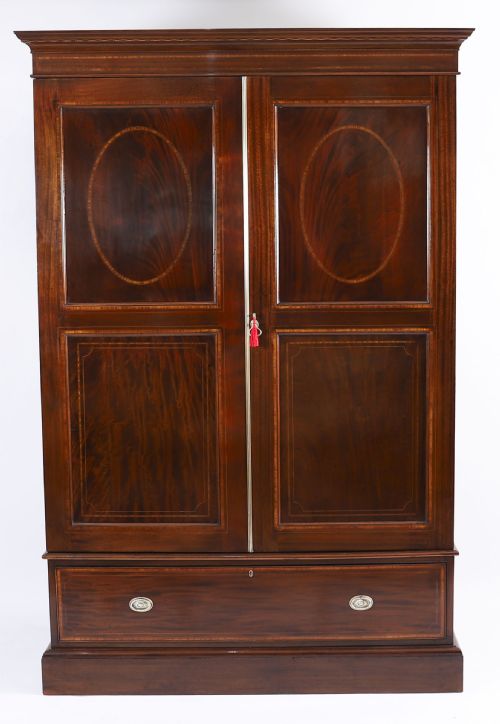
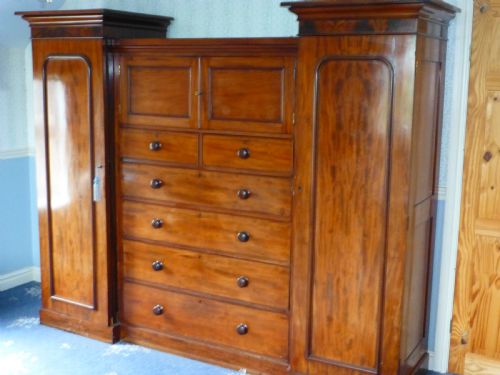
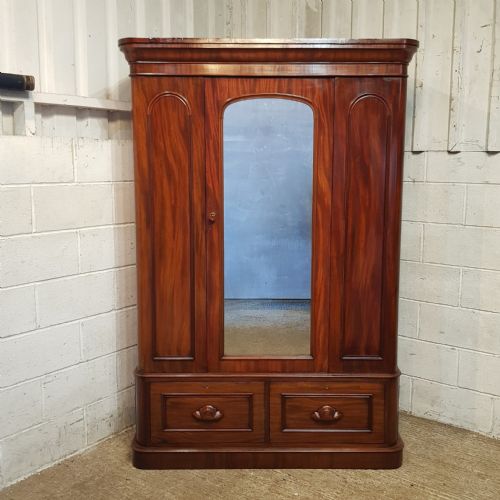
A flame mahogany clothes press combines the functionality of a wardrobe and a chest of drawers, designed to store garments and linen securely. When you search for a flame mahogany clothes press, you encounter large storage pieces originating mainly from the Georgian, Regency, William IV and Victorian eras.
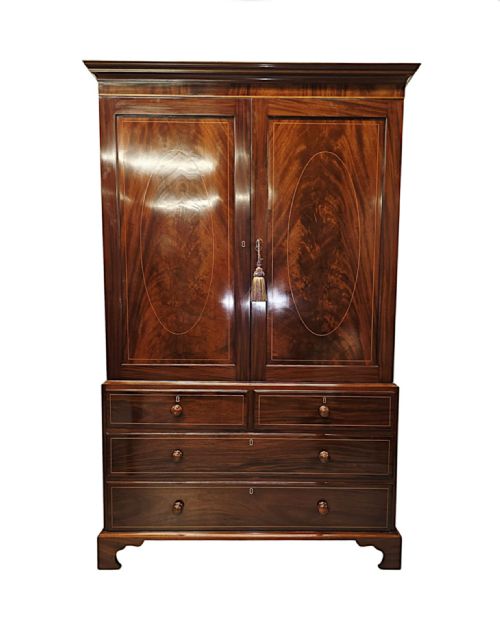
These items appear under various descriptions including linen presses, compactum wardrobes, and cupboards on chests. The version most commonly met on this page pairs upper cabinet doors enclosing trays or hanging space with lower drawer sections.
How They Were Made
Cabinetmakers utilised solid mahogany and oak carcasses overlaid with carefully selected flame mahogany veneer to create striking patterns on the main doors. Brass hardware, boxwood inlay and glass elements frequently complement the rich wood surfaces.
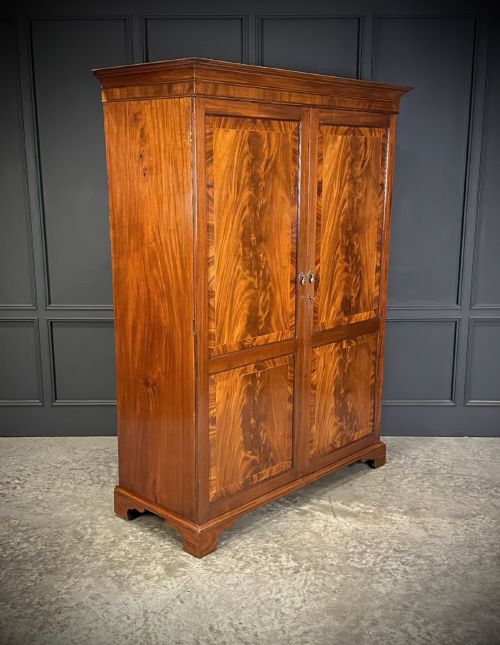
Makers applied specialised slicing techniques to timber to achieve the characteristic swirling grain effect known as flame mahogany. Secondary timbers like oak appear in drawer linings and internal trays to provide structural stability.
Object types recorded across the inventory include gentleman's wardrobes, compactums, bowfront linen presses, and cupboards on chests.
What Varies in Quality
The visual impact of a flame mahogany clothes press rests on the symmetry and book-matching of the veneer panels across the front doors. Superior examples display uninterrupted wave patterns that demonstrate exceptional skill in timber selection and application.
maples & co·Gillows·S & H Jewell·Heals·DENBY & SPINKS
The Flame Mahogany Clothes Press Glossary
- Flame mahogany veneer
- A thin slice of mahogany timber cut from the fork of the tree where branches meet, producing a distinctive flame-like pattern. This material defines the principal decorative surface of these presses.
- Compactum wardrobe
- A fitted wardrobe designed with internal partitions, drawers and sliding trays to maximise storage efficiency. It represents a versatile evolution of the traditional linen press.
- Blind fretwork
- Carved ornamentation applied to a flat surface in an intricate geometric pattern without piercing right through the timber. It often decorates the cornice of Georgian and Victorian presses.
- Cornice
- The ornamental moulding running around the top edge of a cabinet or press. It provides a finished architectural transition to the ceiling height.
Flame Mahogany Clothes Press: Frequently Asked Questions
What is the difference between a clothes press and a wardrobe?
A clothes press traditionally combines upper sliding trays or cupboard storage with lower drawers for folded linens and garments. Wardrobes generally focus primarily on vertical hanging space behind full-length doors.
Over time, makers blended these forms into compactum designs that incorporate both hanging space and internal linen slides.
How do I care for flame mahogany wood?
Keep these pieces away from direct sunlight and strong heat sources to prevent the veneer from drying out or lifting. Regular dusting with a dry cloth maintains the finish without needing heavy polishes.
Applying natural beeswax occasionally helps preserve the depth and warmth of the mahogany grain.
How can I tell a Georgian press from a Victorian one?
Georgian pieces from the eighteenth century typically exhibit cleaner architectural lines, subtle bracket feet, and restrained proportions. Victorian examples from the nineteenth century tend to be larger, incorporating heavier cornices and bolder carved details.
Internal construction details and handles also shift in style across these chronological periods.
Can these large presses be dismantled for moving?
Many larger wardrobe and press designs separate into modular sections including the cornice, the main central carcass, and the base chest of drawers. This sectional construction allowed historical cabinetmakers to maneuver heavy furniture up staircases and through doorways.
Inspecting the internal joining bolts reveals whether a particular piece is designed to come apart.