




Flame Mahogany Buffet Table
A flame mahogany buffet table brings rich timber figure and formal presence to a dining room.
Flame Mahogany Buffet Table
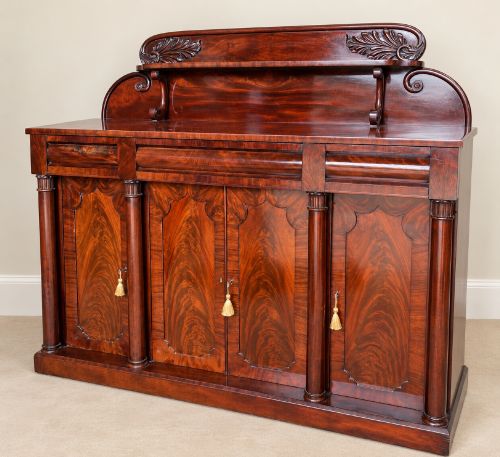
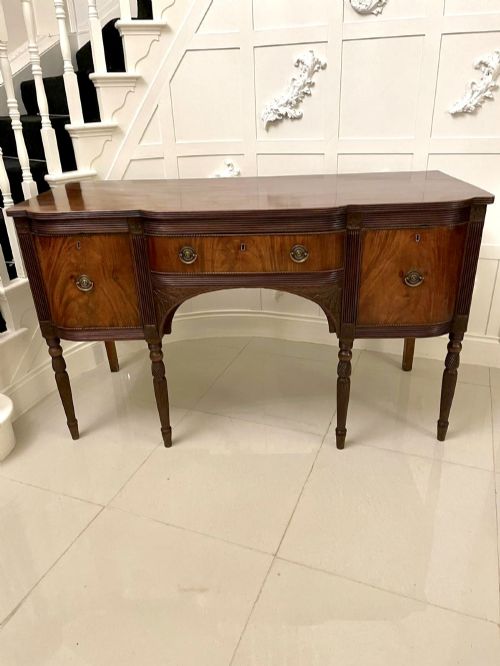
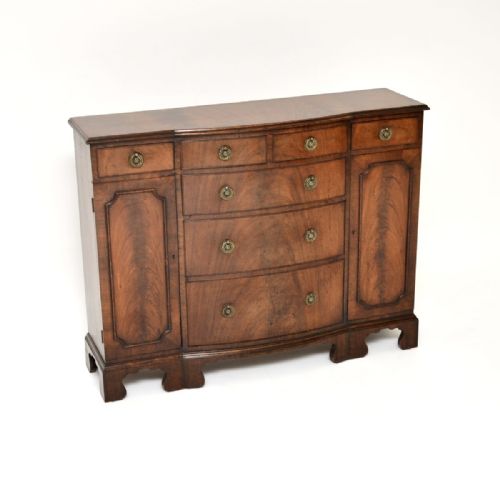
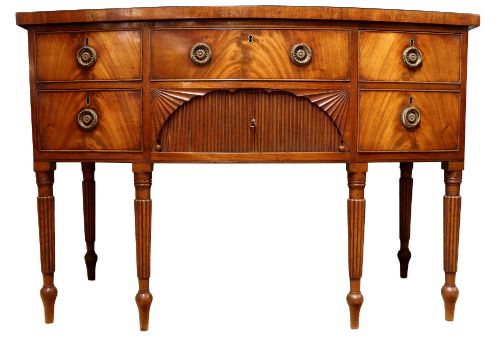
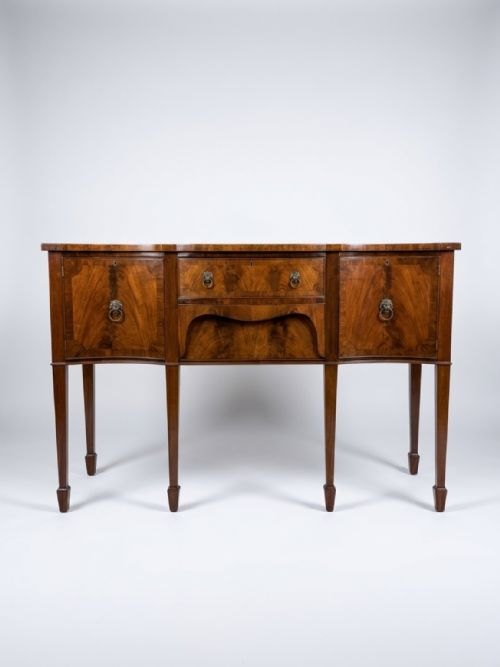
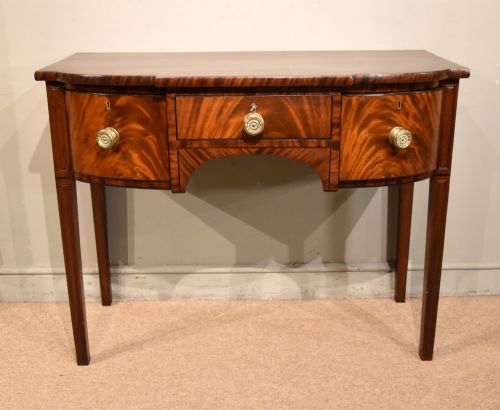
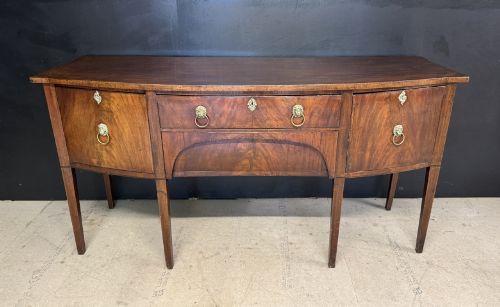
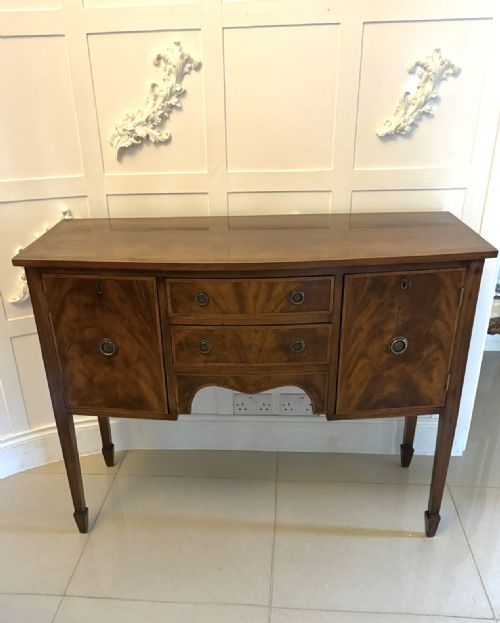
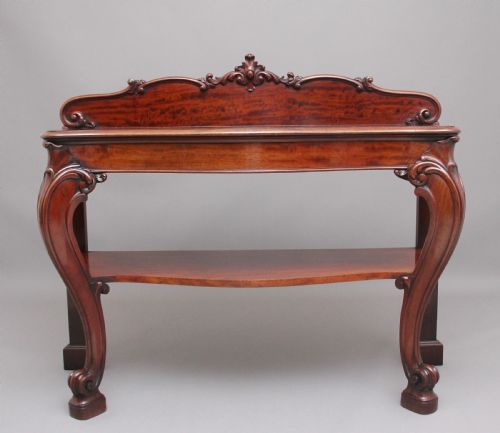
A flame mahogany buffet table is a dining room server designed for display and storage, appearing in forms such as sideboards, serving tables, and console tables. These pieces serve as practical furniture for holding tableware while anchoring a room with strong architectural lines.
The pieces on this page span several key periods, including the Georgian era, the Regency period, and the Victorian age. Buyers encounter both straight-fronted models and curved shapes like bow fronts and serpentine facades.
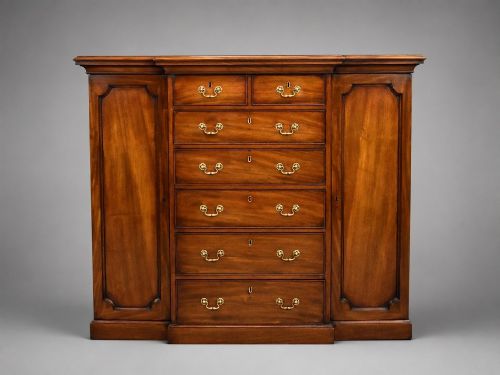
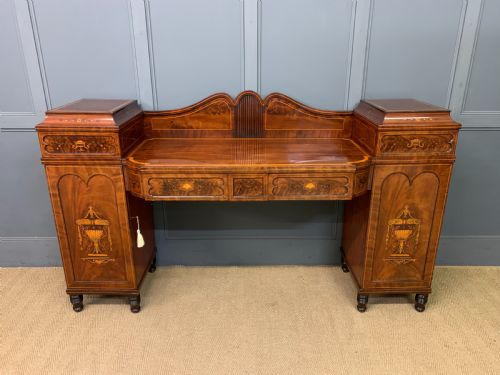
Makers historically produced these servers to meet the needs of formal dining. The inventory includes classic sideboard configurations alongside pedestal forms and stage-back designs.
Assessing quality in construction and timber
Quality rests heavily on the choice and placement of the mahogany veneer, where striking grain patterns create visual depth across the principal surfaces. The skill of the cabinetmaker shows in how smoothly drawers operate and how cleanly inlaid borders align.
Proportion and scale also separate standard items from superior examples. Pieces with balanced serpentine or bow fronts and well-preserved original hardware hold greater distinction than heavily altered or clumsily proportioned alternatives.
Listings feature pieces spanning the Georgian, Regency, and Victorian periods, constructed primarily from mahogany with boxwood and satinwood inlay.
Gillows·Robson & Sons·George Hepplewhite
The Flame Mahogany Buffet Table Glossary
- Flame mahogany veneer
- A thin slice of timber cut from the fork of the mahogany tree where the branch meets the trunk. This cut produces a rippling, flame-like figure prized by cabinetmakers.
- Serpentine front
- A furniture facade that curves outward in the centre and inward at the sides. This shape requires advanced woodworking skill to execute cleanly.
- Bow front
- A convex, outward-curving front typical of many servers from the Georgian and Regency periods. It softens the room's geometry while maximising internal storage.
- Pedestal sideboard
- A form featuring distinct side pedestals flanking a central serving surface, often associated with late 18th-century and early 19th-century dining rooms.
- Boxwood inlay
- Narrow strips of pale wood inserted into darker mahogany surfaces to create contrasting geometric borders and lines.
Flame Mahogany Buffet Table: Frequently Asked Questions
What is the difference between a sideboard and a buffet table?
Sideboards and buffet tables both function as serving furniture in dining spaces. The terms often overlap in historic and modern descriptions.
Historically, specific regional preferences or cabinetmaker designations dictated the exact name. On this page, both forms share similar proportions and storage layouts.
How do I spot a Georgian piece from a Victorian one?
Georgian examples often display restrained classical proportions with fine inlay work and elegant tapered legs. Cabinetmakers of this era favoured lighter, balanced structures.
Victorian pieces tend to be heavier in scale and occasionally incorporate bolder mouldings or three-door storage configurations. Examining the interior timber and construction joints helps confirm the period.
Where should I place a serving table in my home?
These tables suit dining rooms, hallways, and large living spaces where surface area and storage are useful. Their shallow depth allows them to sit comfortably against walls without blocking walkways.
Pairing the surface with a mirror or lighting creates a focal point in an entrance hall. In a dining room, they hold serving dishes during meals.
How do I care for flame mahogany veneer?
Protect the timber by keeping the piece away from direct sunlight and sudden temperature shifts. Excessive heat can cause old veneers to lift or crack over time.
Dust the surface regularly with a soft cloth and apply traditional beeswax occasionally to nourish the wood. Avoid modern chemical sprays that can damage the antique finish.