
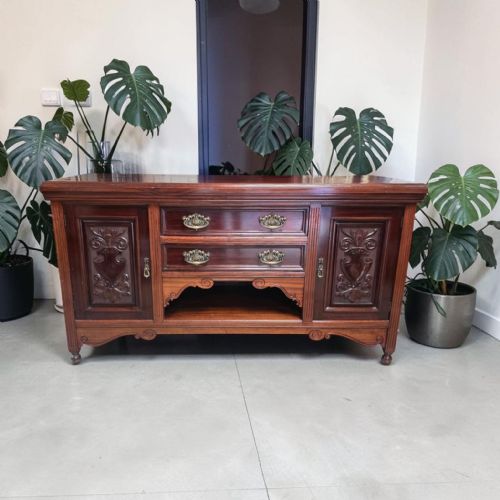
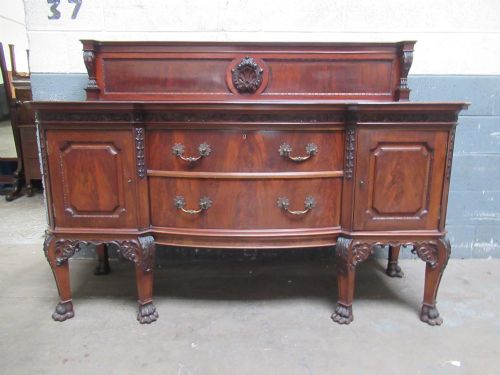

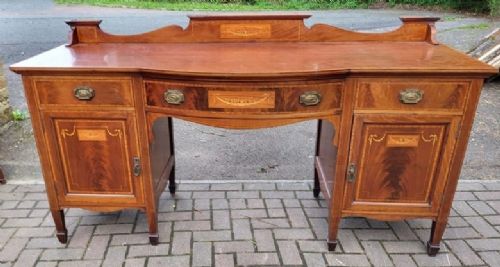
Carved Mahogany Server Cabinet
A carved mahogany server cabinet grounds a dining room with heavy timber and practical storage, spanning Victorian, Regency, and Edwardian periods.
Carved Mahogany Server Cabinet
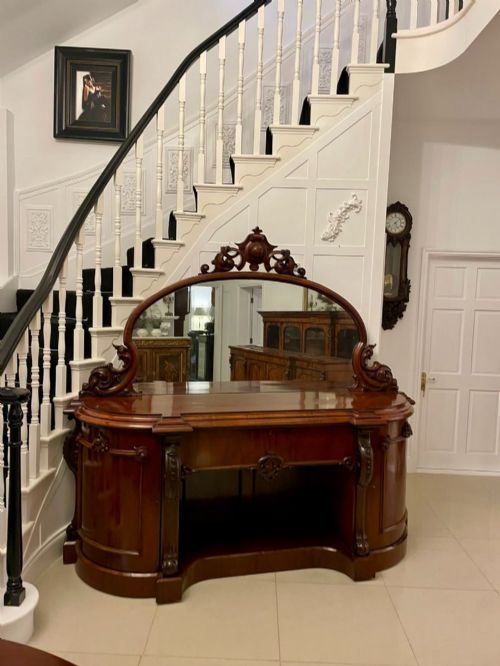
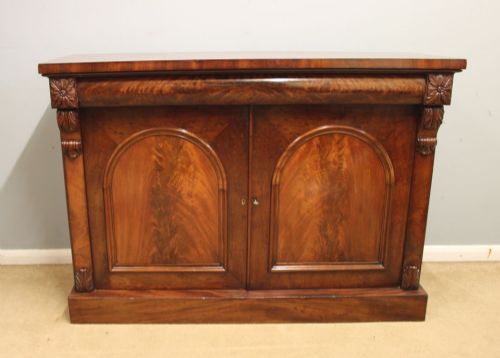
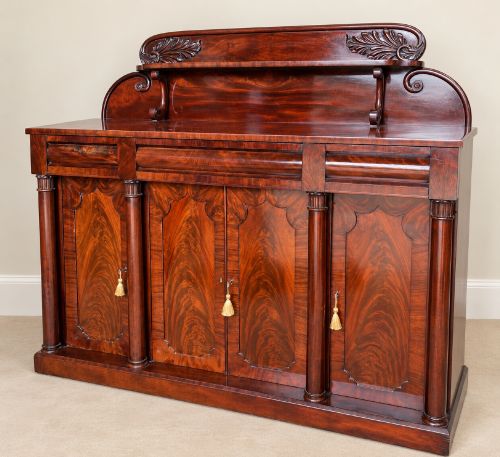
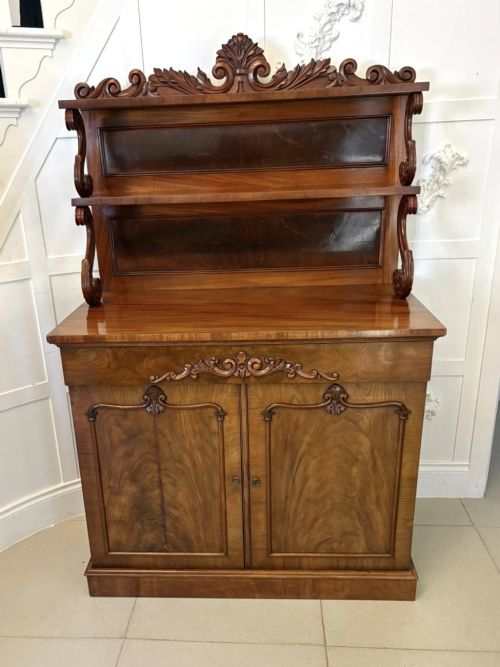
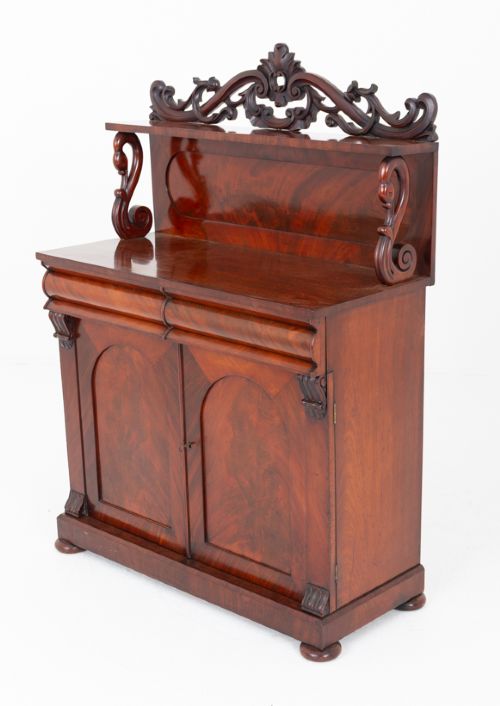
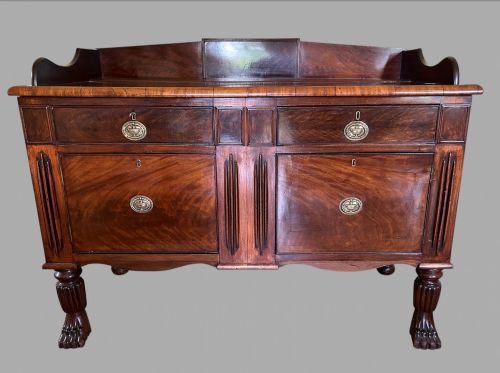
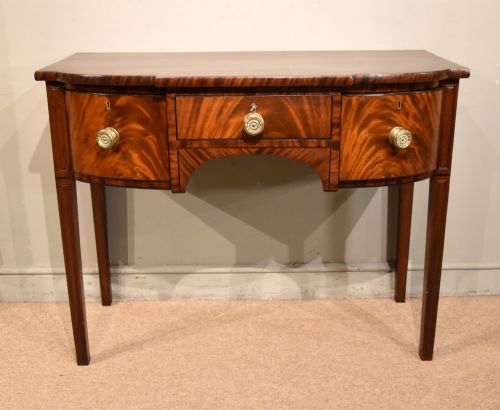
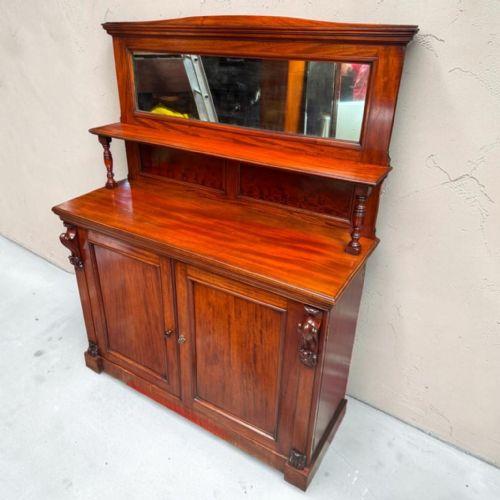
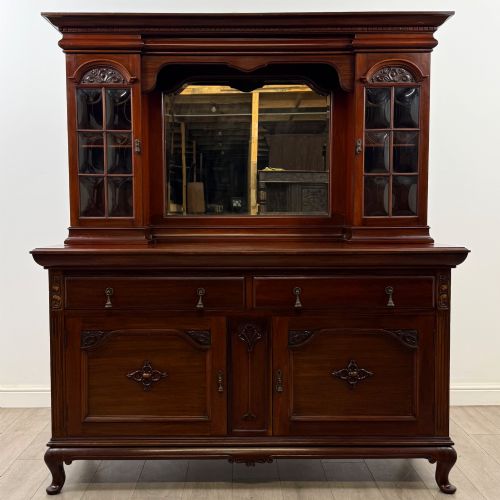
When searching for a carved mahogany server cabinet, buyers encounter substantial dining room storage spanning the Victorian, Regency, and Edwardian eras. These pieces function as sideboards, buffets, and chiffoniers designed for holding silver, linen, and glassware.
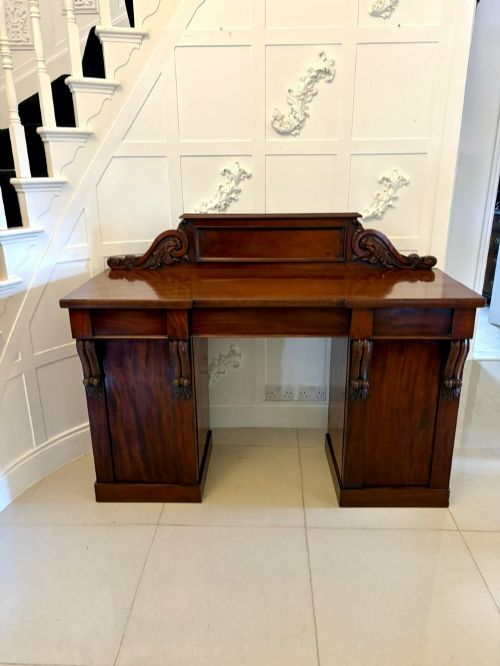
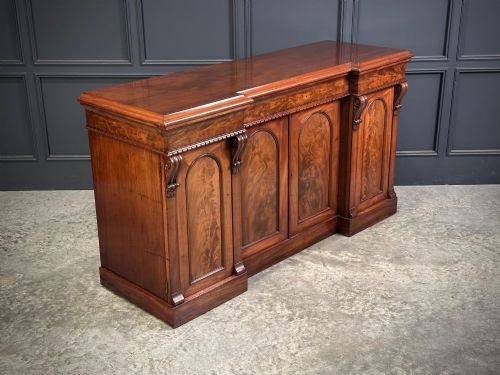
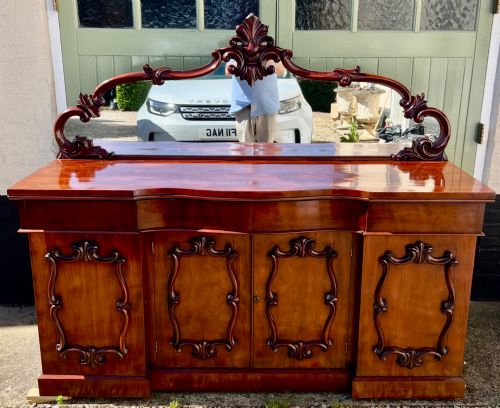
The most common examples on this page are Victorian mirror-back sideboards and pedestal chiffoniers dating from around eighteen-fifty to eighteen-eighty. Makers also produced breakfront configurations and smaller side cabinets drawing upon Chippendale and Regency styles.
Earlier Georgian and William IV examples emphasise solid timber construction and architectural proportions, while later Edwardian and nineteen-twenties pieces introduce lighter inlaid motifs and Arts and Crafts influences.
Timber Selection and Joinery
Cabinet makers relied heavily on solid mahogany and flame mahogany veneer applied over secondary framing timbers to create deep visual grain movement. Figured sections were carefully matched across drawer fronts and cupboard doors to present a unified surface.
Structural elements incorporated brass hardware, mirror glass inserts, and occasionally satinwood stringing for contrast. Carved details such as scrolls, foliage, and classical motifs were worked directly into the solid mahogany framing of the carcase.
Listings feature mahogany, flame mahogany veneer, brass, mirror glass, and satinwood across Victorian, Regency, and Edwardian periods.
Assessing Craftsmanship and Material Depth
Quality rests primarily in the choice of timber, distinguishing simple solid mahogany from highly figured flame mahogany veneers laid with precise grain alignment. Superior examples display crisp, hand-carved ornamentation rather than soft or repetitive machine moulding.
Internal construction, including solid drawer linings, original brass fittings, and intact mirror glass, separates standard utility items from exceptional architectural cabinetwork.
M. D. Miller & Sons Nottingham
The Carved Mahogany Server Cabinet Glossary
- Chiffonier
- A low sideboard or cabinet featuring enclosed shelving below, sometimes surmounted by a mirror back or superstructure. These pieces gained popularity during the nineteenth century for smaller reception rooms.
- Flame mahogany
- A veneer cut from timber where the grain diverges to create a flame-like or ripple pattern. Cabinet makers prized this figure for principal display surfaces such as doors and drawer fronts.
- Pedestal sideboard
- A heavy dining room form comprising two large pedestals flanking a central recessed section or board. They often feature deep cellarette drawers or concealed cupboards.
- Breakfront
- A piece of furniture where the central section projects forward from the flanking wings. This architectural arrangement creates depth and shadow across large cabinet facades.
Carved Mahogany Server Cabinet: Frequently Asked Questions
What is a server cabinet used for?
These cabinets served primarily in dining rooms to store heavy silver, tableware, and serving dishes.
Their broad top surfaces also provided a convenient staging area for serving food and displaying decorative ceramics during meals.
How do I identify a Victorian piece?
Victorian examples often feature dark figured mahogany, substantial proportions, and applied carved scrollwork or fruit motifs.
Many incorporate tall mirror backs with shaped wooden frames reflecting mid-nineteenth-century interior design tastes.
What is flame mahogany?
Flame mahogany is a highly figured wood veneer displaying undulating patterns resembling flickering fire.
Craftsmen sliced this timber carefully to bookmatch the grain across double doors and drawer fronts.
How do Regency and Edwardian styles differ?
Regency pieces lean towards classical architectural restraint, clean lines, and dark solid mahogany.
Edwardian cabinets frequently incorporate lighter satinwood stringing, inlaid decoration, and influences from earlier revival movements.