
Fitted Writing Cabinet
When you want a fitted writing cabinet, you look for a piece that combines practical storage with a dedicated writing surface, spanning periods from Queen Anne to Art Deco.
Fitted Writing Cabinet
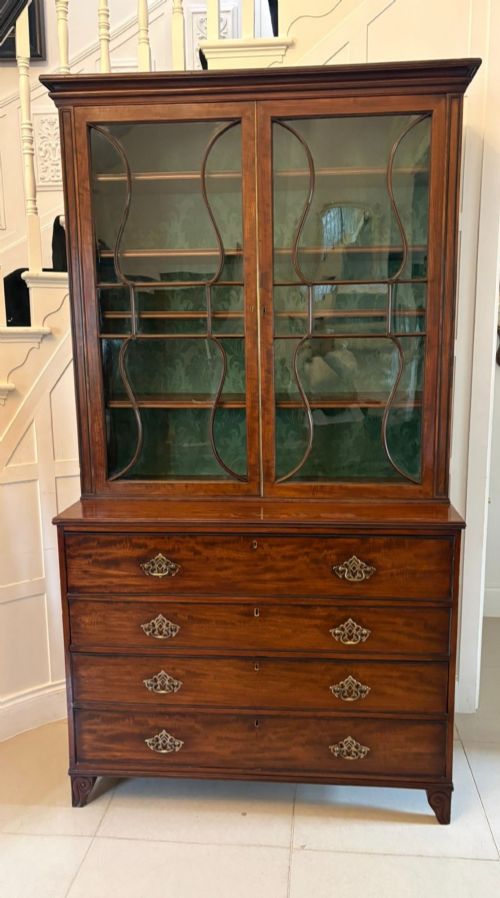
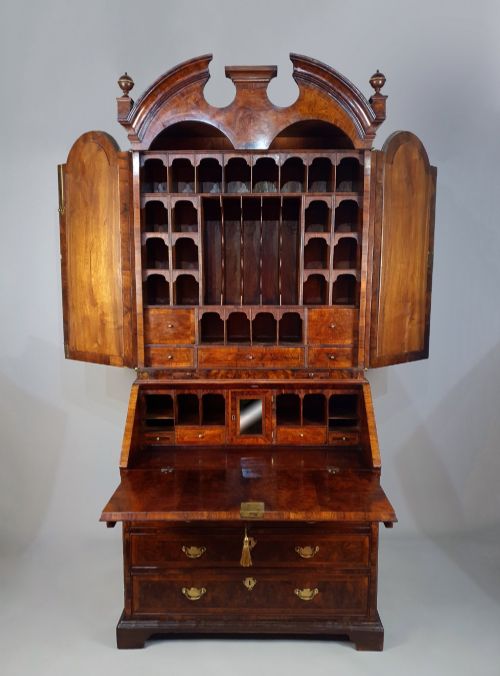
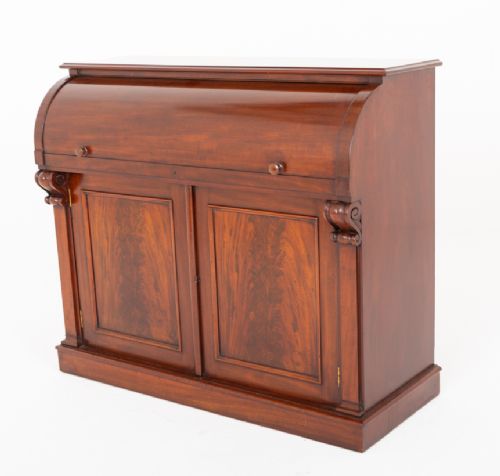
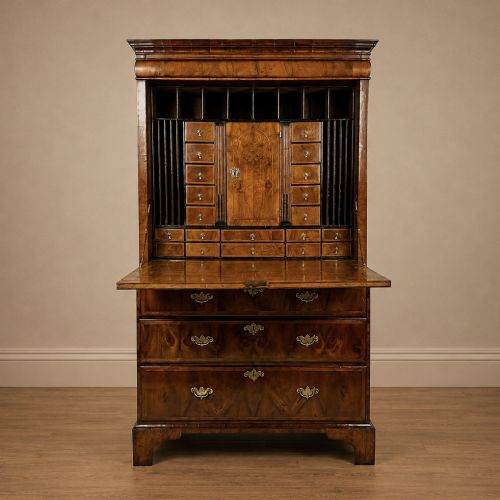
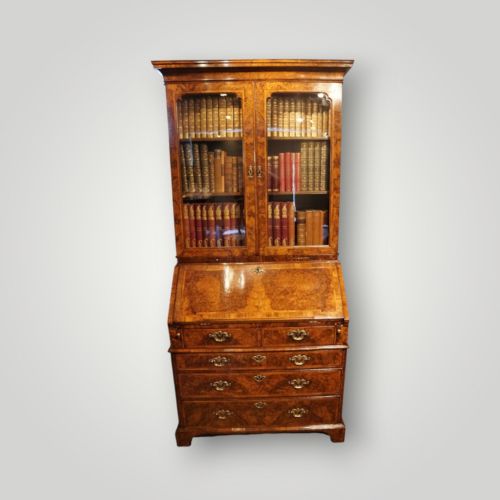
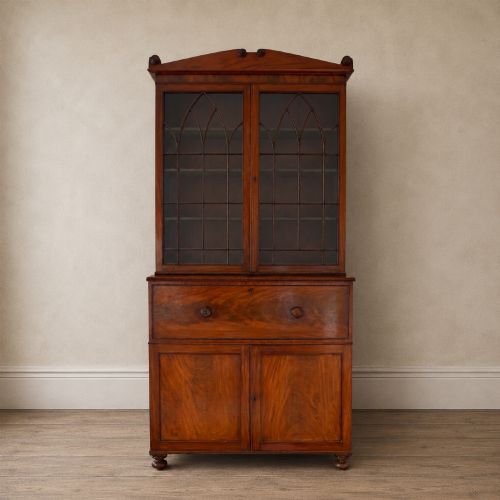
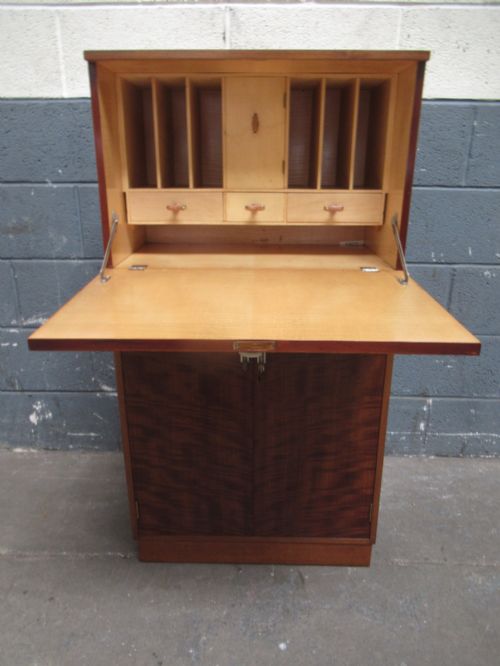
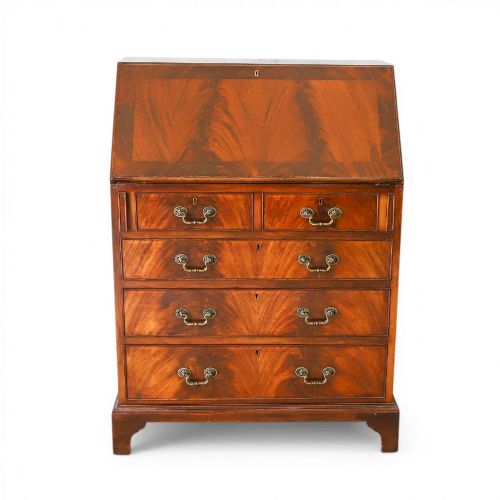
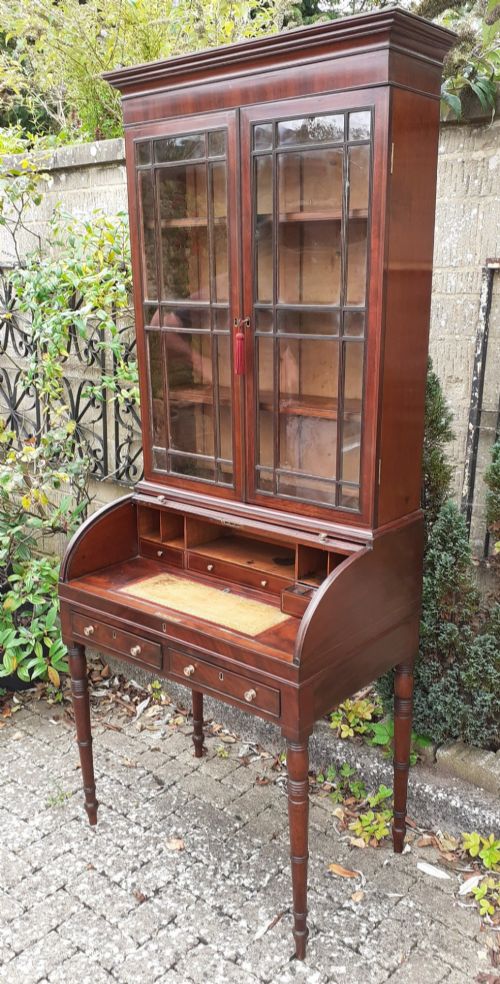
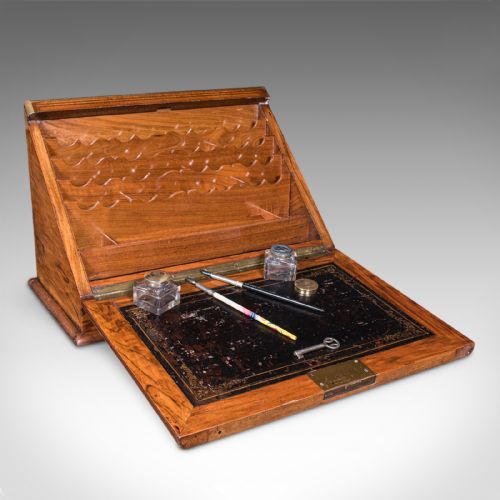
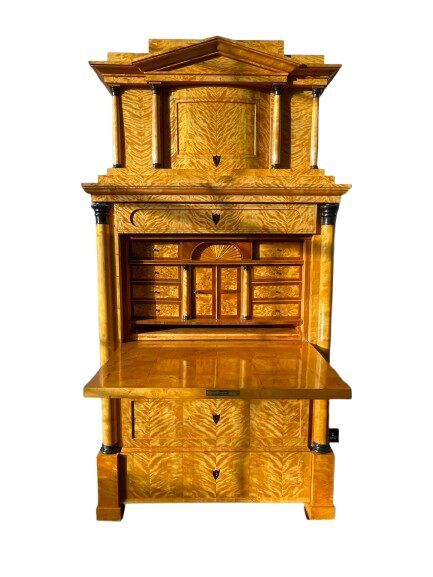
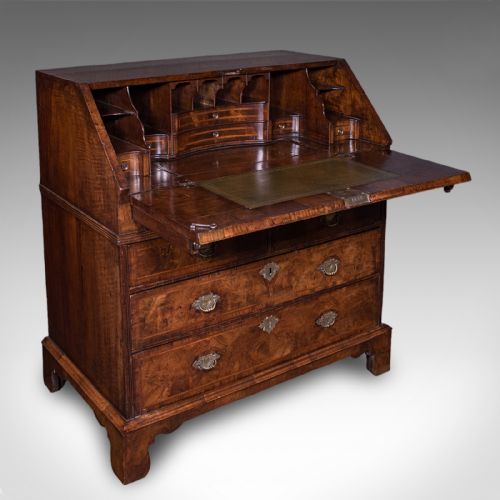
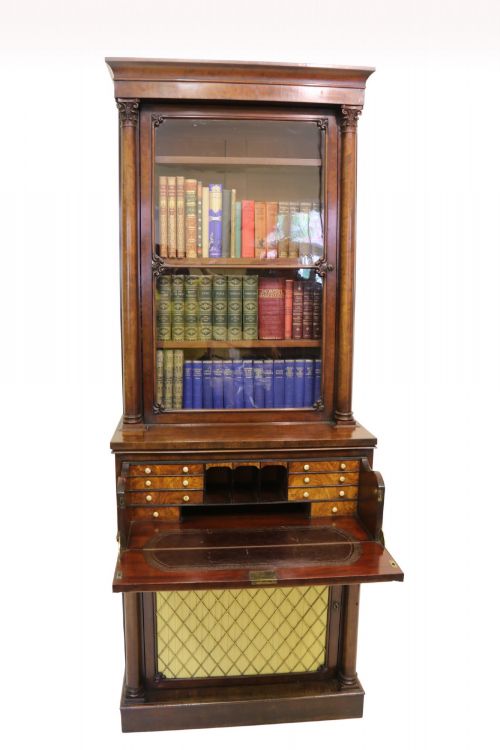
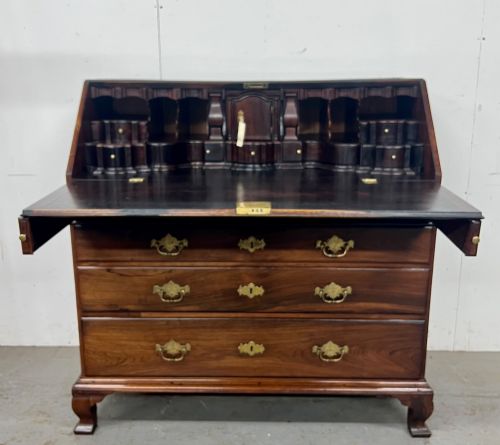
A fitted writing cabinet encompasses forms such as bureau bookcases, secretaire chests, escritoires, and Davenport desks designed for correspondence and storage. These pieces combine a writing surface - often a drop-front fall or a pull-out drawer - with internal compartments, pigeonholes, and small drawers.
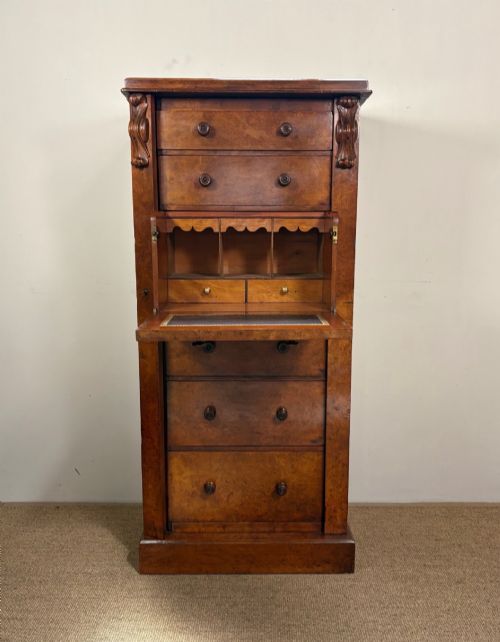
The versions most commonly met on this page range from Georgian and Regency mahogany and walnut examples to Victorian and 1930s variations. They vary from tall bookcase combinations with glazed upper doors down to compact Wellington chests and stationery cabinets.
Origins span English workshops alongside occasional Continental and Japanese examples, reflecting centuries of domestic and professional utility.
How they were made
Makers utilised primary cabinet timbers such as mahogany, walnut, oak, and rosewood, often selecting figured veneers, burr walnut, or flame mahogany for the primary visual surfaces. Secondary woods inside drawers typically included oak or pine.
Construction techniques combined traditional dovetailing for drawer construction with panelled doors and fitted interior compartments built to house stationery, inkwells, and ledgers. Brass hardware, leather writing inserts, and baize linings completed the functional aspects of the interior.
Fitted Writing Cabinet Retail Price Guide 2026
Typical asking prices for fitted writing cabinet among the pieces listed under this phrase on Sellingantiques today, from the lower quarter to the upper quarter. They describe what is for sale here now, not the wider market.
Listings feature primary cabinet timbers including mahogany, walnut, oak, rosewood, and burr walnut, complemented by brass hardware and leather inserts.
What varies in quality
The distinction between tiers rests upon timber selection and the complexity of the internal fitments. Superior pieces display matched veneers, finely grained solid timbers, and intricate pigeonhole arrangements with secret compartments.
Execution of secondary details, such as the precision of dovetails, the retention of original brass handles and glass, and the integration of the writing flap, determines the standing of an individual cabinet.
Tudor and Burrey·Gillows of Lancaster·John McClean·Wells Fargo Wooton
The Fitted Writing Cabinet Glossary
- Secretaire
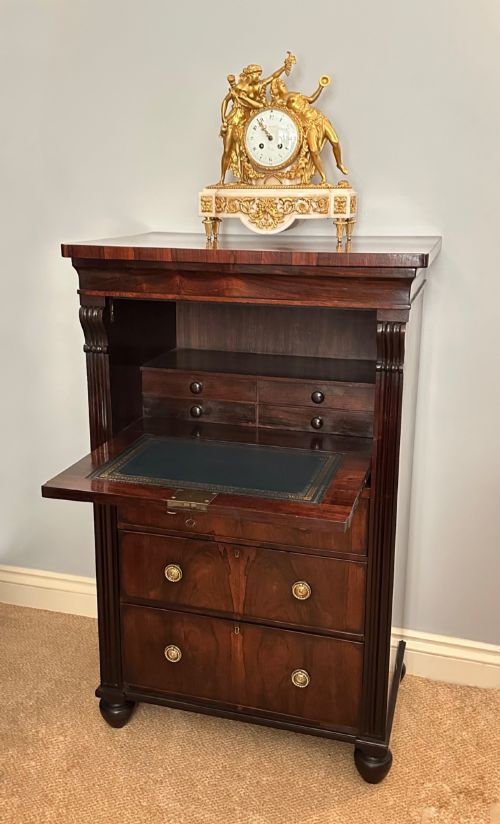
- A desk or chest of drawers containing a concealed writing drawer or a drop-front writing surface. This mechanism folds down to reveal a fitted interior of small drawers and pigeonholes.
- Bureau bookcase
- A dual-purpose furniture form featuring a sloping writing flap or secretaire drawer beneath a glazed or panelled bookcase top. These pieces served as both library storage and a writing station.
- Wellington chest
- A tall, narrow chest of drawers secured by a hinged locking stile on one side. Certain variations incorporate a secretaire drawer within the stack.
- Davenport desk
- A compact Victorian desk featuring a sloping, lidded writing surface above a pedestal of drawers. The stationary box often sits atop the rear of the desk.
Fitted Writing Cabinet: Frequently Asked Questions
What is a secretaire drawer?
A secretaire drawer looks like a standard deep drawer from the outside but pulls out and folds down to reveal a fitted writing surface and internal compartments.
This clever design allows a chest of drawers or bookcase to function as a desk without requiring a permanent sloping lid.
How do I date a walnut bureau?
Walnut bureau cabinets from the early periods often display cross-banding, herring-bone inlay, and candle slides above the fall front, reflecting Queen Anne and George I styles.
Later nineteenth-century examples tend to use denser mahogany timbers and simpler internal layouts without the earlier candle slides.
Where were these cabinets used?
These cabinets served as primary correspondence and administrative hubs in the principal rooms, libraries, and studies of period homes.
Their fitted interiors kept stationery, ledgers, and personal documents organised and secure behind locked doors or folding panels.