
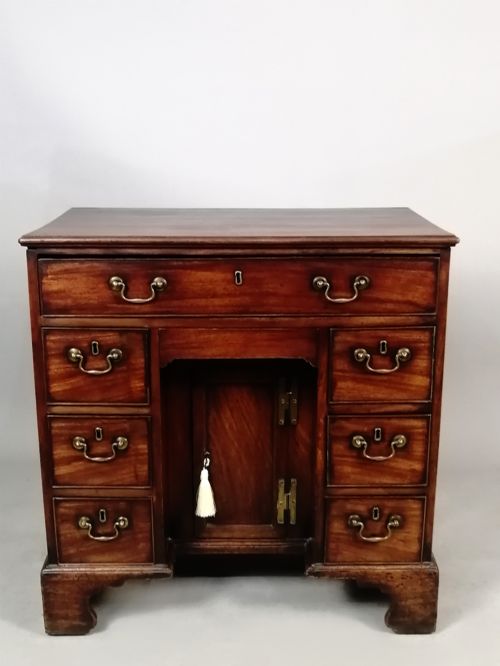
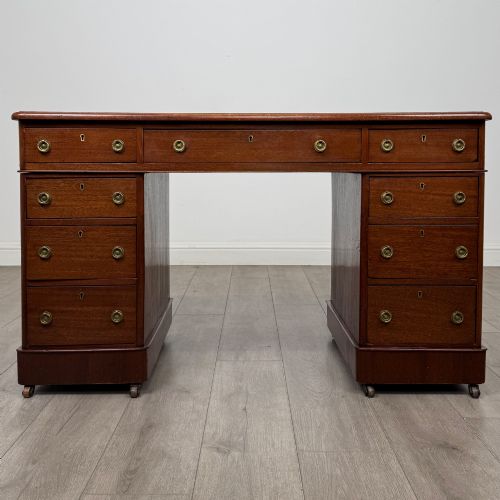
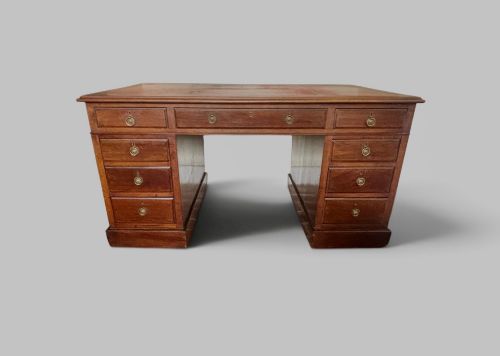

Mahogany Office Furniture
Mahogany office furniture brings solid timber and fitted workspaces together, offering practical desks and cabinets built to last.
Mahogany Office Furniture
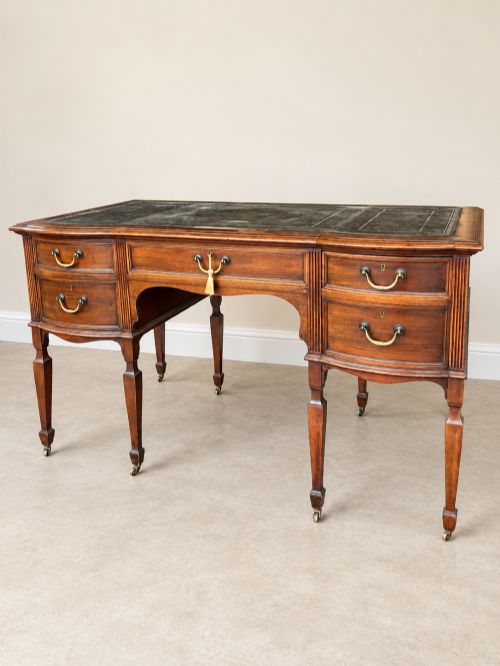
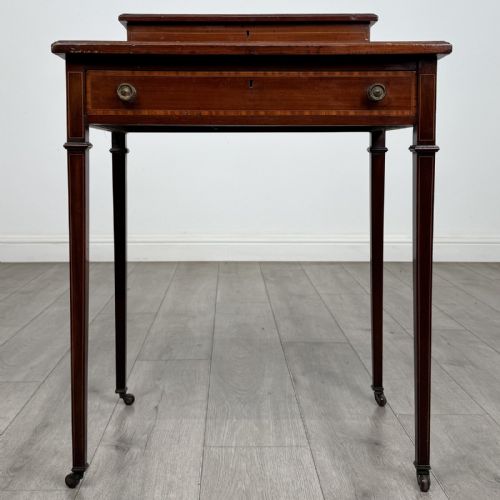
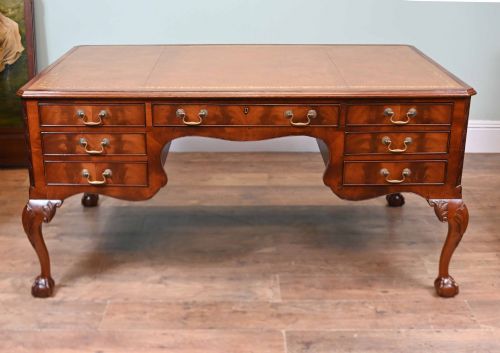
Mahogany office furniture covers heavy timber desks, pedestal writing tables, and storage cabinets designed for workspaces across several centuries. You encounter pedestal desks and writing tables most often on this page, spanning Georgian, Victorian, and Edwardian periods.
The selection includes partners desks, tambour desks, and filing cabinets constructed from mahogany, often paired with leather writing surfaces and brass hardware. These pieces originate from workshop traditions running from the eighteenth century into the twentieth century.
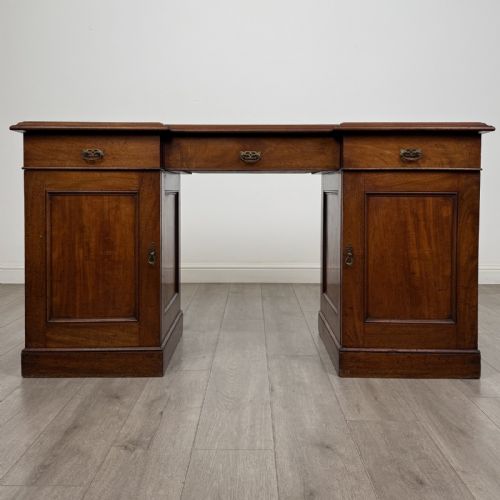
Workspaces of the past required robust storage, leading to the creation of modular pedestal units and military campaign pieces. Makers utilised sturdy timber to build functional items that served estate offices, libraries, and studies.
How they were made
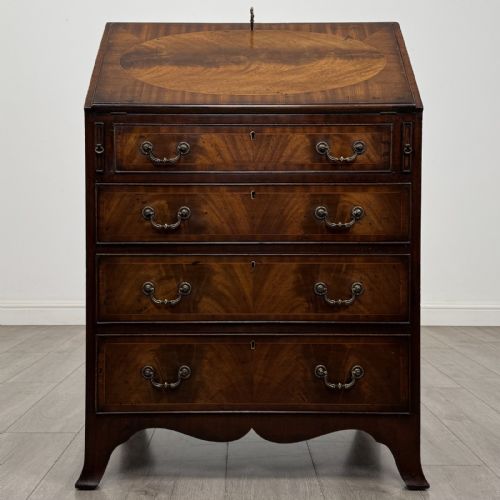
Cabinet makers utilised solid mahogany and rich veneers over secondary timbers, building carcases with traditional dovetail joints for drawer construction. Timber selection often involved figured curl mahogany to create striking grain patterns across large writing surfaces and drawer fronts.
Working surfaces frequently incorporate inset tooled leather writing panels, secured with subtle brass pins or decorative blind tooling. Hardware consists of cast brass handles, escutcheons, and occasional campaign-style flush fittings designed for durability.
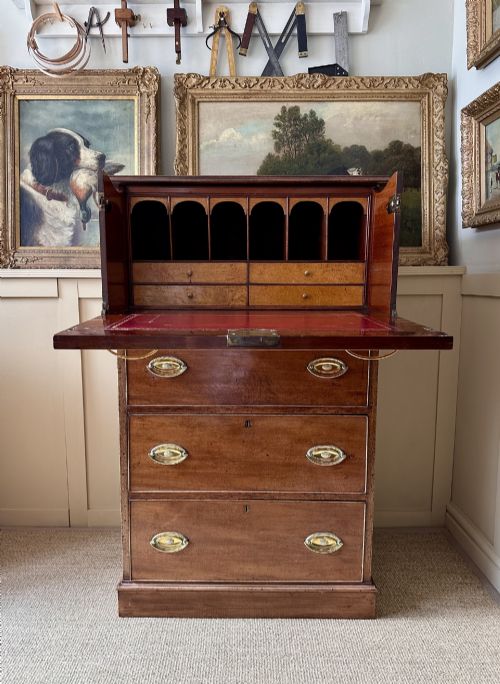
Nineteenth-century desks sometimes conceal hidden compartments behind false drawer backs for storing private documents.
What varies in quality
Quality rests in the selection of timber figures, the precision of dovetail joints, and the integrity of original secondary woods. Superior examples display thoughtful grain matching across drawer fronts and sound structural joinery that withstands daily use.
Details such as finished backs on free-standing partners desks and the presence of original brass hardware distinguish finer commissions from standard utilitarian pieces. The depth of hand-applied polish and the preservation of original fitted interiors further separate workshop standards.
Trollope and sons·James Mein of Kelso·Charles Andrea Nosotti·Whytock and Reid of Edinburgh·Betty Joel·Cookes of Finsbury London·Gillows
The Mahogany Office Furniture Glossary
- Partners desk
- A large double-sided desk with drawers and cupboards on both faces, designed for two people to work opposite one another.
- Pedestal desk
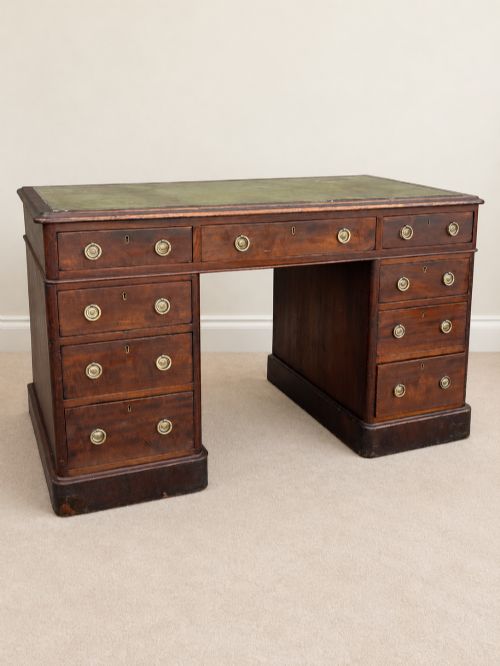
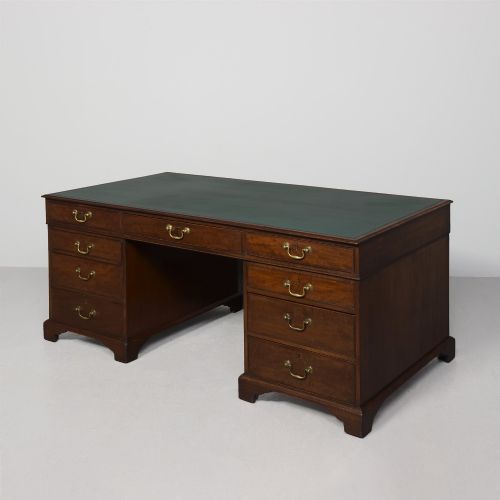
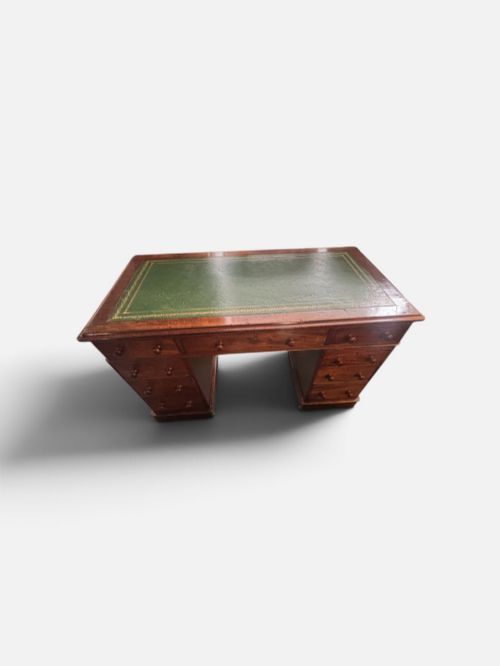
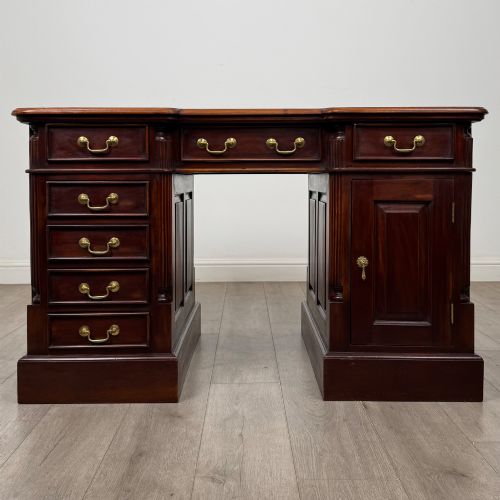
- A form comprising two banks of small drawers supporting a single desktop, frequently fitted with an inset leather writing surface.
- Tambour
- A flexible sliding shutter formed of narrow vertical strips of wood glued to a canvas backing, used to enclose desk pigeonholes.
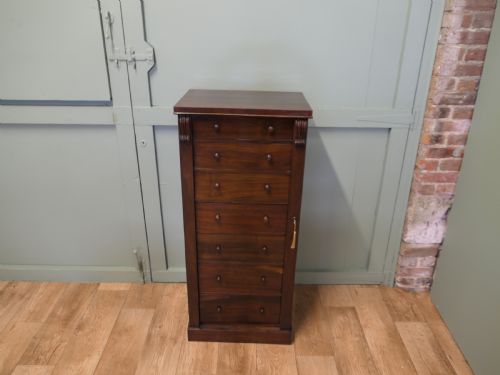
- Wellington chest
- A tall, narrow chest of drawers secured by a hinged locking stile on one side that fastens with a key.
- Campaign furniture
- Portable pieces made in sections with brass corners and recessed handles, originally built for military travel.
- Cartonnier
- A piece of furniture containing numerous pigeonholes or shallow drawers for organising papers and documents.
Mahogany Office Furniture: Frequently Asked Questions
What is a partners desk?
A partners desk provides workspace on both sides, featuring matching sets of drawers and cupboards arranged face-to-face. This layout allowed two individuals to share the same piece of furniture while working independently.
Such desks often stood in the centre of a library or large study rather than against a wall. Their finished backs and substantial proportions mark them out as significant pieces of workspace furniture.
How do I identify a Victorian pedestal desk?
Victorian pedestal desks typically feature two pedestals of drawers supporting a top inset with leather. They display robust proportions and dark mahogany tones reflecting the manufacturing styles of the nineteenth century.
Many examples include moulded drawer edges, turned wooden knobs or brass pulls, and plinth bases. Examining the construction inside the drawers reveals hand-cut dovetailing typical of the period.
What is a tambour desk?
A tambour desk incorporates a slatted wooden shutter that rolls upward in tracks to reveal pigeonholes and small drawers. This mechanism covers the upper writing surface when closed to secure documents.
The flexible slats consist of narrow strips attached to fabric backing, allowing the curtain to curve around corners. This clever design saved space while concealing paperwork.
How do I care for a leather desk top?
Leather writing surfaces benefit from gentle cleaning with a damp cloth followed by occasional application of neutral leather balm. Avoiding harsh chemicals and excessive sunlight preserves the supple texture and gold tooling.
Using blotters and coasters protects the surface from ink stains and moisture rings during daily writing tasks. Proper maintenance keeps the leather resilient over decades of use.