

Antique Secretaire Tallboy
An antique secretaire tallboy combines vertical storage with a fitted writing drawer, offering a practical dual-purpose form that suits period interiors.
Antique Secretaire Tallboy
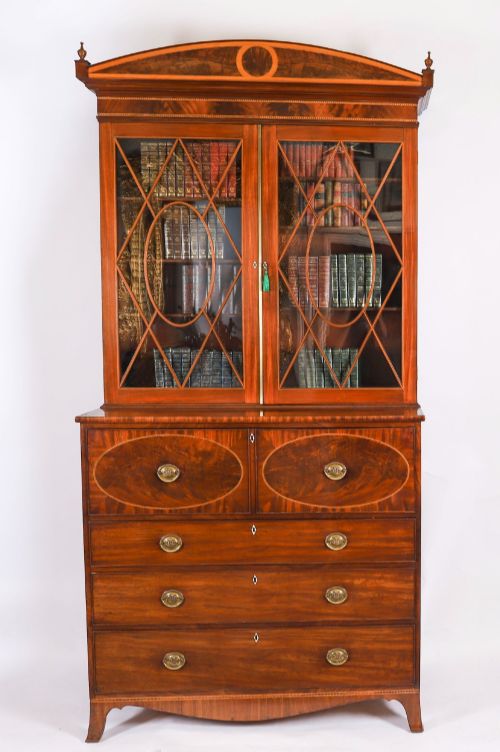
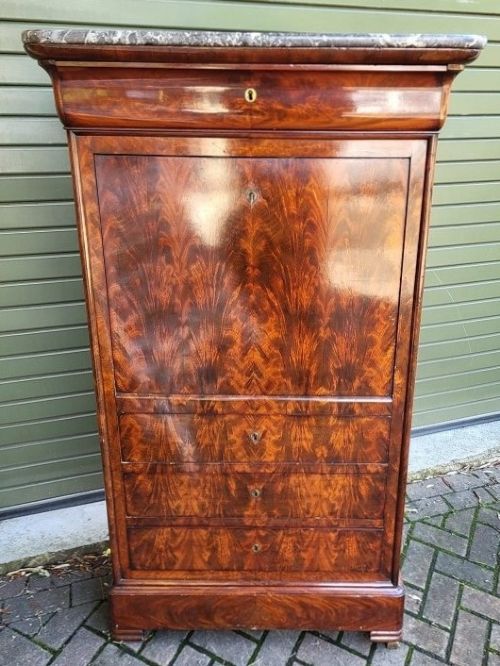
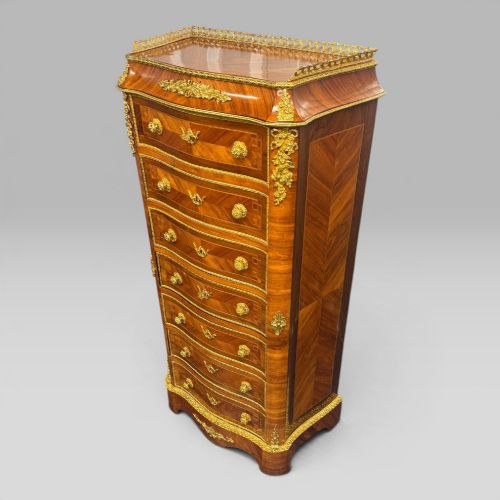
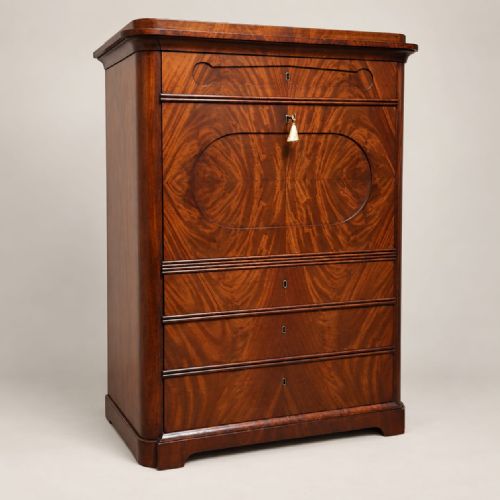
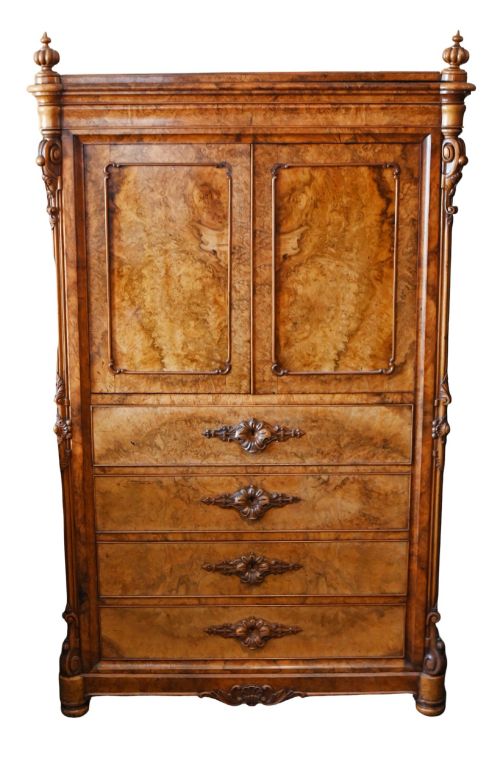
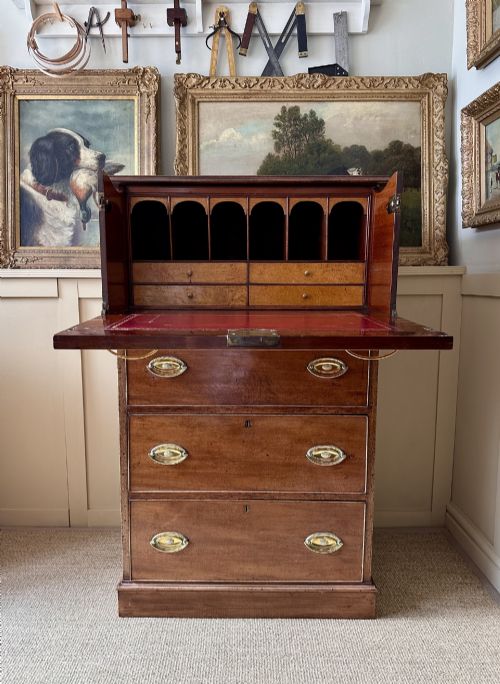
An antique secretaire tallboy is a tall, stacked case of drawers containing a dedicated writing compartment, typically encountered in eighteenth-century and nineteenth-century forms. The design merges the tallboy or chest on chest with a drop-front or pull-out writing drawer, creating a compact bureau within a high vertical frame.
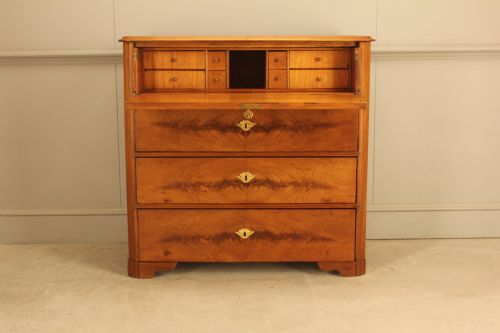
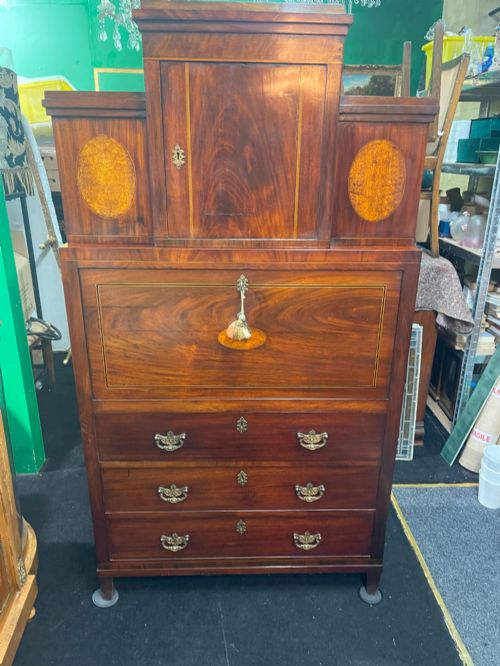
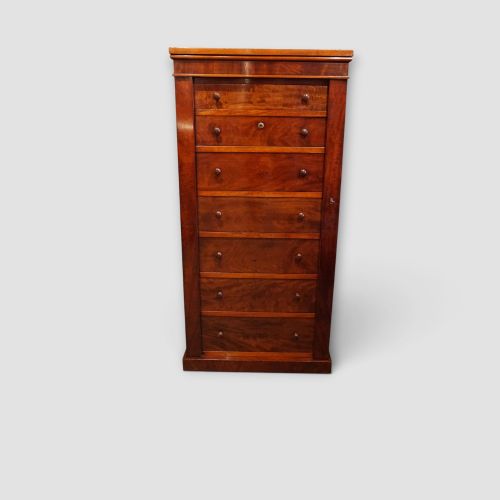
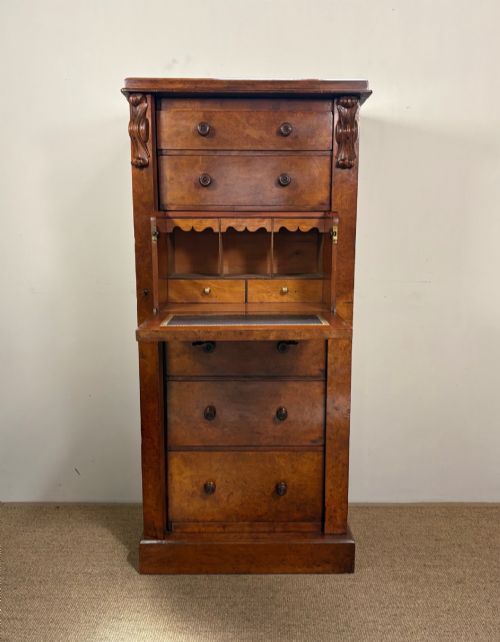
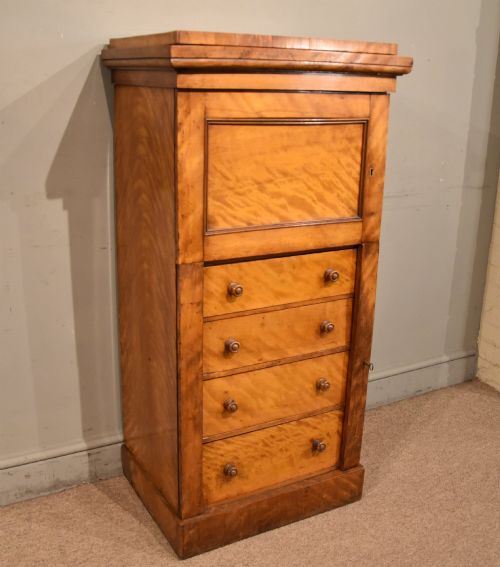
Most examples on this page date from the Georgian and Victorian eras, alongside Regency and Biedermeier interpretations. These pieces originate across Britain and continental Europe, utilising timbers such as mahogany, walnut, and birch configured as tall chests, Wellington chests, or tallboys with secretaire drawers.
How they were made
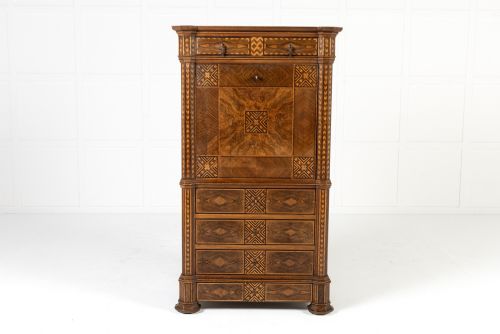
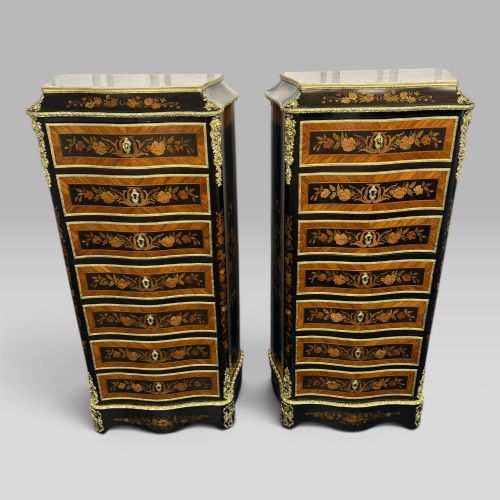
Cabinet makers built these pieces using solid foundational timbers like pine and oak, applying veneers of mahogany, walnut, rosewood, amboyna, or burr birch to the primary surfaces. Crossbanding, stringing, and marquetry inlay frequently decorate the drawer fronts and secretaire flaps.
Brass hardware, including drop handles, escutcheons, and locking mechanisms, secures the drawers and internal compartments. Writing surfaces within the pull-down or sliding secretaire drawers are traditionally lined with leather.
Antique Secretaire Tallboy Retail Price Guide 2026
Typical asking prices for secretaire tallboy among the pieces listed under this phrase on Sellingantiques today, from the lower quarter to the upper quarter. They describe what is for sale here now, not the wider market.
Some nineteenth-century models feature hidden compartments accessible only by removing a secret small drawer to release a spring-loaded latch.
What varies in quality
The sophistication of the internal fittings defines the upper tier of these pieces, separating standard drawer arrangements from intricate pigeonholes, concealed compartments, and small accessory drawers. Cabinet-making precision is evident in the tightness of the dovetail joints and the book-matching of figured timber veneers.
Proportion and execution distinguish regional and period variations, from the restrained classical lines of George III workshops to the figured grain of Swedish Biedermeier or the functional brass mounts of Victorian military campaign pieces.
Gillows of Lancaster·Maison Krieger
The Antique Secretaire Tallboy Glossary
- Secretaire tallboy
- A tall chest of drawers incorporating a dedicated writing drawer with a drop-front or sliding surface. This form unites vertical clothes storage with a concealed desk.
- Tallboy
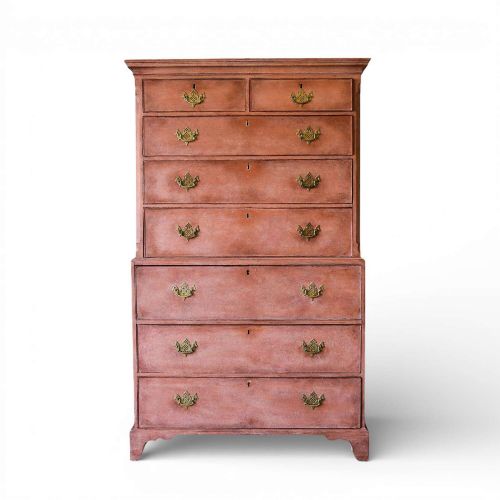
- A tall chest of drawers, often built as a chest on chest where a shorter upper section sits upon a deeper base. It maximises storage capacity while maintaining a narrow floor footprint.
- Wellington chest
- A tall, narrow Victorian chest of drawers secured by a hinged vertical locking flap on one side. This mechanism fastens all drawers simultaneously with a single key.
- Biedermeier
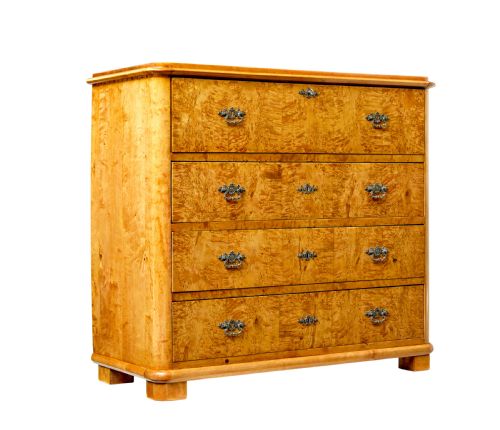
- A Central European style spanning the nineteenth century, characterised by clean architectural lines and smooth wood veneers. Pieces from this tradition emphasise natural timber grain over heavy carved ornament.
- Campaign chest
- A modular chest built in sections with recessed brass handles and corner brackets for transport by military officers. These items are constructed to separate into distinct carcases for travel.
Antique Secretaire Tallboy: Frequently Asked Questions
What is an antique secretaire tallboy?
An antique secretaire tallboy is a tall chest of drawers that includes a fitted writing drawer with a drop front. It combines the vertical storage of a tallboy with the workspace of a bureau.
These pieces were produced primarily during the eighteenth and nineteenth centuries in Britain and Europe. They provide compartmentalised storage for papers alongside deep drawers for clothing.
How do you use a secretaire drawer?
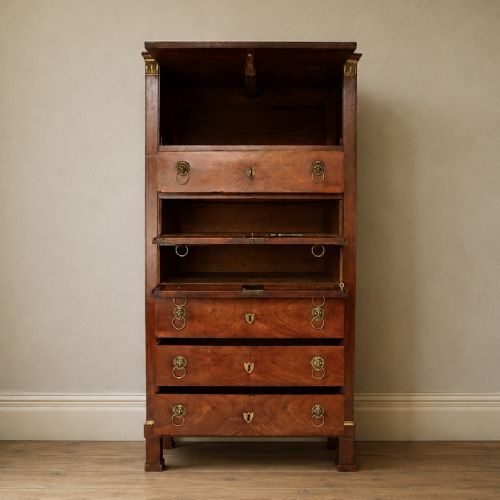
The secretaire drawer operates by pulling out the drawer box or dropping down the front flap to reveal a writing surface and small internal compartments. This provides an integrated desk space that conceals paperwork when closed.
Inside, users find small pigeonholes, tiny drawers for stationery, and occasionally secret compartments. The drop-front is usually supported by brass lopers or internal quadrant hinges.
How do I date an antique secretaire tallboy?
Dating relies on timber selection, construction methods, hardware styles, and overall aesthetic proportions. Eighteenth-century examples frequently feature figured mahogany or walnut with hand-cut dovetails and bracket feet. Nineteeth-century versions introduce alternative timbers like satin birch, camphorwood, or rosewood, alongside different locking mechanisms and plinth bases. Cabinetry details evolve from plain linings to complex internal stationary layouts.
Where were secretaire tallboys placed?
These tall cabinets were traditionally positioned in bedrooms, dressing rooms, or private studies where vertical floor space was at a premium. Their height allowed for substantial storage without occupying a wide footprint. Because they combined a desk and a chest of drawers, they served multiple functions in domestic spaces where a separate writing table was impractical.